
Guazi
GlobalEnglish


Yes, the Tharu Is a Real Volkswagen, and Here Is What an Algerian Buyer Should Check Before Importing One
Article OverviewA used Volkswagen Tharu guide for Algeria: what this China-built SUV actually is, how it differs from the Tiguan, which engine and gearbox to want, what goes wrong, and whether it clears the 2026 import rules.
Quick answers
- Is the Tharu a real Volkswagen? Yes. It is a genuine SAIC Volkswagen compact SUV on the MQB platform, the same engineering base as the Volkswagen cars sold worldwide. The closely related export version sold elsewhere is badged the Volkswagen Taos.
- How is it different from the Tiguan? The Tharu is a compact SUV. The Tiguan L sold in China is a mid-size SUV. The Tharu is the smaller, more value-focused car. The Tiguan is larger and feels more premium.
- Which engine should I want? The 2.0 TSI paired with the wet-clutch DSG is the more robust automatic. The 1.4 TSI uses a dry-clutch DSG that needs closer inspection.
- Can you import one into Algeria? Possibly, as a private buyer. The Tharu is petrol, so it clears the diesel ban, but it must be under three years old, and only the most recent cars meet that window. Confirm the current rules with Algerian customs.
- What does it cost? Treat China-export used examples as a rough range and add Algeria's import duties and taxes on top as a separate calculation.
This guide walks through what the Tharu actually is, how it sits against the Tiguan, which engine and gearbox to prefer, what genuinely goes wrong, the Algerian import rules in plain terms, and how to check a car you cannot inspect in person.
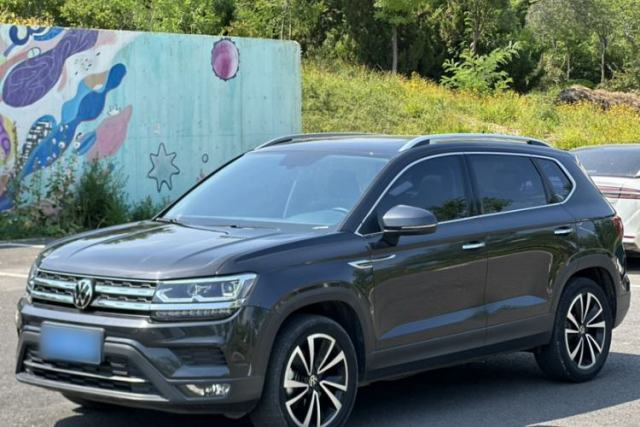
If you have never heard of a Volkswagen Tharu, that is not a gap in your knowledge. Volkswagen never sold this model in Europe or North America under that name. It was built by SAIC Volkswagen for the Chinese market, so most Western drivers have simply never met it. But it is a genuine Volkswagen, built on the same platform as cars the brand sells worldwide, and it is petrol-only. That last detail is the reason it has become an import candidate in Algeria, where the rules shut diesel cars out for private buyers. So the real question stacked inside a search for a used Volkswagen Tharu Algeria is two questions: is this a real Volkswagen at all, and can you actually import the right one. Guazi fits this story as the from-China inspection lens, because the Tharu is built in and shipped from China, and a buyer abroad cannot stand next to the car before committing.
What the Volkswagen Tharu actually is, and why it is a real Volkswagen
Start with the existence question, because it is the one holding everything else back. The Tharu is a compact SUV launched by SAIC Volkswagen in China in October 2018. It rides on the MQB platform, the modular base under a long list of Volkswagen Group cars, which means it shares its core engineering with models Volkswagen sells across the world. In the SAIC Volkswagen range it slots between the smaller T-Cross and the larger Tiguan. So this is not a budget copy or a badge-only special. It is a proper Volkswagen, designed and built within the group, for a market that happens to be China.
If you want a Western reference point, the Volkswagen Taos is the closest one. The Taos is a restyled version of the same basic car, sold in North and South America and a few other markets. When you picture a Taos, you are picturing a near cousin of the Tharu. That single fact does most of the work in placing the car: it is real, it is current, and its mechanical parts are documented globally rather than hidden behind a China-only curtain.
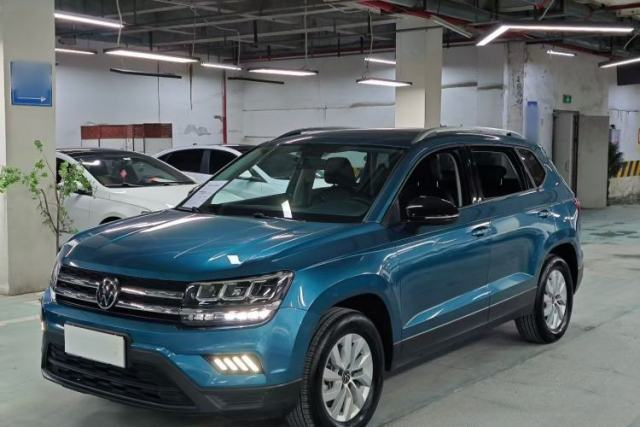
That global parts story matters for a used buyer more than it might seem. Because the engines and gearboxes are shared across many Volkswagen Group cars, a mechanic does not need Tharu-specific knowledge to understand what is under the hood. The behavior of these units, the known weak points, and the service intervals are all public. You are buying an unfamiliar nameplate, but you are not buying an unknown machine.
Tharu versus Tiguan, the comparison everyone makes
Almost everyone who looks at a Tharu has heard of the Tiguan, so the natural question is how the two relate. The short version is that they are siblings of different sizes. The Tharu is a compact SUV. The Tiguan L sold in China is a mid-size SUV. They share MQB underpinnings, but they are aimed at different buyers.
The Tiguan is the larger car. It is slightly longer, it feels more spacious inside, and its overall finish leans more premium. The Tharu is the more compact and practical option, pitched at value rather than size. Interestingly, the Tharu is actually a touch wider than its length suggests, so it does not feel cramped, but it is the smaller vehicle of the two. Neither choice is wrong. It depends on whether you want maximum space and a more upmarket feel, or a smaller, more affordable Volkswagen that is easier to place in city traffic.
| Point | Volkswagen Tharu | Volkswagen Tiguan L (China) |
|---|---|---|
| Class | Compact SUV | Mid-size SUV |
| Length | Around 4,450 to 4,460 mm | Around 4,500 mm and up |
| Positioning | Value and practicality | Size, space, more premium feel |
| Shared base | MQB platform | MQB platform |
| Best for | A smaller, cheaper Volkswagen | Buyers who want more room |
The fair way to read this table is that the Tharu wins on price and easy daily size, and the Tiguan wins on room and refinement. If your priority is value in a recent, petrol Volkswagen SUV, the Tharu is the logical pick. If you simply need more space, look at the Tiguan instead.
Buy It Now

GradeSUsed Volkswagen Tharu 2025 New Sharp 300TSI Ambitious Edition Certified DealerCertified Dealer
 Guazi InspectedGuazi Inspected
Certified DealerCertified DealerGuazi InspectedGuazi InspectedOriginal paint
Original paint
FOB Price:$15,159

The engines and gearboxes, and the one combination to prefer
This is the part that decides whether a specific Tharu is a smart buy, so it deserves more attention than the rest. The Tharu is petrol-only, which is central to the Algerian import story later. Across its life it has used a small family of turbocharged petrol engines paired with dual-clutch automatic gearboxes, and the gearbox is where the important choice sits.
The 1.4 TSI and the dry-clutch DSG, the volume car to scrutinize
The most common Tharu uses the 1.4 TSI engine, part of Volkswagen's widely used EA211 family, paired with a seven-speed dry-clutch DSG known internally as the DQ200. This is a perfectly capable combination for daily driving, and it is efficient. The caution is the gearbox type. The dry-clutch DSG has a documented history across Volkswagen Group cars of trouble in heavy stop-start traffic, where the clutch and the control unit can run hot. It is not a guaranteed failure, and many cars run for years without drama, but it is the single item to check most carefully on a used Tharu. This does not make the car a bad buy. It makes the test drive and the inspection matter.
The 2.0 TSI and the wet-clutch DSG, more power and the sturdier automatic
The Tharu also came with a 2.0 TSI engine from the well-known EA888 family, paired with a seven-speed wet-clutch DSG, the DQ381. This is the combination to prefer if you can find it. The wet-clutch gearbox is the more robust automatic of the two, better suited to heat and load, and the 2.0 engine gives the car noticeably more performance. Later and renewed versions of the Tharu, including the XR variant, added other options such as a 1.5-liter unit, so confirm exactly what is fitted to the specific car rather than assuming from the model year.
| Engine | Gearbox | What to know |
|---|---|---|
| 1.4 TSI (EA211) | 7-speed dry-clutch DSG (DQ200) | The volume car, efficient, but check gearbox behavior closely |
| 2.0 TSI (EA888) | 7-speed wet-clutch DSG (DQ381) | More power, the sturdier automatic, the one to prefer |
| 1.5 TSI / later options | Varies | On renewed and XR cars, confirm the exact spec on the car |
If you take one thing from this section, take this: prefer the 2.0 with the wet-clutch DSG, and if you are looking at a 1.4, make the gearbox check non-negotiable.
How reliable is the Tharu, and what actually goes wrong
An honest reliability picture is more useful than a clean bill of health, so here is the candid version. The Tharu is, by most measures, a solid car. It was even named a fuel-vehicle of the year in China in 2024, which reflects genuine market satisfaction. The engineering is mainstream Volkswagen Group hardware with a long global track record. None of that is marketing. It is the real strength of the car.
That said, there are specific watch-items. The first is the dry-clutch DQ200 gearbox already covered, which is the most important mechanical check on the lower-engine cars. The second is a reported collective owner complaint about tire cracking, raised around May 2026 and affecting roughly the 2022 to 2024 model-year cars. The fair way to treat that is as a specific inspection item, not a verdict on the whole model: look closely at the tires on any car from those years and budget for replacements if needed. The third is that some early cars showed undercarriage corrosion in humid conditions, so a look at the body and underbody is worth doing.
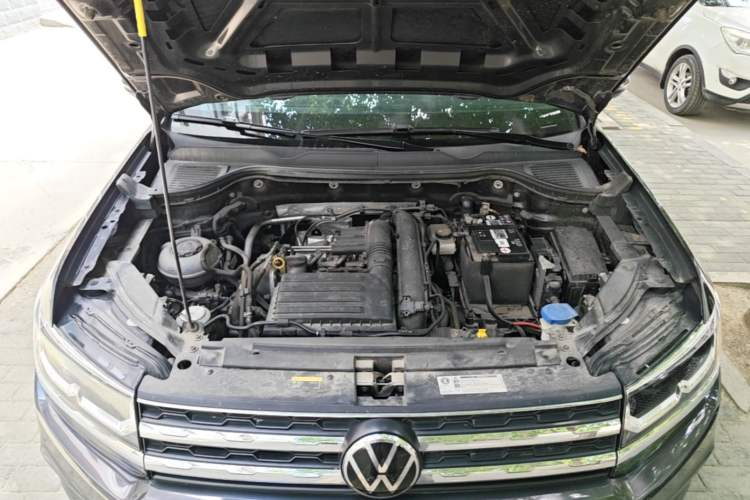
What a good inspection looks for is straightforward. On a test drive, the dual-clutch gearbox should pull away cleanly and shift smoothly, without harsh jerking, slipping, or hesitation in slow traffic. The tires should be free of sidewall cracking. The underbody should be solid, with no soft or flaking metal. The service history should show regular maintenance. A Tharu that passes these checks is a strong used car. One that fails them is a price-down or a walk-away, depending on what you find.
Can you import a used Tharu into Algeria
This is the section the whole guide leans on, so read it carefully and confirm the details with Algerian customs before you act, because the rules change from year to year. The headline is that the Tharu being petrol-only is exactly why it can be a candidate for private import. Algeria bans the import of diesel passenger cars by individuals, which removes a large slice of older European stock from the table. A petrol car like the Tharu clears that ban.
The under-three-years window and the one-car limit
The biggest constraint is age. As the rules currently stand, a resident individual may import a used car only if it is under three years old at the point the customs filing is registered, counted from first registration or manufacture. That is a tight window, and it means only the most recent Tharus qualify. An individual may generally import roughly one vehicle every three years. The 2026 Finance Law adds a narrow exception, allowing cars up to five years old for returning citizens who hold a Change of Residence Certificate. Because the cutoff is measured precisely, work out the exact age math for your specific car and confirm it with customs rather than estimating.
Personal import, not a trading shortcut
There is an important distinction to be honest about. Algeria's commercial channel for importing used passenger cars is not open to general traders. Only brand-authorized local importers may bring in new passenger cars for resale. So the realistic frame for a Tharu is personal import, one car for your own use within the rules, not a plan to import and trade them. Treating it any other way risks running into the restricted commercial channel. For the wider picture on bringing a car into the country, see our guide on Algeria's used-car import rules for 2026.
The honest summary is this. The Tharu being petrol is a real advantage that lets it clear the diesel ban. The under-three-years window is the real constraint that limits you to the newest cars. And the personal-versus-commercial line is the rule you should not cross.
What a used Tharu costs, and what to check before you commit
Price is the reason most people start looking, so here is a frank frame. Because the Tharu is sold and stocked in China, the natural reference is the China-export used market, and prices there move with mileage, trim, and engine. Treat any figure as a range, not a quote, and confirm against current listings. On top of the car price, Algeria's import duties and taxes are your own separate calculation. The full cost of landing a car, including duty, VAT, and fees, is its own subject, and we break the numbers down in how much it costs to import a used car to Algeria, with the freight side covered in shipping a car from China to Algeria.
| Item | What you are looking at |
|---|---|
| Car price | A China-export used range that varies by year, mileage, trim, and engine. Confirm against current listings. |
| Engine and gearbox | Prefer the 2.0 with the wet-clutch DSG. Scrutinize any 1.4 dry-clutch car. |
| Import duties and taxes | An Algeria-side cost on top of the car price, calculated separately. |
Before you commit to any Tharu, run through a short, specific checklist. Confirm the exact engine and gearbox variant on the car, not the brochure. Test the dual-clutch gearbox behavior on a real drive. Inspect the tires, especially on 2022 to 2024 cars. Check the body and underbody for corrosion. And verify that the car's age clears the import window for the day you plan to register the filing. Those five checks are the difference between a clean import and an expensive surprise at the port.
Buy It Now
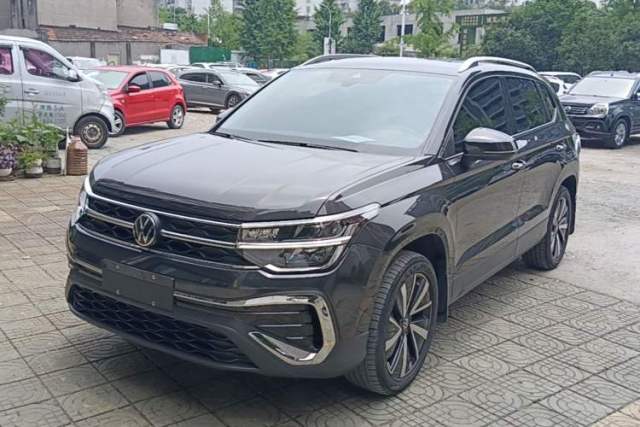
GradeSUsed Volkswagen Tharu 2024 300TSI Two-Wheel-Drive Moonlight EditionCertified DealerCertified DealerGuazi InspectedGuazi Inspected
Certified DealerCertified DealerGuazi InspectedGuazi InspectedOriginal paint
Original paint
FOB Price:$15,165
How the Tharu compares for cross-shoppers
The Tharu does not exist in isolation. If you are drawn to a recent, petrol, China-built SUV for Algeria, you are probably also weighing a few alternatives that import on the same logic. The Chery Tiggo 7 and the Geely Coolray are popular Chinese compact SUVs worth comparing on price and equipment. The Jetour X70 is the one to look at if you want a larger, family-focused SUV with seven seats. And BYD's used hybrid and electric options are worth a look if running cost is your main concern. For the field side by side, our Top 6 Chinese used cars Algerians are importing sets them out together. The Tharu's pitch among these is specific. It is the genuine Volkswagen in the group, with mainstream engineering and a strong name, as long as you accept the under-three-years window and pick the right engine.
Buying a China-built SUV the smart way, and how Guazi helps
Here is where the from-China angle matters most. The Tharu is built in and exported from China, which means a buyer in Algeria cannot stand next to the car, drive it, or check its history in person before paying. That is exactly the gap a proper inspection closes. Guazi is one of China's largest used-car platforms, active in 50+ markets including the Africa region, and every car it handles goes through an inspection of over 200 points by certified technicians, feeding a full condition report. On a car like the Tharu, that report turns the things you most need to know into facts: the exact engine and gearbox variant, the behavior of the dual-clutch gearbox, and the state of the tires, body, and underbody. To be clear, this is inspection and import-checklist help, not a claim that Guazi retails Tharus into Algeria, and Algeria's commercial used-car channel remains restricted.
See how inspected used cars are checked before they ship →
The bottom line on the Tharu for Algerian buyers
- What it is: a genuine SAIC Volkswagen compact SUV on the MQB platform, with the Taos as its export twin.
- Versus the Tiguan: smaller and more affordable, where the Tiguan is bigger and more premium.
- The engine to want: the 2.0 TSI with the wet-clutch DSG, with the 1.4 dry-clutch car needing a closer look.
- Reliability: solid overall, with the gearbox, the tire-cracking complaint, and early corrosion as the real checks.
- Import: eligible as a petrol car, but only the newest examples clear the under-three-years window, and only as personal import.
- Smart buy: a recent, inspected car with the right engine, an age that clears the rules, and a clean condition report.
Summary
The Volkswagen Tharu rewards a buyer who does the homework. It is a real Volkswagen, built in China on the same engineering as the cars the brand sells worldwide, and its petrol-only nature is the very thing that makes it a candidate for private import into Algeria. The price of that opportunity is precision: you have to pick the right engine and gearbox, check the specific car honestly, and stay inside the under-three-years window and the personal-import rules. Settle those, ideally with a proper inspection on a car you cannot see in person, and the Tharu makes a quietly strong case as a recent, sensible, genuinely Volkswagen SUV.
Ready to source an inspected used car from China? Browse Guazi's export-ready inventory


About Us
Follow US


Copyright © 2015~2026 https://en.guazi.com/, Chongqing Guazi Enterprise Consulting Service Co., Ltd. All rights reserved.