


Guazi
GlobalEnglish


Makes
Buy It NowAuctionsUp to 160 psPort StockAll VehiclesPopular Makes


Shop By Type


Popular Models


Shop By Budget

The Real Cost to Import a Used Car to Algeria 2026
Article OverviewThe real landed cost of importing a used car to Algeria in 2026, built piece by piece: the Argus value, customs duty, 19% VAT, TIC, fees, the EV break, two worked examples.
Read this first. Every figure here is a 2026 illustration, not a quote. Algeria resets its vehicle-import taxes each year through the Loi de Finances, and it adjusts the official reference-value tables that decide what your car is taxed on. The duty rates, the VAT, the consumption tax, the solidarity fee and the worked examples below are all 2026 reference ranges compiled in June 2026, gathered to show you how the bill is built, not to promise a number. Your own figure will differ. Guazi is the China-side supplier of the car and its export paperwork, not your customs broker or tax authority in Algeria. The Algerian Customs (Douanes Algériennes) and the current Finance Law are the only authority on what you will actually pay. Confirm every rate that applies to your car with Customs or a licensed broker before you commit any money.
Picture the moment the spreadsheet stops being comforting. You have found a clean compact abroad, the asking price fits your budget, and then someone who has actually imported into Algeria asks you a quiet question: taxed on what, exactly? Because the price on the listing turns out to be the smallest part of the bill. Between the seller and the road sit a freight invoice, a stack of duties, a 19% VAT, a consumption tax that scales with engine size, a small solidarity fee, and one quietly decisive rule that the listing never mentions. That is the real cost to import used car Algeria buyers keep underestimating, and the gap is rarely a rounding error. On an ordinary petrol car the taxes alone can add half the car's value again. So this guide does the honest, unglamorous thing and builds the landed cost the way Customs does, one layer at a time, with the layer that surprises everyone made central, and with Guazi as the transparent China-export and freight lens rather than a calculator that pretends to know your final price.
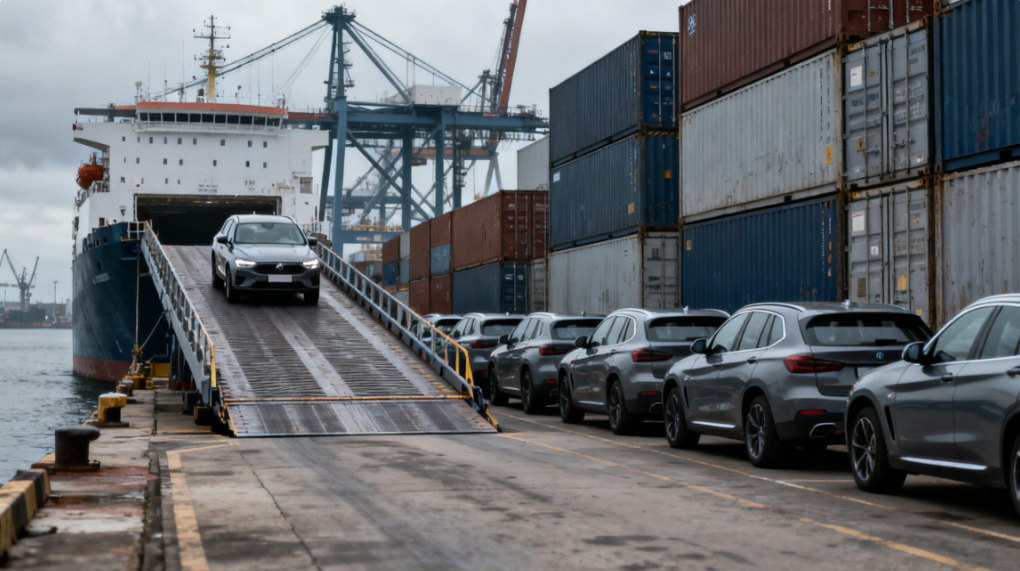
A word on how the money works here, because it shapes every figure that follows. Algeria's import taxes are set yearly by the Loi de Finances, which means the specific rates move from one year to the next and two sources written a year apart can disagree. More importantly, Algeria does not simply tax what you paid. It taxes a value it decides, on top of your freight, and that single mechanic reorders the whole budget. Everything below is the 2026 position, hedged where reputable sources conflict and flagged where a number is an estimate rather than a quote. Read it as a map of how the bill is assembled, settle the precise rate for your car with Algerian Customs, then let the math tell you whether the deal still works.
Success Stories
See how Abdel in Algeria imported a 2023 Geely Boyue L 1.5TD from Guazi
The cost stack: what you actually pay
It helps to stop thinking of an imported car as a price and start thinking of it as a stack. Five layers sit between the listing and your registration, and they build on each other in order, which is why the total is so easy to under-count. The first layer is the car itself, the figure you negotiate with the seller. The second is freight, the cost of moving the vehicle by sea from China to an Algerian port, and the choice of RoRo or container changes it. The third is customs duty, charged as a percentage of the taxable value. The fourth is VAT at 19%, and here is the catch that trips people, VAT is charged not on the bare car value but on the value plus the duty, so it stacks on top of a number that is already inflated. The fifth layer is the cluster of additional taxes and fees, the internal consumption tax on larger engines, the solidarity fee, and the assorted handling and registration costs at the port.
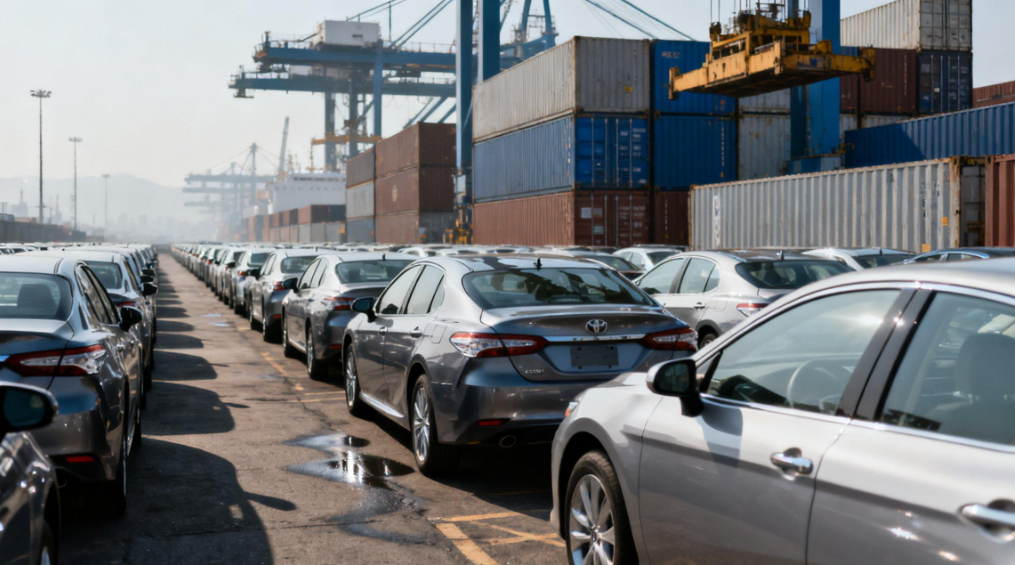
The reason the stack matters more than any single rate is that the layers compound. A 30% duty does not mean the car costs 30% more, because the VAT then applies to the duty-inflated figure and the consumption tax can pile on above that. By the time everything settles, a standard petrol car's cumulative taxes commonly land somewhere around 53% to 60% of the car's value, depending on engine and category. The good news, and the reason the EV section below matters so much, is that the same stack can collapse to a fraction of that for the right clean vehicle. Here is the whole stack in one view, with the basis each layer is charged on, so you can see why they add up the way they do.
| Cost layer | What it is | Charged on | Rough 2026 range |
|---|---|---|---|
| Car price | What you pay the seller | Negotiated | Your budget |
| Freight (the F in CIF) | Sea shipping China to Algeria | RoRo or container | RoRo around 1,200 to 2,000 USD; 20ft container around 2,500 to 3,500 USD |
| Customs duty (DD) | The import duty | Reference value plus freight (CIF) | Around 15% small petrol, around 30% larger petrol and EV before relief |
| VAT (TVA) | Value-added tax | Customs value plus duty | 19% |
| TIC, solidarity fee, port costs | Consumption tax, solidarity levy, handling | Varies by layer | TIC 0% to around 60%; solidarity around 2% to 3%; plus port and registration fees |
Treat the freight figures as a pointer, not the full story. The shipping decision has its own moving parts, RoRo against container, which Algerian port, how many weeks, and we walk through all of it in the companion shipping a car from China to Algeria guide. What matters for the budget here is simply that freight is real money and, as the next sections show, it does more than move the car.
The Argus surprise: you are taxed on a reference value, not your invoice
Now the layer the listing never warns you about, and the single most important paragraph in this guide. When Algerian Customs works out the duty and VAT, it does not necessarily start from the price on your invoice. It starts from an official customs reference value, drawn from a government-recognised valuation often referred to as the Argus value, and it taxes the higher of the two . In plain terms, the state has its own opinion of what your model is worth, and that opinion can outrank your receipt.
Work through what that does to the budget. Say you find a genuine bargain and buy a car for the equivalent of 20K, but the official reference value for that model and year sits at 25K. Customs will generally calculate your duty and VAT on the 25K, plus your freight, not on the 20K you actually paid. You negotiated a discount the tax system simply ignores. The reverse offers no relief either, because the reference value is a floor for the taxable amount, so a low invoice does not lower the bill. This is exactly why under-declaring the purchase price, a trick that works in some markets, fails here, you cannot dodge tax by writing a smaller number on the invoice when Customs is taxing its own value regardless.
There is a constructive way to read this, though, and it is the honest one. Because the reference value governs, the smart play is not to chase the lowest possible sticker and hope, it is to source a car whose paperwork, build date and condition are clean and verifiable, so the declaration is straightforward and there are no surprises layered on top of an already-fixed tax base. You cannot argue the reference value down. What you can control is everything around it, the price you pay, the condition you inherit, and the freight, and that is precisely the part a transparent, well-documented supply chain helps with. The reference value also feeds off the freight you paid, because, as the next layers show, the tax is built on CIF.
Customs duty and VAT, by engine and fuel
With the taxable base understood, the two headline taxes are the customs duty and the VAT, and this is the heart of Algeria car import tax 2026. Both are percentages, but they apply to different bases and they behave differently by engine and fuel, so it pays to take them one at a time.

Petrol under and over 1.8L, plus TIC on big engines
The customs duty Algeria car buyers pay turns largely on engine size. A petrol car under 1,800 cc generally sits in a lighter duty band, commonly cited around 15%, while a petrol car of 1,800 cc and above steps up to a heavier band commonly cited around 30%. That alone is a meaningful swing, but the engine-size line does more than move the duty, because it also governs the internal consumption tax. The TIC sits at 0% for electric cars and for petrol engines under 1,800 cc, then climbs steeply for larger petrol engines, reported as high as around 60% for the biggest. The practical lesson writes itself, a smaller engine is not just cheaper to fuel in Algeria, it can sit a whole tax band lower at the port, so engine displacement is a budget decision before it is a driving one.
VAT at 19%, on value plus duty
VAT, the TVA, is the steadier of the two at a flat 19%, but the base it applies to is what makes it bite. The 19% is charged on the customs value plus the duty already added, not on the bare car value. So if the duty has lifted the figure, the VAT then takes its 19% of that larger number, which is the compounding effect the cost-stack section flagged. It is a small mental adjustment with a real cash consequence, the order of operations means VAT is always working on an inflated base, never on the sticker.
The solidarity fee, around 2% to 3%
Sitting alongside duty and VAT is a smaller solidarity levy, and here the sources genuinely diverge, which is worth being upfront about. Some references cite it at around 2%, while others report it raised to around 3% on imports from 2025 onward. The honest answer is to budget for the range, treat it as roughly 2% to 3%, and confirm the current figure with Customs, because this is exactly the sort of number the Finance Law adjusts quietly from one year to the next. It is not large enough to make or break a deal on its own, but it is real, and leaving it out is how a budget ends up short. Here is how the duty, VAT and consumption tax stack up across the main categories.
| Category | Customs duty (DD) | VAT (TVA) | TIC (consumption tax) |
|---|---|---|---|
| Petrol under 1.8L | Around 15% | 19% on value plus duty | 0% |
| Petrol 1.8L and over | Around 30% | 19% on value plus duty | Up to around 60% |
| Hybrid (petrol-based) | Duty applies, relief possible | 19% on value plus duty | Lower, category dependent |
| Electric (EV) | Around 30% before relief | 19% before relief | 0% |
Where the tax breaks are: small engines, hybrids and especially EVs
If the previous section was the bad news, this is where the system hands back real money, and it does so deliberately to steer buyers toward cleaner, smaller cars. For used vehicles under three years old, Algeria reports a tiered set of reductions on the total duties and taxes, and the gap between the tiers is large enough to redraw a shopping list. A petrol or hybrid car at or under 1.8L is reported to attract roughly 50% off the total duties and taxes, a petrol or hybrid over 1.8L roughly 20% off, and a fully electric vehicle the headline relief of roughly 80% off.
The EV figure is the one that changes the arithmetic completely. A petrol car can carry cumulative taxes in the region of 53% to 60% of its value, while an EV after relief can land at an effective burden of roughly 5% to 10%. Read those two numbers next to each other and the implication is stark, a small electric car is often one of the cheapest legal routes onto an Algerian road for a buyer whose daily driving suits the range, not because the car is cheap but because the tax almost disappears. That relief is conditional, tied to the car meeting the age, fuel and documentation rules, and as the resale section warns it comes with a string attached. But on landed cost alone, the clean end of the market is where Algeria's tax system is quietly generous. If you want to see which actual models sit on the favourable side of these lines, the petrol-under-1.8L and EV picks, we matched them up in the guide to the Chinese used cars Algerians are importing in 2026, and every pick there is chosen to land in a friendly tax band.
A worked example, end to end
Enough theory, here is the bill built in full. Two illustrative cars, a petrol compact and a small EV, each taken from reference value through freight, duty, VAT and fees to a landed total, so you can see how the layers compound and how differently the two fuels land. These figures are an illustration for 2026, not a quote, your own Argus value and freight will differ, and the percentages are the reference ranges from the sections above rather than a customs assessment. The point is the shape of the bill, not the exact dinar.
Take the petrol compact first, a sub-1.8L hatchback. Suppose its customs reference value comes out at 18K and you ship it RoRo for around 1,800, giving a CIF base near 19.8K. Duty at roughly 15% adds about 3K, lifting the figure to around 22.8K, and VAT at 19% on that takes roughly another 4.3K. The TIC is 0% on a sub-1.8L petrol, so it adds nothing, and the solidarity fee plus port and registration costs add a few hundred more. Before any under-3-years relief, the landed figure sits somewhere around 27K to 28K against an 18K reference, which is the half-again-on-top pattern in action. Apply the reported roughly 50% reduction available to a sub-1.8L car under three years old and the tax portion shrinks substantially, pulling the landed total back down toward the low 20s.
Now the small EV with the same 18K reference and the same 1,800 freight, a near-identical 19.8K CIF base. On paper it starts in the heavier 30% duty band, which would add about 5.9K, with VAT at 19% on the combined figure adding several thousand more, so before relief an EV can actually look more expensive than the petrol car. Then the roughly 80% EV reduction lands on the total duties and taxes and the picture inverts, because the tax leg that was the largest part of the bill mostly evaporates, leaving an effective tax burden in the rough 5% to 10% region. The EV's landed total ends up close to its reference value plus freight and a thin slice of tax, which is how a small electric car can finish cheaper to land than a petrol equivalent despite starting from a higher duty rate. Here are the two builds side by side.
| Build step | Petrol compact (under 1.8L) | Small EV |
|---|---|---|
| Customs reference value | Around 18K | Around 18K |
| Freight (RoRo) | Around 1,800 | Around 1,800 |
| CIF base | Around 19.8K | Around 19.8K |
| Customs duty | Around 15%, roughly 3K | Around 30%, roughly 5.9K |
| VAT at 19% | On value plus duty | On value plus duty |
| TIC | 0% | 0% |
| Solidarity fee plus port and registration | Around 2% to 3% plus fees | Around 2% to 3% plus fees |
| Reported under-3-years relief | Roughly 50% off duties and taxes | Roughly 80% off duties and taxes |
| Illustrative landed feel after relief | Low 20s | Close to CIF plus a thin tax slice |
Read this table as a worked illustration only. The reference value for your specific model and year, your actual freight, and the exact 2026 rates and relief tiers will move every line, and Customs has the final word on all of it. What the example is meant to teach is the order the bill is built in, the way VAT compounds on duty, and how decisively the under-3-years relief, and the EV tier in particular, can rewrite the total.
The resale lock if you took the EV break
There is a string attached to that generous EV relief, and it catches buyers who plan to flip the car quickly, so it belongs in any honest cost picture. The reduction is conditional on you actually keeping and driving the vehicle, and selling it too soon triggers a clawback of the tax you saved, on a sliding scale reported as roughly 100% if you sell within 12 months, around 66% within 24 months, around 33% within 36 months, and free of the penalty after 36 months.
The logic is to stop the EV incentive being used as a trading scheme rather than as a reason to drive something cleaner, and for an honest buyer the message is simple, the saving is real but it rewards a multi-year hold, so factor a three-year keep into the decision before you bank it. The exact percentages and holding periods are the kind of figures the Finance Law can revise, and the full eligibility picture, including how this lock interacts with the age and fuel rules, lives in the companion Algeria used car import rules 2026 guide. Confirm the current schedule before you rely on the relief, especially if there is any chance you will sell within three years.
Keeping the controllable costs down, with Guazi
Step back and the bill splits cleanly into two halves, the part Algeria controls and the part you control, and being honest about which is which is the whole point of this guide. The tax leg, the duty, the VAT, the consumption tax, the solidarity fee and the reference value they are calculated on, is set by the Algerian state, and no supplier can lower it or quote it for you. What sits on the other side of the line is the car price, the condition you inherit, and the freight, and that is exactly where sourcing the right way from China keeps the controllable costs low.
This is the part Guazi is built for. As one of China's largest used-car platforms, Guazi supplies left-hand-drive stock, which is what Algeria drives, in the petrol, hybrid and electric fuel types the country still allows, and every car carries an over 200-point inspection and a full condition report, so the build date and condition are verified data rather than a hopeful guess. That matters for the budget in a way that is easy to miss, because a clean, accurately documented car keeps the post-arrival surprises, the unexpected repairs that quietly inflate the true landed cost, to a minimum. Guazi also runs the logistics leg itself, with end-to-end export clearance and freight forwarding by container or RoRo, so the freight line in your stack comes from one accountable source rather than a chain of middlemen. We want to be precise about the boundary, though, Guazi does not set or quote Algerian customs tax, and the local clearance and your exact reference value are things to confirm on the ground. What we handle well is the controllable side, a sound, inspected, correctly documented car delivered to port at a transparent price. Price an inspected used car for export.
Success Stories
See how Amine in Algeria imported a Chery Arrizo 5 sedan from Guazi
Key Takeaways
- The cost to import used car Algeria is a five-layer stack, car price, freight, customs duty, 19% VAT and the consumption tax plus fees, and the layers compound, so a standard petrol car's taxes often run 53% to 60% of value.
- The decisive surprise is the customs reference value, the Argus figure, because Customs taxes the higher of that or your invoice, so a bargain price does not lower the bill and under-declaring fails.
- For Algeria car import tax 2026, duty turns on engine size, around 15% under 1.8L and around 30% at or over it, VAT at 19% stacks on value plus duty, and TIC climbs toward 60% on the biggest petrol engines.
- The customs duty Algeria car picture flips for clean vehicles, with reported under-3-years relief of roughly 50% for sub-1.8L petrol or hybrid, 20% above 1.8L, and 80% for EVs, dropping an EV's effective burden to around 5% to 10%.
- Duty and VAT are charged on CIF, so freight is part of the taxable base, which means the shipping number also moves the tax number.
- The EV relief carries a resale clawback over 36 months, so plan to hold the car, and confirm every rate with Algerian Customs before you commit.
One more time, because it matters. These figures are current to 2026 and set yearly by the Loi de Finances, so they will move, the reference-value tables are revised, and reputable sources already disagree on points like the solidarity fee. Nothing here is a quote, a tax filing or a guarantee, and Guazi is the China-side car supplier, not your customs broker. Verify every rate that applies to your import with the Algerian Customs (Douanes Algériennes) or a licensed broker before you spend a dinar.
Sources & References
- PwC, Algeria other taxes summary
- DubiCars, 2026 Algeria import customs and tax guide
- EV24.africa, electric vehicles Algeria customs and tax guide
- DXBDZD, Argus customs reference value
- eCarsTrade, how to import a car to Algeria
- FranceCarAutomotive, importing a car to Algeria under 3 years, 2026 rules
Working out the landed cost of a specific car for Algeria?
We can source an inspected, left-hand-drive, under-3-years petrol or EV car from China at a transparent price, with its condition report and conformity paperwork, then leave the customs tax and clearance to you and your broker.



About Us
Get Support
Follow Us


Copyright © 2015~2026 https://en.guazi.com/, Chongqing Guazi Enterprise Consulting Service Co., Ltd. All rights reserved.