


Guazi
GlobalEnglish


Makes
Buy It NowAuctionsUp to 160 psPort StockAll VehiclesPopular Makes


Shop By Type


Popular Models


Shop By Budget

Why Half of Poland Drives a Golf or a Passat, and How to Buy a Good One in 2026
Article OverviewA Polish buyer's guide to the used VW Golf and Passat in 2026: Mk7 vs Mk8, B7 vs B8, PLN prices, TDI vs TSI honestly, the DSG gearbox question, and the German-import checks that decide a good buy.
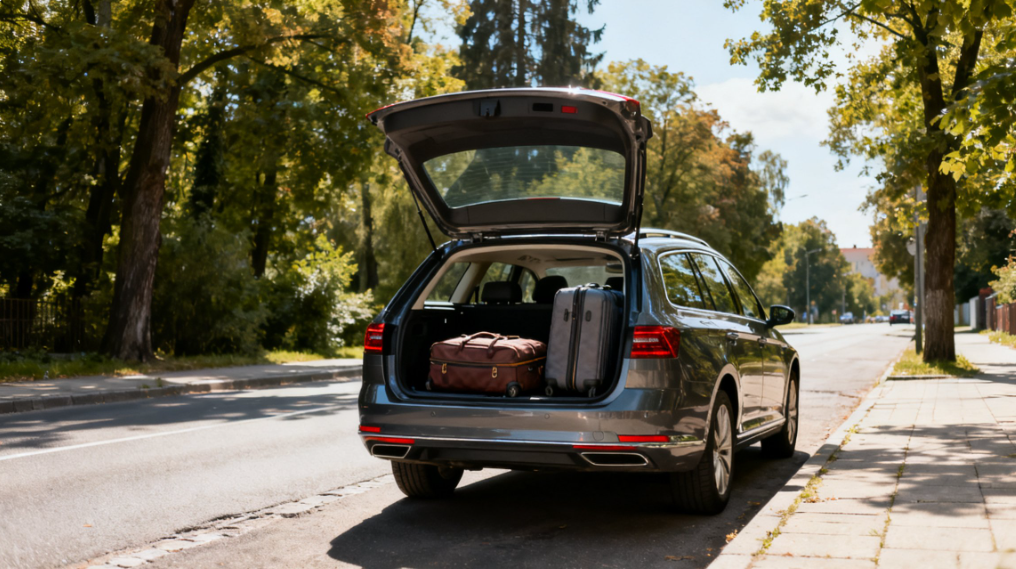
Drive through any Polish town and count the silver hatchbacks and the dark-grey estates parked nose to tail along the kerb. A great many of them will be a Golf or a Passat. These two are not aspirational cars in Poland, they are something closer to infrastructure, the default that an enormous share of the country quietly settles on. That is precisely why getting one wrong is so easy. When a badge is this trusted, the buyer relaxes, and the used Volkswagen Golf Poland shopper stops asking the questions that actually matter. Because the truth of these cars lives underneath the badge. The engine and the gearbox decide whether you have bought a 250,000 km autobahn cruiser with a healthy heart or a tidy-looking money pit, and the two can sit side by side on the same forecourt looking identical.
This guide is about telling those two cars apart. It covers why the Golf and Passat so completely dominate Poland's used pool, which generations to look at for each, the engine choice between TDI diesel and TSI petrol told honestly rather than as brochure copy, and the question that looms over every VW purchase, the DSG automatic gearbox. We will put real PLN bands on both cars, walk through the German-import angle without either fearing it or romanticising it, and finish on the verification step that closes the gap between how a VW looks and how it actually is. Treat the Golf and Passat not as two separate decisions but as one VW buying decision split by body style and use case, because mechanically that is exactly what they are.
Why the Golf and Passat are Poland's used-car bedrock
To understand why these two cars are everywhere, you have to understand how Poland's used market is fed. Poland is Central Europe's largest import gateway for ageing EU vehicles, and roughly 60% of those imports come from Germany. The Golf and Passat are the archetypes of that flow: German-designed, German-built, often German-owned for their first life, then driven across the border to begin a second one. The used pool that results is vast, deep and liquid, with thousands upon thousands of examples listed at any moment, on one pan-European aggregator alone there are getting on for 9,000 used Golfs available for Poland. Add to that the Polish buyer's stated preference for predictable models with established reputations, and Volkswagen sits comfortably inside the trusted trio, alongside BMW and Audi, that the market instinctively gravitates toward.
A pool this deep is genuinely good news, because it rewards the patient buyer. With so many cars to choose from, there is no reason to settle for a doubtful one, the right example is almost always out there if you are willing to look and to walk away. But depth cuts both ways. The same German origin that supplies so many well-maintained cars also supplies high-mileage ones whose odometers flatter them, and undisclosed history travels across borders more easily than buyers like to think. A German-market Passat can be a beautifully kept family estate or a hammered motorway workhorse, and from the photos you genuinely cannot tell which. That is the whole reason the engine, the gearbox and the documented history matter more on these cars than on almost anything else. The badge is trustworthy. The individual car has to earn the same trust separately.
Golf or Passat, and which generation
The first fork is body style, and it is really a question about your life rather than the car. The Golf is the hatchback most Poles actually buy, the all-rounder that does the commute, the school run and the city without fuss. The Passat is the bigger car for people who need to haul, and in Poland that almost always means the Variant, the estate, with its long load bay and family-swallowing boot. They share engines and gearboxes, so much of the mechanical advice that follows applies to both. Where they differ is in who they suit, so pick the body first and let the shared engineering guidance do the rest.
Golf Mk7 vs Mk8, the hatchback most Poles actually buy
For the Golf, the used-volume sweet spot is the Mk7, built from 2012 to 2019. It is the generation with the deepest supply, the most mature reputation and, by now, prices that put a genuinely good car within reach of an ordinary budget. It drives well, the cabin has aged gracefully, and the engines and gearboxes are thoroughly understood, which means the known issues are exactly that, known, and therefore checkable. The Mk8, from 2020 on, sits at the top of the used band: newer, more digital inside, and pricier, with an interior that divides opinion thanks to its touch-heavy controls. For most Polish buyers chasing value rather than the latest screen, a well-kept Mk7 is the rational heart of the search, and the Mk8 is the choice if budget allows and you specifically want the most recent car.
Passat B7 vs B8 Variant, the estate that hauls a family
On the Passat side, the generation to anchor on is the B8, launched in 2015, and specifically the Variant estate that defines the model's role in Poland. The B8 is the family workhorse: spacious, comfortable over distance, and available with the more durable engines and gearboxes covered below. The earlier B7, which ran into the mid-2010s, is the cheaper entry point and still a sound car, but it is older, often higher in mileage, and worth approaching with a touch more caution on history and wear. For a buyer who wants a used Volkswagen Passat Poland families actually rely on, the B8 Variant is the sensible centre of gravity, with the B7 making sense mainly when budget is tight and a thorough inspection backs the car up. As with the Golf, name the generation correctly when you shop, the marketplaces use B7 and B8 and Mk7 and Mk8 precisely, and mixing them up is the fastest way to misjudge a car's age and value.
What they cost in Poland right now, in PLN
Here are indicative price bands for both cars, in PLN, reflecting listings and aggregator sightings as of June 2026. Where a car was advertised in euros on a pan-European platform, it has been converted at roughly 4.25 PLN to the euro, the rate around early-to-mid June 2026. These are orientation bands, not fixed quotes, and the spread within each is wide because condition, mileage, engine and gearbox all move the number. Use them to spot the outliers: a car priced well under its band is asking you to find out why, and one priced well over needs to justify it with documented history and condition. The honest expensive example and the cheap risky one often sit within a few thousand zloty of each other, which is exactly why the checks later in this guide matter.
| Model and generation | Typical age | Indicative PLN band |
|---|---|---|
| Golf Mk7 hatchback | 2012 to 2019 | roughly 35,000 to 65,000 PLN |
| Golf Mk8 hatchback | 2020 onward | roughly 65,000 to 95,000 PLN |
| Golf estate, recent | around 2022 | up to roughly 63,000 PLN at higher mileage |
| Passat B7 Variant estate | to mid-2010s | roughly 25,000 to 45,000 PLN |
| Passat B8 Variant estate | 2015 onward | roughly 55,000 to 90,000 PLN |
| Passat B8 sedan, recent | around 2022 | up to roughly 91,000 PLN |
The pattern to take away is that the Golf and Passat give you a genuinely wide ladder. You can buy an honest, older example for the price of a city runabout, or a near-new one for serious money, and almost everything in between exists in volume. That breadth is the upside of Poland's deep VW pool. The catch is that price alone tells you very little about condition on cars that share so much hardware and history, so the band is where you start, not where you decide.
Diesel or petrol, TDI vs TSI, honestly
With body and budget settled, the engine is the decision that most shapes ownership, and on a VW it carries real nuance. Both the diesel TDI and the petrol TSI families have specific known risk areas that a careful buyer should understand, not because every example is faulty, far from it, but because knowing where the landmines are is what separates a confident purchase from a hopeful one. The aim here is to point you at the right engine for your driving and to flag the precise things to confirm, in plain language.
The TDI diesels, EA288 vs EA189, and the EGR/DPF reality
The diesel story turns on which generation of engine you are looking at. The older EA189 diesel carried the well-known troubles of its era, while the newer EA288 family that replaced it, the 1.6 and 2.0 TDI you will find in Mk7 Golfs and B8 Passats, is markedly more durable, with many examples running comfortably past 200,000 km on their original internals. That is genuinely reassuring for a high-mileage buyer. The real ownership risks on the good diesels cluster not in the bottom end but in the emissions components, principally the EGR valve and the diesel particulate filter, which can need attention especially on cars used mostly for short city trips that never let the filter clear properly. This is Golf TDI reliability in its honest form: the modern diesel is a strong, long-legged motorway engine, and the things to check are the emissions cluster, the timing belt against its service interval, and a history showing the car was driven in a way that suits a diesel.
The TSI petrols, which are fine, and the EA888 timing-chain caveat
The petrol side is mostly straightforward with one caveat worth knowing. The smaller TSI petrols vary but are broadly fine for a city-leaning buyer who wants a simpler car than a diesel. The caveat sits with the EA888 2.0 TSI, a strong engine that nonetheless has a documented history of timing-chain issues on certain examples, chain stretch and tensioner problems that drew owner complaints and legal action in some markets. This does not make every EA888 a problem, but it does make the chain's service history a specific thing to confirm on an affected petrol Golf or Passat before you commit. Treat it the way you would the diesel's emissions cluster: a known risk area to verify, not a reason for blanket fear.
Which engine for which buyer, in plain terms
The simplest way to choose is by how you drive. If you cover real motorway distance, a long commute, regular intercity runs, the modern TDI diesel is in its element, returning excellent economy and shrugging off the miles. If your driving is mostly urban and shorter, a petrol TSI suits you better, both because short trips are hard on a diesel's particulate filter and because the petrol is the simpler car to live with in town. The mistake to avoid is buying a diesel for a life of short city hops, which is exactly the use that stresses the emissions components and turns a durable engine into a maintenance headache. Match the engine to the journeys, confirm the known risk area for whichever you choose, and the VW will reward you.
The DSG gearbox question, the one that actually decides a good buy
If there is one check that decides a good VW buy more than any other, it is the gearbox, because so many Golfs and Passats are fitted with the DSG automatic, and not all DSGs are equal. The DSG is a dual-clutch automatic, and the crucial distinction for a used buyer is between two units. The DQ200, the dry-clutch version, typically fitted to lower-torque petrols, is the one to approach with care, especially on a car with no documented fluid or clutch service, as it has the more sensitive reputation. The DQ250, the wet-clutch version, common on diesels and higher-torque cars, is generally the more robust unit and inspires more confidence over high mileage. Neither is a reason to avoid a DSG car outright, plenty run faultlessly for years, but which unit a car has, and crucially whether its servicing has been done, is central to judging it.
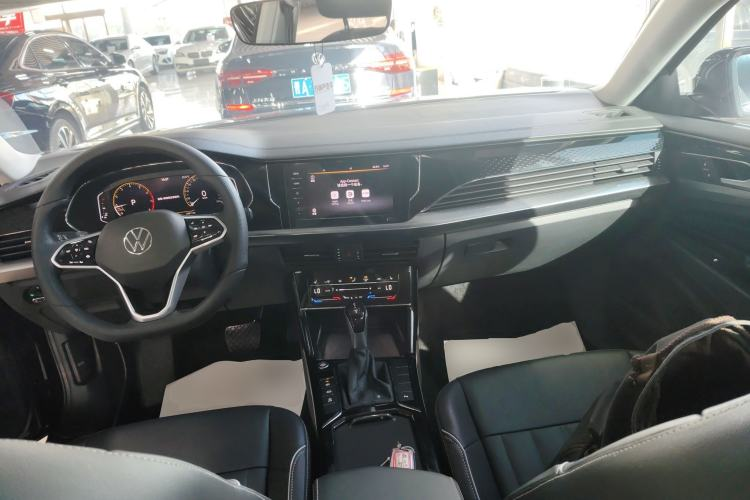
What does this mean in practice at a viewing? First, find out which DSG the car has, since it follows from the engine and torque. Then ask the question that matters most: has the gearbox fluid been changed on schedule? "No documented fluid change" on a DSG is a genuine warning sign, because these gearboxes depend on clean fluid and a neglected one can fail expensively. There is a related note for manual diesels, which use a dual-mass flywheel that wears and can be costly to replace, this affects manuals rather than DSG cars, so it is a separate thing to check if you are buying a manual. The reason this whole area is the decisive one is that a DSG fault is among the most expensive things that can go wrong on these cars, and it is invisible in a listing and easy to miss on a short test drive. It is exactly the kind of fault a proper mechanical inspection is built to surface before your money is on the table.
Buying a German-import Golf or Passat the smart way, and how Guazi helps
Everything in this guide points to a single conclusion: Poland imports the Golf and Passat more than almost any other cars, and on a German import the gap between how a VW looks and how it actually is, the DSG, the emissions cluster, the timing chain, the undisclosed history, is precisely the gap a standardized inspection closes. Guazi is one of China's largest used-car platforms, built on more than 30 million standardized inspections feeding digital condition reports, and that inspection-at-scale discipline is exactly what a high-mileage European car needs. Every car runs through an over 200-point inspection and a full condition report, the lens that turns a tidy-looking VW into a known quantity: which gearbox, whether it was serviced, the real state of the engine and the documented history rather than the hopeful version. To be precise about the role, Guazi is the supply-side specialist in inspection and condition, not your local Polish dealer, so handle the local purchase accordingly. What the inspection settles is the question the badge cannot, whether this Golf or Passat is the good one.
Key Takeaways
- The Golf and Passat are Poland's used-car bedrock, fed by a German-import pool where roughly 60% of cars come from Germany, so the badge is trusted but the individual car must earn that trust separately.
- Pick the body first: the Golf hatchback for commuting, the Passat Variant estate for families, then apply the same shared engine and gearbox checks to both.
- For generations, the Golf Mk7 and Passat B8 Variant are the value-and-sense anchors; expect roughly 35,000 to 95,000 PLN across Golfs and 25,000 to 90,000 PLN across Passats, June 2026, euro sightings near 4.25 PLN.
- On engines, the modern EA288 TDI is a durable motorway diesel with the EGR and DPF to watch, while the EA888 2.0 TSI petrol's timing-chain history is the thing to confirm.
- The DSG gearbox is the decisive check: the dry-clutch DQ200 is more sensitive than the wet-clutch DQ250, and "no documented fluid change" is a real warning sign on either.
- Because a DSG, emissions or history fault is invisible in a listing and expensive to fix, a verified over 200-point inspection and condition report is what makes a German-import VW a safe buy.
Sources & References
- theparking.eu, used Volkswagen Golf in Poland
- theparking.eu, used Volkswagen Passat in Poland
- szbk.pl, used Passat prices in Poland
- carchecker.pro, Golf Mk7 1.6 TDI EGR and DSG reliability
- CARFAX, 2025 Polish used car market
- Arval Trading, Polish used car market trends

About Us
Get Support
Follow Us


Copyright © 2015~2026 https://en.guazi.com/, Chongqing Guazi Enterprise Consulting Service Co., Ltd. All rights reserved.