
Guazi
GlobalEnglish


What a Good Used Honda Fit Actually Costs in Georgia, and the One Gearbox Check That Pays for Itself
Article OverviewA used Honda Fit buyer's guide for Georgia: which generation to buy, real USD and GEL prices, whether the hybrid import is worth it, the CVT truth, and how to check a car from the Japanese auctions.
Quick answers
- Which generation should I buy? For most buyers, the GK (2014 to 2020), the third-generation Fit, is the sweet spot of fresh auction supply and modern features. The older GE (2007 to 2014) is cheaper but older.
- What does a clean one cost? In Georgia, used Fits run roughly from the low thousands of USD for older high-mileage cars up to around 7,500 USD for clean, low-mileage GK-era examples. Prices are quoted in USD with GEL alongside and move weekly.
- Is the Fit the same as the Jazz? Yes. The Fit is sold as the Honda Jazz in some markets, so export and regional listings use both names for the same car.
- Is the CVT a problem? It is reliable when serviced, but it deserves a check. Insist on Honda-spec CVT fluid history and test for judder on a drive.
- Is the hybrid worth it? Only if the battery checks out and the price premium over a petrol of the same year is small. The hybrid is the economy champion but adds a battery question.
This guide covers the generations and the Jazz name, real prices by generation, the petrol-versus-hybrid decision, what actually goes wrong with the CVT included, and how to check a Japanese-auction import without getting burned.
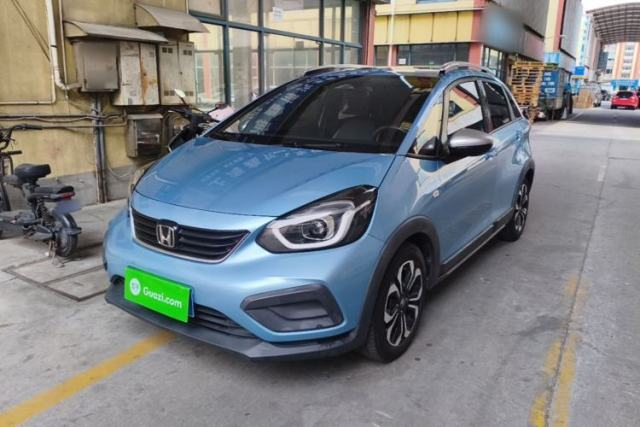
Almost nobody in Georgia regrets buying a Honda Fit. The way people get it wrong is more specific than that. They buy the wrong generation, they overpay for a tired hybrid import, or they skip the gearbox check on a car whose price spread is already thin, so a single hidden fault wipes out the saving. This guide is about landing the right Fit from the auction pipeline, not about whether to buy one, because for a calm, value-minded buyer the choice is mostly already made. A used Honda Fit Georgia search is a reassurance search, and the honest answers are narrow: which generation, what a clean one really costs in USD and GEL, whether the hybrid is worth it, and what the CVT does over high mileage. Guazi sits in this story as the inspection lens, because the same Fit generations that reach Georgia from Japan are cars Guazi inspects at scale in its home market.
Why the Fit keeps landing on Georgian shortlists
It helps to understand why this car is so common here before picking one. Georgia is one of the world's busiest used-car crossroads. The country re-exported a record number of vehicles in 2025, worth billions of dollars, feeding Azerbaijan, Armenia, and a fast-growing Central Asian pipeline into Kazakhstan, Kyrgyzstan, and beyond. Most of that stock arrives through Japanese and US auctions and changes hands at the large Rustavi Autopapa market near Tbilisi. In that world, Japanese cars are prized as the most durable option, and the Honda Fit is exactly the kind of small, efficient, auction-sourced car the market runs on.
The appeal is practical, not emotional. The Fit is cheap to buy, frugal on fuel, and far roomier inside than its small footprint suggests, thanks to a center-mounted fuel tank and Honda's clever folding Magic Seats. That space-for-the-size trick is why families and small traders keep choosing it. And because clean small Japanese cars are in constant demand for re-export, a good Fit holds its value and stays easy to sell on. The car earns its place on the shortlist by being sensible in every direction at once.
GE, GK, and the Jazz name that trips people up
The first real decision is which generation, and the naming can muddle it, so map it head-on. The same car is called the Honda Fit in some markets and the Honda Jazz in others. Export and regional listings use both names, so do not be thrown when you see "Jazz" on a Georgian or Japanese-export page. It is the same vehicle.
GE, the 2007 to 2014 cars
The GE is the second-generation Fit. It uses the 1.3 and 1.5 i-VTEC petrol engines, and from 2010 in Japan it introduced the first Fit Hybrid, a 1.3 system in the GP1 and GP4 cars. The GE is the cheaper way into a Fit and still a sound car, but it is the older choice, so condition and mileage matter more. There are also leftover GD cars from the first generation (roughly 2001 to 2007) still circulating very cheaply, which suit a tight budget but are genuinely old now.
GK and GP5, the 2014 to 2020 cars
The GK is the third-generation Fit and the bulk of fresh Japanese-auction imports today. It keeps the 1.3 and 1.5 petrol engines and adds the i-DCD Fit Hybrid in the GP5 and GP6 cars. This is the generation most buyers should target. It is modern enough to feel current, common enough that parts and examples are easy to find, and recent enough that a clean one has plenty of life left. Its trunk is around 470 liters, large for the class. If you want the simplest recommendation, look for a well-kept GK petrol first and treat the hybrid as a separate decision.
What a used Fit costs in Georgia right now, by generation
Price is the heart of this search, so here is the honest frame. Georgia quotes used cars day to day in USD, with GEL alongside, and listings move weekly, so treat every figure below as a band, convert to GEL at the current rate when you shop, and check the date. Across the market, used Fits run roughly from the low thousands of USD for older, high-mileage cars to around 7,500 USD for clean, low-mileage GK-era examples. The clustering matters more than any single number.
| Generation | Typical age | Rough USD band | What you are looking at |
|---|---|---|---|
| GD leftovers | 2001 to 2007 | Low thousands | Very cheap, genuinely old, budget only |
| GE | 2007 to 2014 | Mid thousands, higher-mileage lower | Older but sound, condition is everything |
| GK / GP5 | 2014 to 2020 | Around the mid-to-high 6,000s up to ~7,500 | Clean low-mileage cars, the value sweet spot |
The pattern worth noticing is that the price spread between a clean Fit and a tired one is small in absolute terms. That is the whole reason the inspection matters so much here. When the gap between a good car and a bad one is only a thousand dollars or two, a single hidden fault, a failing CVT or a weak hybrid battery, erases the entire saving and then some. Confirm any price against live local listings before you commit.
Petrol or hybrid, the decision that actually matters for a Georgian buyer
Once you have settled on a generation, the real fork is petrol or hybrid, because it changes both the running cost and the buying risk. This is where a used Honda Fit hybrid needs a clearer head than the petrol car.
The plain petrol 1.3 and 1.5
The straight petrol Fit is the simplest car to own and the easiest to re-export. The 1.3 and 1.5 i-VTEC engines are durable, cheap to service, and understood by every mechanic. There is no high-voltage battery to worry about and no extra complexity to inspect. For a buyer who wants the lowest-stress ownership and the easiest resale into the regional pipeline, the petrol Fit is the default, and there is no shame in stopping here.
The Fit Hybrid, the economy champion with a battery question
The Fit Hybrid is the fuel-economy champion. The early GE-era car used Honda's IMA system, and the GK-era car uses the more advanced i-DCD, which pairs a dual-clutch gearbox with the electric system. The catch is that the hybrid adds a battery whose health you cannot read from a photo. On a 2013 to 2016 import, the hybrid battery state-of-health is a real question, and a tired pack is expensive to replace. The hybrid is a genuinely good car when the battery is healthy. It is a trap when it is not.
Is the hybrid worth the premium
The practical test is simple math. Compare the hybrid against a petrol Fit of the same year and mileage. If the price premium is modest and the battery checks out on inspection, the fuel savings can justify it, especially for high-mileage drivers. If the premium is large or the battery health is unknown, the petrol car is the safer money. Ask for a battery state-of-health read-out, and budget for an eventual i-DCD pack replacement rather than assuming the battery will last forever.
Buy It Now
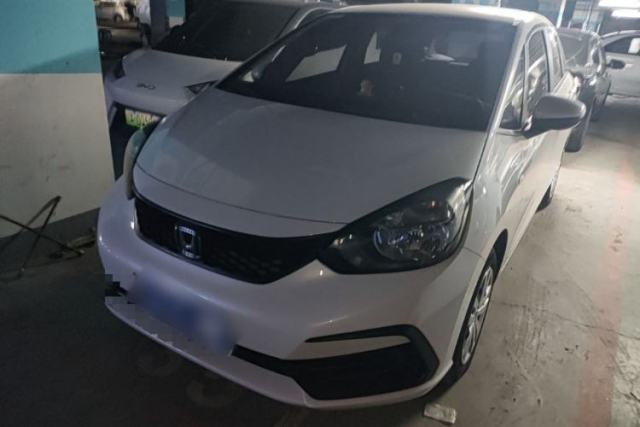
GradeSUsed Honda Fit 2023 1.5L CVT Trend Edition Certified DealerCertified Dealer
 Guazi InspectedGuazi Inspected
Certified DealerCertified DealerNear-new car
Near-new car
Guazi InspectedGuazi InspectedOriginal paint
Original paint
FOB Price:$12,466

How reliable is it, really, and what about that CVT
The Fit's reliability reputation is genuine, and that is precisely why it deserves honesty rather than a puff piece. The Fit is repeatedly ranked among the most reliable used small cars, and a well-maintained one will run for a very long time. The bodywork holds up, the engines are tough, and running costs are low. None of that is in doubt.
The honest caveat is the CVT automatic. Early GE-era CVTs could judder or shudder when the fluid additives wore down, an issue Honda largely addressed through running changes after 2008. The GK had a 2015 recall on certain CVTs for a high-internal-pressure shaft issue. None of this means the gearbox will fail, but it means the CVT is the single component whose service history matters most. The fix is not complicated: insist on evidence of Honda-spec CVT fluid changes, test for judder and hesitation on a real drive, and treat any Fit with no gearbox-service paperwork as a price-down. Beyond the gearbox, expect the usual small wear items on a high-mileage car, suspension bushings, the occasional electrical niggle, and tires and brakes due for replacement. A Fit that drives smoothly with a documented CVT history is a strong used car.
Buying a Fit from the Japanese auctions without getting burned
Because nearly every Fit here arrives through a Japanese auction, the diligence is specific to that pipeline, and it is where buyers most often slip. The good news is that Japanese auction cars come with an inspection sheet and a grade, which is real information if you read it. Ask for the auction grade and the sheet, and treat a car with no paperwork more cautiously than one with a clean, legible record.
The checks that matter most are the verifiable ones. Confirm the odometer reading against the auction sheet and service records, because mileage tampering is the classic trap. Check for accident and flood history, which the sheet and a physical inspection can reveal. And mind the steering side: Georgia officially requires left-hand drive, and a 2017 law tripled the excise on right-hand-drive cars, so a Japanese-market right-hand-drive Fit can carry a real tax and resale penalty. Confirm the current excise rules at import before you buy a right-hand-drive car. Put simply, a clean grade, a matching odometer, no accident history, and the right steering side are what separate a safe import from an expensive one.
Buying a used Fit the smart way, and how Guazi helps
Here is where the inspection angle earns its place. The very thing that makes a cheap car risky, the thin price spread between a good Fit and a worn one, is also what makes a verified condition report so valuable. On a car this affordable, one hidden fault erases the whole saving, so knowing the truth before you pay is worth more than a slightly lower sticker. The same Fit generations that reach Georgia are everyday inventory in Guazi's home market, where Guazi is one of China's largest used-car platforms. Every car it handles goes through a standardized multi-point inspection feeding a digital condition report, and the Fit Hybrid in particular sits inside Guazi's hybrid and new-energy inspection competence, backed by an industry-first 100-day battery-decay guarantee on its NEVs. That inspection lens is exactly what answers the CVT-history and hybrid-battery questions this car raises. To be clear, this is inspection expertise and a buying checklist, not a claim that Guazi exports or retails used Fits into Georgia.
See how inspected used cars are checked before they ship
Key takeaways
- Best generation: the GK (2014 to 2020) for most buyers, with the GE as the cheaper, older option and GD cars only for tight budgets.
- Price reality: roughly low-thousands to about 7,500 USD, quoted in USD with GEL alongside, with a thin spread between clean and tired cars.
- Petrol or hybrid: petrol is simplest and easiest to re-export, the hybrid is the economy champion but only if the battery checks out and the premium is small.
- The key check: Honda-spec CVT fluid history plus a judder test on a real drive is the single most valuable piece of diligence.
- Auction diligence: read the grade and sheet, verify the odometer, check accident history, and mind the right-hand-drive excise trap.
Summary
The used Honda Fit is Georgia's safe small-car buy, and the goal is simply to land a clean one rather than a tired one. Get the generation right, with the GK as the sensible default, read the price as a band in USD with GEL alongside, and decide petrol versus hybrid on honest math rather than the fuel-economy headline. Then do the two checks that actually protect your money: a documented CVT service history with a judder test, and the auction-grade, odometer, and steering-side diligence that a Japanese import demands. On a car where the gap between a good one and a bad one is small, a verified condition report is the cheapest insurance you can buy.
Ready to source an inspected used car from China? Browse Guazi's export-ready inventory




About Us
Follow US


Copyright © 2015~2026 https://en.guazi.com/, Chongqing Guazi Enterprise Consulting Service Co., Ltd. All rights reserved.