


Guazi
GlobalEnglish


Makes
Buy It NowAuctionsUp to 160 psPort StockAll VehiclesPopular Makes


Shop By Type


Popular Models


Shop By Budget

Shipping a Car from China to Algeria 2026
Article OverviewThe real China to Algeria sea route for a used car in 2026: ports, RoRo versus container, transit time, freight cost ranges, the documents, and how freight feeds your tax.
Read this first. Freight rates and schedules move with the market. The transit times, the RoRo and container cost ranges, and the port pairings below are 2026 reference figures compiled in June 2026, and ocean freight is the most volatile part of the whole import, swinging with carrier, origin port, season and fuel. Every number here is a planning range, not a booked rate, and you should confirm the live quote and schedule at the moment you book. Guazi runs the logistics leg as a service, but exact rates and sailing dates are set by carriers and market conditions, not by this page. For the import rules and the tax math that sit on either side of the shipping, see the companion guides linked throughout.
You have chosen the car and checked it clears the rules. What is left between you and an Algerian number plate is roughly six weeks of open water and one decision you have probably not made yet, whether the car crosses on the open deck of a roll-on roll-off ship or sealed inside a steel container. That stretch of sea is where a lot of first-time importers go quiet, because it is the part they cannot see and the part the listing never covered. So this guide walks the real route end to end, the way the freight desk sees it, the Chinese port the car leaves from, the Algerian port it lands at, the honest RoRo vs container Algeria trade-off, how many weeks it genuinely takes, and what the ocean leg costs. Shipping car from China to Algeria is the one stage of the whole journey that is genuinely Guazi's home turf, a leg the platform runs itself rather than explains from the outside, which is why this is the piece where the practical detail runs deepest.

A word on the numbers before we start, because freight is honest only when it is hedged. Rates and sailing schedules shift constantly with the market, so every figure here is a 2026 reference range to plan around, not a rate you can hold the carrier to. Ports congest, carriers reshuffle their loops, and a quote good this month can read differently the next. Everything below is the current shape of the route, with the ranges kept deliberately wide, and one important link the forwarders rarely draw, the freight you pay is not just a cost of moving the car, it becomes part of the value your import tax is calculated on. Read it as a map of the crossing, then confirm the live quote when you book.
The route: ports at both ends
Shipping a car is really a question of two ports and the water between them, so it helps to fix the geography first. On the China side the car leaves from one of a handful of major export ports, and on the Algerian side it lands at one of several Mediterranean gateways, each with its own character and congestion profile. Getting the pairing right is not a formality, because the departure port shapes the freight options and the arrival port shapes the clearance reality you will face when the ship docks.
Leaving China: Shanghai, Ningbo, Shenzhen, Nansha
Most cars bound for Algeria sail from the big eastern and southern Chinese ports, principally Shanghai and Ningbo-Zhoushan on the east coast, and Shenzhen and Guangzhou's Nansha terminal in the south. For cars specifically, Shanghai and Nansha are the names that come up most often for RoRo sailings, because the dedicated car-carrier services call there with the frequency a vehicle needs. Which port your car leaves from usually follows where the car is sourced and which service has space, and it matters mainly because it sets the available sailing pattern, a port with regular car-carrier calls gives you more departure dates and steadier transit than one you have to route around.
Arriving in Algeria: Algiers the main gateway, Oran, Bejaia and others
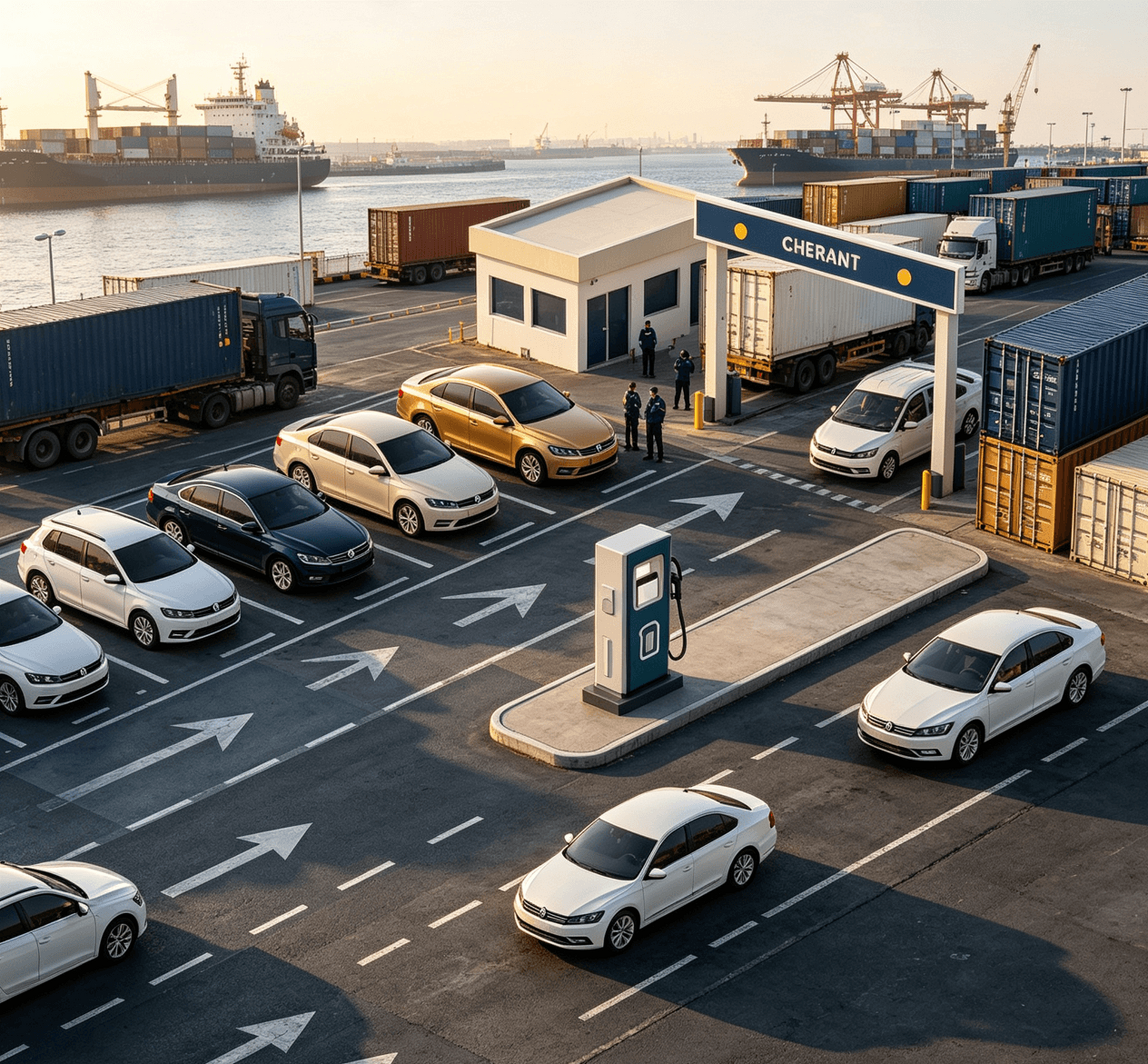
On the Algerian side the dominant gateway is the Port of Algiers, which handles the lion's share of the country's container traffic and a large slice of its overall imports. It is the default for most car imports simply because the services call there most reliably. But it is not the only door, and it is often the most congested one. Oran on the west coast is a major alternative, Bejaia is a busy commercial port, and Annaba and Skikda serve the east. The trade-off is straightforward, Algiers offers the most frequent sailings and the most familiar clearance routine, while the secondary ports can sometimes move a car through with less queueing, at the cost of fewer direct services. The right arrival port is usually the one closest to where you will register and drive the car, balanced against how busy it is when your ship is due. Here is how the main pairings and rough transits line up.
| China departure port | Common Algeria arrival port | Rough transit feel |
|---|---|---|
| Shanghai | Algiers | Around 30 to 45 days, schedule dependent |
| Ningbo-Zhoushan | Algiers or Oran | Around 30 to 45 days |
| Shenzhen | Algiers | Around 30 to 45 days |
| Nansha (Guangzhou) | Algiers or Oran | Around 30 to 45 days |
RoRo vs container: the real decision
Here is the choice that defines the crossing, and it is genuinely a decision rather than a default, because the two methods suit different cars and different owners. The honest framing is cheaper-and-simpler against protected-and-flexible, and once you see it that way the answer for your situation usually becomes obvious.
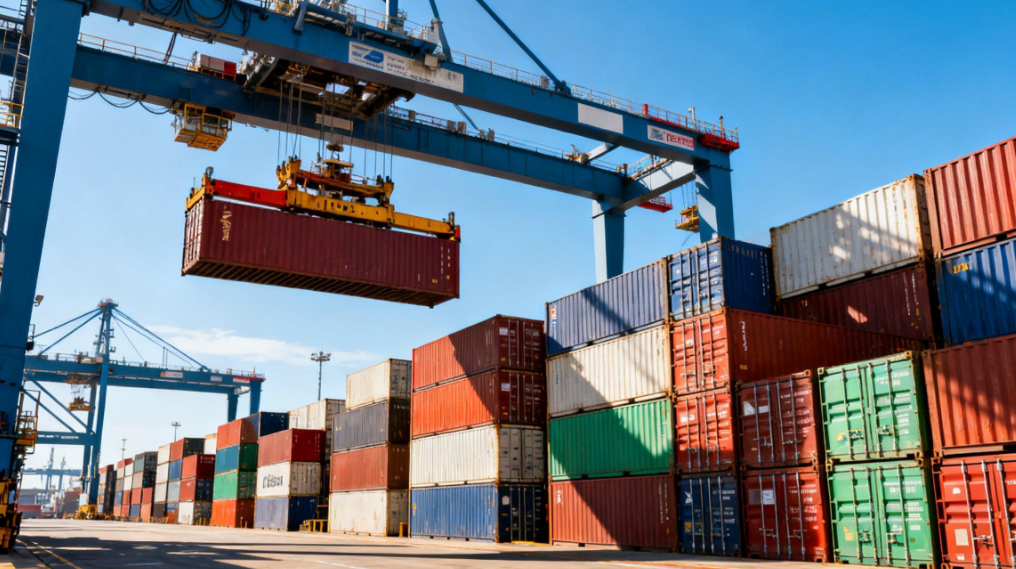
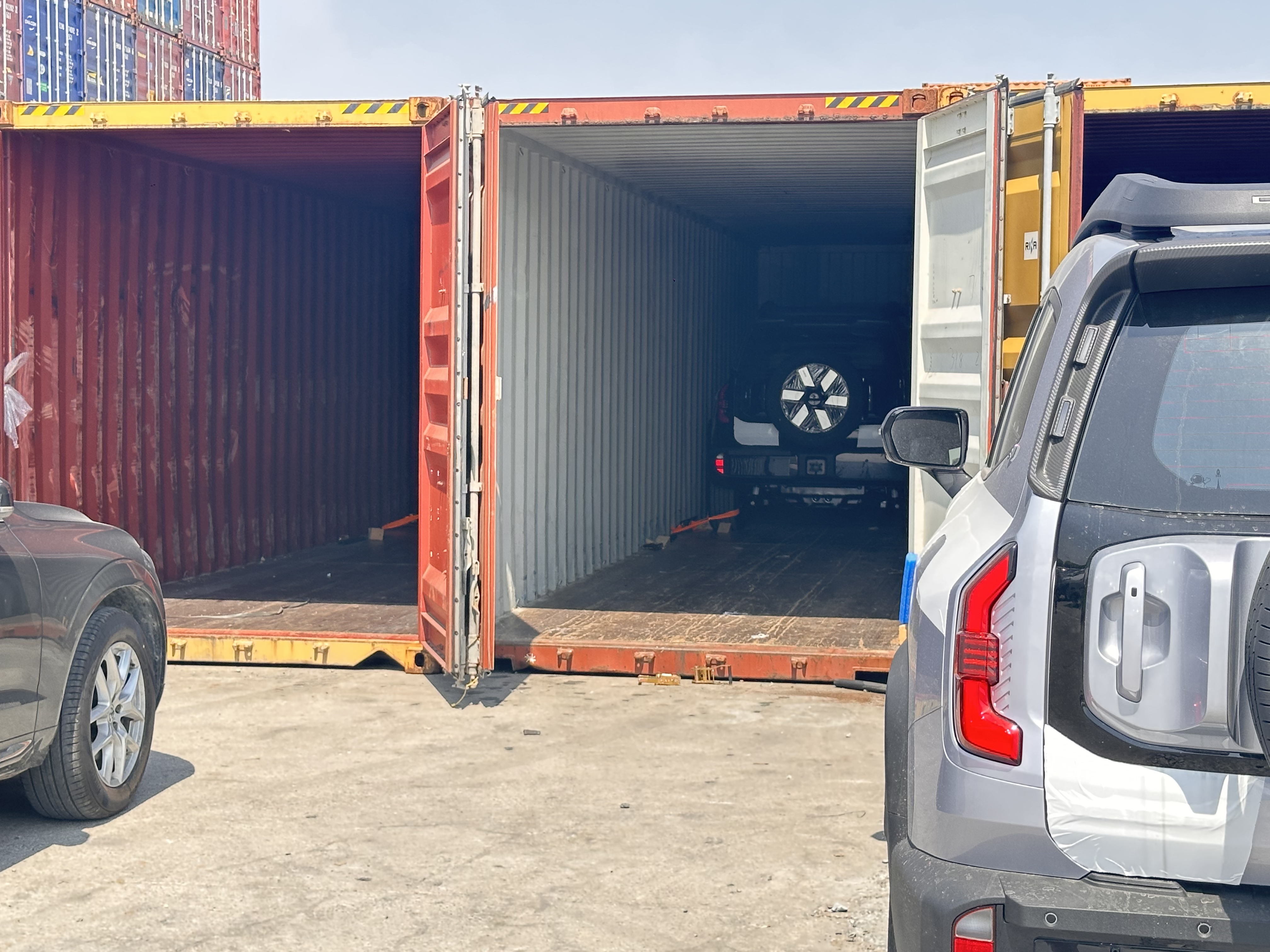
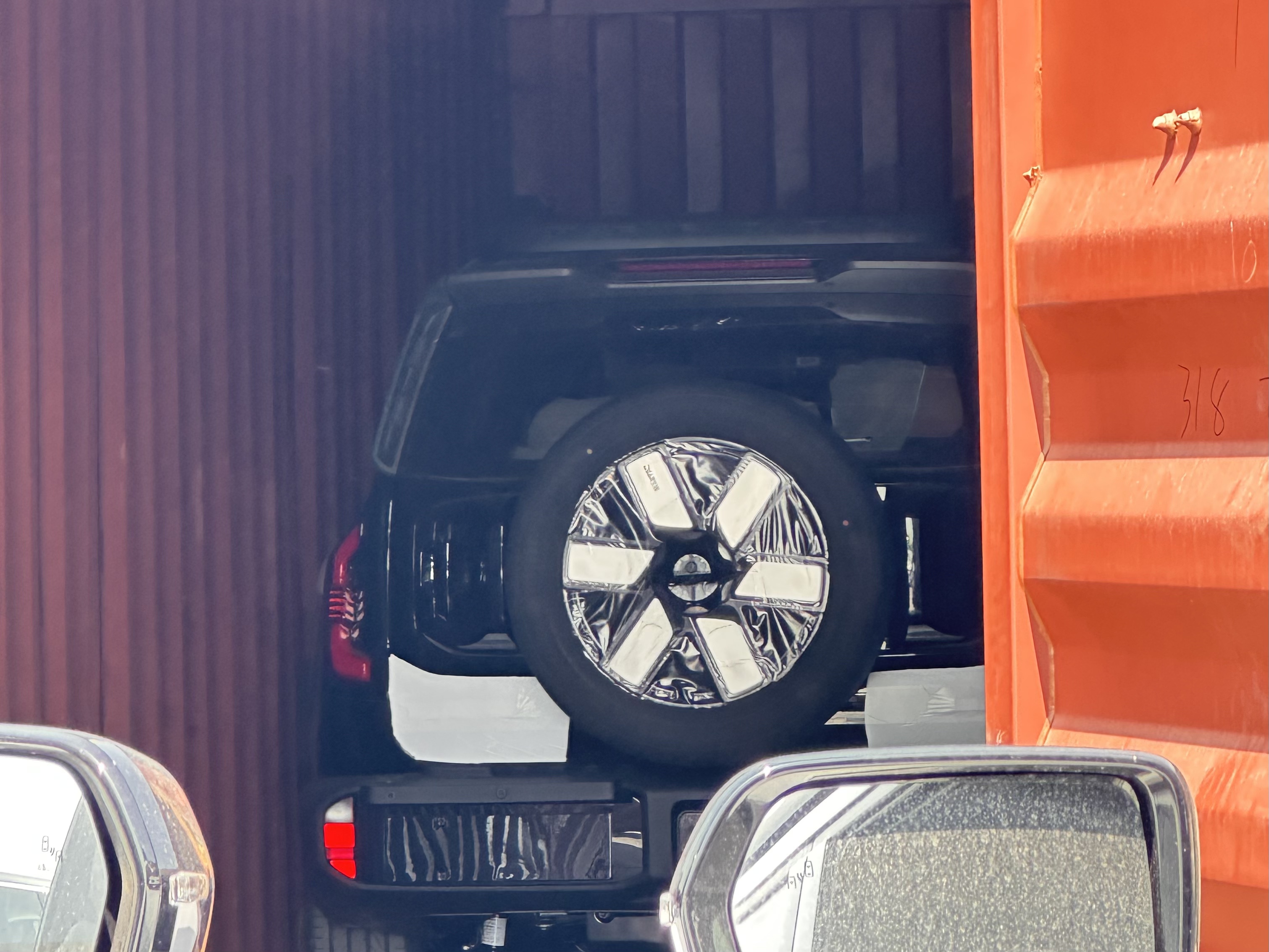
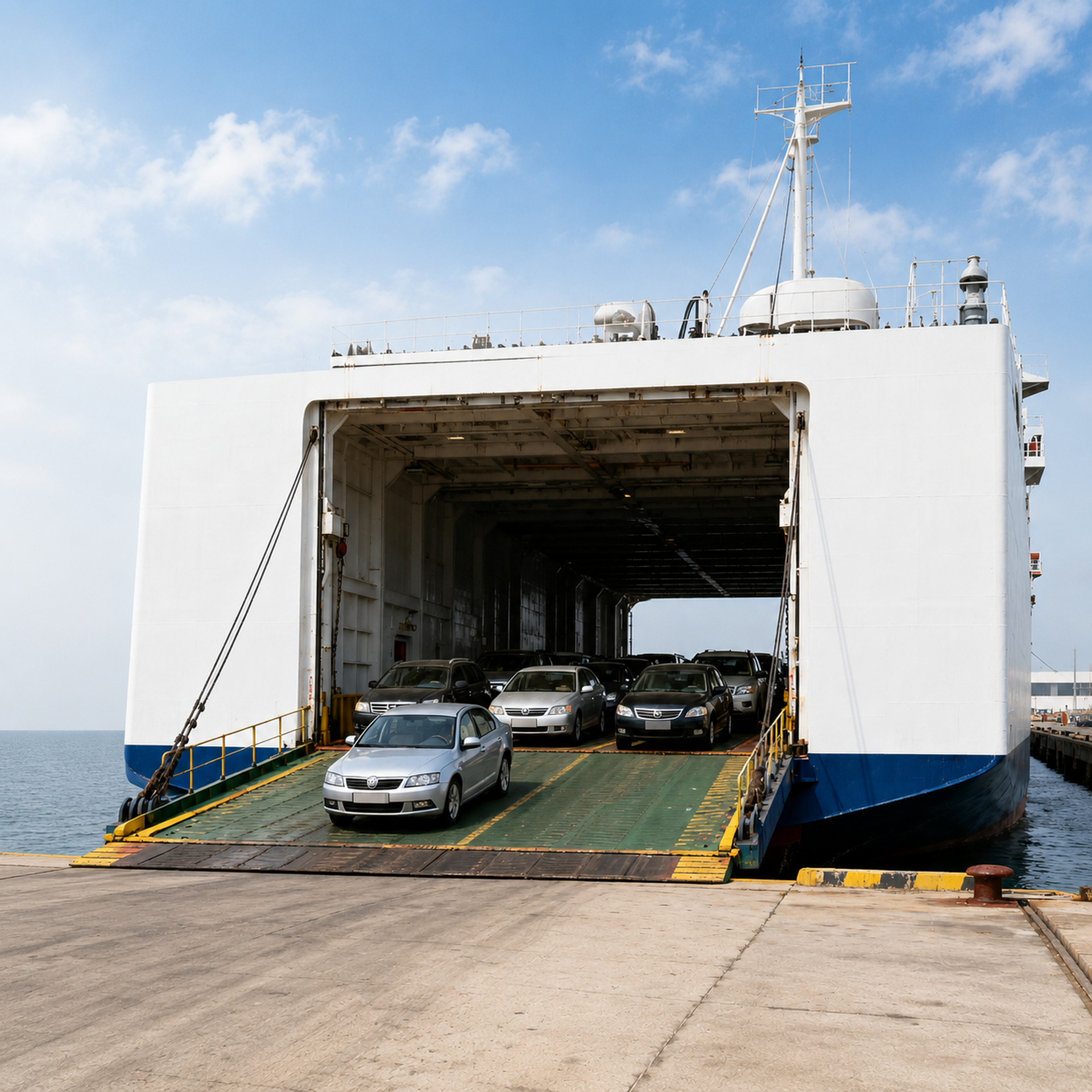
Roll-on roll-off, RoRo, is exactly what it sounds like, the car is driven up a ramp onto a dedicated vehicle-carrier and parked on a deck alongside hundreds of others, then driven off at the far end. It is generally the cheaper and often the slightly faster route for a drivable car, with less handling because the vehicle is never lifted or packed. The catch is exposure, the car rides on an open vehicle deck, you cannot ship personal items inside it, and it must be in running, drivable condition to board. A container, by contrast, seals the car inside a steel box where it is fully enclosed and protected from the elements and the handling of an open deck, and because the box is yours, you can often pack spare parts or personal effects around the secured vehicle. The cost of that protection is money and a little time, a container is typically pricier and can run slightly slower, and it makes most sense for a higher-value car, a non-running vehicle, or an owner who wants the extra security and the room for parts. The rule of thumb writes itself, RoRo for a standard, drivable, sensibly-priced car where cost and simplicity win, container for a valuable or special car, or when you want it boxed and protected. Here is the comparison in one view.
| Factor | RoRo | Container |
|---|---|---|
| Cost | Lower | Higher |
| Speed | Often slightly faster | Sometimes slightly slower |
| Protection | Open vehicle deck, exposed | Fully enclosed and protected |
| Personal items inside | Not allowed | Often allowed, packed around the car |
| Car condition needed | Must be drivable | Drivable or non-running |
| Best for | Standard, drivable, value-conscious imports | High-value, special or non-running cars, or shipping parts too |
How long it really takes
Set the expectation honestly and you will save yourself a month of anxious refreshing. The China to Algeria sea crossing runs roughly 30 to 45 days port-to-port, which lines up with Guazi's own published port-to-port figure, and recent route data clusters around the 35 to 44 day mark for standard sea freight, with consolidated LCL shipments running a touch longer at around 36 to 48 days. Treat any single quoted figure as a midpoint rather than a promise, because the real transit swings with the sailing schedule and with transshipment, since not every service runs direct and a transfer at a hub adds days. One outlier table showed a Shanghai to Algiers run at 56 days, which is best read as a schedule-dependent worst case rather than the norm, the kind of timing you get when the loop is indirect or a connection is missed.
Two things stretch the clock at the Algerian end, and both are worth planning for. The first is port congestion, because Algiers handles the most volume and can back up, so a ship can arrive on time and still wait for a berth and a clearance slot. The second is more consequential than it looks, and it ties back to the rules, the under-three-years age limit is judged at the moment the customs declaration is filed in Algeria, not when you bought or shipped the car, so a long transit quietly eats into your age margin. Buy a car sitting right on the three-year line and six weeks of water plus a clearance queue can push it over before the paperwork is stamped. The safe move is to ship with a buffer, source a car comfortably under the limit rather than on the edge, and the full age-and-eligibility picture is in the companion Algeria used car import rules 2026 guide. The water is the part of the journey you cannot hurry, so the answer is to give it room.
What it costs to ship
Now the freight itself, and the China to Algeria car shipping cost that anchors the budget, with the standing reminder that these are the most volatile numbers in the whole import and move with carrier, origin port, season and fuel. For a single drivable car, RoRo sea freight commonly runs in the region of 1,200 to 2,000 USD as a base, with car-specific guidance often landing around 1,500 to 2,000. Containerising the same car costs more for the protection, with a 20ft full-container load commonly cited around 2,500 to 3,500 USD, while broader 40ft container ranges have been seen anywhere from roughly 2,700 to 6,050 USD in early-2026 market data depending on origin, carrier and season. Keep those ranges wide in your head, because a quote that looks firm today reflects this week's space and fuel, not next quarter's. Here are the method costs at a glance.
| Shipping method | Rough 2026 freight range (one car) | Notes |
|---|---|---|
| RoRo (one car) | Around 1,200 to 2,000 USD | Cheaper, drivable cars, open deck |
| Container, 20ft FCL | Around 2,500 to 3,500 USD | Enclosed, room for parts or effects |
| Container, 40ft | Roughly 2,700 to 6,050 USD seen | Wide swing by origin, carrier, season |
There is a consequence to the freight number that the forwarder pages almost never mention, and it is the reason this section links straight into the tax guide. Your shipping cost is not just a cost of moving the car, it is part of the CIF value, the Cost plus Insurance plus Freight figure that Algerian Customs uses as the base for duty and VAT. In plain terms, the freight you pay is taxed, so a higher shipping bill also lifts your import-tax base, and the two numbers move together rather than separately. That is exactly why the choice between RoRo and a container, and the rate you secure, ripples beyond the shipping line into the final landed cost. We build the full tax math on top of this freight in the companion cost to import a used car to Algeria guide, and it is worth reading the two together, because the cheapest crossing and the lowest tax are part of the same calculation.
The documents that move with the car
A car cannot clear an Algerian port on its own, it clears on its paperwork, and the handoff between the shipping line and customs is where a missing document turns six weeks of patience into a vehicle stuck on the quay. The shipping side hinges on the original Bill of Lading, the title document that proves the consignment is yours and is what you present to take delivery of the car at the destination port. Around it sits the customs file, the commercial invoice that establishes value and ownership, the Certificate of Conformity (COC) that confirms the car meets Algeria's technical and safety standards, and the original registration showing the vehicle's status in its country of origin. Have these moving with the car from the start, not chased after arrival, because the clearance clock and the age clock are both running while the car waits.
The full rulebook around these documents, the conformity requirement, the foreign-currency payment channel, and the rest of the eligibility file, lives in the Algeria used car import rules 2026 guide, and this is the only point where the two overlap, so we keep the detail there. For shipping purposes the point is simpler, the Bill of Lading and the conformity paperwork are what let the car move from ship to street. Here is the core set that travels with the vehicle.
| Document | Purpose |
|---|---|
| Original Bill of Lading | The shipping title, presented to take delivery of the car at the destination port. |
| Commercial invoice | Establishes value and ownership for the customs declaration. |
| Certificate of Conformity (COC) | Confirms the car meets Algerian technical, safety and emissions standards. |
| Original registration / title | Proves the vehicle's status in its country of origin. |
Letting one platform handle the whole leg, with Guazi
Assembling a freight forwarder, a clearing agent and a carrier yourself is the version of importing that goes wrong, because the gaps between three parties are exactly where a car sits idle and a deadline slips. This is the stage where Guazi stops being an explainer and becomes an operator, because the sea leg is the part of the journey the platform is genuinely built to run. As one of China's largest used-car platforms, Guazi handles the export end to end, with port-to-port delivery in the region of 30 to 45 days, more than 4,000 global shipping routes, and a choice of Container in 20ft or 40ft or RoRo to suit the car (Guazi about). The logistics service covers export clearance and international freight forwarding as one accountable chain rather than a relay of middlemen, so the Bill of Lading, the booking and the clearance handoff come from a single source.
The car that goes on the ship is the same standard as the service around it, left-hand drive for Algeria, carrying an over 200-point inspection and a full condition report, so what arrives at the Algerian port is a vehicle whose condition is verified data and whose paperwork is in order for the clearance the documents section described. We want to be honest about the boundary, exact rates and sailing dates are confirmed at booking and move with the market, and the local clearance on the Algerian side is completed with your broker, not promised by us. What Guazi does well is the crossing itself, an inspected, documented, correctly-shipped car delivered to an Algerian port on a route the platform runs every day. Ship an inspected used car from China.
Key Takeaways
- Shipping car from China to Algeria runs roughly 30 to 45 days port-to-port, usually from Shanghai, Ningbo, Shenzhen or Nansha into Algiers, with Oran, Bejaia, Annaba and Skikda as alternatives.
- The core choice is RoRo vs container Algeria, RoRo cheaper, faster and exposed for a drivable car, container pricier, protected and able to carry parts, so pick by value and protection needs.
- Transit swings with schedule, transshipment and port congestion at Algiers, and because the under-three-years age test is judged at customs filing, ship with a buffer so the water does not push the car over the age line.
- For China to Algeria car shipping cost, plan around RoRo near 1,200 to 2,000 USD and a 20ft container near 2,500 to 3,500 USD, with 40ft ranges wider, all volatile and confirmed at booking.
- Freight is part of the CIF value, so the shipping number also lifts your import-tax base, which means the cheapest crossing and the lowest tax are one calculation.
- The car clears on its paperwork, the original Bill of Lading, commercial invoice, Certificate of Conformity and registration, so have them travelling with the vehicle from the start.
One more time, because it matters. Freight rates and sailing schedules are the most volatile numbers in the whole import and change constantly with the market, so every figure here is a 2026 planning range, not a booked rate or a fixed arrival date. Confirm the live quote and schedule at the moment you book. Guazi runs the shipping leg as a service, but carriers and market conditions set the rate and the timing, not this page.
Sources & References
- DocShipper, China to Algeria freight shipping
- Efanda, how to import and ship cars from China to Algeria
- Dantful, car shipping cost from China to Algeria
- Sino-Shipping, freight from China to Algeria
- Guazi, about and logistics facts
Planning the crossing for a specific car?
We can source an inspected, left-hand-drive used car from China and ship it port-to-port by RoRo or container with its condition report and conformity paperwork, then leave the local clearance to you and your broker.




About Us
Get Support
Follow Us


Copyright © 2015~2026 https://en.guazi.com/, Chongqing Guazi Enterprise Consulting Service Co., Ltd. All rights reserved.