
Guazi
GlobalEnglish


Why the Fiat Doblò Is Algeria's Default Workhorse, and How to Buy a Good Used One
Article OverviewA practical 2026 guide to the used Fiat Doblo in Algeria: body style, engine, real DZD bands, what to check, and the diesel-ban catch for importers.
Read this first. Prices are soft, and Customs is the authority. This is a buyer's guide, not a price list or a customs filing. The DZD figures below are reference bands gathered in June 2026 from Algerian classifieds, and they move with the year, the mileage, and the condition of the individual van, so treat them as a feel for the market rather than a quote. Import rules in Algeria are set yearly by the Loi de Finances and can shift, so anything you might act on should be confirmed with the Algerian Customs (Douanes Algériennes) or a licensed broker before you spend a dinar. Guazi is the China-side supplier of inspected, left-hand-drive used cars and their export paperwork, not your clearing agent or registration office in Algeria.
Park yourself outside any market in Algiers for ten minutes and you will lose count of them. A Doblò squeezing into a half-space to drop off crates of fruit, another with its sliding door wide open while a tradesman pulls out a ladder, a glazed Panorama with a family of six climbing out for the weekend shop. The van is not a status object here and it never pretends to be. It is a tool that earns its keep, day after day, and that is exactly why a used Fiat Doblo Algeria search is almost never about whether the thing is any good. You already know it works. The real question is which one, for what, at what price, and how not to inherit somebody else's worn-out gearbox in the process.
That is the job this guide takes on, and there is a twist most listings will not tell you about. Buying a used Doblò well comes down to three things: matching the body style to the work you actually do, knowing what a hard-driven van hides under its skin, and, if you are importing one, facing the awkward fact that the famous diesel cannot legally come into the country anymore. Get those right and you have one of the most sensible buys on Algerian roads. Get them wrong and the saving you thought you were making vanishes the first time the van limps onto a flatbed. Guazi looks at the used market through an inspection lens across the countries it works in, and that lens is what shapes the checklist here.
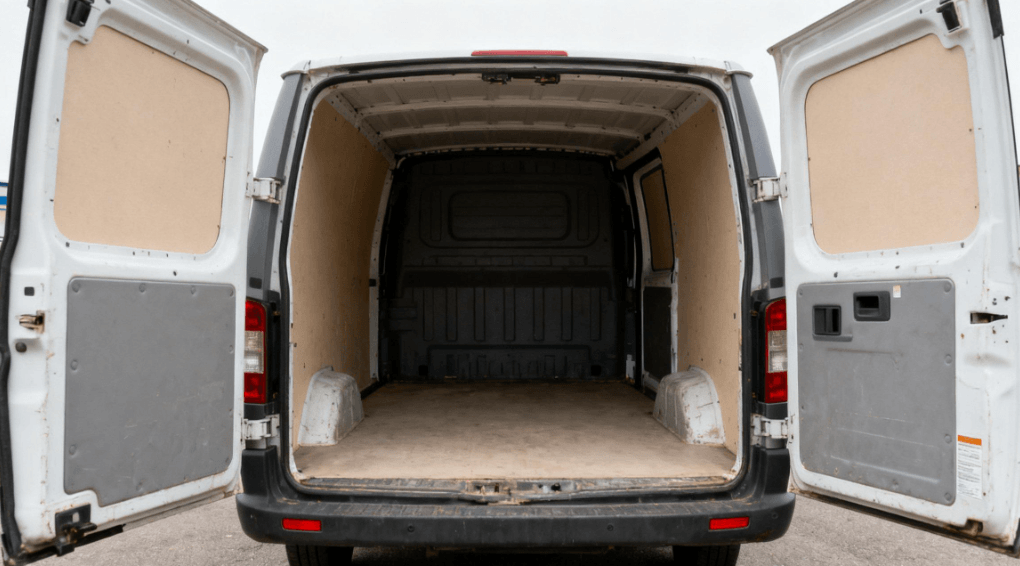
So here is the route we will take. First, why the Doblò dominates the small-van world in Algeria and what the local Oran-built new car means for the used pool. Then the decision that actually matters, Cargo against Combi against Maxi against Panorama, by the job you need doing. After that the engine question and the diesel-ban trap that reroutes any importer toward petrol. Then an honest account of what breaks on a high-mileage van and how to check for it, the DZD bands a clean used one trades in, the import gate for 2026, and finally where an inspected van fits in. Plenty of ground, all of it practical.
Why the Doblò runs Algeria's small-van world
The affinity is not an accident, and it is not nostalgia either. The Doblò has become the reference small van in Algeria the same way certain tools become the default in a trade: it does enough things well enough, cheaply enough, that buying anything else starts to feel like an argument you have to justify. Reporting puts the Doblò as the best-selling model in the country and the leader of its commercial segment, with one figure circulating of around a quarter of segment volume, and Fiat as the top-selling brand nationally. Those are trade and press numbers rather than an audited tally, so read the exact share as reported rather than gospel, but the direction is not in any doubt to anyone who has stood at an Algerian roundabout.
Part of what keeps the nameplate so deeply rooted is that the new Doblò is now built on home soil. Stellantis assembles it in SKD form at the Tafraoui plant near Oran, with a second line launched in the middle of 2024, in both the glazed Panorama for families and the Cargo panel van for work. It is worth being precise about that, because it is easy to blur: the Oran-assembled car is the new Doblò, the current third-generation model. This guide is about the used market, which today is overwhelmingly the previous generation. The two things are connected, though, and that is the point. A locally-built new car feeds a steady stream of trade-ins, fleet replacements, and private sales into the used pool, and it plants a visible price anchor at the top of the range. A self-renewing supply with a known ceiling is precisely the backdrop that makes a used buyer's guide useful rather than guesswork.
There is one more reason the Doblò suits this market, and it is mechanical sympathy. Parts are everywhere, every second mechanic has fixed one, and the design is honest and boxy with no clever fragility to it. For a vehicle people depend on to make money, a deep bench of cheap parts and familiar repairs is worth as much as outright reliability. It is the difference between a fault that costs you an afternoon and one that costs you a week off the road.
Cargo, Combi, Maxi or Panorama, pick the body for the job
Here is where most buyers go wrong, and it has nothing to do with engines or year. The Doblò is sold in several body styles that look similar from across a car park but serve genuinely different lives, and picking the wrong one is the most expensive mistake you can make short of buying a broken van. A family that buys a windowless Cargo because it was cheap ends up with no rear seats and a tax-and-comfort headache. A courier who buys a seven-seat Panorama for deliveries is hauling air and seats they will never unfold. The body style is the decision. Engine and condition come after.
The Cargo and Maxi panel vans for work and load
If the van's job is to carry things and the back is where the value lives, you are looking at the Cargo or the Maxi. The Cargo is the standard panel van, two seats up front, a flat sealed load bay behind, the workhorse in its purest form. The Maxi is the long-wheelbase version of the same idea, with a longer body and more cubic space for operators who routinely run out of length before they run out of weight. Both typically give you a near-flat floor, a wide tailgate or twin rear doors, and often a side sliding door that turns a tight kerbside drop into a quick one. This is the classic Fiat Doblo van, and in Algeria it is doing real work: produce runs, parts delivery, small-trade tools, light haulage between towns.
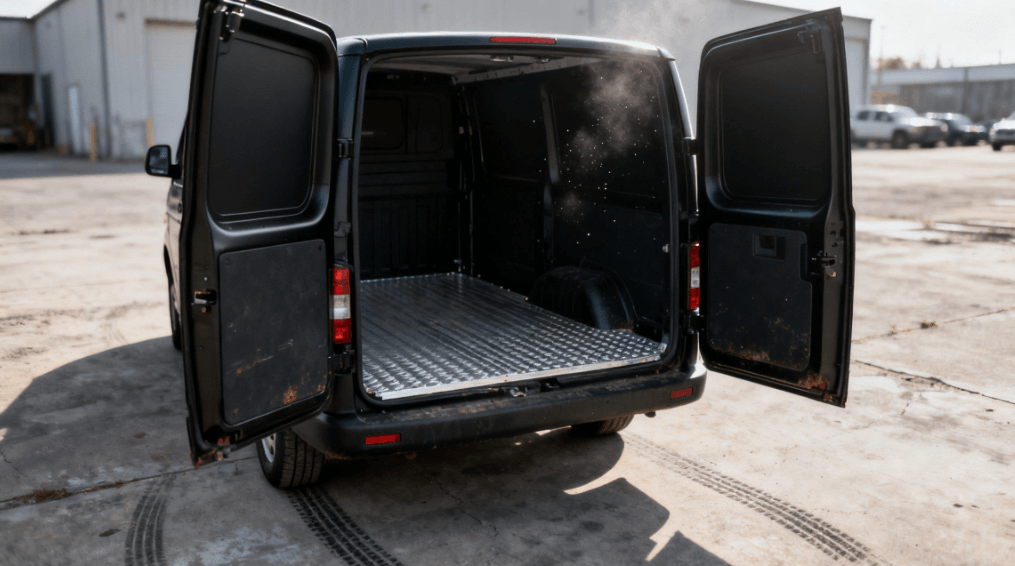
When you choose between them, be honest about your actual loads rather than your biggest-ever load. The standard Cargo swallows far more than its footprint suggests and is easier to park and thread through old-town streets, which for most urban traders is the right answer. Step up to the Maxi only if length is a recurring constraint, because the extra metal costs you a little manoeuvrability and a little fuel for space you may not fill weekly. Whichever you pick, the load area is also where a hard life shows, so it earns a close look later when we get to what breaks.
The Combi and Panorama for families and crews (5 and 7 seats)
When people need to ride, not just cargo, the Doblò answers with the Combi and the Panorama. The Combi is the crew-and-cargo compromise: windows down the sides and a second row of seats, so you can carry a small team and their kit in the morning and still fold things away for a load in the afternoon. It is the natural pick for a trade that moves both people and tools, a small workshop, a delivery crew, a family business that blurs the line.
The Panorama is the proper people-carrier of the range, fully glazed and trimmed for passengers, available in five and seven-seat layouts. This is the Doblo Panorama Algeria buyers know best, and it is the same shape Stellantis now builds new in Oran for exactly this audience: families who want van space and van doors without driving something that feels like a commercial vehicle inside. As a used buy it is compelling, big sliding doors that are a gift with children, a tall airy cabin, and a flat boot that eats pushchairs and shopping. If your weekends involve people more than pallets, the Panorama is the body to shortlist, and a used one usually undercuts anything else offering the same seats and space. Just confirm whether you genuinely need the seven-seat layout, because the third row eats the boot when it is up, and many buyers are better served by the roomier five-seat version.
The engine question, and the diesel-ban trap
Now the part that quietly decides everything for an importer, and that local buyers and import buyers should read completely differently. The Doblò's mechanical reputation was built on one family of engines, and through an accident of policy those are the exact engines an importer is no longer allowed to bring into Algeria. If you are buying a van already in the country this is mostly background. If you are importing one, it reroutes your entire search from the first click, so it belongs up front, not in the small print.
Why the MultiJet diesel built the reputation, and why you cannot import one
The engines that made the second-generation Doblò trusted are the MultiJet turbodiesels, chiefly the 1.3 and the 1.6, with the 1.6 making up to roughly 133 PS in stronger tunes, alongside a 1.4 petrol that was also offered. The diesel is the one operators reach for: torquey when loaded, frugal on a long run, and durable in a way that suits a van that lives on the road. Ask any Algerian Doblò owner what to buy and the reflex answer is the MultiJet. On a van staying put, that instinct is sound.
The catch lands squarely on importers. Algeria now bans diesel passenger and light vehicles for individual import, leaving petrol, petrol-hybrid, and fully electric as the routes open to a private buyer. Read those two facts side by side and the trap is obvious: the engine that gave the Doblò its name abroad is precisely the one you cannot personally bring home. This is the single most useful thing an import buyer can know about this van, because it quietly removes the majority of attractive used diesel listings from consideration before shipping or paperwork even enters the picture. Screen the diesel out at the search bar, not at the dock. Our companion guide to the Algeria used-car import rules for 2026 lays out the fuel ban and the age line in full.
The petrol route, the one that clears Algerian rules
That leaves petrol as the importer's lane, and it is a perfectly good one as long as you go in with the right expectations. The Doblò's petrol engines trade a little low-down pull and a little economy under load for compliance, which for a private buyer who is not running fully freighted every day is a fair exchange, and an unavoidable one if you want the van to clear. Because the rules also favour a newer car, the petrol importer is nudged naturally toward the current third-generation Doblò, which broadened the petrol line-up and even added a full-electric e-Doblò for buyers whose driving suits it.
The honest framing is this: if you are buying inside Algeria, the used diesel is on the table and often the smart pick. If you are importing, build your shortlist as petrol from the very first filter, accept the mild trade-off in grunt and consumption, and you sidestep the most common and most expensive import disappointment, which is falling for a van you are never allowed to register.
What actually breaks on a used Doblò, and what to check
This is the section that protects your money, so it stays honest rather than flattering. The Doblò is fundamentally durable, but it is a working van, and Fiat Doblo reliability in the real world depends almost entirely on how hard the previous owner used it and whether they serviced it. Owners report a consistent set of weak points, and they cluster on heavily-worked, high-mileage examples rather than appearing at random, which is good news because it means a careful inspection catches them. The disciplined way to buy is to treat each known fault as a specific thing to check, not a reason to walk away.
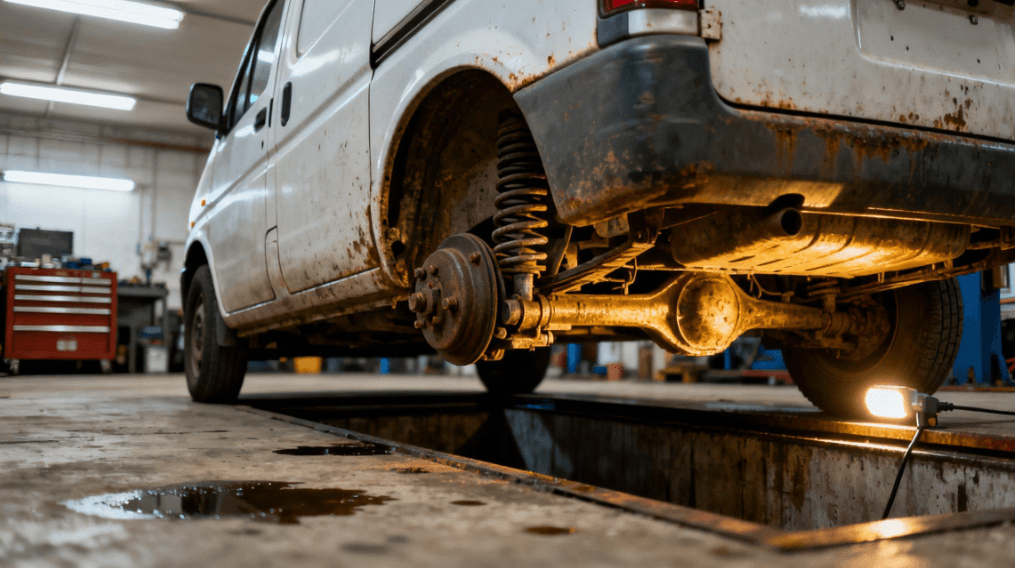
Start with the gearbox, because it is the costliest surprise. On hard-driven vans owners report manual-gearbox wear and, in some cases, early failure, the kind of damage a life of stop-start delivery work and heavy loads brings on. Drive any candidate properly: every gear under light load and under acceleration, listening for whine and feeling for baulky or vague shifts, and be suspicious of a clutch that bites right at the top. Next, on diesels specifically, watch for hard or hesitant starting, which owners often trace to a failing sensor on the high-pressure fuel pump. Cold-start the van yourself, from properly cold, and treat any extended crank as a question to answer before you buy.
Then look at the rear suspension, because the Doblò has a tell. A van that has carried too much for too long can sag visibly to one side on tired or broken rear leaf springs, so step back and look at it square-on across a level surface, and check the ride height left against right. While you are underneath, scan the load floor and door seals for the wear and water ingress that a busy working life leaves, and budget for the smaller niggles owners mention, occasional electrical and earthing gremlins, a wiper-linkage that plays up, a rear central-locking plastic part that gives out. None of those are dealbreakers, but each is a bargaining point.
Now the upside, because it is real and it is the reason people keep buying these. A Doblò that has been serviced on schedule is a genuinely long-haul vehicle, comfortably capable of well past 200,000 km without drama. The whole game, then, is telling a cherished high-miler from an abused one, and that is exactly where verified condition data earns its place. This is why every car Guazi handles carries an inspection of over 200 points feeding a digital condition report, so the gearbox, the high-pressure fuel system, the leaf springs, the load floor, and the service history are checked and written down rather than guessed at from a kerbside glance. On a vehicle this commoditised, where the next listing is identical on paper, a hidden fault wipes out the entire saving, and a documented inspection is what stands between a bargain and a flatbed.
The 60-second Doblò check, when you can only do one viewing. Drive every gear hot and cold and feel for a high clutch bite, cold-start a diesel from stone cold and time the crank, sight the van square-on for a leaning rear end, lift the floor mat and check the door seals for damp, and ask to see the service record. Anything that fails one of these is a price negotiation at best and a walk-away at worst.
What a used Doblò costs in Algeria right now
Now to money, with the same caveat in bold from the top: these are reference bands, not quotes, and they move. The cleanest anchor in the market is the local-new car, because the new Doblò Panorama has been listed in Algeria in the region of 3.3M to 3.5M DZD as a current ceiling. Everything used sits below that line, and how far below depends overwhelmingly on year, mileage, body style, and condition. A tidy, low-kilometre, late example shades toward that ceiling, while an older high-miler that has clearly worked for its living lands far lower. Treat the table below as the shape of the market rather than a price tag, and verify the exact figure for any specific van against live listings on autobip and OpenSooq at the time you buy.
| Doblò by body and age | Typical use case | Indicative DZD position (verify at purchase) |
|---|---|---|
| New Panorama (local Oran build) | The price ceiling and reference point | Around 3.3M to 3.5M DZD listed |
| Late second-gen Panorama, low km | Family buyer wanting near-new for less | High used band, well under the new ceiling |
| Mid-life second-gen Combi / Cargo | Mixed crew-and-cargo or trade work | Middle of the used market |
| Older high-km Cargo / Maxi, worked hard | Budget work van, expect to recondition | Lower used band, widest variation |
The pattern worth internalising for Fiat Doblo price Algeria is that the spread inside the used market is enormous and condition-driven, far more than the badge or even the year alone would suggest. Two vans of the same age and trim can sit thousands of dinars apart purely on how they were treated, which is the whole argument for spending on a proper inspection before you spend on the van. The cheapest listing is rarely the cheapest van once a tired gearbox or a set of collapsed leaf springs is priced in. Buy the condition, not the advert.
Importing a used Doblò into Algeria in 2026
If the van you want is not already in the country, the import gate decides what is even possible, and for the Doblò it bites in two specific ways. This is a summary to orient you, not the full procedure, and the full procedure lives in the dedicated guides linked below and, ultimately, with Customs.
The under-3-years window and the one-car rule
For ordinary residents, Algeria generally allows the import of passenger vehicles under three years old, with the age judged at the point the customs declaration is registered rather than when you bought or shipped the car, and an individual is generally limited to one imported vehicle every three years. Two consequences follow for a Doblò buyer. First, because shipping and clearance burn weeks, target a van comfortably inside the window, nearer two years and ten months than one sitting right on the three-year line, so transit time does not push it over. Second, the under-three-years rule steers you firmly toward the current third-generation Doblò, since older second-generation vans, diesel or not, simply fall outside the age limit for import even though they dominate the used market inside the country. State that to yourself plainly rather than hoping for flexibility, because the age is checked at the dock.
Why petrol-only and the resale-tax clawback shape your pick
Layer the fuel ban on top of the age rule and your import Doblò is effectively defined for you: a petrol (or hybrid, or electric) third-generation van, under three years old, left-hand drive. The diesel MultiJet that an inside-Algeria buyer would chase is off the table, so do not let it onto your shortlist. There is also a tail to be aware of if you take any clean-vehicle tax incentive: selling the car too soon can trigger a clawback of the relief on a sliding scale over the first three years, which rewards holding the van rather than flipping it. For the full age math, the fuel rule, and the resale lock, see our Algeria used-car import rules for 2026; for the landed-cost breakdown, the cost to import a used car to Algeria; and for getting the van to port, shipping a car from China to Algeria.
See inspected vans and SUVs ready for export → browse the Guazi inventory. Every listing is left-hand drive with a full condition report, so you can confirm the build date and fuel type against the Algerian rules before you commit.
Sourcing an inspected used van through Guazi
Once the rules are clear, the rest is choosing a van that fits every line from the start, and that is the part sourcing the right way is built for. Guazi is one of China's largest used-car platforms, founded in 2015, with more than 3 million cars sold and over 30 million inspections behind it, and stock that is left-hand drive by default, which is what Algeria drives and registers. For an import Doblò that means you can build the search as petrol and under three years from the first filter, then let a documented inspection of over 200 points and a digital condition report settle the question every classified leaves open, what kind of life this particular van has had.
We are deliberate about where our role ends, because overstating it would not help you. Guazi is the China-side supplier of the car and its export paperwork, not your customs broker, registration office, or legal adviser in Algeria, so local clearance and the fine print of your own eligibility are things to settle on the ground with Customs or a licensed broker. What we do well is the part we are built for: a sound, inspected, correctly documented left-hand-drive van delivered to port with its condition report in order. Get the eligibility right, then let the inspection decide the van.
Key Takeaways
- The used Fiat Doblo Algeria decision is body style first: Cargo and Maxi for load, Combi for crew-and-cargo, Panorama for families and seven seats.
- The Doblò is durable well past 200,000 km when serviced, but Fiat Doblo reliability in the real world hangs on the gearbox, the diesel high-pressure fuel pump, and the rear leaf springs, so check all three.
- For Fiat Doblo price Algeria, use the local-new Panorama at roughly 3.3M to 3.5M DZD as the ceiling, expect used to sit well below, and remember condition moves the price far more than age.
- The local Oran-built Doblò is the new car; the used market is overwhelmingly the previous generation, so do not conflate "made in Oran" with the used one you might import.
- Importers face a trap: the famous MultiJet diesel is banned for individual import, so build your search as petrol, under three years, and left-hand drive from the start.
- On a commoditised Fiat Doblo van, a hidden fault erases the whole saving, which is the entire case for buying on a documented inspection rather than the lowest advert.
The final word on a used Doblò in Algeria. It earns its reputation honestly, but the badge alone guarantees nothing on a van that may have worked hard for a decade. Choose the body for your job, buy on a verified inspection rather than the cheapest listing, and if you are importing, accept that petrol is the only road the rules leave open and plan around it from the first search. Do that and the used Fiat Doblo Algeria market is one of the soundest places your money can go.
Sources & References
- Stellantis Media, Fiat leads Algeria by volume
- Stellantis Media, start of the Fiat Doblò line at Tafraoui
- autoevolution, Fiat Doblò 2015 engines and specs
- What Car?, Fiat Doblò used reliability
- VanTribe, common Fiat Doblò problems
- DubiCars, 2026 Algeria import customs and tax guide
- autobip, Fiat Doblò prices in Algeria
Working out whether a specific used Doblò clears the 2026 rules and stacks up on condition?
We can source an inspected, left-hand-drive, under-3-years petrol van from China with its condition report and export paperwork, then leave the local clearance to you and your broker.

About Us
Follow US


Copyright © 2015~2026 https://en.guazi.com/, Chongqing Guazi Enterprise Consulting Service Co., Ltd. All rights reserved.