


Guazi
GlobalEnglish


Makes
Buy It NowAuctionsUp to 160 psPort StockAll VehiclesPopular Makes


Shop By Type


Popular Models


Shop By Budget

Is a Used Chery Tiggo 7 a Smart SUV to Import to Algeria in 2026?
Article OverviewIs a used Chery Tiggo 7 a smart import to Algeria in 2026? The honest price band, the reliability truth, and the under-3-years import catch, spelled out.
Price figures are 2026 reference points in Algerian dinar (DZD), and used bands move quickly, so treat them as a buying guide rather than a quote. Algerian import rules, customs duties, and vehicle-age limits are summarized here for orientation only and change without much notice, so confirm the current position with Algerian Customs (Douanes Algériennes) or a licensed clearing agent before you commit to any car.
Spend an afternoon at a busy intersection in Algiers or Oran and you will lose count of the compact crossovers that look a lot like the Chery Tiggo 7. It is already a familiar shape on Algerian roads, which quietly changes the question a 2026 buyer is really asking. You are not wondering whether the car is any good, because you have watched it survive Algerian heat, fuel and traffic for years. You are wondering something narrower and more anxious: does the used Chery Tiggo 7 still make sense once you factor in the under-3-years import rule, the resale-tax fine print, and a couple of well-documented quirks? Before any of that, it helps to know that Guazi, one of China's largest used-car platforms, sells these cars only after a standardized inspection, which is exactly the lens this decision needs.
This guide answers the buyer's real homework rather than reciting a spec sheet. We cover why the Tiggo 7 earned its place here, what a used example actually costs against a new one, the reliability story told straight, the import math that decides whether you can legally bring one in at all, and the honest picture on parts and after-sales. It suits the individual buyer in Algeria who likes the car, wants a fair verdict with the catch spelled out, and would rather hear the weak points now than discover them later.
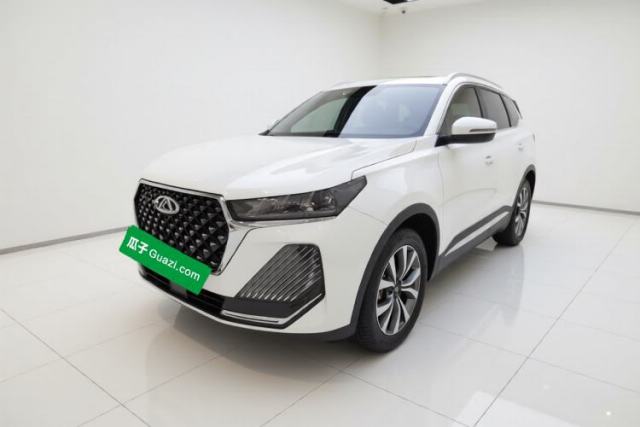
Why the Tiggo 7 earned its place on Algerian roads
The Tiggo 7 did not arrive as an unknown quantity. It belongs to a family that has been proving itself across markets with tough climates and rough secondary roads for a long time, and by late 2024 the broader Tiggo line had passed one million units exported worldwide. That scale matters less as a bragging figure and more as a quiet reassurance: a car sold in those numbers, in conditions resembling Algeria's, has had its weak points found, fixed and documented. For a used buyer, a well-understood car is a safer car.
Physically it is well judged for the way Algerians actually drive. Ground clearance sits around 196 mm, which is enough to shrug off broken urban tarmac and unpaved stretches without turning every speed bump into an event. The wheelbase of roughly 2,670 mm gives a settled ride on the open road, and a 475-litre boot that opens to around 1,500 litres with the seats folded makes it genuinely useful for a family or a small trade. It is a compact SUV in name and a practical hauler in use.
Space, comfort and the 1.5T on real roads
Inside, the Tiggo 7 trades on space rather than flash. Rear-seat room is generous for the class, the seats are soft in the way long Algerian drives reward, and the boot swallows a weekend's worth of luggage without complaint. The engine most buyers will meet is the 1.5T petrol, with a 1.6T also in circulation. On real roads the 1.5T is comfortable rather than quick. It pulls cleanly through town and settles into an easy highway cruise, though owners note it feels soft if you push it hard, which is to say it rewards a relaxed driving style over an impatient one.
The point worth holding onto is that nothing about the Tiggo 7's road manners is exotic or fragile. It is a sensible, slightly soft, easy-to-live-with crossover, and that ordinariness is a virtue in a car you intend to keep.
What the cabin gets right, and where it lags
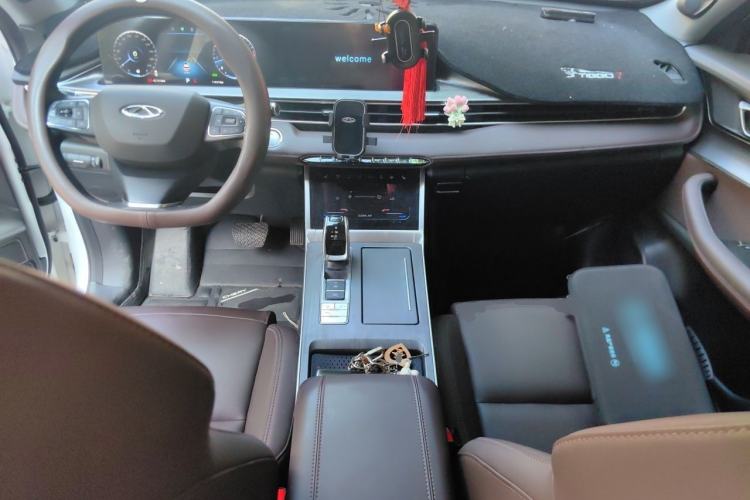
The cabin gets the important things right. Material quality feels a class above the price, the layout is clean, and the equipment list on most trims is fuller than rivals at the same money. Where it lags is the screen. Owners consistently report infotainment lag, occasional freezes and slow Bluetooth pairing, the kind of niggle that does not strand you but does irritate on a daily commute. Some also mention false sensor warnings and a degree of tyre and road noise at motorway speed.
None of that is a deal-breaker, and most of it is cosmetic to the ownership experience rather than mechanical. But it is exactly the sort of detail you want confirmed as working, or merely annoying rather than faulty, on the specific car you are buying.
The used price picture in Algeria
Here is where a used Tiggo 7 starts to look interesting. A new Tiggo 7 PRO in Algeria has been quoted starting around 4,599,000 DZD, and used examples sit meaningfully below that. The exact gap depends on year, mileage and condition, and because of the import rules we will get to shortly, the only used cars an individual can actually bring in are recent ones, which keeps the realistic used band closer to new than it would be in a market without an age limit.
Treat the table below as orientation, not a price list. DZD figures move, and a landed import price also carries duties and shipping that a domestic purchase does not.
| Buying route | Rough price posture | What you are really paying for |
|---|---|---|
| New Tiggo 7 PRO (Algeria reference) | Around 4,599,000 DZD as a reference point | Full warranty, zero history risk, dealer parts pipeline |
| Recent used Tiggo 7 (under 3 years, import-eligible) | Below new, but not dramatically so given the age cap | Most of the car's life left, a real saving if condition checks out |
| Older used Tiggo 7 (over 3 years) | Cheapest on paper | Not importable by an individual, so largely irrelevant to this decision |
The takeaway is blunt. Because the import window forces you toward newer cars anyway (covered below), the used Tiggo 7 saving is real but moderate, and it lives or dies on getting a genuinely sound example rather than a cheap one. That is the whole reason to verify condition before you pay. For a sense of the inspected inventory and how pricing works in practice, you can browse inspected used cars at Guazi.
Reliability, told straight
Talk to enough owners and a fair picture of Chery Tiggo 7 reliability emerges, and it is neither the disaster the brand's old reputation suggests nor a flawless machine. It is a generally dependable, well-proven crossover with a short list of known quirks that a buyer should know by name. Stating them plainly is not running the car down. It is the difference between buying with eyes open and buying on hope.
The transmission and infotainment quirks worth knowing
Two themes recur in owner reports. The first is the transmission. Some owners describe gear-slip or hesitation, and the smoothness of the automatic is the single most-discussed mechanical trait of the car. This is owner-reported and far from universal, but it is common enough that you treat the gearbox as the headline thing to check, not an afterthought. The second theme is the infotainment lag and the occasional false sensor warning already noted, plus tyre and road noise at speed.
The honest framing is this. None of these issues means a given Tiggo 7 will fail, and many cars show none of them. But they tell you precisely where to look. A car whose transmission shifts cleanly cold and warm, whose screen behaves, and whose warning lights are all explained is a very different proposition from one that is merely cheap.
The inspection checks that decide a good used Tiggo 7
This is where condition data earns its keep. The weak points above are not abstract risks, they are a checklist. Does the gearbox engage smoothly from cold and hold gears without slip under load? Is the turbo quiet and free of smoke on a hard pull? Does the infotainment boot and pair without freezing, and are the warning lights genuinely clear rather than reset moments before viewing? Is the service history consistent with the mileage?
Guazi is built around answering exactly those questions before a car changes hands. Founded in 2015 and having sold more than three million cars off the back of tens of millions of inspections, it runs a standardized, over 200-point inspection that feeds a digital condition report on every vehicle. For a car like the Tiggo 7, whose risks are specific and checkable, that report is the practical tool that separates a good used example from a tired one. You can see how the over 200-point inspection process works and what the report covers.
See inspected Chery SUVs ready for export → Browse the Guazi used-car inventory
Can you actually import a used Tiggo 7 into Algeria in 2026?
Everything above is moot if the car cannot legally enter the country, so this is the section that decides the purchase. Algeria reopened individual vehicle imports with firm conditions, and the Tiggo 7's petrol engine and recent-model availability both work in your favour, provided you respect the rules exactly. Treat what follows as orientation and confirm the live position with Algerian Customs or a licensed clearing agent, because these rules shift.
The under-3-years window and what "at customs filing" means
The hard gate is age. Algeria allows an individual to import only a passenger car that is under three years old, and the critical, often-missed detail is that the age is measured at the moment of customs filing, not at the date you buy or pay for it. In practice that means a car comfortably under three years old when you purchase it can still cross the line if shipping and clearance drag on, so you must build a margin into the timeline rather than buying a car that is already at the edge.
There is a further limit: an individual may generally import only one car every three years. The returning-resident (CCR) route carries a different, more generous age allowance, but that is a separate edge case for Algerians coming home, not the standard path, and it should not be assumed. For the ordinary buyer, the rule is simple and unbending: recent cars only, with time to spare. Our companion piece on Algeria's used-car import rules for 2026 walks through the documentation and the age math in full.
Petrol clears the diesel ban, but mind the resale-tax clawback
The good news is that the Tiggo 7 is petrol, which clears a real hurdle. Algeria bans the individual import of diesel passenger cars, so a petrol crossover qualifies where a diesel equivalent simply would not. That is a genuine point in the Tiggo 7's favour and worth stating as a positive rather than a footnote.
The catch sits on the other side of the transaction. Reselling an imported car too soon triggers a tiered repayment of the tax benefits you received, reported as roughly 100 percent of the benefit if you sell within twelve months, around 66 percent within twenty-four, and about 33 percent within thirty-six. The plain reading is that an imported used Tiggo 7 is a car to keep, not to flip. Buy it to drive for years and the clawback never bites. Buy it to trade quickly and the maths turns against you fast. The full cost picture, including duties and the clawback schedule, is covered in our guide to the cost of importing a used car to Algeria, and the logistics in our shipping a car from China to Algeria walkthrough.
Parts, after-sales and the local-assembly question
Parts availability is where the picture gets genuinely nuanced, and overstating it would do you no favours. Chery is investing in local assembly capacity in Algeria, including a joint venture for OMODA and JAECOO production with planned local NEV output from 2026. Over time that should deepen the parts and after-sales pipeline in the country, which is good for the brand generally.
The honest nuance is that this benefit accrues mainly to locally assembled models, not necessarily to an imported used Tiggo 7. A car you bring in yourself may not slot neatly into the same dealer-parts channel as a showroom car, and a future wave of locally assembled Cherys could even put downward pressure on used import values. None of this makes the Tiggo 7 a poor choice, because it remains a widely sold, well-supported family car. It simply means you should not assume effortless dealer parts for a private import, and should factor a realistic view of servicing into the decision rather than an optimistic one.
Sourcing an inspected used Tiggo 7 through Guazi
If the verdict points you toward a recent, sound Tiggo 7, the buying process is the part that protects the money. The single most important step is verifying the car against a standardized inspection rather than a seller's word, with particular attention to the transmission, the turbo and the electronics flagged above. As one of China's largest used-car platforms, Guazi pairs an exporting operation with that over 200-point inspection and digital condition report, so you start from documented condition rather than a hopeful photo set.
The sensible workflow is to fix your import timeline first so the car stays inside the under-3-years window at clearing, set your budget with duties and shipping included, and let the condition report rather than the price tag decide which car you buy. If you want to weigh the Tiggo 7 against its closest rivals, our Geely Coolray guide and our roundup of the best Chinese used cars for Algeria are the natural next reads, and the Jetour X70 is worth a look if you want more space. Browse inspected Chery SUVs ready for export.
Key Takeaways
- A used Chery Tiggo 7 is a sensible import for Algeria in 2026 if you buy a recent, inspected example and intend to keep it, not flip it.
- The hard gate is age: individuals can import only cars under three years old, measured at customs filing, so build a timeline margin and confirm the rule with Algerian Customs.
- Being petrol, the Tiggo 7 clears Algeria's diesel-import ban, a real point in its favour.
- Reliability is generally good, but check the transmission, turbo and infotainment, the known weak points, through an over 200-point inspection.
- The used saving is moderate because the age limit forces newer cars, so a sound car matters far more than a cheap one, and the resale-tax clawback rewards keeping it.
Sources & References
- Malekcars, Chery Tiggo 7 specs and price (Algeria reference)
- Jinyu Autos, best Chery models for Algeria
- Jinyu Autos, importing cars to Algeria
- What Car?, Chery Tiggo 7 review
- CarsGuide, Chery Tiggo 7 Pro problems
- Wikipedia, Chery Tiggo 7
Weighing a used Chery Tiggo 7 for Algeria and want the condition checked before you commit?
Our team can match you with an inspected, import-eligible car and walk you through its condition report first.




About Us
Get Support
Follow Us


Copyright © 2015~2026 https://en.guazi.com/, Chongqing Guazi Enterprise Consulting Service Co., Ltd. All rights reserved.