
Guazi
GlobalEnglish


Getting a Car From China to Poland by Sea, and Why the Cheapest Freight Isn't Always the Cheapest Trip
Article OverviewShipping a used car from China to Poland: RoRo vs container, direct-Gdansk vs via-Germany routes, honest transit and cost bands, EV battery rules, and the customs handoff.
Note: Freight rates move monthly, get a live quote. Every cost figure below is a 2026 snapshot compiled in June 2026, and ocean freight is one of the most volatile numbers in this whole process, so the ranges here are a guide to shape your expectations, not a quote you can book against. Transit times are typical, not promises, and port congestion swings them. This is an explainer, not a freight booking, and Guazi is the China-side supplier of the car, not a shipping line or freight forwarder. For real numbers and real dates, get a written quote from a licensed forwarder for your specific car, route, and shipping window before you plan a budget.
Moving a car from China to Poland is a five-to-six-week sea voyage with only two big decisions inside it, and both of them quietly change what you pay. The first is method: do you roll the car onto a RoRo ship and drive it off at the other end, or seal it inside a container. The second is route: do you sail it straight to a Polish port like Gdańsk, or send it through a large German or Benelux auto hub and truck it the rest of the way. Each choice shifts the cost and the clock, and 2026 has made the cost especially hard to pin down, with sea-freight rates on this corridor swinging sharply from one month to the next. The trap to avoid is assuming the cheapest sea leg is the cheapest trip, because a bargain crossing into a German port can be eaten alive by the inland haul to Poland, which is the kind of false economy this guide is written to help you sidestep.
Here is how the guide is laid out. We start with the overall shape of the journey, then work through the two real levers in turn, RoRo versus container and direct versus via-Germany, with honest transit and cost bands for each rather than a single tidy number. We cover what shipping an electric car adds, because EVs carry battery rules that combustion cars do not, and we finish at the border, where shipping stops and Polish customs begins, handing you off to our companion guide on the tax and registration side. Throughout, treat every freight figure as a moving snapshot and confirm it with a live quote, because on this route a number from last month can already be wrong.
The shape of the journey: five to six weeks and two decisions
Strip the corridor down to its essentials and it is simpler than the forwarder jargon suggests. A car leaves a Chinese port, crosses to Europe by sea over roughly five to six weeks, and arrives either directly at a Polish port or at a Western-European one for the final overland leg into Poland. That is the whole journey. Everything that changes the price and the timeline comes down to the two decisions named above, the method and the route, and almost nothing else is yours to control.
The reason those two levers matter so much is that they interact. A RoRo crossing is generally cheaper and a little faster than a container, but it depends on a suitable ramp and service at both ends. A direct sailing to Gdańsk is the simplest handoff into Polish customs, but the via-Germany route can sometimes offer a cheaper or more frequent sea leg, at the cost of adding a truck or rail journey afterwards. So the right answer is rarely "always RoRo" or "always direct," it is whichever combination gives the lowest honest door-to-door total for your particular car and timing. Hold the journey in that frame, two decisions over five to six weeks, and the rest of this guide is just the detail behind each one.
RoRo or container: how to choose
The first decision, RoRo vs container car shipping, is the one that most affects both cost and how protected your car is in transit, and the right call depends mostly on the value and condition of the car. Neither method is simply better, they suit different cars.
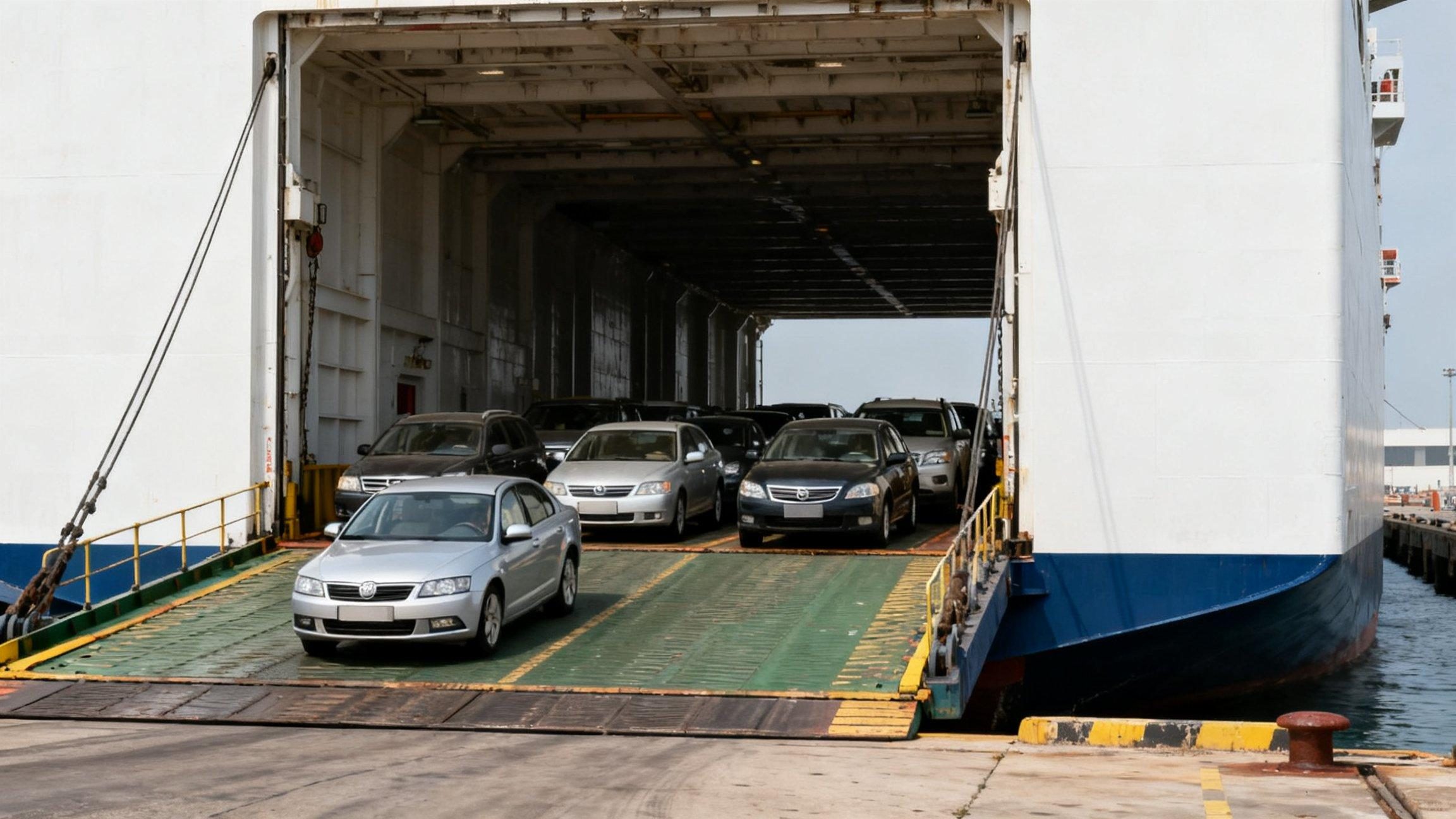
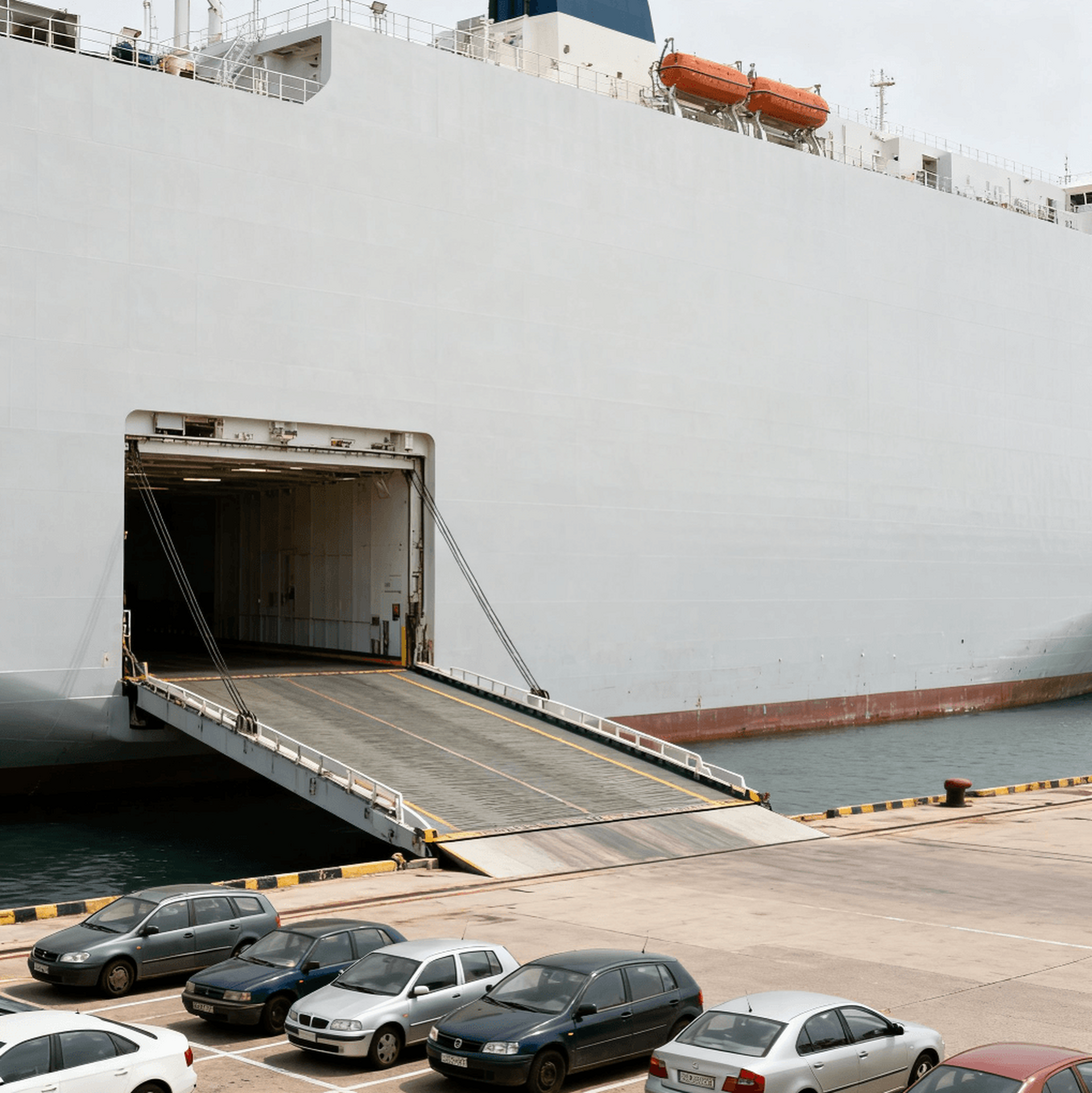
RoRo, short for roll-on/roll-off, is exactly what it sounds like: the car is driven up a ramp onto a dedicated vehicle-carrier deck, parked and secured, and driven off at the destination. It is generally the cheaper and slightly faster method, with quicker port turnaround because there is no container to pack and unpack, and it is the natural choice for a standard, running used car. Indicative RoRo cost runs roughly 800 to 2,500 USD per vehicle depending on the route and the port pairing, and port handling is often faster than the container equivalent. The catch is that RoRo needs a suitable ramp and a vehicle-carrier service at both the loading and the destination port, so it is route-dependent.
A container, typically a 20-foot box for one car or a 40-foot high-cube that can hold roughly two, is the more protective option. The car is sealed inside, shielded from weather and handling, which suits high-value cars, classics, or vehicles that are not in running condition and cannot be driven onto a RoRo deck. That protection costs more and usually takes a little longer, since containers add packing, loading, and unpacking steps. Indicative container cost runs roughly 3,800 to 5,000 USD for two cars sharing a 40-foot high-cube, and container sailings generally run about 8 to 12 days slower than RoRo on the same corridor. Splitting a 40-foot box between two cars is how importers bring the per-car container cost closer to RoRo territory.
What RoRo costs and how long it takes
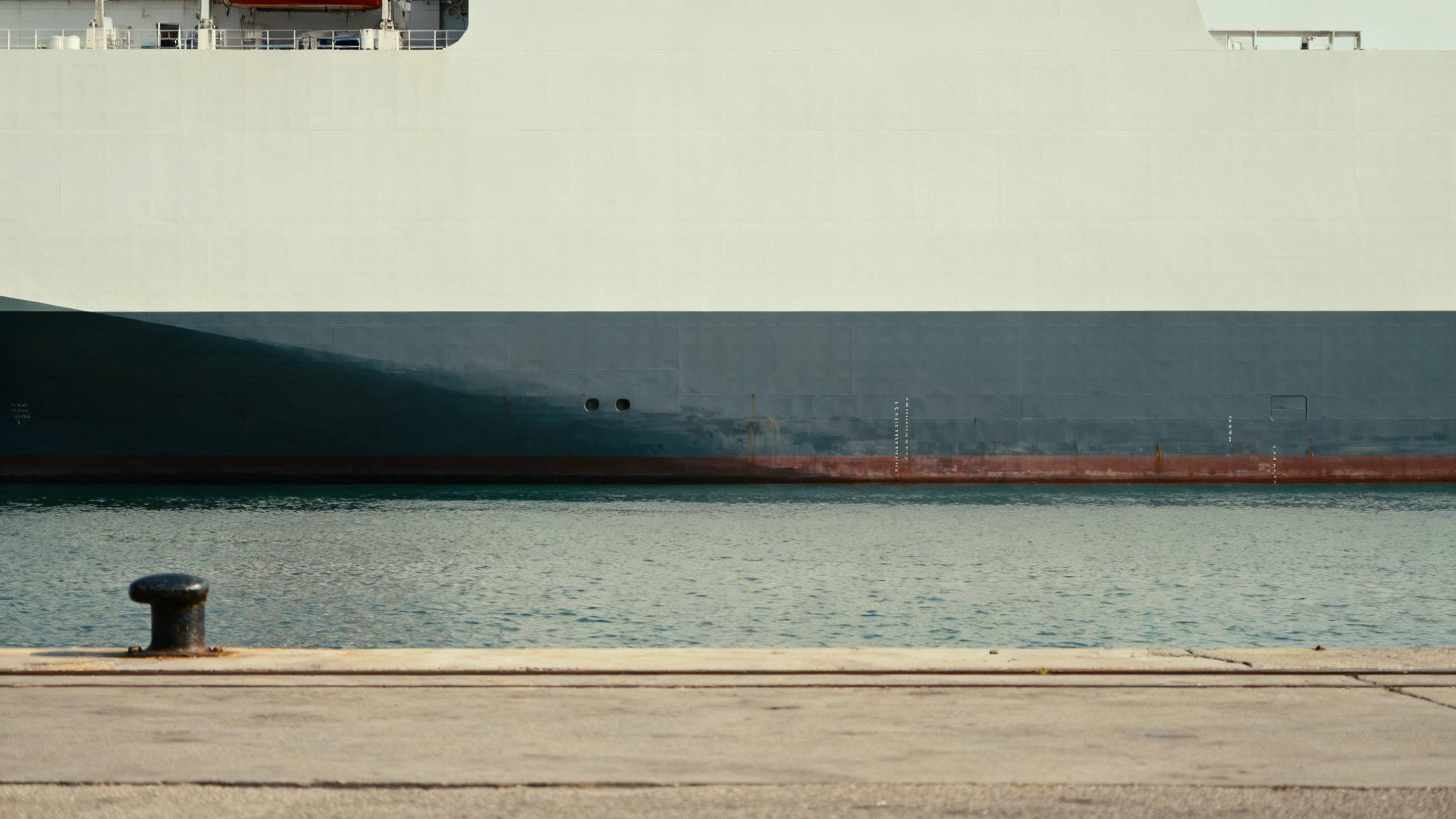
For a standard running car, RoRo is usually the default, and the appeal is straightforward: lower cost and faster handling. On the China-to-Poland corridor, the RoRo sea leg sits within the broader five-to-six-week transit band, with port turnaround at each end measured in roughly a day or two rather than the several days a container can take. The per-vehicle figure in the 800 to 2,500 USD range moves with the specific ports, the carrier, and the month, so treat it as the shape of the cost, not the cost itself. Because RoRo depends on vehicle-carrier services calling at the right ports, its availability and price can vary more by route than a container's, which is part of why a live quote matters so much here.
When a container is worth the extra
The case for a container is about protection and flexibility rather than price. If the car is high-value, rare, or simply not running and therefore impossible to drive onto a RoRo deck, the container is the answer, and the extra cost buys you a sealed, weather-protected, lower-handling journey. The other quiet advantage is consolidation: splitting a 40-foot high-cube between two cars spreads the box cost across both, which can make the per-car number competitive while keeping the protection. Here is the trade-off between the two methods at a glance.
| Method | Indicative cost (2026) | Transit vs the other | Best for |
|---|---|---|---|
| RoRo (roll-on/roll-off) | around 800 to 2,500 USD per car | faster, quicker port turnaround | standard running used cars on served routes |
| Container (20ft, one car) | higher per car than shared 40ft | slower than RoRo | a single high-value or non-running car |
| Container (40ft HQ, two cars) | around 3,800 to 5,000 USD for two | about 8 to 12 days slower than RoRo | high-value, classic, or non-running cars; sharing the box |
Straight to Gdańsk, or in through Germany?
The second decision is the route, and it is where the "cheapest freight isn't the cheapest trip" warning earns its place. There are two real shapes to the China-to-Poland corridor, and they trade simplicity against a sea leg that can look cheaper on paper.
The direct route to Gdańsk or Gdynia
The clean option is to sail straight to a Polish port. Gdansk car import runs through Poland's largest seaport, a primary entry point for Asian cargo into the country, with Gdynia next door offering modern RoRo and container facilities. The advantage is the simplest possible handoff: the car arrives on Polish soil, and the customs and registration process happens right there, with no extra border or inland leg to add cost or complexity. For most buyers who want the fewest moving parts, a direct sailing to Gdańsk or Gdynia is the most straightforward route, and it keeps the whole journey inside a single, easy-to-follow chain.
The via-Germany route, and when it stops saving you money
The alternative routes the car through a major Western-European auto hub and then overland into Poland, and it exists largely because of how Chinese carmakers now ship. BYD in particular has built its own fleet of RoRo car carriers, vessels cited at capacities around 7,000 to 9,200 cars, running into ports like Bremerhaven, home to one of Europe's leading auto terminals handling on the order of 1.7 million vehicles a year, along with Zeebrugge and Vlissingen. Those services can make the sea leg into a German or Benelux port cheaper or more frequent than a direct Polish call.
The honest catch is the inland leg. Once the car lands in Bremerhaven or Zeebrugge, it still has to travel to Poland by road or rail, and that overland haul carries its own cost. A cheaper sea leg into Germany can be partly or wholly cancelled out by the trucking bill to Poland, so the route that looks cheapest at the quayside is not always the cheapest once the car is actually in Poland. The only way to compare the two routes fairly is on a full door-to-door basis, sea plus inland, not on the sea quote alone. That is the single most important honesty point in choosing a route, and it is exactly where importers who fixate on the freight number overpay.
What it actually costs in 2026 (and why the number keeps moving)
Now the number everyone wants, with the heavy caveat it deserves. China to Poland car freight cost is genuinely volatile in 2026, and the figures here are a June 2026 snapshot presented as ranges, not a fixed price you can rely on. To make the volatility concrete: recent June 2026 data showed sea FCL rates into Gdańsk up sharply, on the order of 70% month over month, landing around 2,430 to 2,970 USD for a 20-foot box and around 4,050 to 4,950 USD for a 40-foot high-cube. A 70% monthly swing is the whole point, a price that can move that fast cannot be quoted from a blog and trusted weeks later.
Set against the method bands from earlier, the picture is roughly this, and every figure below is indicative and date-stamped to June 2026.
| Shipping option | Indicative range (June 2026) | Notes |
|---|---|---|
| RoRo, per vehicle | around 800 to 2,500 USD | varies by route and port pairing |
| Container 20ft (FCL) into Gdańsk | around 2,430 to 2,970 USD | up around 70% month over month |
| Container 40ft HQ (FCL) into Gdańsk | around 4,050 to 4,950 USD | holds roughly two cars |
| Container 40ft HQ, two cars (indicative) | around 3,800 to 5,000 USD | per-car cost falls when shared |
The practical takeaway is not the specific digits, it is the discipline: because the numbers move this much, build your budget from a live, written quote for your exact car, route, and shipping window, and treat anything older than a few weeks as stale. Ask the forwarder for an all-in door-to-door figure rather than just the sea leg, so the via-Germany inland cost is captured, and confirm what is and is not included. The volatility is not a reason to avoid the route, it is a reason to quote it fresh every time.
Shipping an electric car from China: the battery rules
If the car is electric, the corridor works the same way but with an extra layer, because batteries are treated as dangerous goods and carriers handle them accordingly. The good news first: you can ship EV from China by both RoRo and container, so an electric car is not locked out of either method. What changes is the documentation and the battery condition the carrier will require.
The most common rule is a cap on the battery's state of charge for the voyage, frequently cited somewhere around 30 to 50%, along with specific documentation for the battery as dangerous goods. Some lines also apply an EV surcharge or restrict how many electric cars they will take per sailing, and these rules vary by carrier and change over time. The right way to treat all of this is as something to confirm directly with your carrier or forwarder before booking: expect a capped state of charge and battery paperwork, and ask for the exact figure and any surcharge for your chosen line rather than assuming a single universal number. The state-of-charge cap in particular is worth pinning down early, because arriving at the port with a battery charged outside the allowed window can hold up loading.
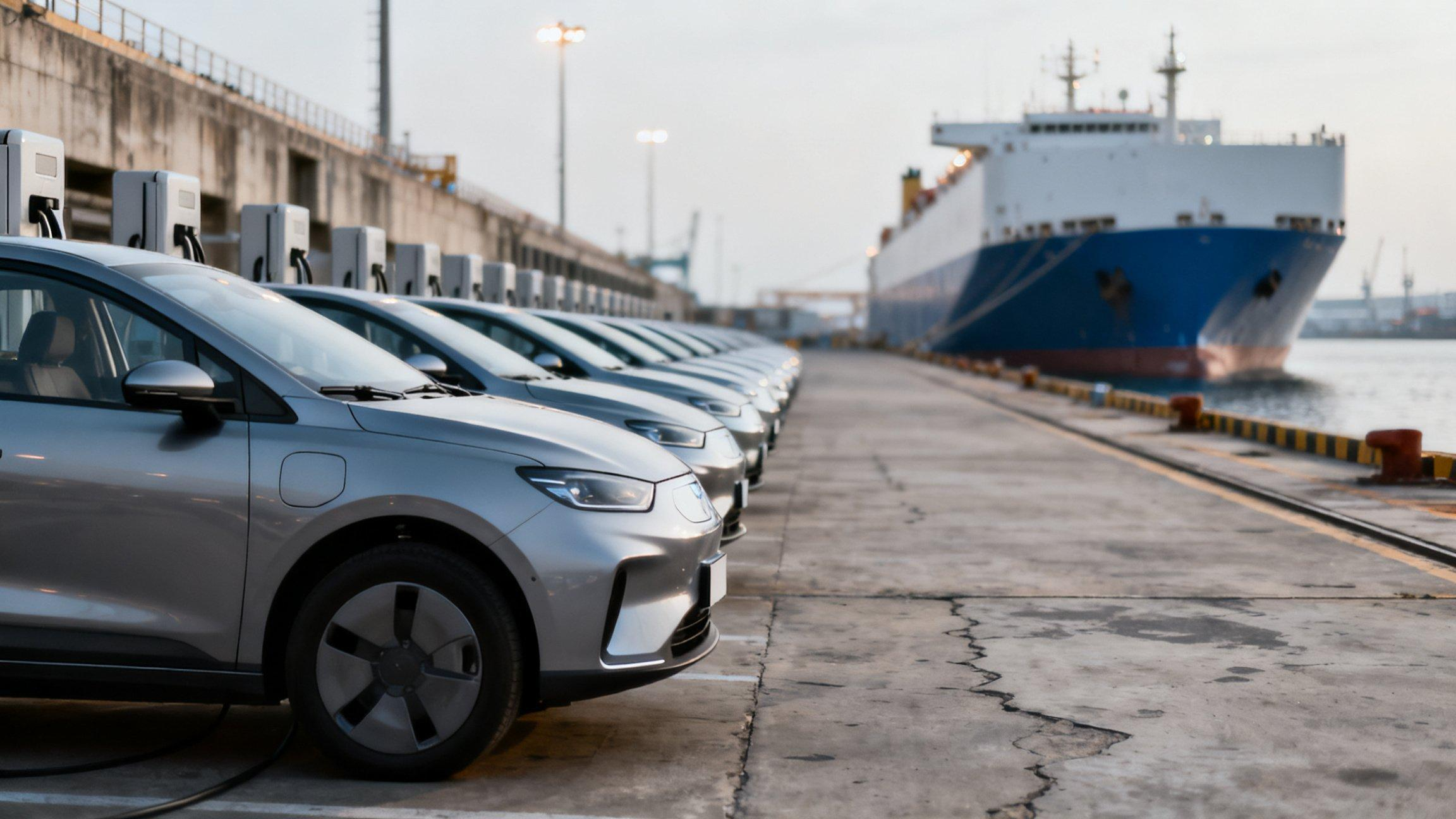
The reason the used-EV corridor is worth the extra battery admin is the cost case on the other end, which is where shipping hands off to the tax side. A genuinely used Chinese electric car lands on much friendlier import terms than a new one, and that, combined with manageable freight, is what makes bringing a used EV from China to Poland add up. We keep the full tax treatment in the import guide, but the next section sets up the handoff.
Then it lands: what happens at the Polish border
Shipping ends at the border, and a different process begins, so it helps to know where the handoff falls. Once the car arrives in Poland, or enters the EU at a German or Benelux port, it has to be cleared and then registered, and that is a separate set of costs and steps from the freight. In brief, a car arriving from China faces customs duty, generally the standard 10% on passenger cars, then 23% import VAT calculated on the customs value plus the duty plus the freight and insurance to the border, then the Polish excise duty known as Akcyza, and finally registration. Those are the headline charges, and they sit entirely on the far side of the shipping you have just arranged.
One point carries over from the freight decision into the tax side and is worth flagging here, lightly, because it materially changes the cost. As the EU anti-subsidy measure on Chinese electric vehicles is written, it targets new battery-electric cars, so a genuinely used, second-hand Chinese EV generally falls outside it and faces only the standard 10% duty plus 23% VAT, while also being exempt from Akcyza as an electric car. That is the cost case that makes the used-EV corridor attractive, but it is a point to verify rather than assume, and the full treatment, the rates, the deadlines, and the new-versus-used distinction, lives in our guide on importing a used car to Poland, which picks up precisely where the shipping stops. If you are weighing which used EV to bring, our overview of used electric cars in Poland covers the buying side.
Spend the smart money before the car sails: where Guazi fits
The most expensive problem on this whole corridor is the one you only discover after the car has crossed an ocean, and the cheapest insurance against it is spent before the car is ever loaded. A freight delay is annoying. A car that turns out to have a hidden fault after a five-week voyage is genuinely costly, because now the problem is on the wrong continent. This is the part Guazi is built for, on the side of the corridor that is our home turf. Guazi is one of China's largest used-car and used-EV platforms, and every car carries an over 200-point inspection feeding a digital condition report, with insurance and maintenance records cross-checked to screen out flood and accident cars. Knowing the car's true condition before it sails means the voyage holds no surprises waiting at the other end.
We want to be precise about the role. Guazi is the China-side supplier of the car and its export documentation, not a freight forwarder or shipping line, and we do not book vessels or quote freight, so for the shipping itself, you should get a written quote from a licensed carrier, and we hedge the specifics of any Poland export arrangement. What we do well is the China side: sourcing and inspecting the car so that what gets loaded is a known quantity, with a condition report and export paperwork in order. Arrange the shipping with a forwarder, handle the customs and registration with the import guide above, and let an inspected, documented car make the long trip with nothing hidden aboard. Know the car before it ships →
Key Takeaways
- Shipping car from China to Poland is a five-to-six-week voyage with two real levers: method (RoRo or container) and route (direct to Gdańsk or via Germany).
- On RoRo vs container car shipping, RoRo is cheaper and faster for a standard running car, while a container protects high-value or non-running cars, and a 40-foot high-cube can share the cost across two.
- Gdansk car import is the simplest handoff into Polish customs, but the via-Germany route can offer a cheaper sea leg that inland trucking may cancel out, so compare door-to-door.
- China to Poland car freight cost is volatile, a June 2026 snapshot showed FCL into Gdańsk up around 70% month over month, so build budgets from a live quote, never a stale figure.
- To ship EV from China, expect a capped battery state of charge (often around 30 to 50%) and dangerous-goods paperwork, with some lines surcharging EVs, so confirm the rules with your carrier.
- Shipping stops at the border, then 10% duty, 23% VAT, Akcyza, and registration apply, with a genuinely used Chinese EV generally outside the anti-subsidy duty and Akcyza-exempt.
One more time, because it matters. Every freight figure here is a June 2026 snapshot, and ocean rates move monthly, so nothing on this page is a quote or a guarantee of price or transit time. Guazi is the China-side car supplier, not a freight forwarder or shipping line. Get a written, all-in door-to-door quote from a licensed forwarder for your specific car, route, and shipping window before you plan a budget.
Sources & References
- Sino Shipping, China to Poland freight (June 2026)
- BR Logistics, ship a car to Poland (2026)
- LaomaCar, RoRo vs container for shipping China cars (2026)
- Maskura, shipping electric vehicles from China to Europe
- Electrek, BYD's first car-carrier docks in Bremerhaven
Planning the China-to-Poland move for a specific car?
We can source and inspect a used car in China with its condition report and export paperwork.




About Us
Follow US


Copyright © 2015~2026 https://en.guazi.com/, Chongqing Guazi Enterprise Consulting Service Co., Ltd. All rights reserved.