


Guazi
GlobalEnglish


Makes
Buy It NowAuctionsUp to 160 psPort StockAll VehiclesPopular Makes


Shop By Type


Popular Models


Shop By Budget

What You Actually Pay to Import a Used Car to Poland, and the One Deadline Most People Miss
Article OverviewImporting a used car to Poland in plain English: the EU vs non-EU fork, customs duty and import VAT, what Akcyza is and how much, the 14-day AKC-U/S deadline, the registration checklist, and the electric-car exemptions.
Read this first. Rates and deadlines change, the tax office is the authority. The duty rates, the Akcyza figures, the import VAT, the 14-day declaration deadline, and the registration fee below are all current as of 2026 and compiled in June 2026, but they move, and excise rules in particular get revised. This is an explainer with sources, not a customs filing or tax advice, and Guazi is the China-side supplier of the car, not your clearing agent in Poland. The Polish tax administration and your local registration office are the only authority on what your car owes and what it takes to plate it. Confirm every figure that applies to your vehicle with them before you spend a złoty.
The hard part of bringing a car into Poland is not the driving, it is the paperwork, and almost all of the cost hangs on a single question you answer before anything else: did the car come from inside the European Union, or from outside it. That one fork decides whether you ever touch a customs office at all. A used car bought in Germany or the Netherlands moves freely across the border with no duty to pay, while the same car shipped in from China, the United States, or post-Brexit Britain has to clear customs first, with duty and import VAT due before a single domestic step begins. Get the order of operations right, clear customs if you need to, pay Akcyza inside the deadline, then register, and the whole thing is routine. Skip a step or miss the clock and a routine import turns into an expensive one, which is exactly the outcome this guide is built to help you avoid.
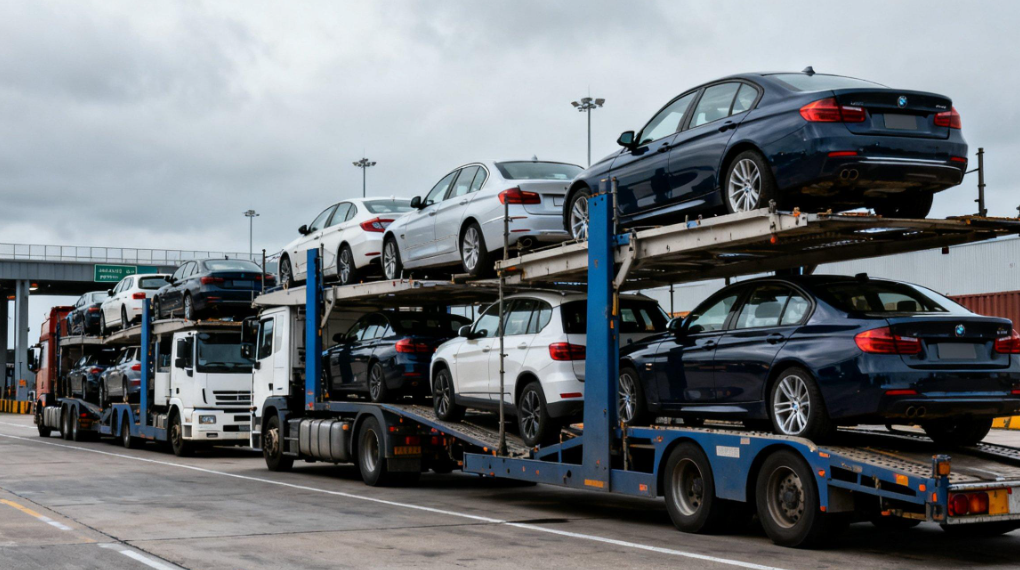
A quick word on how to read what follows, because the structure matters. We keep the two import paths firmly separate, the EU-internal route and the non-EU route, because applying the wrong one is the single most common and most costly mistake people make. Inside each path we walk the real steps in the order they happen: customs where it applies, then the excise duty Poles call Akcyza, then the declaration deadline that trips up newcomers, then the registration checklist that finally puts plates on the car. Rates and deadlines are flagged as 2026 figures throughout, and where the treatment depends on your status or your car, we say so and point you to verify. Treat this as a map of the route, then confirm the exact numbers for your situation with the tax office.
One question decides your whole tax bill: EU or non-EU
Before you compare cars or think about shipping, settle this. The cost of importing a used car into Poland splits cleanly along one line, whether the car is already inside the EU customs territory or has to enter it. Everything downstream, how much you pay and how much paperwork you handle, follows from that answer.
If the car is inside the EU, say a used estate from a German dealer or a private seller in the Netherlands, it travels under the free movement of goods. There is no customs duty and no customs clearance, because the car is already in the single market. You still owe Akcyza when you first register it in Poland, and VAT can come into play depending on who is selling and what is being sold, but the heavy, non-EU import machinery never switches on. This is the path the large majority of Polish used-car imports take, and it is the cheaper and simpler of the two by a wide margin.

If the car is outside the EU, shipped from China, the United States, the United Kingdom, or anywhere else beyond the customs union, it has to be cleared into the EU before it can go anywhere. That clearance adds a customs duty and an import VAT charge, calculated on the value of the car plus the cost of getting it to the border, and only once that is done do the same domestic steps, Akcyza and registration, begin. The car is more expensive to land, the paperwork is heavier, and the timeline is longer. None of that makes it a bad idea, plenty of desirable cars only exist outside the EU, but you need to price the difference honestly before you commit.
So the first thing to nail down is not the car, it is the customs status. The rest of this guide is really two routes that briefly converge at registration.
Importing from inside the EU (Germany, the Netherlands, and the usual sources)
For most Polish buyers, this is the route, and it is the friendlier one. Germany alone supplies an enormous share of the used cars that end up on Polish plates, with the Netherlands, Belgium, and France close behind, and the reason the trade is so brisk is precisely that none of it involves customs. A car bought in another EU member state is already in free circulation, so there is no duty, no import VAT in the ordinary private-buyer case, and no customs clearance to arrange. You drive it home, or have it trucked, and the obligations that remain are domestic ones.
What remains is Akcyza and registration. Akcyza Poland treats as a one-time excise charge that falls due when you first register a passenger car in the country, and it applies whether the car came from Munich or from Shanghai, so an EU import does not escape it. We cover the rates and the mechanics in their own section below, because they are the same regardless of where the car came from. The point to hold here is that for an intra-EU car, Akcyza and the registration package are essentially the whole bill, with no customs layer underneath.
VAT is where intra-EU imports get nuanced, and it deserves care rather than a blanket rule. In the common case, a private individual in Poland buying a used car from a private seller in another EU country generally does not owe Polish import VAT, because the transaction is not a taxable acquisition in the way a business purchase would be. But the treatment changes with status and circumstance. A business buyer, a VAT-margin car bought from a dealer, or a vehicle that counts as a "new means of transport" under the EU rules can all be taxed differently, and the last category catches cars that feel used but are recent or low-mileage enough to qualify as new for VAT purposes. The safe move is to treat your own VAT position as something to confirm, not assume, especially if you are buying through a business or the car is nearly new. When in doubt, ask the tax office or an accountant how your specific purchase is treated before you build it into your budget.
The honest summary of the EU path is that it is mostly about Akcyza and paperwork, with VAT a question to check rather than a default cost. That is why so much of Poland's used stock, including a growing share of the used electric cars covered in our guide to used electric cars in Poland, flows in from Germany and the Benelux: the route is well worn precisely because it is light.
Importing from outside the EU (China, the United States, the United Kingdom)
The moment a car comes from outside the EU, a customs step appears that the intra-EU buyer never sees, and it is the single biggest cost difference between the two paths. A car arriving from China, the US, or the UK has to be cleared into the EU customs territory before it can move on to Akcyza and registration, and that clearance carries two charges that stack on top of the price you paid for the car.
The first is customs duty. For ordinary passenger cars, classified under the customs nomenclature heading for motor vehicles, the standard most-favoured-nation duty rate in the EU is 10%. The second is import VAT, levied at Poland's standard rate of 23%. The order in which they are calculated matters, because the VAT is charged on a base that already includes the duty, so the two are not simply added side by side. We walk through exactly how that stacking works next, since it is the part people most often get wrong when they try to estimate a landed cost in their head.
How customs duty and import VAT are calculated
The calculation runs in a fixed sequence, and following it in order is the only way to get an honest number. Customs starts from the customs value of the car, which is essentially what you paid for it plus the cost of transport and insurance to get it to the EU border. Onto that value, customs applies the 10% duty. Then the 23% import VAT is calculated not on the bare customs value but on the customs value plus the duty you just added, plus any further transport and incidental costs up to the destination. In other words, VAT is charged on top of duty, which is why a 10% and a 23% rate together cost more than a flat 33% of the car's price.
A rough worked example makes the shape clear, and this is illustrative only, dated June 2026, not a quote. Take a car with a customs value of 50K PLN at the EU border. The 10% duty adds 5K PLN, bringing the base to 55K PLN. The 23% import VAT is then charged on that 55K PLN, adding about 12.65K PLN. So before you reach Akcyza or registration, the non-EU clearance alone has added roughly 17.65K PLN to a 50K PLN car. Change the customs value or the freight and the numbers move, but the method holds: value, then duty on the value, then VAT on the value-plus-duty. Always confirm the exact customs value and rates with the clearing agent or customs, because the declared value can be examined and the figures here are only a worked illustration.
Once the car is cleared and those charges are settled, the non-EU path rejoins the domestic steps. From here, the obligations are the same as for any imported car: Akcyza, then registration. The logistics of actually getting the car to the EU border, the sea routes, the transit times, and the freight cost that feeds into that customs value, are the subject of our companion guide on shipping a used car from China to Poland, which picks up exactly where this customs explanation begins.
Akcyza, explained: what it is and how much you'll pay
Akcyza is the term that makes first-time importers nervous, usually because nobody explains it plainly, so here it is plainly. Akcyza is an excise duty on passenger cars, payable once, when the car is first registered in Poland. It applies to imports from inside and outside the EU alike, it is separate from customs duty and from VAT, and it has to be paid before the car can be registered. That is the whole concept. The amount, though, depends on the car, and the main lever is engine size.
For petrol and diesel passenger cars, the Akcyza rate is tiered by engine displacement. Cars with an engine up to 2000 cm³ are charged at the lower rate, and cars above 2000 cm³ at the considerably higher rate. The figures cited across multiple 2026 sources are roughly 3.1% for the smaller engines and roughly 18.6% for the larger ones, applied to the value of the car. Plug-in hybrids receive a reduced rate rather than a full exemption, and the exact reduced figure is the kind of detail that shifts, so confirm the current plug-in hybrid rate on PUESC rather than relying on a number from a blog. The headline relief sits at the electric end, which we come to in its own section.
| Vehicle type | Akcyza rate (2026, indicative) | Notes |
|---|---|---|
| Petrol or diesel, engine up to 2000 cm³ | around 3.1% of value | The lower excise tier |
| Petrol or diesel, engine above 2000 cm³ | around 18.6% of value | The higher excise tier |
| Plug-in hybrid (PHEV) | reduced rate | Exact figure varies, confirm on PUESC |
| Battery-electric (BEV) | exempt | Exemption reported valid through end of 2029 |
The base that Akcyza is charged on is the car's value, and for an imported car that value tracks the customs or market value rather than a number you simply choose. This matters because an under-declared value can be challenged and reassessed by the tax office, which means writing down an optimistically low figure is not a saving, it is a risk. State the real value, keep the documents that support it, and treat the rates above as a current snapshot to verify, not a locked quote. The engine-size tiers in particular are exactly the kind of thing a Finance Law can adjust, so check the live figure for your car before you budget.
The deadline most people miss: the AKC-U/S declaration
Here is the step that catches more importers off guard than any rate, because it is a clock rather than a cost. Paying Akcyza is not just a matter of handing over money at registration, it is preceded by a formal excise declaration, and that declaration has a hard deadline. For an imported car, you file the AKC-U/S declaration, submitted through the PUESC portal, and it is due within 14 days of the event that triggers the liability, which for an import is essentially the car entering Poland or the acquisition taking effect. Miss the window and you are late on a tax filing before you have even reached the registration desk.
The ordering is the part to internalise. The declaration comes first, the Akcyza payment follows, and only once the excise is declared and paid can you register the car. So the real-world sequence for an imported car is: get the car into Poland, file AKC-U/S within 14 days, pay the Akcyza due, and then take the proof of payment into the registration process. Building in that 14-day step from the start, rather than discovering it when you arrive to register, is what keeps the whole import on schedule. Because the form name, the portal, and the deadline are administrative details that can be revised, confirm the current AKC-U/S requirements and the exact filing window on PUESC at the time you import, not from memory.
Registering the car: the document checklist
With customs cleared where it applied, and Akcyza declared and paid, you reach the final stage, registration at your local wydział komunikacji. This is a documents exercise, and a car that is otherwise perfectly eligible will simply wait if the file is incomplete, so it pays to assemble everything before you go. The registration fee itself is modest, commonly cited at around 180 PLN to cover the plates, the registration certificate, and the sticker, but the fee is the easy part. The paperwork is what actually moves the car onto Polish plates.
Documents you'll need to gather
The core file for registering an imported car typically includes the items below, though the exact list varies by office and can change, so confirm the current requirements with your local wydział komunikacji before you file.
- Proof of Akcyza payment, or the EU excise-exemption certificate if the car is exempt, since registration will not proceed without the excise settled.
- Proof of customs clearance, required for cars imported from outside the EU, showing the duty and import VAT were paid.
- A recent technical inspection (badanie techniczne) confirming the car is roadworthy to Polish standards.
- A sworn (certified) translation of any vehicle documents that are not already in Polish, prepared by a sworn translator.
- Ownership documents, the purchase contract or invoice and the foreign registration document or title, establishing that the car is yours.
- The registration application itself, with your identifying details (PESEL for residents, or the relevant tax identifier).
The order of operations across the whole import is the thing to keep straight: clear customs if the car is non-EU, file AKC-U/S and pay Akcyza within the deadline, get the technical inspection and any sworn translations done, then take the complete file to register and pay the roughly 180 PLN fee. Handle the steps in that sequence and registration is the straightforward finish to the process rather than the place where it stalls.
Electric cars are the easy case: the BEV exemptions
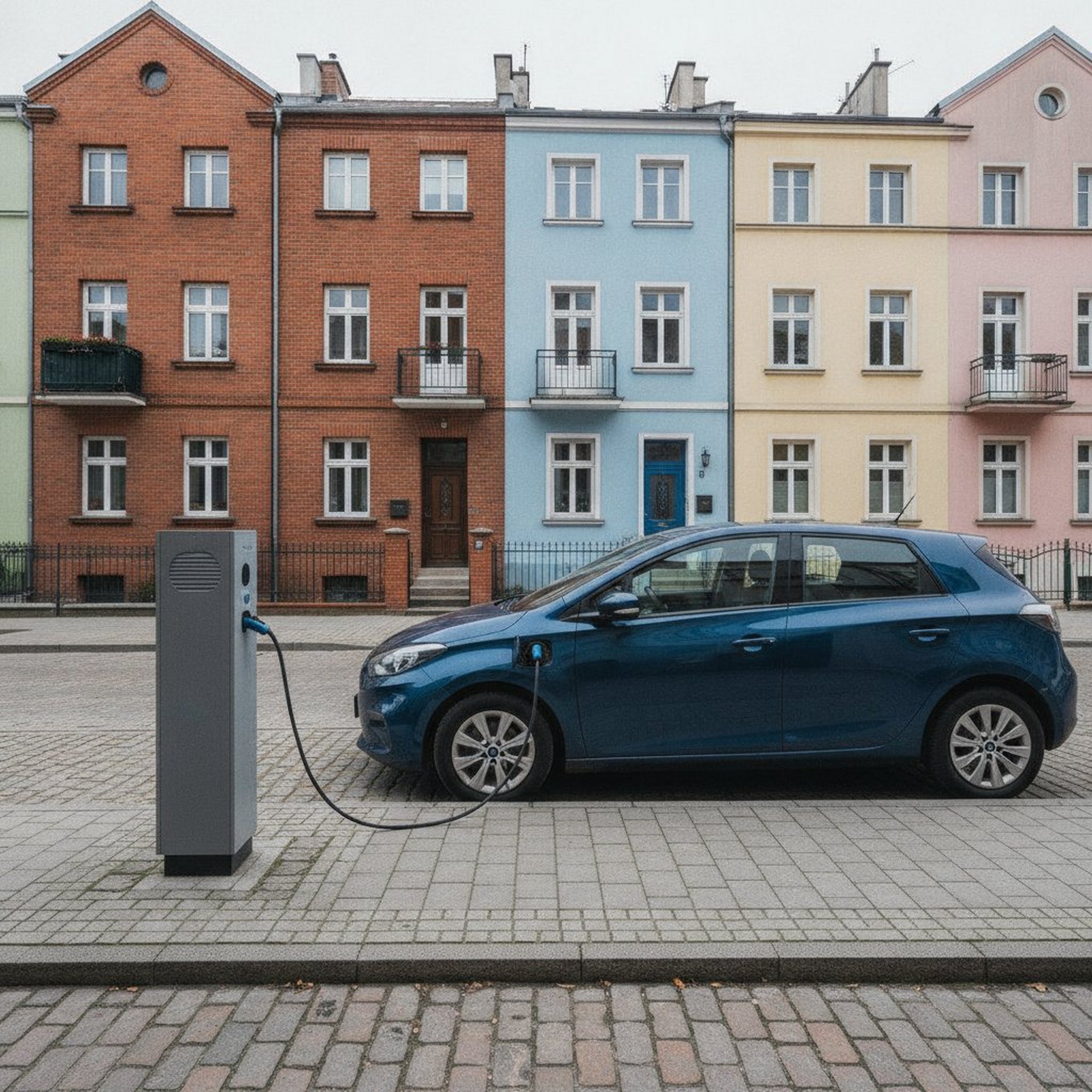
If you want the cleanest possible import paperwork, a used battery-electric car is hard to beat, because the charge that complicates everyone else's budget simply does not apply. Fully electric vehicles are exempt from Akcyza in Poland, an exemption that has been reported as valid through the end of 2029, which removes the excise question entirely from an EV import. There is no engine-size tier to worry about, because there is no combustion engine, and the excise line on the budget is zero.
The relief tends to extend to the registration-side charges as well, with battery-electric cars generally exempt from the recycling-style fees that can attach to a registration, where those apply. The combined effect is that a used EV, especially one bought inside the EU where there is no customs layer either, can be one of the lightest imports going: no customs duty, no Akcyza, and reduced registration charges, leaving little more than the modest registration fee and the cost of the inspection and any translations. That is a genuinely different experience from importing a large-engined petrol car, where the 18.6% Akcyza tier alone can be a serious sum.
This is part of why the used-EV route into Poland has been gaining momentum, and it connects directly to the rest of this cluster. If you are weighing an electric import, our guides to used electric cars in Poland and the EV charging network in Poland cover the buying and the living-with-it side, while the exemption above is the reason the importing side is so much lighter. As always, confirm that the BEV exemption and its end date still stand at the time you import, since it is a policy that can be extended, changed, or allowed to lapse.
A note on importing a Chinese EV specifically
There is one accuracy point worth stating carefully, because it is widely misunderstood and it materially changes the cost of importing a Chinese electric car. You may have read about the EU's anti-subsidy duties on Chinese electric vehicles, the countervailing duties of roughly 7.8% to 35.3% layered on top of the standard 10%, introduced under Implementing Regulation (EU) 2024/2754. The crucial detail is the scope: as the measure is written, those extra duties apply to new battery-electric vehicles only, under the specific customs code for new Chinese BEVs.
A genuinely used, second-hand Chinese BEV falls outside that anti-subsidy measure. As written, it faces only the standard 10% most-favoured-nation duty plus the 23% import VAT, and because it is a battery-electric car it is also Akcyza-exempt in Poland. That is a meaningfully lower cost basis than a new Chinese EV carries, and it is the single most important compliance distinction in this whole area. It is also the kind of point you should not take on trust from any blog, including this one, because the scope and status of these measures can change. Confirm the current treatment, and that your specific car genuinely qualifies as used rather than new, with customs or a licensed broker before you rely on it. The logistics of bringing such a car over are covered in our China to Poland shipping guide; the duty distinction here is what makes that corridor attractive for used EVs in the first place.
Starting with a clean, well-documented car: where Guazi fits
Once you understand the route, the thing that actually makes an import painless is the car you start with, and specifically how well its condition and paperwork are known before it ever moves. An import is easiest when there are no surprises, and surprises come from cars whose history, build date, and true condition are uncertain. This is the part Guazi is built for. Guazi is one of China's largest used-car platforms, and every car carries an over 200-point inspection feeding a digital condition report, with insurance and maintenance records cross-checked to screen out flood and accident cars. For an importer, that means the build date, the specification, and the condition are verified data you can plan around, not guesses you discover after the car has shipped.
We want to be precise about the role, because this piece is about a regulated process and overstating it would be wrong. Guazi is the China-side supplier of the car and its export documentation, not a customs agent, a tax adviser, or a registration service in Poland, and we hedge the specifics of any Poland export arrangement. The duties, the Akcyza, and the registration are things to confirm and handle with the Polish authorities and a licensed broker. What we do well is the part we own: delivering a sound, inspected, properly documented car with its condition report in order, so that when it reaches the customs and registration steps above, there is nothing hidden to derail them. Get the rules right with the tax office, then let a clean, documented car carry the rest. Browse inspected used cars.
Key Takeaways
- The whole tax bill turns on one fork: an import car from outside EU Poland clears customs first (10% duty + 23% VAT), while an intra-EU car does not, so settle the customs status before anything else.
- Akcyza Poland is a one-time excise on first registration, roughly 3.1% of value for engines up to 2000 cm³ and 18.6% above, reduced for plug-in hybrids and exempt for fully electric cars.
- Car import VAT Poland at 23% applies to non-EU imports on the customs value plus duty, and may apply to some intra-EU cases (business buyers, new means of transport), so check your VAT position rather than assume it.
- The deadline most people miss: the AKC-U/S excise declaration is due within 14 days via PUESC, and Akcyza must be paid before you can register imported car Poland.
- The registration file needs proof of Akcyza (or EV exemption), customs clearance for non-EU cars, a technical inspection, sworn translations, ownership docs, and the application, for a fee around 180 PLN.
- A genuinely used Chinese BEV falls outside the EU anti-subsidy duties (which target new BEVs) and is Akcyza-exempt, the cleanest import case, but verify it qualifies as used with customs.
One more time, because it matters. Every rate, deadline, and fee here is current to 2026 and can change, and excise rules in particular get revised. Nothing on this page is legal or tax advice or a guarantee of what your car will owe. Guazi is the China-side car supplier, not your customs broker or tax adviser in Poland. Verify every figure that applies to your import with the Polish tax administration (Krajowa Administracja Skarbowa / PUESC) and your local registration office before you commit any money.
Sources & References
- PUESC, excise for an imported car (AKC-U/S, Akcyza)
- podatki.gov.pl, vehicle registration tax
- Warszawa 19115, registering a second-hand vehicle imported from abroad
- eCarsTrade, car taxes in Poland
- Access2Markets, EU countervailing duties on Chinese BEVs (scope = new)
Working out whether a specific car clears the 2026 rules and what it will owe?
We can source an inspected, well-documented used car from China with its condition report and export paperwork in order, then leave the Polish customs, Akcyza, and registration to you and your broker.


About Us
Get Support
Follow Us


Copyright © 2015~2026 https://en.guazi.com/, Chongqing Guazi Enterprise Consulting Service Co., Ltd. All rights reserved.