


Guazi
GlobalEnglish


Makes
Buy It NowAuctionsUp to 160 psPort StockAll VehiclesPopular Makes


Shop By Type


Popular Models


Shop By Budget

Buying a Used Electric Car in Poland Without Getting Burned on Battery or Imports
Article OverviewWhat a used electric car really costs in Poland in 2026, from a 60K PLN BYD to a used Tesla, plus the battery-health check and German-import caveat that decide the buy.
A few years ago, buying electric in Poland meant paying new-car money for the privilege. That has quietly changed. A three-year-old BYD Atto 3 now turns up on otomoto for around 60,000 PLN, a used Tesla Model 3 has come within reach of an ordinary family budget, and a large share of the stock arriving on Polish lots is not Polish at all but German and Dutch trade-ins funnelled across the western border. The result is that the used electric cars Poland drivers can actually afford have multiplied, and the value is real. But there are two catches the listing pages will never tell you, and both can cost you badly. A used EV is only as good as its battery, and the headline Polish subsidy that everyone has heard about will not give you a single zloty toward a second-hand one.
This guide ties the whole picture together in one place, because nobody else does it in plain English. It covers which used EVs genuinely show up on the Polish market and what they cost in honest PLN ranges, how a used Tesla compares with a used BYD as a buy, the battery state-of-health check that quietly decides whether you got a bargain or a trap, the blunt subsidy truth, why that cheap German-plate import is sometimes a warning sign rather than a deal, and what it actually costs to live with an electric car here. Read it and you will walk onto a lot asking the three or four questions that matter, instead of the ones the seller hopes you will ask.
The used-EV market in Poland has quietly grown up
Poland is not a country where most new cars are electric. By the official count, electric vehicles made up only around 6 of every 100 new cars sold in the first months of 2026, which is modest by Western European standards. But that headline understates what is happening underneath, because the used electric pool is filling far faster than the new-sales figure suggests, and it is being topped up from outside the country. Germany and the Netherlands have been buying electric cars in large numbers for years, and as those cars come off lease and out of first ownership, a steady stream of them flows into Poland through dealers clustered around Wrocław, Kraków, and the western border. That is why a Polish buyer in 2026 is standing exactly where the used-EV market is heating up, even though new-EV adoption still looks slow.
Who is actually buying these cars? Increasingly, pragmatic households doing the maths. A used EV that covers a city commute on cheap home-charged electricity, exempt from Poland's excise duty and cheap to service, starts to make obvious sense for a second car or a city runabout, especially once the new-car premium has evaporated through depreciation. The cars Poles cross-shop are a predictable set: the Tesla Model 3 and Model Y as the default, the BYD Atto 3 and other Chinese EVs as the value alternative, and a scattering of European models like the Volkswagen ID family. The opportunity is genuine. The discipline this guide adds is making sure the car you buy is sound underneath, because the one component that decides that is invisible.
What a used EV actually costs in Poland today
Used prices move weekly and the zloty's exchange rate widens the bands further, so treat every figure here as a 2026 snapshot to verify against live listings rather than a fixed price. With that caution stated plainly, the shape of the market is clear, and depreciation is the buyer's friend. The same fall in value that frustrates the first owner is exactly what brings a three-year-old EV within your reach, and Chinese EVs in particular have depreciated quickly into genuine used-bargain territory.
Used Tesla in Poland: what the Model 3 now lists for
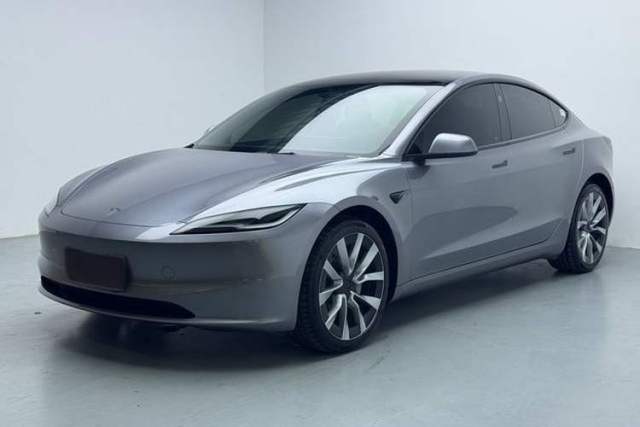
The used Tesla Poland buyers reach for first is the Model 3, and it has come a long way down from its launch price. On otomoto, a 2023 Long Range Dual Motor all-wheel-drive car with around 46,000 kilometres was listed near 170,000 PLN in early 2026, while the broader pan-European used Model 3 market spans roughly 14,000 to 26,000 euros depending on year and mileage, which at current zloty rates translates into a wide PLN band rather than one clean number. The Model 3's appeal as a used buy is the combination of long real-world range, a mature charging story through the Supercharger network, and a software-and-drivetrain package that has held up well. Its weak points are the ones every used Tesla shares: build-quality variation between cars, and the fact that battery condition, not badge, is what you are really paying for. Treat any single price you see as illustrative and date-stamped, because Tesla adjusts its new prices often and the used market follows.
Used BYD in Poland: the Atto 3 as the depreciation story
The used BYD Poland story is best told through the Atto 3, a compact electric SUV that has become the clearest example of how fast a Chinese EV falls into bargain range. Recent otomoto listings tell it cleanly: a 2024 Design with just 6,500 kilometres, imported, near 59,900 PLN, a 2023 Design with about 24,000 kilometres near 62,900 PLN, and a near-new 2024 Full Option with only 2,900 kilometres near 89,990 PLN. The 2023 car lists a 60.48 kWh battery, around 420 kilometres of WLTP range, 204 horsepower, and CCS Type 2 charging, which is a lot of usable EV for the money. The Atto 3 uses lithium-iron-phosphate battery chemistry, which is durable and tolerant of frequent charging, and that, plus the low used price, is what makes it such a strong value pick for a city-and-suburbs buyer who does not need huge range. The catch is the same as always: a low sticker price is only a bargain if the battery underneath is healthy. Here is how the headline numbers compare, as a 2026 snapshot.
| Model | Example year / mileage | Indicative price (PLN, 2026) | Battery | Approx. range |
|---|---|---|---|---|
| Tesla Model 3 Long Range AWD | 2023, ~46,000 km | ~170,000 | Long-range pack | Long real-world range |
| BYD Atto 3 Design | 2023, ~24,000 km | ~62,900 | 60.48 kWh LFP | ~420 km WLTP |
| BYD Atto 3 Design (imported) | 2024, ~6,500 km | ~59,900 | 60.48 kWh LFP | ~420 km WLTP |
| BYD Atto 3 Full Option | 2024, ~2,900 km | ~89,990 | 60.48 kWh LFP | ~420 km WLTP |
Battery health is the whole ballgame on a used EV
If you remember one thing from this guide, make it this. On a used electric car the battery is the single most expensive component and the single biggest variable in whether you bought well, and you cannot judge it by looking at the car or even by driving it around the block. Two identical models from the same year with the same mileage can be worth very different amounts depending on how their batteries have been treated, and the only way to know which one you are looking at is to measure it.
What state of health means and why it decides the price
State of health, usually written as SoH, is the battery's current usable capacity expressed against its original capacity when new. A pack at 95% has barely aged. A pack that has dropped further has lost range you will feel every day and value you will feel when you sell. Most modern EV batteries actually hold up well, and there is some reassuring news for Polish buyers specifically: cooler climates tend to be kinder to battery longevity than hot ones, because heat is a bigger enemy of battery life than cold. But "most hold up well" is not the same as "this one has," and the gap between a well-treated battery and an abused one, frequent fast-charging, repeated deep discharges, long spells sitting at full charge in the heat, is exactly the gap that decides whether the price in front of you is fair.
What to ask for before you pay
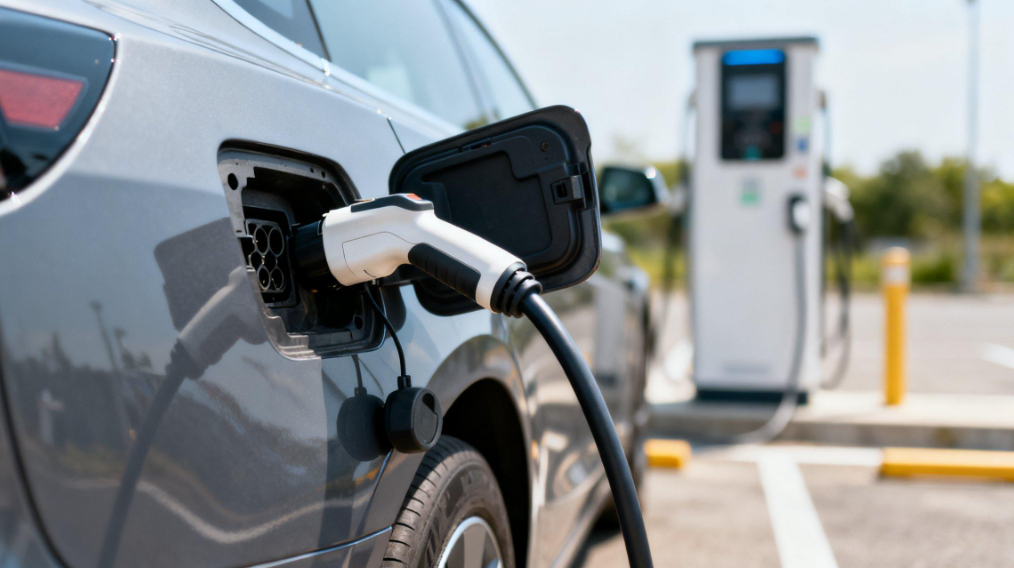
The good news is that protecting yourself is concrete, not mystical. Before you pay for any second hand electric car Poland buyers should insist on three things. Ask for a state-of-health read-out, a measured figure for the battery's current capacity, not a salesman's reassurance. Confirm how much of the manufacturer's battery warranty remains, since most EV batteries carry a long warranty, often eight years or a set distance, and a car still inside it carries far less risk. And ask about charging history and usage, because a car that lived on home AC charging has generally had an easier life than one that was fast-charged hard every day. These three questions are the whole defence, and they are precisely the discipline that a platform inspecting used electric cars at scale builds its process around. Insist on the numbers, and the invisible variable stops being a gamble.
Does any subsidy help with a used EV? The honest answer
This is the correction this guide exists to make, because Polish buyers get it wrong constantly. The well-known NaszEauto support does not apply to used electric cars at all. It covers only new, previously unregistered passenger BEVs under a price ceiling and with almost no kilometres on the clock, which by definition rules out anything second-hand. The headline figure people quote, support of up to around 40,000 PLN, is built from a base grant, a scrappage component, and an income-tested top-up, and every part of it is aimed at a new car. If you are buying used, you should plan your budget as if no purchase grant exists, because for your car it does not.
That is not the whole cost story, though, and the rest of it is friendlier. Fully electric cars are exempt from Poland's excise duty, the Akcyza, a status confirmed for BEVs through the end of 2029, which is a real saving against a comparable used petrol car that has to pay it. Registration itself is a modest administrative cost, on the order of 180 PLN. So while no grant lands on a used EV, the running and ownership costs tilt in its favour in ways the subsidy headline distracts from. If you are still weighing new against used, the brand-specific picture is worth a look, and our Poland EV brand pieces, including the used plug-in hybrid guide for the BYD Seal U and Chery Tiggo, lay out where a new or nearly-new car might still make sense.
That cheap German-plate import: bargain or warning sign?
A lot of the most tempting used-EV prices in Poland belong to imported cars, and there is a sound reason a German-plated Tesla or a Dutch-registered BYD can list below a domestic equivalent. These cars come from large, mature electric markets where supply is plentiful and trade-in volumes are high, so they arrive cheaper before Polish registration costs are added. That part is genuine value. The caution is that "imported and cheap" occasionally hides "imported and damaged," and the worst version is a car that was written off as salvage or suffered flood damage abroad, lightly repaired, and shipped on to a market where its history is harder to trace.
So treat a cheap import with curiosity rather than suspicion, and do the diligence that turns a gamble into a decision. Check the vehicle's history through its identification number, look for a coherent service record, and be wary of a price that is well below the rest of the market for no explained reason, because on a used EV that gap is sometimes the battery and sometimes the bodyshell. Remember too that an imported car still has to be registered in Poland, with the costs and paperwork that involves, so the lot price is not the landed price. The full mechanics of bringing a car in, the registration, VAT position, and excise treatment, live in our dedicated guide to importing a used car to Poland, and that is the place to get the numbers straight before you commit to an import.
What it costs to live with a used EV in Poland
Once the car is yours, the day-to-day economics are where a used EV quietly rewards you. The biggest single factor is where you charge. Public DC fast charging in Poland runs in the rough region of 2.10 to 2.89 PLN per kWh depending on the network, while AC charging is cheaper, and home charging is cheaper again, which is why drivers who can plug in overnight see by far the lowest running costs. An EV that does its city kilometres on home electricity simply costs less to run per kilometre than a petrol equivalent, and the gap widens every time petrol prices climb. The full breakdown of where to charge, what each network costs, and how the public map looks across the country sits in our guide to EV charging in Poland.
The ownership side reinforces the case. The Akcyza exemption for fully electric cars, confirmed through the end of 2029, removes a tax a used petrol car cannot escape, and registration is a small one-off cost. Servicing an EV is generally lighter than servicing a combustion car, with no oil changes and fewer wearing parts, though you should still budget for tyres, which an EV's weight and torque can wear a little faster. None of this depends on a subsidy. It is simply the structural running-cost advantage of an electric car, and on a used example bought at a depreciated price, that advantage is what makes the whole proposition work.
How Guazi approaches a used EV's condition
The thread running through this entire guide is that a used EV's value lives in its condition, and above all in its battery, which is exactly the problem Guazi is built to solve. Guazi is one of China's largest used-car platforms and the leading used new-energy-vehicle platform in its home market, with more than 30 million inspections behind it. The cars Polish buyers cross-shop second-hand, Tesla, BYD, and the growing field of Chinese EVs, are precisely the vehicles Guazi inspects and prices at scale, and its standardized inspection feeds a digital condition report rather than a sales pitch. Crucially, Guazi backs new-energy cars with an industry-first 100-day battery-decay guarantee, which exists because the one variable that decides a used EV, the health of its battery, is too important to leave to trust.
A precise word on our role, since overstating it would undercut the point of an honest guide. Guazi is a China-side used-car platform, not a Polish dealer, and we are not claiming to retail or export these cars into Poland. What carries across borders is the standard: insist on a measured battery state-of-health figure, confirm the remaining battery warranty, and let a real condition report rather than a low sticker price decide the car. Apply that discipline to your Polish search and the invisible risk becomes a known quantity. See how inspected used EVs are checked
The bottom line for used-EV buyers in Poland
- The used electric cars Poland drivers can afford have multiplied, fed heavily by German and Dutch imports, even though new-EV adoption still looks modest.
- A used BYD Poland buyers consider, the Atto 3, now lists from around 59,900 to 89,990 PLN, while a used Tesla Poland shoppers want, the Model 3, ranges higher around 170,000 PLN for a recent Long Range car. Treat every figure as a 2026 snapshot to verify against live listings.
- Battery health is the whole ballgame: insist on a measured state-of-health read-out, the remaining battery warranty, and the charging history before you pay, because the battery is invisible and decisive.
- No subsidy helps a used EV. NaszEauto covers new cars only, so budget as if no grant exists, and lean instead on the BEV Akcyza exemption through 2029 and cheap home charging.
- A cheap German-plate import is often genuine value but can hide salvage or flood damage, so check the history by VIN and be wary of an unexplained low price; registration costs still follow.
- Living with a used EV is cheap where it counts, home charging well below public rates, no excise duty, and lighter servicing, which is what makes a depreciated used EV add up.
Sources & References
- otomoto.pl: used Tesla Model 3 listings
- otomoto.pl: used BYD Atto 3 listings
- EV Database: BYD Atto 3 specifications
- Gov.pl: NaszEauto programme
- ICCT: European Car Market Monitor, April 2026
Trying to tell a sound used EV from a risky one?
We inspect used electric cars at scale, with a battery state-of-health read and a 100-day battery-decay guarantee, so condition decides the car, not the sticker price.






About Us
Get Support
Follow Us


Copyright © 2015~2026 https://en.guazi.com/, Chongqing Guazi Enterprise Consulting Service Co., Ltd. All rights reserved.