


Guazi
GlobalEnglish


Makes
Buy It NowAuctionsUp to 160 psPort StockAll VehiclesPopular Makes


Shop By Type


Popular Models


Shop By Budget

China-to-Ghana Car Import: A Walkthrough With Real Cost Numbers
Article OverviewStep-by-step China-to-Ghana car import walkthrough — real CIF, duty, freight, clearing numbers, paperwork, and Tema timing for 2026 importers.
Pricing Note: Cost figures in this guide are indicative May 2026 ranges from the Guazi Africa Desk and public Ghana customs references. USD figures use a working reference of GHS 12.5 ≈ USD 1. Duty rates, freight, and exchange rates move — confirm the live GRA tariff and Bank of Ghana rate before you commit. Prices are written as K thousands for readability.
Importing a used car from China to Ghana is no longer a specialist's game — but it still rewards the buyer who understands the sequence. Skip the vehicle inspection step, misjudge the duty, or pick the wrong shipping route, and a good deal on paper becomes an expensive lesson at Tema port. Done in the right order, a China-import lands a verified car below local dealer pricing.
This guide walks the full process end to end: sourcing the car, the vehicle inspection that protects you, shipping to Africa, clearing Tema, registration, and the costs and documents at each stage. It is written for Ghanaian dealers and individual importers alike — anyone doing B2B used car sourcing or buying a single unit will follow the same eight steps.
Planning a China import?
Talk to the Guazi Africa desk for landed-cost estimate and a verified-stock shortlist
Why Importing Used Cars from China Matters for Ghana Buyers in 2026
China has become the world's largest vehicle exporter, and its domestic used-car supply is deep, modern, and—crucially—left-hand drive, which is mandatory for Ghana. For a Ghanaian buyer, a direct China import removes the layers of margin that stack up when a car passes through a re-exporter, a local importer and a forecourt dealer.
The trade-off is process. A direct import means you are responsible for getting the sequence right: verifying the car before you pay, choosing a shipping method, budgeting duty accurately, and clearing Tema without costly demurrage. Get those right and the savings are real — a verified 2018+ unit typically lands below the equivalent local dealer price. Get them wrong, and the savings evaporate. The rest of this guide is that sequence.
The Step-by-Step Import Process
The import runs in eight stages. Treat each as complete before you start the next.
Step 1 — Define the car and budget. Fix the model, year, trim and your landed-cost ceiling before you shop. The landed cost is purchase price + freight + duty + clearing + inland delivery, not the sticker price.
Step 2 — Source the car. Use a verified platform rather than an anonymous seller. For B2B used car sourcing, a platform that buys 100% from individual owners gives you a real ownership and service history to verify against.
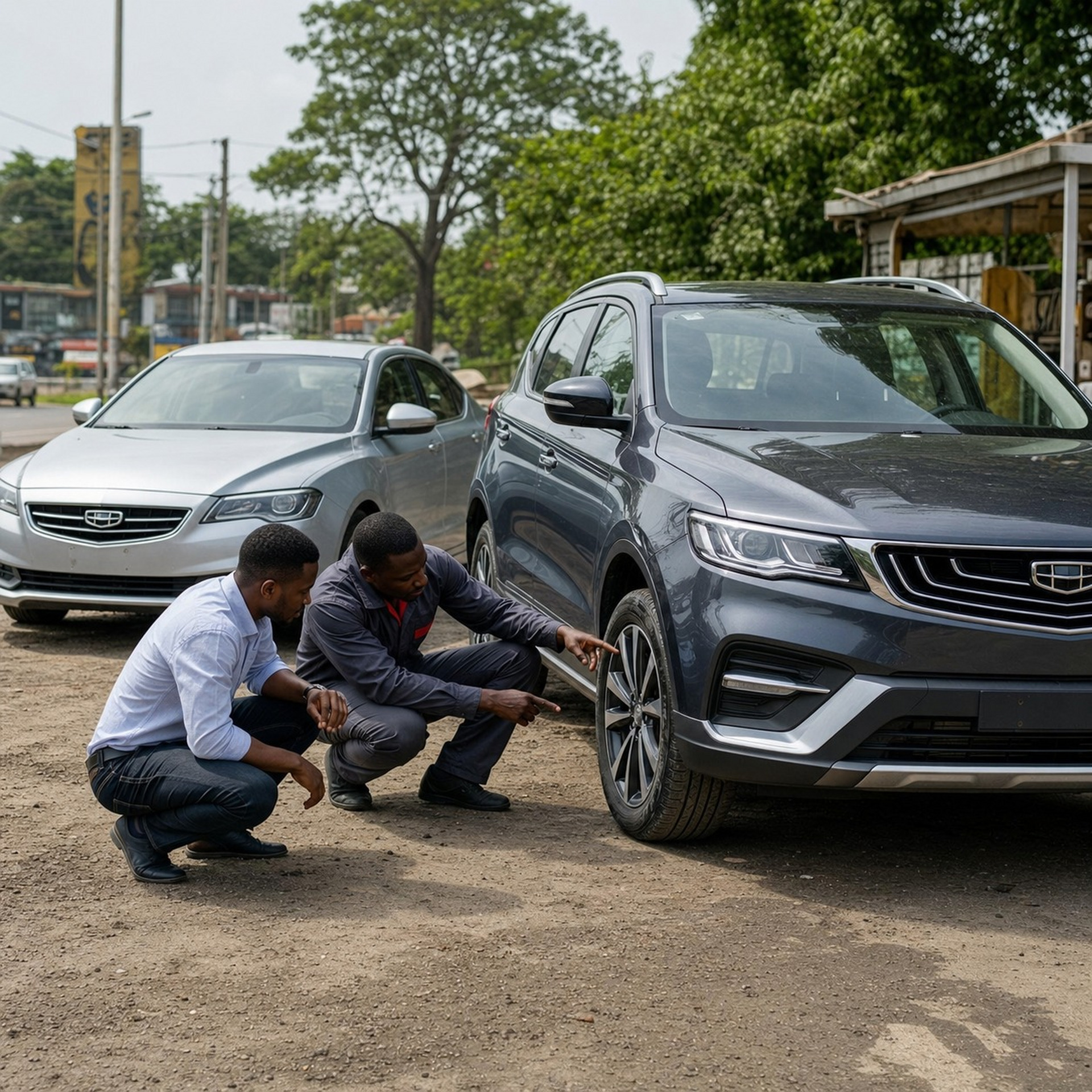
Step 3 — Vehicle inspection. Before any money moves, the car must pass a documented vehicle inspection — mechanical, structural, mileage and accident history. This is the single step that separates a sound import from a salvage liability. Insist on a written report.
Step 4 — Purchase and documentation. Pay through a traceable channel. Collect the commercial invoice, the export documents, and the inspection report — you will need all three at Tema.
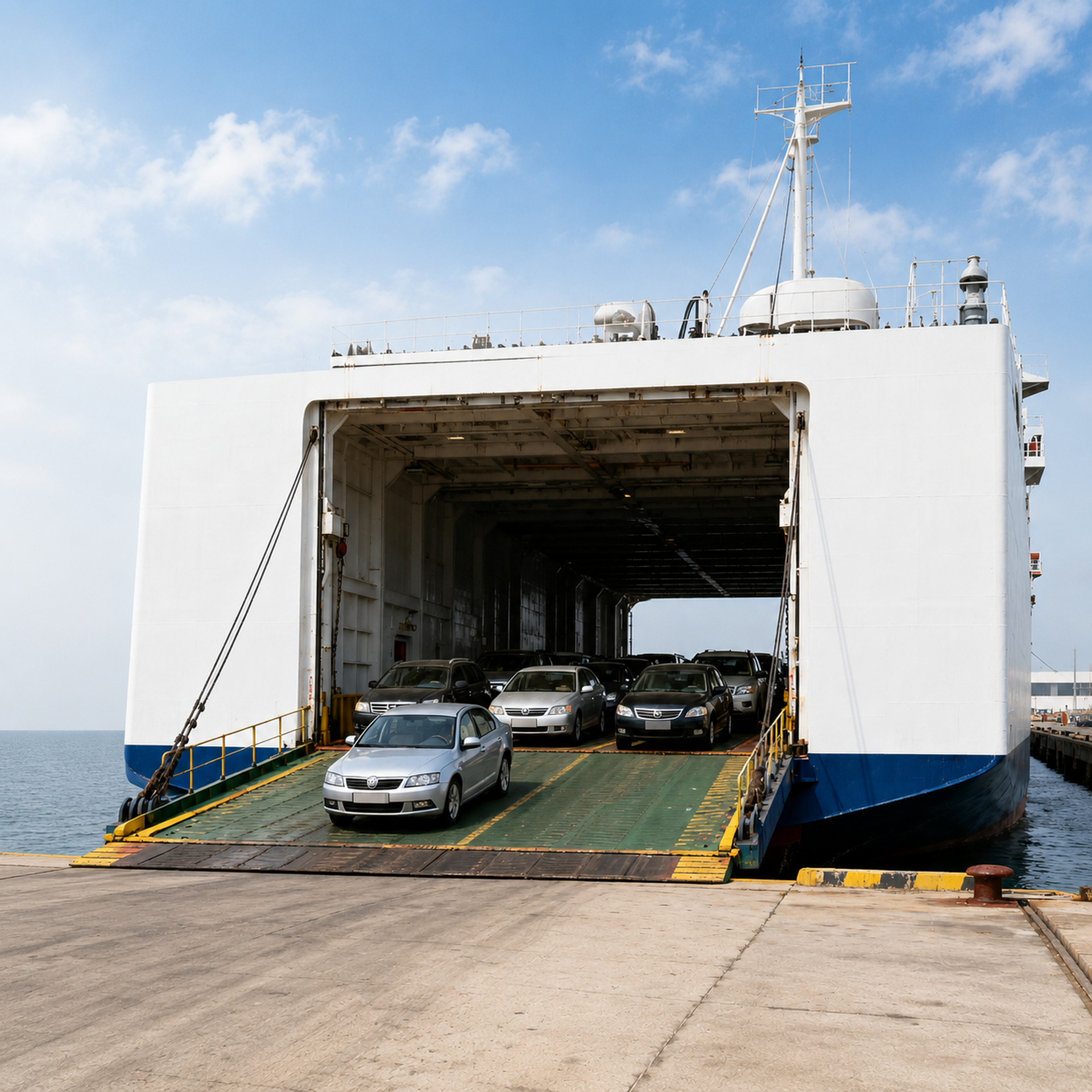
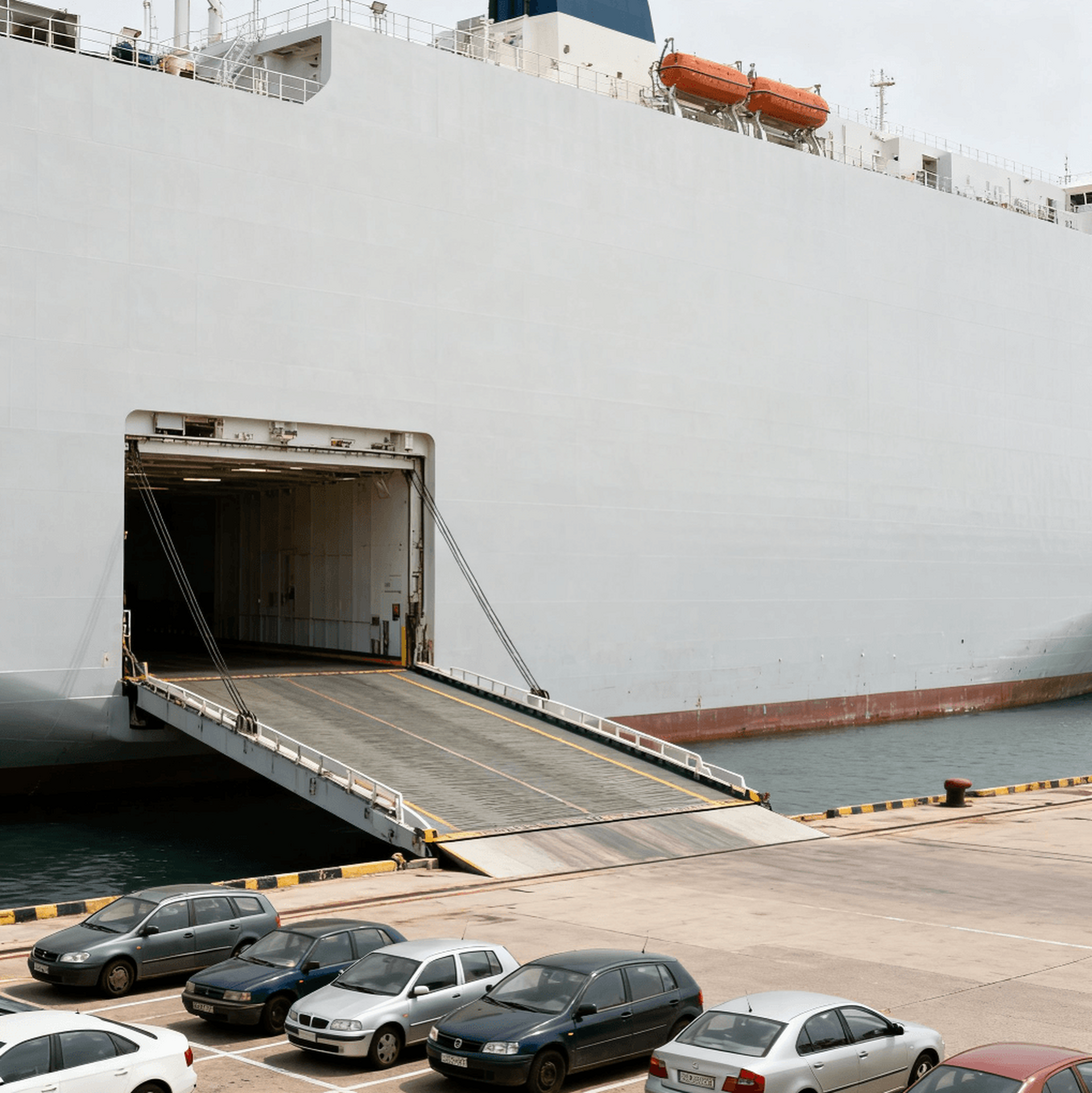
Step 5 — Shipping to Africa. Choose RoRo (roll-on/roll-off) or container. Book the sailing and confirm the Bill of Lading details match the car exactly.
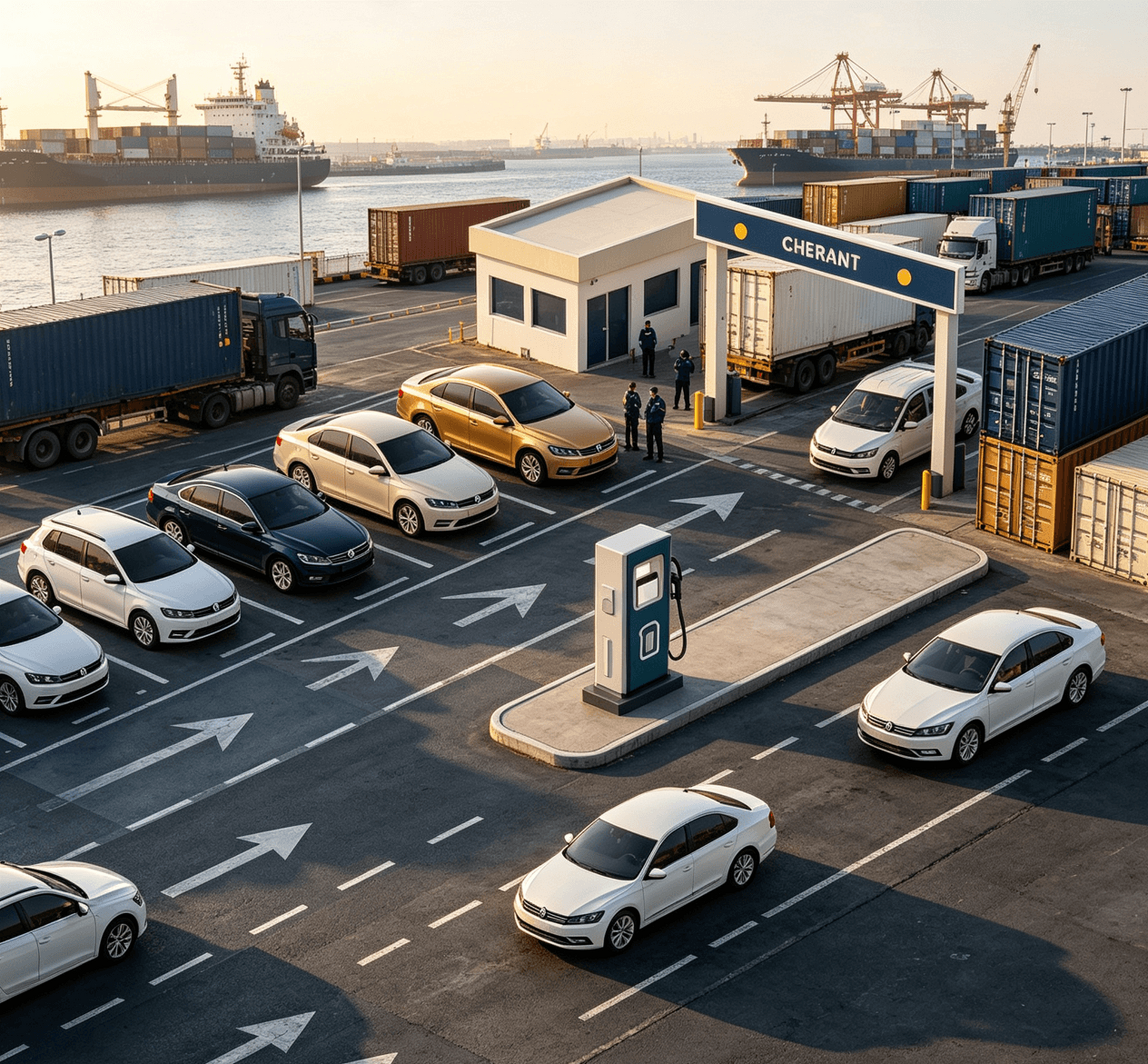
Step 6 — Tema port clearing. The car arrives, you (or your agent) clear customs: duty assessment, inspection, and release. Speed matters here — demurrage accrues daily.
Step 7 — Registration. Register with the DVLA, obtain plates and roadworthiness certification.
Step 8 — Inland delivery. Move the car from Tema to its final city — Accra, Kumasi, Tamale or beyond.
Vehicle Inspection: The Step That Protects Your Money
Of the eight steps, the vehicle inspection is the one most often skipped and the one that causes the most expensive failures. Because the buyer is thousands of kilometers away, they can't see the car; the inspection report serves as the substitute for being there.
A proper inspection covers the engine and transmission, the chassis and structural integrity, brakes and suspension, the electrical system, accident-repair history, and critically verified mileage, cross-checked against the service record. A car that looks clean in photos can still hide a repaired structural panel, a tampered odometer, or a cleared fault code. Only an inspection on the actual car reveals those.
For Guazi units, every exported car passes a 200+ point inspection before it is offered, and the report travels with the car. Whether you import through Guazi or another channel, the rule is the same: no inspection report, no payment.
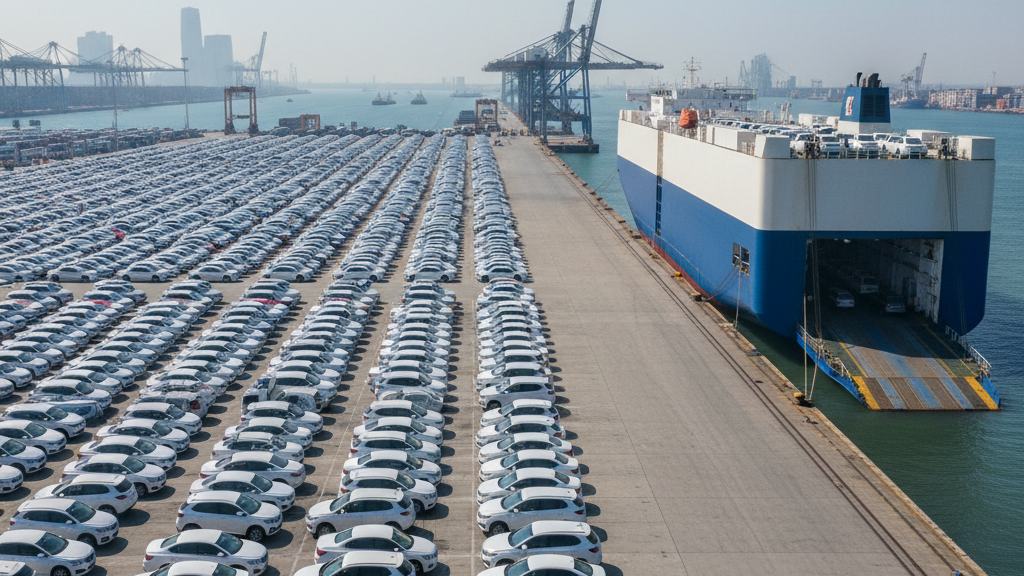
Shipping to Africa: RoRo vs Container
Shipping to Africa comes down to two methods, and the right one depends on value and volume.
| Method | How it works | Best for | Trade-off |
|---|---|---|---|
| RoRo (roll-on/roll-off) | Car is driven onto a dedicated car-carrier vessel | Single cars, standard models | Cheaper; car exposed on deck, no cargo inside |
| Container (sole) | Car sealed in its own 20ft container | Higher-value cars, dealers shipping parts too | More secure; higher cost per unit |
| Container (shared) | Two cars share a 40ft container | Cost-conscious dealers in B2B used car sourcing | Cost split; schedule tied to the co-shipper |
Typical China-to-Tema sea transit runs roughly 30-45 days depending on the port pairing and sailing schedule. Always confirm the vessel, the sailing date, and the Bill of Lading before the car leaves; the BoL is the document Tema customs works from.
Cost Breakdown: What a China-to-Ghana Import Actually Costs
The landed cost has five components. Treat any single figure as a range.
| Cost component | What it covers | Indicative share of landed cost |
|---|---|---|
| Vehicle purchase | The car itself, ex-China | 55-70% |
| Ocean freight | RoRo or container, China-Tema | 8-15% |
| Import duty + levies | GRA duty, VAT, NHIL, GETFund, processing | 18-30% |
| Tema clearing | Agent, port handling, inspection | 3-6% |
| Inland delivery | Tema to final city | 1-4% |
Import duty is the component buyers most often underestimate. Ghana assesses used-vehicle duty on engine size, age and CIF value, with penalties stacking sharply once a vehicle passes 10 years from manufacture. Always run the specific car through the GRA used-vehicle calculator before you buy — never assume.
The three worked examples below trace real paths through the Guazi Africa Desk — a mid-size petrol SUV, a smaller turbo crossover and a diesel pickup. Each is a typical China-to-Ghana sourcing pattern; together they show how landed cost shifts with engine size, fuel type and body style under the same GRA tariff.
Case A — Worked Example: 2019 Toyota RAV4 2.5L, Shanghai to Tema
Buy It Now
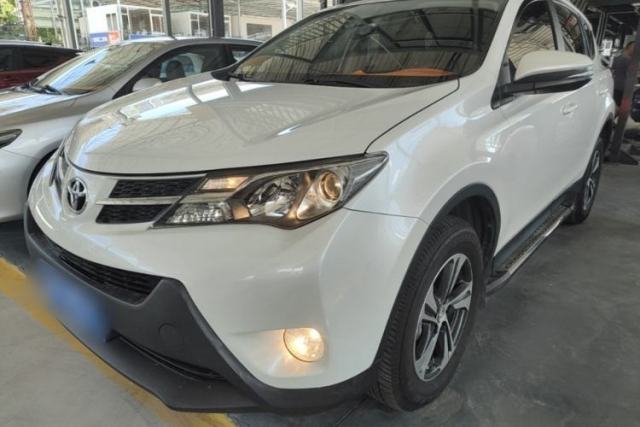
GradeAUsed Toyota RAV4 2015 2.0L CVT Two-Wheel Drive Fashion Edition Certified DealerCertified Dealer
 Guazi InspectedGuazi Inspected
Certified DealerCertified DealerNewly listed
Newly listed
Guazi InspectedGuazi InspectedFOB Price:$9,389$9,989

This is the most common Guazi China-to-Ghana sourcing pattern: a mid-size petrol SUV under the 10-year age cap, RoRo via Shanghai to Tema, cleared and delivered to Accra. An indicative landed-cost build for a real-pattern unit shipped May 2026 through the Guazi Africa Desk. Treat every figure as a working number — the GRA returns the binding duty for your exact VIN; the freight quote moves with the sailing.
Step 1 — Purchase + China-side fees (FOB Shanghai)
| Line | USD | GHS |
|---|---|---|
| Vehicle purchase (owner-direct, Shanghai) | 11,200 | 140,000 |
| Pre-export inspection + documentation | 320 | 4,000 |
| China inland trucking to Shanghai port | 280 | 3,500 |
| China export customs + handling | 200 | 2,500 |
| Subtotal — FOB Shanghai | 12,000 | 150,000 |
Step 2 — Ocean freight + marine insurance (CIF Tema)
| Line | USD | GHS |
|---|---|---|
| Ocean freight, RoRo Shanghai → Tema | 1,400 | 17,500 |
| Marine insurance (~1% of FOB) | 120 | 1,500 |
| CIF Tema value | 13,520 | 169,000 |
Step 3 — Ghana customs duty + levies (assessed on CIF)
For a 2.5L SUV under the 10-year age cap, the GRA stacks the following charges:
| Charge | Basis | Amount (GHS) |
|---|---|---|
| Import Duty (~20% of CIF) | 169,000 × 20% | 33,800 |
| ECOWAS Levy (0.5%) | 169,000 × 0.5% | 845 |
| African Union Import Levy (0.2%) | 169,000 × 0.2% | 338 |
| Special Import Levy (~2%) | 169,000 × 2% | 3,380 |
| VAT (15% on duty-inclusive base) | (169,000 + 33,800) × 15% | 30,420 |
| NHIL (2.5% on duty-inclusive base) | (169,000 + 33,800) × 2.5% | 5,070 |
| GETFund Levy (2.5% on duty-inclusive base) | (169,000 + 33,800) × 2.5% | 5,070 |
| COVID Health Recovery Levy (1%) | (169,000 + 33,800) × 1% | 2,028 |
| Network Charge (~0.4%) | 169,000 × 0.4% | 676 |
| Processing Fee (~1%) | 169,000 × 1% | 1,690 |
| Total duty + levies | ~83,300 |
Step 4 — Tema clearing + DVLA registration + inland delivery
| Line | GHS |
|---|---|
| Clearing agent fees | 4,500 |
| Port handling + examination | 3,200 |
| DVLA registration + plates + roadworthy | 2,800 |
| Inland delivery, Tema → Accra | 1,500 |
| Subtotal | ~12,000 |
Total landed cost, Accra:
| Component | GHS | Share |
|---|---|---|
| CIF Tema | 169,000 | 64% |
| Customs duty + levies | 83,300 | 31% |
| Clearing + DVLA + inland | 12,000 | 5% |
| Landed Accra | ~264,300 | 100% |
For comparison, a 2019 RAV4 2.5L listed on Tonaton or in an Accra forecourt typically sits at GHS 295,000-320,000 in May 2026 — putting the verified direct-import saving at roughly GHS 30,000-55,000, against a 6-10 week timeline.
Three things move the number: the Bank of Ghana USD-GHS rate on duty assessment day, the GRA tariff in effect (rates change with the national budget), and the specific VIN's classification by engine size and body type. Confirm all three on the GRA used-vehicle calculator before you commit.
Case B — Worked Example: 2018 Honda CR-V 1.5T, Guangzhou to Tema
A smaller-engine turbo crossover is a common dealer sourcing target with lower duty bracket, family-friendly cabin, and fuel efficiency. This is a real Guazi China-to-Ghana pattern: a 2018 Honda CR-V 1.5T sourced from a single owner in Guangdong, shipped RoRo from Guangzhou to Tema, and cleared in May 2026.
Buy It Now
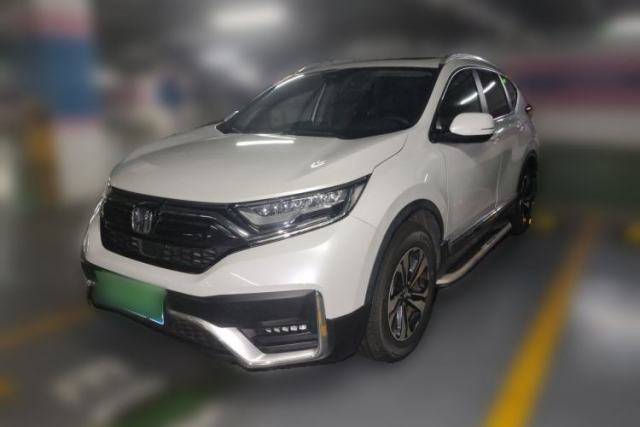
GradeDUsed Honda CR-V 2021 240TURBO CVT 2WD Fashion Edition Individual SellerIndividual SellerGuazi InspectedGuazi Inspected
Individual SellerIndividual SellerNewly listed
Newly listed
Guazi InspectedGuazi InspectedFOB Price:$18,101
FOB Guangzhou + freight to CIF Tema
| Line | USD | GHS |
|---|---|---|
| Vehicle purchase (owner-direct, Guangdong) | 8,800 | 110,000 |
| Pre-export inspection + documentation | 320 | 4,000 |
| China inland trucking to Guangzhou port | 240 | 3,000 |
| China export customs + handling | 200 | 2,500 |
| Ocean freight, RoRo Guangzhou → Tema | 1,400 | 17,500 |
| Marine insurance (~1% of FOB) | 95 | 1,200 |
| CIF Tema value | 11,055 | 138,200 |
Ghana customs duty + levies (1.5T engine, under 10-year cap)
| Charge | Basis | Amount (GHS) |
|---|---|---|
| Import Duty (~20% of CIF) | 138,200 × 20% | 27,640 |
| ECOWAS + AU + Special Import Levies (~2.7%) | 138,200 × 2.7% | 3,731 |
| VAT (15% on duty-inclusive base) | (138,200 + 27,640) × 15% | 24,876 |
| NHIL + GETFund (5% on duty-inclusive base) | (138,200 + 27,640) × 5% | 8,292 |
| COVID Health Recovery Levy (1%) | (138,200 + 27,640) × 1% | 1,658 |
| Network Charge + Processing Fee (~1.4%) | 138,200 × 1.4% | 1,935 |
| Total duty + levies | ~68,100 |
Clearing + DVLA + inland delivery, Tema → Accra: ~GHS 11,500
Total landed cost, Accra:
| Component | GHS | Share |
|---|---|---|
| CIF Tema | 138,200 | 63% |
| Customs duty + levies | 68,100 | 32% |
| Clearing + DVLA + inland | 11,500 | 5% |
| Landed Accra | ~217,800 | 100% |
For comparison, a 2018 CR-V 1.5T listed on Tonaton or in an Accra forecourt typically sits at GHS 240,000-265,000 in May 2026 — putting the verified direct-import saving at roughly GHS 22,000-47,000.
Case C — Worked Example: 2019 Toyota Hilux 2.4D Double-Cab, Tianjin to Tema
A diesel double-cab pickup is a Ghanaian fleet staple — agriculture, construction, rural service. This is a real Guazi China-to-Ghana pattern: a 2019 Toyota Hilux 2.4L diesel sourced from a corporate owner in Tianjin, shipped RoRo from Tianjin to Tema, cleared in May 2026. Pickups face a slightly different duty mix from passenger SUVs, and the larger diesel engine pushes the CIF higher than a comparable petrol crossover.
Buy It Now
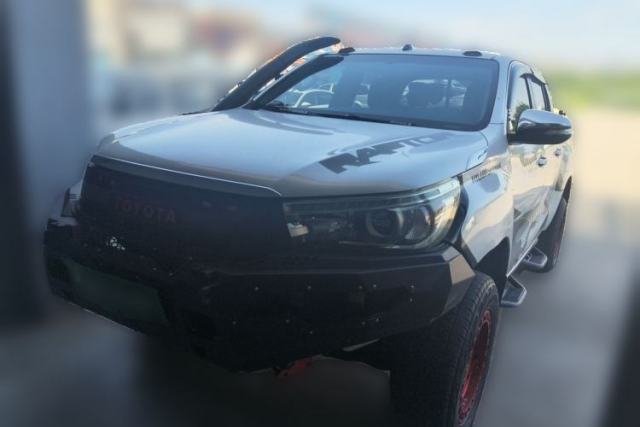
GradeDUsed Toyota Hilux Hilux parallel import, Middle East specification, 4.0-liter automatic, 4 seatsIndividual SellerIndividual SellerGuazi InspectedGuazi Inspected
Individual SellerIndividual SellerGuazi InspectedGuazi InspectedFOB Price:$19,074
FOB Tianjin + freight to CIF Tema
| Line | USD | GHS |
|---|---|---|
| Vehicle purchase (corporate fleet, Tianjin) | 14,500 | 181,200 |
| Pre-export inspection + documentation | 320 | 4,000 |
| China inland trucking to Tianjin port | 200 | 2,500 |
| China export customs + handling | 200 | 2,500 |
| Ocean freight, RoRo Tianjin → Tema | 1,550 | 19,400 |
| Marine insurance (~1% of FOB) | 152 | 1,900 |
| CIF Tema value | 16,922 | 211,500 |
Ghana customs duty + levies (2.4L diesel pickup, under 10-year cap)
| Charge | Basis | Amount (GHS) |
|---|---|---|
| Import Duty (~20% of CIF) | 211,500 × 20% | 42,300 |
| ECOWAS + AU + Special Import Levies (~2.7%) | 211,500 × 2.7% | 5,711 |
| VAT (15% on duty-inclusive base) | (211,500 + 42,300) × 15% | 38,070 |
| NHIL + GETFund (5% on duty-inclusive base) | (211,500 + 42,300) × 5% | 12,690 |
| COVID Health Recovery Levy (1%) | (211,500 + 42,300) × 1% | 2,538 |
| Network Charge + Processing Fee (~1.4%) | 211,500 × 1.4% | 2,961 |
| Total duty + levies | ~104,300 |
Clearing + DVLA + inland delivery, Tema → Kumasi: ~GHS 13,500 (longer inland leg)
Total landed cost, Kumasi:
| Component | GHS | Share |
|---|---|---|
| CIF Tema | 211,500 | 64% |
| Customs duty + levies | 104,300 | 32% |
| Clearing + DVLA + inland | 13,500 | 4% |
| Landed Kumasi | ~329,300 | 100% |
For comparison, a 2019 Hilux 2.4D double-cab in a Kumasi forecourt typically sits at GHS 360,000-395,000 in May 2026 — putting the verified direct-import saving at roughly GHS 30,000-65,000 on a higher-ticket unit.
What the three cases tell you
Run the same GRA tariff across three real Guazi sourcing patterns and one rule jumps out: CIF Tema decides the duty bill, and engine size decides the bracket. A 1.5T crossover lands roughly GHS 50,000 below a 2.5L SUV; a 2.4L diesel double-cab lands roughly GHS 65,000 above it. The forecourt saving versus a local Accra or Kumasi listing falls in a similar range — GHS 22,000-65,000 — and scales with ticket size, not with discount percentage. Pick the body style first, then size the engine to your duty appetite, then run the specific VIN through the GRA calculator before you commit.
Documents You Need at Each Stage
Missing paperwork is the most common cause of demurrage at Tema. Have this checklist ready:
- Commercial invoice — the purchase price and car details, for duty assessment.
- Bill of Lading — issued by the shipping line; the title document for the cargo.
- Vehicle inspection report — proof of condition and verified mileage.
- Export certificate/de-registration — proof the car was legally exported from China.
- Bank payment evidence — a traceable record of the transaction.
- DVLA registration forms — completed for the post-clearing registration step.
Keep digital and printed copies of all six. A complete document set is what turns a multi-week Tema clearance into a multi-day one.
Common Pitfalls and How to Avoid Them
- Skipping the inspection — the costliest mistake. A salvage or odometer-tampered car looks identical to a sound one in photos.
- Underestimating duty — budgeting on the sticker price, not the landed cost. Run the GRA calculator first.
- Buying a car too old — a vehicle that crosses the 10-year age line at the time of import attracts heavy penalty duty.
- RHD by mistake — Ghana prohibits right-hand-drive imports. Every car must be left-hand drive.
- Demurrage from slow clearing — incomplete documents leave the car accruing daily port charges. Prepare the full set in advance.
- Wiring funds to an unverified seller — use a platform with traceable payment and a real inspection, never a direct transfer to a stranger.
How Guazi Helps with B2B Used Car Sourcing
A verified platform collapses the eight steps into a managed chain. Guazi exports 35,000+ vehicles a year, with 8,000+ into African markets, and sources 100% from individual owners — so every car has a genuine history to inspect against. Each exported unit passes the 200+ point inspection, ships left-hand drive, and travels with its inspection report.
For dealers doing B2B used car sourcing at volume, that means predictable margin: verified condition on every unit, documented mileage, and a single point of contact for sourcing, inspection, shipping to Africa and Tema documentation. The process still has eight steps — but the risk in each one is handled.
Ready to source from China?
Access 100,000 verified vehicles monthly. Bid in real-time and secure bulk inventory at highly competitive market rates.
Final Recommendation & Next Steps
A China-to-Ghana import is a sequence, not a gamble. Before you commit:
- Fix your landed-cost ceiling, not just the sticker price.
- Never pay without a documented vehicle inspection report.
- Run the specific car through the GRA duty calculator.
- Prepare all six documents before the car sails.
- Use a verified platform for B2B used car sourcing — traceable payment, real inspection, LHD only.
Follow the eight steps in order and a China import is one of the most cost-effective ways to put a verified, modern car on a Ghanaian road.
Key Takeaways
- Importing a used car from China to Ghana runs in eight ordered steps — sourcing, inspection, purchase, shipping, clearing, registration, delivery
- The vehicle inspection is the step that protects your money — no report, no payment
- Shipping to Africa: RoRo is cheaper for single cars; container is more secure for high-value units or dealer volume
- Landed cost is purchase + freight + duty + clearing + inland — duty is the most underestimated piece
- A verified platform turns B2B used car sourcing into predictable margin: inspected, LHD, documented.
- Guazi facts (35,000+ annual exports, 8,000+ into Africa, 200+ point inspection, 100% individual-owner sourcing): Guazi About.






About Us
Get Support
Follow Us


Copyright © 2015~2026 https://en.guazi.com/, Chongqing Guazi Enterprise Consulting Service Co., Ltd. All rights reserved.