


Guazi
GlobalEnglish


Makes
Buy It NowAuctionsUp to 160 psPort StockAll VehiclesPopular Makes


Shop By Type


Popular Models


Shop By Budget

How BYD Went From 21 Cars to Everywhere in Poland by 2026
Article OverviewBYD in Poland in 2026: five models from the 82,000-zł Dolphin Surf up, the Blade Battery truth, honest safety, the value-vs-Tesla math, and the Hungary factory.
NOTE: Every PLN figure here is a 2026 reference point, compiled mid-2026 from BYD's Polish price list and Polish auto-news sources. BYD prices and trims move quickly, and several of these models are new to the market, so treat the figures as a buying guide rather than a quote, and confirm the current price on the BYD Poland configurator before you order. Range figures are WLTP unless noted.
Two years ago, almost nobody in Poland drove a BYD. The brand recorded around 21 registrations in the first half of 2024, a rounding error in a market this size. A year later that number was roughly 614, and the badge is suddenly everywhere, part of a wider surge that saw Chinese brands sell more than 16,500 passenger cars in Poland in the first half of 2025, around four times the year before. The pull behind BYD in Poland is easy to name: a battery the company makes itself and swears is safer, and prices that undercut a comparable Tesla by something like a fifth.
This guide is the orientation a curious Polish buyer actually needs. We cover how BYD rose so fast here, how we picked the five models worth knowing, and then each car with real PLN prices, from the budget Dolphin Surf to the Tesla-rivalling Seal. After that comes the heart of the piece: an honest look at the Blade Battery and the safety question, the genuine pros and the active-safety caveat nobody should bury, followed by the value-versus-Tesla math, what the new Hungary factory means, and how the NaszEauto subsidy changes the cost. BYD's appeal is real, and unlike some rivals it genuinely fields a full line-up here, so a proper round-up fits.
How BYD went from unknown to everywhere in Poland
BYD's Polish rise is one of the fastest brand stories the market has seen, and it is worth understanding before you shop. The 21-to-614 jump in a single year is striking, but it is really the leading edge of a broader Chinese-EV wave: buyers who once would not have considered an unfamiliar badge are now drawn in by the combination of low prices, long warranties and genuinely modern cars. BYD sits at the front of that wave in Poland, with the widest range and the most recognizable name, even as its global sales softened somewhat in early 2026, which is a useful reminder to read the momentum as strong rather than unstoppable.
The Polish numbers behind the surge
The registration figures tell the story plainly. From around 21 cars in the first half of 2024 to roughly 614 in the same period of 2025, BYD's growth in Poland outpaced almost every established brand in relative terms, and the wider Chinese-brand total of more than 16,500 passenger cars shows it was not a fluke. Poland has become a key gateway for Chinese EVs entering Europe, and BYD's expanding dealer presence here reflects a market the company clearly takes seriously. The base is still small compared with Tesla or the legacy makers, but the trajectory is what has dealers and buyers paying attention.
What makes BYD different from Tesla and the legacy brands
The thing that sets BYD apart, and the spine of this whole guide, is that it makes its own batteries. While most carmakers buy cells from suppliers, BYD designs and builds its LFP Blade Battery in-house, which it argues gives it an edge on safety, cost and longevity all at once. Pair that with prices that consistently land below a comparable Tesla or Volkswagen, and warranties that run longer than the Western norm, and you have a value proposition the established brands struggle to match. Tesla answers with its charging network and software; BYD answers with the battery and the price tag, and that is the contrast a Polish buyer is really weighing.
How we picked these five BYD models for Poland
We chose the five BYDs that a Polish buyer can genuinely walk in and order, judged on the things that matter locally: the real PLN price, usable WLTP range, the battery and platform underneath, and actual Polish availability rather than cars that exist only on a global brochure. Where it helps, we lean on something most outlets cannot offer, the first-hand inspection data Guazi holds on BYD models at scale, to flag which cars age well and what to watch. The result is a line-up that spans the budget hatch to the flagship saloon, with a plug-in hybrid option included for buyers not yet ready to go fully electric.
BYD Dolphin Surf, the cheapest way into a new EV in Poland
The Dolphin Surf is BYD's budget hero and arguably the most important car in the range for the Polish market. It starts from around 82,700 PLN in Active trim, with an 88 KM motor and a roughly 30 kWh Blade battery, which makes it one of the cheapest ways into a brand-new electric car in the country. It is a small city car, not a long-distance cruiser, so the modest range suits exactly the urban and commuter buyers it targets: people who charge at home, drive mostly in town, and want the running-cost savings of electric without a six-figure price tag. For a first EV, a second household car or a city runabout, the Dolphin Surf is the entry point that makes BYD's value story concrete, and at this price it tends to move quickly off a dealer lot.
BYD Dolphin, the compact all-rounder
The Dolphin proper is the sensible step up, the car for a buyer who wants real range and everyday practicality without leaving the affordable end of the range. It starts from around 141,000 PLN in Comfort trim, with a 204 KM motor and a larger 60.4 kWh Blade battery that gives it the legs the Surf lacks. This is the compact all-rounder that handles a daily commute, a weekend away and the occasional longer trip, and it competes head-on with cars like the MG4 for the heart of the mainstream EV market. If the Surf is the city car and the Seal is the statement, the Dolphin is the quietly rational choice most buyers should at least test, offering the bulk of what a family needs at a price that still undercuts the established brands.
BYD Atto 3, the family crossover that put BYD on the map
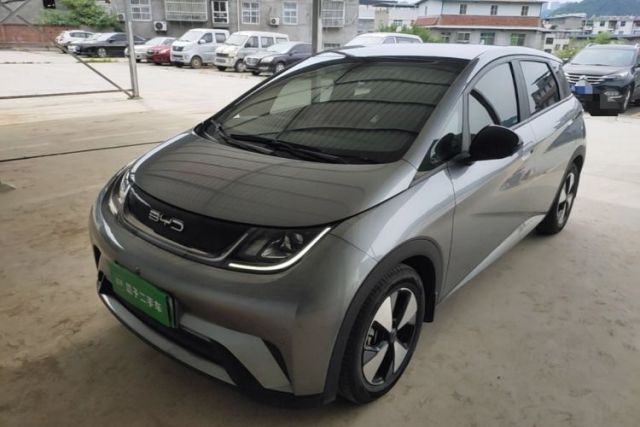
The Atto 3 is the car that introduced most Europeans to BYD, and it remains the family-friendly heart of the range. It runs from around 176,300 PLN in Design rear-wheel-drive form up to roughly 189,200 PLN for the Excellence all-wheel-drive version, and the updated Atto 3 EVO pushes WLTP range toward 510 km. It is a compact crossover sized for family life, with a roomy cabin, a 60.4 kWh Blade battery and the kind of equipment list that shames pricier rivals. For a Polish family wanting one electric car that does the school run, the supermarket and the holiday drive, the Atto 3 is the natural BYD choice, and its longer time on European roads means there is more real-world data behind it than the newer models. The thing to watch is that the EVO and the various trims differ noticeably in range and price, so match the version to your actual driving.
BYD Seal, the Tesla Model 3 rival
Buy It Now
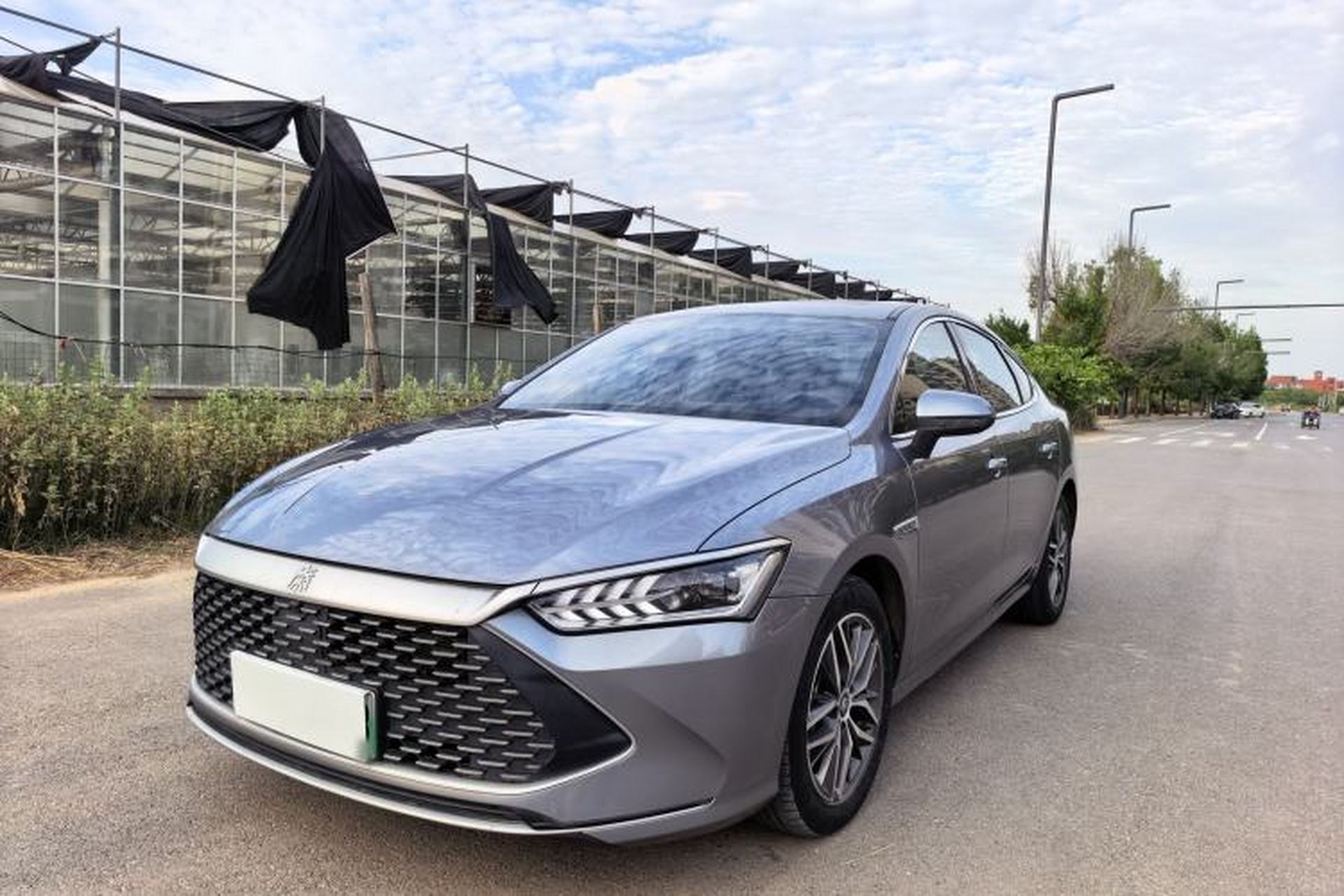
GradeSUsed BYD Seal 2025 650 Intelligent Driving Version Certified DealerCertified Dealer
 Guazi InspectedGuazi Inspected
Certified DealerCertified DealerNear-new car
Near-new car
Guazi InspectedGuazi InspectedOriginal paint
Original paint
FOB Price:$24,865

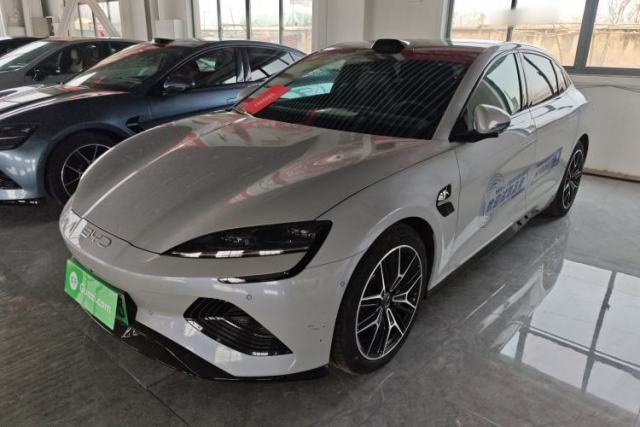
The Seal is BYD's statement car and the centre of its value-versus-Tesla pitch. It starts from around 215,900 PLN in Design trim, with a 313 KM motor and a sizeable 82.5 kWh Blade battery, and it is aimed squarely at the Tesla Model 3. The comparison is the one Polish buyers genuinely run, and it captures the whole BYD argument: the Seal matches or beats the Model 3 on quoted range, interior plushness and standard kit, and it typically costs less, while the Model 3 answers with the Supercharger network and a longer service track record in Poland. For a buyer who charges mostly at home and cares more about the car than the charging ecosystem, the Seal is a compelling, better-equipped alternative for the money. The honest caveat sits in the next section, because the Seal, like its siblings, is stronger on hardware than on driver-assistance software.
BYD Han and the Seal U plug-in hybrid
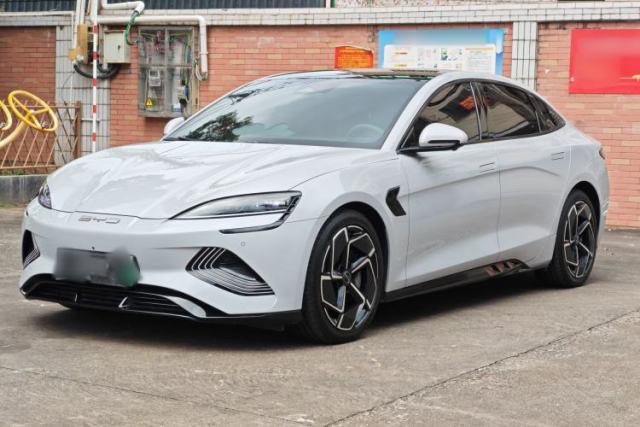
Rounding out the range are two cars for buyers at the edges of the line-up. The Han is BYD's flagship saloon, a large, premium-feeling executive car that sits at the top of the Polish range; its exact current price is worth confirming on the configurator, but it is the BYD for someone who wants space and presence rather than the lowest cost. The Seal U DM-i, by contrast, is the pragmatist's pick, a plug-in hybrid SUV from around 169,900 PLN in Boost form with a 1.5-litre engine and a 218 KM system output. It matters to be clear here: the Seal U DM-i is a plug-in hybrid, not a full battery-electric car, so it pairs everyday electric running with a petrol engine for longer trips and reassurance, but it is not eligible for the BEV subsidy in the way the pure-electric models are. For a Polish buyer not yet ready to commit fully to electric, it is the sensible bridge.
The five at a glance: prices, range and who each suits
Here is the line-up summarized for a Polish buyer, with the budget hero at the top and the flagship below.
| Model | From (PLN) | Battery / type | Best suited to |
|---|---|---|---|
| Dolphin Surf | from 82,700 | about 30 kWh BEV | City drivers, first or second car |
| Dolphin | from 141,000 | 60.4 kWh BEV | The compact all-rounder |
| Atto 3 | 176,300 to 189,200 | 60.4 kWh BEV, EVO to 510 km | Families wanting one do-it-all EV |
| Seal | from 215,900 | 82.5 kWh BEV | The Tesla Model 3 rival |
| Seal U DM-i | from 169,900 | 1.5 plug-in hybrid | Buyers not ready for full electric |
The Blade Battery and the safety question, answered honestly
This is the spine of the BYD case, so it deserves a straight, balanced answer rather than a sales pitch. The Blade Battery is BYD's in-house LFP design, and its strengths are real: LFP chemistry is inherently more thermally stable than the nickel-rich alternatives, the blade format is engineered to resist fire even when physically pierced, and LFP cells tend to tolerate frequent full charging and last well over many cycles. That combination of safety, cost and longevity is the genuine technical reason BYD can price the way it does, and it is not marketing fluff. On crash safety more broadly, the picture is also strong: Chinese EVs including BYD have swept five-star Euro NCAP ratings, to the point that many of the safest cars on sale in Europe are now Chinese.
The honest caveat is about active safety rather than the battery or the crash structure. BYD's driver-assistance and advanced safety-assist systems, the lane-keeping, the warnings, the automated interventions, can lag the very best Western cars in how smoothly and reliably they work, even when the headline NCAP star rating is full marks. So does the Blade Battery matter for you? If your priorities are fire safety, battery longevity and low running cost, it is a real and meaningful advantage worth choosing BYD for. If you lean heavily on polished driver-assistance technology for long motorway journeys, test those systems carefully on the specific model before you buy, because that is the one area where BYD's hardware lead does not fully carry through to the software.
Is a BYD really better value than a Tesla in Poland?
The value question is the one that brings most buyers to BYD, and the answer is a qualified yes. BYD typically prices 15 to 25% below a comparable Tesla or Volkswagen ID model, and it pairs that with the kind of long warranties common among Chinese brands, which strengthens both the ownership case and resale confidence. For the sticker price plus the equipment you get for it, BYD genuinely beats Tesla on paper across most of the range. The table sets the trade out fairly.
| Factor | BYD | Tesla |
|---|---|---|
| Price for equivalent car | 15 to 25% lower | higher |
| Battery | in-house LFP Blade | bought-in cells |
| Standard equipment | generous | competitive |
| Warranty | typically longer | shorter |
| Charging network | public CCS2 | Supercharger network |
| Driver-assistance software | capable, can lag the best | mature, proven |
The honest reading is that BYD wins on price, battery and kit, while Tesla wins on charging and software maturity. Which matters more depends entirely on whether you charge at home or live on the motorway, a trade we explore further in our piece on Tesla in Poland.
Made in Europe now: what the Hungary factory means for Polish buyers
A development that should reassure Polish buyers is that BYD is no longer purely an import brand. The company's plant in Szeged, Hungary, is expected to start production in 2026, which over time should cut import costs and tariff exposure, shorten delivery times and ease parts supply for the European range. This matters because it signals long-term commitment rather than a hit-and-run sales push, and it sits within a shifting trade backdrop: the EU has moved from straight tariffs on China-built EVs toward a minimum-price, or price-floor, undertaking from January 2026, which keeps a floor under prices while letting BYD compete. For a buyer worried about whether a Chinese brand will still be supporting the car in five years, European production is a genuine vote of confidence.
Subsidy and the real cost: NaszEauto and BYD
Poland's NaszEauto programme can take up to around 40,000 PLN off a qualifying new battery-electric car, and most of BYD's pure-electric models comfortably qualify, since their net prices sit under the scheme's cap. That makes the already-keen pricing on cars like the Dolphin and Atto 3 sharper still. Two caveats matter. First, the plug-in hybrid Seal U DM-i is not a BEV, so do not assume it qualifies on the same terms as the electric models. Second, the programme runs until a deadline or until its funds are exhausted, whichever comes first, so by the time you read this the window may be closing. Treat it as a reason to check current availability rather than a guaranteed discount, and confirm the live terms before you bank on them.
Buying a BYD used, and how Guazi helps
BYD is the heart of the Chinese new-energy category that Guazi was built around, which makes this the most genuine bridge in the whole cluster. As one of China's largest used new-energy-vehicle platforms, Guazi has first-hand inspection data on BYD models at a scale no Western outlet can match, so as these cars begin reaching the secondary market the used-value case becomes concrete: the same Blade-Battery health, charging history and condition checks that decide any used EV's worth are exactly what the platform is built to assess. To be clear and honest, Guazi does not retail or export used BYDs into Poland; what we offer is inspection expertise and a clear sense of what to verify before you commit anywhere. If you are weighing a used BYD as the cars start to appear, those battery and condition checks are the ones to insist on. See how Guazi inspects Chinese EVs.
Exploring Chinese EVs at the value end? See inspected listings at Guazi
Key Takeaways
- BYD in Poland went from around 21 registrations in early 2024 to roughly 614 a year later, leading a wider Chinese-EV surge on the strength of its battery and its price.
- The line-up genuinely spans five-plus models, from the 82,700 PLN Dolphin Surf to the 215,900 PLN Seal, with a plug-in hybrid Seal U DM-i and the Han flagship.
- The in-house LFP Blade Battery is a real advantage for fire safety, longevity and cost, and BYDs earn five-star Euro NCAP, but driver-assistance software can lag the best Western cars.
- BYD typically prices 15 to 25% below a comparable Tesla with more kit and a longer warranty; Tesla answers with charging and software maturity.
- The Szeged, Hungary factory starting in 2026 signals long-term commitment, and NaszEauto can cut up to around 40,000 PLN off the qualifying BEVs, subject to funds.
Sources & References
- BYD Europe
- BYD Poland price list (PGD)
- Electra, BYD 2026 models, prices and ranges
- InsideEVs, the safest cars in Europe are now Chinese (Euro NCAP)
- electrive, EU minimum-price mechanism replaces tariffs
Weighing a new BYD against an inspected used Chinese EV?i
Our team can explain what to check on a used BYD and walk you through its battery-health report before you commit.



About Us
Get Support
Follow Us


Copyright © 2015~2026 https://en.guazi.com/, Chongqing Guazi Enterprise Consulting Service Co., Ltd. All rights reserved.