


Guazi
GlobalEnglish


Makes
Buy It NowAuctionsUp to 160 psPort StockAll VehiclesPopular Makes


Shop By Type


Popular Models


Shop By Budget

What the Xiaomi SU7 Really Costs and How to Get One in Poland
Article OverviewThe Xiaomi SU7 in Poland in 2026: real WLTP range, trims, PLN price with the EU floor, the Tesla Model 3 question, and the honest truth about buying one.
A note on the prices and numbers in this review. The PLN and EUR figures here are 2026 estimates, compiled mid-2026 from manufacturer specs and European market reporting. Because the SU7 is not officially sold in the EU yet, every Polish price is a projection built on duty, certification and the new EU minimum-price mechanism, not a dealer quote. Range figures quoted by Xiaomi use China's optimistic CLTC cycle; we pair them with realistic WLTP equivalents throughout. Treat all of it as a guide and confirm current numbers before you act.
A phone company built a car, and that car out-sold the Tesla Model 3 in its home market. That sentence is why the Xiaomi SU7 is the most talked-about Chinese EV in the world right now, and why a lot of Poles, many already carrying a Xiaomi phone in their pocket, are quietly curious about it. The questions tend to be blunt: is it actually any good, can I get one in Poland, and what would it really cost in złoty? This review answers all three without the hype, including the uncomfortable part most global spec pages skip.
Here is the short version up front, because you deserve it before 3,000 words. The SU7 is a genuinely impressive, well-engineered electric sedan that beats the Model 3 on paper for range, charging speed and equipment. But it is not officially on sale in the European Union yet, with a launch not expected before 2027, so in 2026 the only way a Pole drives one is through a grey import, and that carries real trade-offs for warranty, software and resale. The rest of this piece covers what the SU7 is, its trims including the wild SU7 Max and Ultra, its real range, the Tesla Model 3 comparison everyone runs, its likely PLN price once EU rules bite, and the honest reality of getting one here.
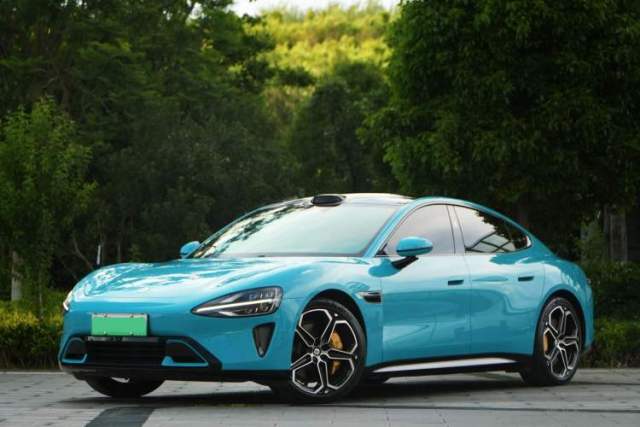
What exactly is the Xiaomi SU7?
The SU7 is Xiaomi's first car, and it arrived with the kind of ambition you would expect from a company that sells phones, watches and rice cookers by the hundred million. It is a sleek full-size electric sedan, clearly styled with a Porsche Taycan flavour, built on Xiaomi's own platform and tightly woven into the company's wider ecosystem of devices. The reason the car world pays attention is not novelty but execution: Xiaomi delivered roughly 258,000 SU7s in China in 2025, ahead of the Model 3's local tally of around 200,000, which is a startling result for a debut product. This is not a phone brand dabbling in cars; it is a serious EV that happens to wear a familiar tech badge, and that combination is exactly why Polish buyers who would never have considered a Chinese sedan are suddenly interested.
The trims, from Standard to that wild Ultra
The SU7 range climbs from a sensible volume car to a hypercar-baiting halo, and the xiaomi su7 max sits in the sweet spot of that ladder. For 2026 Xiaomi upgraded the electrical architecture across the range, and the differences between trims are mostly about power, voltage and battery rather than wildly different cars. Most Polish interest, realistically, lands on the Standard and Pro for value or the Max for performance; the Ultra is a fascinating flagship that is almost beside the point for anyone actually trying to buy here.
| Trim | Architecture | Headline range / power | Where it sits |
|---|---|---|---|
| SU7 Standard | 752 V | strong everyday range, rear-wheel drive | The sensible volume car |
| SU7 Pro | 752 V | 902 km CLTC claimed, long-range focus | The distance pick |
| SU7 Max | 897 V | dual-motor, near-supercar pace | The performance sweet spot |
| SU7 Ultra | high-voltage flagship | 0 to 100 km/h in about 2.78 s | The halo, over 80,000 € in the EU |
Standard and Pro, the volume cars
The Standard and Pro are where the SU7 makes its case as a daily driver. The Pro carries Xiaomi's headline 902 km CLTC range claim and a 752 V architecture that enables genuinely quick charging. These are the trims a normal Polish family would actually consider, offering the space, comfort and equipment of a premium sedan without the performance-car price. The realistic European range is lower than the CLTC headline, which we get into below, but it is still firmly long-distance capable.
SU7 Max, the performance sweet spot
The Max steps up to an 897 V architecture and dual-motor all-wheel drive, and it is the trim enthusiasts circle. It pairs the full long-range battery with serious pace and the quickest charging in the line-up, and Xiaomi claims it can recover something close to 670 km of range in about 15 minutes at a high-power charger. For a Polish buyer who wants one car that can do the school run, the autobahn dash to Berlin and a track day, the Max is the obvious target, assuming you can get one.
SU7 Ultra, the halo
The Ultra is the headline-grabber, with a 0 to 100 km/h time around 2.78 seconds that puts it in genuine supercar territory. It is a remarkable engineering statement, but in Poland it is largely academic: priced in China around ¥529,900, roughly 64,000 €, it would likely clear 80,000 € once EU duties and certification are added, which moves it out of the conversation for almost everyone reading this. Admire it, then look back at the Pro and Max.
Range and charging: separating the CLTC headline from real life
The 902 km figure is real, but it is a CLTC number, and CLTC is the most generous of the major test cycles. Translated toward Europe's stricter WLTP standard, the SU7 Pro's realistic range is closer to 680 to 720 km, which is still genuinely excellent and ahead of most rivals at the price. The lesson is the same one that applies to every Chinese EV: read the CLTC headline as the manufacturer's best case, discount it toward WLTP, and the car remains impressive rather than unbelievable. Quoting the 902 km figure without that context is how buyers end up disappointed.
Charging is where the SU7's high-voltage architecture earns its keep. The 800 V-class systems allow very high charging power, and Xiaomi's claim of roughly 670 km recovered in 15 minutes, with a 10 to 80% top-up in around 11 minutes on the right charger, is a real-world advantage on a long trip. The catch for Poland is not the speed but the standard, which leads to the single most important practical question.
Does it even fit Polish chargers?
A China-market SU7 ships with the GB/T charging standard, not the CCS2 connector used across Poland and the EU, so any car brought into Poland must be adapted to CCS2 to use the public network. Reputable grey importers do exactly this, but it is something to verify on any specific car rather than assume, because a sedan that cannot use Poland's growing fast-charging network is no use at all. If you want the full picture of where and how you would actually charge it here, our guide to the EV charging network in Poland covers the operators, costs and route planning in detail.
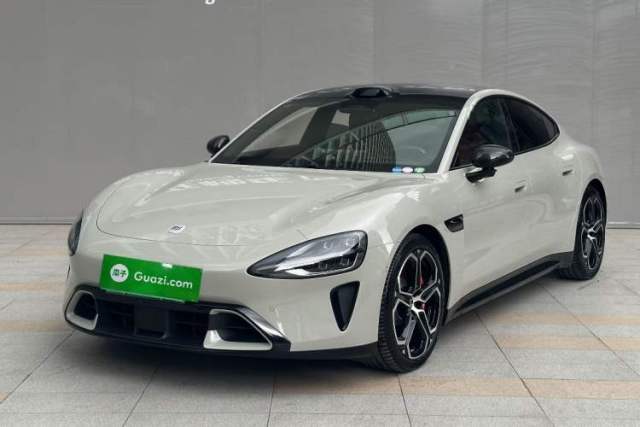
Xiaomi SU7 vs Tesla Model 3: the comparison everyone runs
No SU7 article escapes the Model 3 comparison, because it is the car the SU7 was explicitly built to beat, and the one Polish buyers cross-shop. On paper the SU7 wins the spec sheet: it starts cheaper in China at around the equivalent of 32,800 dollars against the Model 3's roughly 39,990, and it leads on quoted range, charging speed and standard equipment. The Ultra and Max also bury the standard Model 3 on raw acceleration. If the decision were made purely on a feature list, the SU7 would take it comfortably.
But Poland is not a spec sheet. Tesla's advantages are exactly the ones that matter most to a real owner here, and they are hard to copy. The Supercharger network is the best and among the cheapest fast-charging in the country, Tesla has a proven service and parts footprint in Poland, and its software arrives in Polish with a long track record of over-the-air updates. The SU7, by contrast, is a grey import with no official Polish service, software that may default to Chinese or English, and an uncertain warranty path. The table below sets the two out honestly.
| Factor | Xiaomi SU7 | Tesla Model 3 |
|---|---|---|
| Starting price (home market) | from about 32,800 USD | from about 39,990 USD |
| Quoted range | higher (902 km CLTC, about 680 to 720 km WLTP) | lower but proven |
| Charging speed | very fast, 800 V-class | fast, plus Supercharger access |
| Charging network in Poland | public CCS2 only, after adaptation | Supercharger network, cheapest DC |
| Service and parts in Poland | none official, grey import | established dealer and service network |
| Software language and updates | may be Chinese or English, uncertain | Polish, proven OTA history |
| Availability in Poland 2026 | grey import only | on sale, orderable today |
The honest verdict: the SU7 is arguably the better car, but the Model 3 is by far the easier and lower-risk one to actually own in Poland in 2026.
What does the Xiaomi SU7 cost?
The xiaomi su7 price is the keyword everyone searches and the hardest figure to pin down, because the China price and the European price are very different animals. In China the SU7 is a value sensation. By the time one reaches Poland, you have to add EU import duties, certification, the CCS2 adaptation and a grey importer's margin, all of which push the real number well above the Chinese sticker. A reasonable expectation for a standard car landed in Europe is somewhere from around 35,000 to 40,000 €, with the Max higher and the Ultra past 80,000 €.
There is also a regulatory factor that actively props up the price of any legal EU SU7. Since 2024 the EU added tariffs of 7.8 to 35.3% on top of the standard 10% on China-built EVs, and from January 2026 carmakers can swap those tariffs for a minimum-price, or price-floor, undertaking instead. The effect is to set a floor under what a legally imported Chinese EV can be sold for in the EU, so the bargain-basement Chinese pricing does not translate directly to Poland even once official sales begin. The table gives the rough shape of it.
| Trim | China price (approx.) | Estimated EU/PLN landed | Notes |
|---|---|---|---|
| SU7 Standard | from about 32,800 USD | from roughly 150,000 to 175,000 PLN | grey import, duty and CCS2 added |
| SU7 Pro | higher | roughly 175,000 to 200,000 PLN | long-range, most cross-shopped |
| SU7 Max | higher again | well above 200,000 PLN | performance trim |
| SU7 Ultra | about 64,000 EUR | above 80,000 EUR landed | halo, largely academic in PL |
Can you actually buy a Xiaomi SU7 in Poland in 2026?
This is the part the hype skips, and it is the most important thing in the article, so here it is plainly: you cannot walk into a Polish dealer and order a new Xiaomi SU7 today. Xiaomi has confirmed a European rollout, but not before 2027 at the earliest, with France signalling 2027 as a starting point. Everything available in Poland in 2026 is a grey import, a car brought in privately or by a specialist rather than through an official Xiaomi channel.
That reality shapes everything. A grey-import SU7 means no factory warranty you can rely on in Poland, parts and repairs that depend on independent specialists rather than a dealer network, software that may not be localized to Polish, and a resale value that is harder to predict because the official market does not exist yet. None of this makes the car a bad one; it makes it a more involved, higher-risk purchase than a Model 3 or an officially sold BYD. Your realistic options in 2026 come down to this: if you want an SU7 now and accept the trade-offs, a reputable grey importer with proven CCS2 adaptation and some form of support is the route; if you want a Chinese EV with official Polish backing today, a BYD or MG makes far more sense; and if you simply love the SU7, the patient move is to wait for the official 2027 launch when warranty, service and Polish software arrive with it.
The used and import angle, and where Guazi fits
As a Chinese new-energy vehicle, the SU7 sits squarely in the category Guazi was built around, which is why a word on the used and import side belongs here. Guazi is one of China's largest used new-energy-vehicle platforms, with standardized inspection of exactly these kinds of cars at a scale no Western outlet can match, so the questions that matter on any China-market used EV, battery health, charging-port standard, software region and accident history, are precisely what such inspection is designed to surface. If you are weighing a used or imported SU7, those are the checks to insist on. To be clear and honest, Guazi does not retail or export the SU7 into Poland, and any China-spec car carries the warranty and software caveats described above; what we offer is the inspection-led, buyer's-side perspective on Chinese EVs that a global spec sheet cannot. See how inspected Chinese EVs are checked at Guazi
Exploring Chinese EVs beyond the hype? See inspected listings at Guazi
Living with it: the smart-cockpit reality
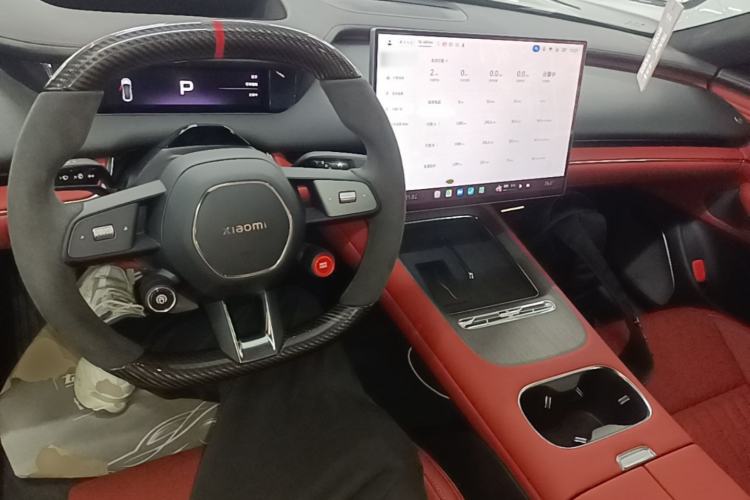
Where the SU7 most obviously reflects its maker is inside, and this is genuinely a high point. The cabin is dominated by Xiaomi's HyperOS, the same software family that runs its phones and home devices, and the integration is the party trick: a Xiaomi phone, tablet and the car talk to each other seamlessly, and the interface is slick and fast in a way that shames a lot of legacy carmakers. Reviewers consistently praise the screen response, the build quality and the sheer amount of standard equipment for the money. The flags they raise are the predictable ones for a young product: some menus and voice functions are oriented to the Chinese market, the driver-assistance suite is capable but not flawless, and long-term software support outside China is unproven. For a tech-literate Polish buyer the cockpit is a real draw; just go in knowing the ecosystem is built around Xiaomi's world, which is a delight if you already live in it and less so if you do not.
Key Takeaways
- The Xiaomi SU7 is a genuinely impressive electric sedan that beats the Tesla Model 3 on paper for range, charging speed and value.
- It is not officially on sale in the EU until 2027 at the earliest, so any SU7 in Poland in 2026 is a grey import with warranty, software and resale caveats.
- The 902 km headline is CLTC; the realistic European WLTP range is closer to 680 to 720 km, still class-leading.
- Expect a landed Polish price well above the Chinese sticker, from roughly 150,000 PLN for a standard car, with the EU price-floor keeping legal pricing up.
- For a lower-risk Chinese EV you can buy and service in Poland today, a BYD or MG is the sensible alternative while the SU7's official launch is still ahead.
Sources & References
- Wikipedia, Xiaomi SU7
- Electra, Xiaomi SU7 EU price, range and release
- InsideEVs, Xiaomi SU7 2026 facelift
- Electrek, SU7 outsells the Model 3 in China
- electrive, EU minimum-price mechanism replaces tariffs
Curious about Chinese EVs but want them checked before you commit?
Our team can explain what to inspect on a China-market EV and walk you through the condition report that matters most.




About Us
Get Support
Follow Us


Copyright © 2015~2026 https://en.guazi.com/, Chongqing Guazi Enterprise Consulting Service Co., Ltd. All rights reserved.