


Guazi
GlobalEnglish


Makes
Buy It NowAuctionsUp to 160 psPort StockAll VehiclesPopular Makes


Shop By Type


Popular Models


Shop By Budget

Why the MG4 Keeps Outselling Pricier EVs in Poland in 2026
Article OverviewMG in Poland in 2026: five EVs with PLN prices, real WLTP range and charging specs, the rare MG5 estate, the 7-year warranty, and the safety caveat.
A note on the figures in this guide. Every PLN price here is a 2026 reference point, compiled mid-2026 from MG's Polish configurator and Polish auto-news sources. Some aggregators list suspiciously low MG4 starting figures that do not match the official configurator, so we anchor to mgmotor.pl and treat outliers as errors. Range, battery and charging figures are drawn from MG and European EV databases and are WLTP unless noted. Specs and trims move between model years and markets, so confirm the current numbers on the MG Poland configurator before you order.
For Poles who find BYD and Xiaomi a leap of faith, MG in Poland offers a softer landing. The badge has been on British roads since the 1920s, it carries decades of motoring heritage, and it is now owned by China's SAIC and priced accordingly. That combination, a familiar name at a Chinese price, is the whole appeal, and it explains why the MG4 has been one of Europe's best-selling electric cars for years. This is not a newcomer testing the water; it is an established player most Polish buyers underestimate.
This guide gives the full picture a value-minded buyer needs. We cover what MG actually is in 2026, how we picked the five EVs worth knowing, and each car with real PLN prices, the WLTP range, the battery and how fast it charges, including the genuinely rare electric estate that BYD and Tesla simply do not offer. Then comes the part the appeal depends on: the British-or-Chinese question answered head-on, the 7-year warranty that anchors MG's value pitch, an honest look at where MG's safety technology lags, what WLTP range really means once a Polish winter gets involved, and the three-way the value buyer actually runs between an MG, a BYD and a used Tesla. MG fields several EVs here, so a proper round-up fits, and the through-line is simple: this is the low-risk, well-priced, familiar way into electric driving.
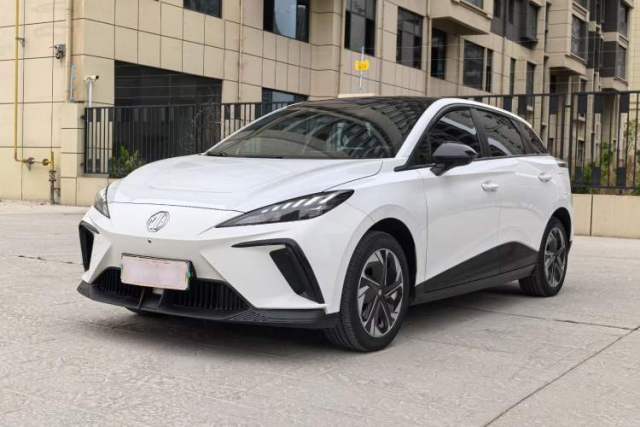
A British name, a Chinese owner: what MG actually is in 2026
Understanding MG starts with being honest about what it is, because the honesty is part of the appeal. MG began as a British sports-car marque in the 1920s and built a following over decades, but the brand is now owned and engineered by SAIC, one of China's largest carmakers, and its current cars are designed and built within that Chinese group. So the badge is genuinely British in heritage and genuinely Chinese in today's reality, and pretending otherwise would be dishonest. What makes that work for Polish buyers is that MG does not feel like an unknown quantity the way a brand-new Chinese marque does: the name is familiar, the dealer presence is established, and the MG4 in particular has years of European sales behind it.
Why MG feels less risky than the newer Chinese brands
The reassurance MG offers over BYD or Xiaomi is mostly about track record. The MG4 has been a European EV best-seller for several years, which means there is far more real-world data on how these cars hold up than there is for newer Chinese arrivals still building their first year of Polish registrations. A familiar badge, a longer sales history and a wide dealer network add up to a lower-anxiety purchase for a buyer who wants electric driving without feeling like an early adopter. That perceived safety, more than any single spec, is MG's quiet advantage.
MG's place in the Polish EV market
In the Polish market MG occupies the sensible value tier, the spine of this guide, where familiarity and warranty matter as much as price. It is not chasing Tesla's premium positioning or making a technology statement like the Xiaomi SU7; it is offering well-equipped, keenly priced EVs backed by a 7-year warranty and a name buyers recognize. For a Pole who wants the running-cost benefits of electric without the leap of faith, MG is positioned almost perfectly, and the sales of the MG4 show that positioning working.
How we picked these five MG models for Poland
We chose the five MGs a Polish buyer can actually order, judged on the things that matter locally: the real PLN price anchored to the official configurator, usable WLTP range, battery size and charging speed, the length and value of the warranty, and genuine Polish availability. Where useful we draw on the first-hand inspection data Guazi holds on SAIC and MG cars, since the MG4 is already common on Europe's used market and there is real condition data to learn from. The line-up that results spans the best-selling hatchback, two SUVs, the rare electric estate, and a brief nod to the sports halo, with a clear note wherever a model also exists as a petrol car so nobody is misled.
MG4, the European best-seller that anchors the range
The MG4 is the car that built MG's modern reputation and the one that anchors the Polish range, a compact electric hatchback that competes directly with the BYD Dolphin. Its pricing ladder runs from around 120,879 PLN for the Standard Range, through roughly 154,275 PLN for the Long Range and about 177,144 PLN for the Extended Range, up to around 181,500 PLN for the hot XPower. Buyers get a real choice of battery: the Standard Range pairs about a 62 kWh pack with a 150 kW motor for a WLTP range near 450 km, while the Extended Range steps up to roughly 74 kWh and close to 540 km for longer drives. Rapid charging peaks around 154 kW, a 10 to 80% top-up takes 25 to 40 minutes, and boot space near 360 litres suits a family's weekly run. It is the value heart of the range and the MG most Polish buyers should start with.
The honest reservation is safety assistance. The MG4 scored well overall on Euro NCAP, but its Safety Assist category, the active driver aids, came in around 69%, notably below the Tesla Model 3's roughly 98%. That gap is the clearest example of the active-safety shortfall common across many Chinese EVs. It is a safe car in a crash, but its assistance tech is less polished than the best in class, so if you lean on lane-keeping and adaptive cruise for long motorway drives, test them yourself first. For most buyers, the range, the price and the 7-year warranty still make it the obvious place to start.
Buy It Now
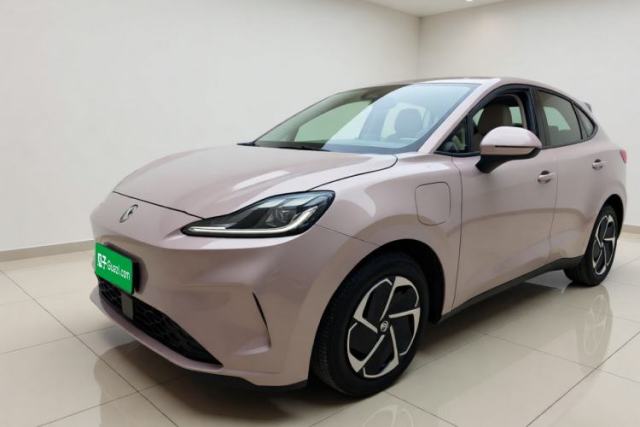
GradeSUsed MG 4 EV 2026 Model 437 Composed Edition Individual SellerIndividual Seller
 Guazi InspectedGuazi Inspected
Individual SellerIndividual SellerNear-new car
Near-new car
Guazi InspectedGuazi InspectedFOB Price:$11,069

MGS5 EV, the new electric SUV
The MGS5 EV is MG's newer electric SUV, the car for a buyer who wants a higher driving position and family space within MG's value envelope. In Excite Standard Range form it starts from around 143,900 PLN, and it slots neatly between the hatchback MG4 and the established crossover money, offering the practicality of an SUV body without the premium pricing of a Tesla Model Y or even some rivals.
Buyers get a choice of two batteries here too. The Standard Range uses a 49 kWh LFP pack with a 170 KM motor for a WLTP range near 340 km and DC charging up to around 120 kW. The Long Range moves to a 64 kWh battery for a WLTP figure close to 460 km and faster charging at about 139 kW, which covers a 10 to 80% top-up in roughly half an hour. Boot space is over 450 litres, genuinely useful for a family, and the 7-year warranty applies here just as it does across the range. For a Polish family that wants the look and utility of an SUV but is shopping on value, the MGS5 EV is the natural MG choice, with the Long Range battery the one to pick if you drive beyond the city with any regularity.
MG ZS EV, the compact-crossover value pick
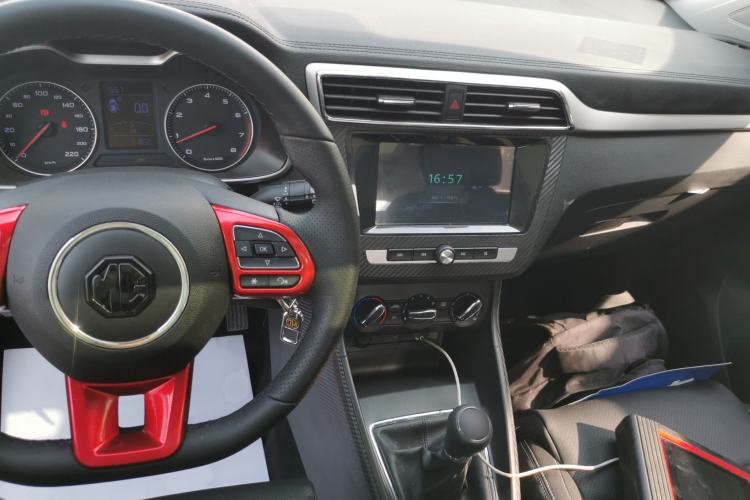
The ZS EV is MG's compact crossover and one of its keenest-priced electric cars, starting from around 119,790 PLN for the Standard Range and roughly 134,310 PLN for the Long Range. One important clarification: the ZS exists as both an electric and a petrol car, with the petrol MG ZS starting from around 79,800 PLN, so be sure you are comparing the EV when you shop, because the price gap between the two is large and only the electric version qualifies for the EV subsidy.
As an EV the ZS comes in two forms. The Standard Range carries a 51 kWh battery, about 49 kWh usable, for a WLTP range around 320 km, while the Long Range lifts that to a 72.6 kWh pack, roughly 68 kWh usable, and a WLTP figure near 440 km, with DC charging in the 76 to 92 kW range depending on version. With around 440 litres of boot space it is a sensible, affordable small crossover for urban and suburban buyers who want a slightly taller body than the MG4 without spending more. It is the value pick for someone who wants a crossover shape on a hatchback budget, and the Standard Range in particular is one of the cheapest ways into a brand-new electric SUV in Poland.
Buy It Now
GradeBUsed Haval F7 2019 2.0T Four-Wheel Drive iJoy China V Standard Certified DealerCertified DealerGuazi InspectedGuazi Inspected
Certified DealerCertified DealerNewly listed
Newly listed
Guazi InspectedGuazi InspectedFOB Price:$7,736$8,436
MG5, the rare electric estate Poland barely knows it can buy
The MG5 is the genuine curiosity of the range and a real differentiator, because it is an electric estate, a body style almost nobody else offers. It starts from around 117,975 PLN in Standard Range form, and it fills a niche that BYD and Tesla leave completely empty: a proper electric wagon with the long, practical boot that estate buyers in Poland and across Europe still value.
The numbers make the case. The MG5 uses roughly a 61 kWh battery, about 57 kWh usable, for a WLTP range close to 400 km, with rapid charging around 87 kW. The figure that matters for an estate, though, is load space: about 464 litres with the seats up, expanding to roughly 1,456 litres with the rear seats folded, a long, flat load bay that no electric SUV in this price bracket can match for shape. For a family that needs to carry bikes, flat-pack furniture or a dog without the height and weight of an SUV, or a buyer who simply prefers the estate format, the MG5 is the only mainstream electric answer on the market. It will not suit everyone, but for the people who want exactly this, it is genuinely the only game in town, and that uniqueness is a quiet reason to put MG on a shortlist.
MG Cyberster and what is coming
To round out the range, MG also offers the Cyberster, an electric sports car that nods directly to the brand's roadster heritage and adds a halo of desirability above the practical models. It pairs a 77 kWh battery with rapid charging up to around 144 kW, and comes as a single-motor Trophy or a dual-motor GT, with a CLTC range quoted near 580 km that translates to a more modest figure in real European driving. It is a low-volume statement car rather than a sensible buy, and most Polish buyers will never cross-shop it against an MG4, but it is a reminder that MG is leaning into its sporting past as it expands. The practical takeaway is simply that the brand's Polish range is growing, and the volume sits firmly in the hatchback, SUV and estate models above.
The five at a glance: prices, range and who each suits
Here is the practical summary for a Polish buyer, anchored to the official configurator pricing and WLTP range figures.
| Model | From (PLN) | Battery (usable) | WLTP range | Body / type | Best suited to |
|---|---|---|---|---|---|
| MG4 | from 120,879 | 62 to 74 kWh | up to about 540 km | Hatchback BEV | The value heart of the range |
| MGS5 EV | from 143,900 | 49 to 64 kWh | up to about 460 km | SUV BEV | Families wanting an affordable SUV |
| MG ZS EV | from 119,790 | 49 to 68 kWh | up to about 440 km | Compact crossover BEV | Crossover shape on a hatchback budget |
| MG5 | from 117,975 | about 57 kWh | about 400 km | Estate BEV | Buyers who want a rare electric wagon |
| MG Cyberster | halo tier | about 74 kWh | a modest real-world figure | Sports car BEV | Enthusiasts, the heritage statement |
What WLTP range really means in Polish driving
A WLTP number is a lab figure, and it is worth being realistic about what you will see on a Polish motorway in February. Cold weather, motorway speeds and heating all pull real range below the official figure, often by a fifth or more in deep winter, so a car rated near 440 km WLTP might deliver closer to 330 km on a cold, fast run. That is normal for every EV, not an MG flaw, but it changes how you read the table above. For mostly-urban driving the official figures are realistic and even conservative; for regular long-distance trips between cities, give yourself a margin and treat the Extended Range MG4 or the Long Range MGS5 as the sensible picks. Charging access matters as much as range: MG's rapid-charging speeds of roughly 90 to 154 kW depending on model are competitive, but plan around Poland's growing but uneven public network, especially outside the big cities. The honest summary is that any of these MGs will cover normal Polish life comfortably, as long as you match the battery to how far you actually drive.
British heritage, Chinese ownership: does it matter?
This is the spine of the MG story, so it deserves a direct answer rather than a dodge. The badge is a 1920s British marque, the company is owned and engineered by SAIC in China, and today's MGs are Chinese-designed and Chinese-built products. None of that should be hidden, and the honesty is genuinely part of the appeal: MG is not pretending to be something it is not, and the cars are better for the resources a large Chinese group brings. So does it matter for you? If your worry is that a Chinese brand might be unfamiliar or short-lived, MG's long European track record and recognizable name ease exactly that concern, which is the whole point. If you specifically want a car engineered and built in Britain, MG is not that anymore, and you should know it plainly before you buy. For most value-minded Polish buyers, the familiar badge plus Chinese-group backing is a feature, not a compromise, and the thing to check is simply the same as for any modern EV: the warranty terms, the local dealer support and the battery health on a used example.
Value and the 7-year warranty: MG's real pitch
The warranty is the quiet centrepiece of MG's value case and worth understanding properly. MG offers a 7-year or 150,000 km warranty across its range, which is longer than most established European brands provide and a real reassurance on a car from a company that, in its current form, is still proving itself to Western buyers. Combined with Chinese-made EVs running roughly 20% cheaper than comparable European cars, that long warranty turns MG's pitch from merely cheap into low-risk-and-cheap, which is a more persuasive proposition. It also helps resale, because a transferable warranty adds value for the second owner. The table sets MG's value position against its rivals.
| Factor | MG | BYD | Tesla |
|---|---|---|---|
| Price for equivalent EV | among the lowest | low | higher |
| Brand familiarity | British heritage badge | newer in Poland | well known |
| Warranty | 7-year / 150,000 km | typically long | shorter |
| Unique body style | electric estate (MG5) | none | none |
| Driver-assistance software | lags the best (MG4 Safety Assist about 69%) | capable, can lag | mature, proven |
The honest reading is that MG wins on familiarity, warranty and the unique estate, BYD wins on battery technology, and Tesla wins on charging and software, a contrast we explore across our pieces on BYD in Poland and Tesla in Poland.
MG4 versus BYD Dolphin versus a used Tesla: the value buyer's three-way
This is the comparison Polish value buyers actually run, and it ties the whole cluster together. The MG4 brings the familiar badge, the long warranty and a sharp price; the BYD Dolphin counters with the in-house Blade Battery and BYD's own keen pricing; and a one to three year old used Tesla Model 3 offers the Supercharger network and mature software at a price that depreciation has brought within reach. There is no single winner, only a fit. Choose the MG4 if reassurance and warranty matter most, the BYD Dolphin if you want the battery story and a fresh car, and the used Tesla if charging convenience and software outweigh buying new. The right answer comes down to whether you value the lowest risk, the newest technology or the best charging, and that is exactly the choice this brand cluster is meant to help you make.
Subsidy and the real cost: NaszEauto and MG
Poland's NaszEauto programme can take up to around 40,000 PLN off a qualifying new battery-electric car, and MG's electric models, the MG4, MGS5 EV, ZS EV and MG5, comfortably qualify because their net prices sit well under the scheme's cap. That sharpens already-low prices into genuinely affordable territory: an MG5 estate or ZS EV that starts under 120,000 PLN can drop toward the price of a well-equipped petrol supermini once the subsidy is applied. Two caveats matter. First, the petrol MG ZS is not an EV and does not qualify, so be clear you are buying the electric version. Second, the programme runs until a deadline or until its funds are exhausted, whichever comes first, so the window may be closing by the time you read this. Treat the subsidy as a reason to check current availability rather than a guaranteed discount, and confirm the live terms before you build it into your budget.
Buying an MG used, and how Guazi helps
MG, as a SAIC brand, sits squarely in the Chinese new-energy category that Guazi was built around, and the used case here is unusually concrete because the MG4 is already one of the most common used EVs reaching Europe's secondary market. As one of China's largest used new-energy-vehicle platforms, Guazi is built around the standardized inspection that surfaces what matters on a used MG, battery state of health, charging history and accident record, so the very checks that decide a used EV's worth are what the platform does at scale. To be clear and honest, Guazi does not retail or export used MGs into Poland; what we offer is inspection expertise and a clear sense of what to verify before you commit anywhere. If you are weighing a used MG4 as plenty now reach the market, those battery and condition checks are the ones to insist on. See how Guazi inspects used EVs
Looking at the value end of the EV market? Browse inspected used EVs at Guazi
Key Takeaways
- MG in Poland offers a familiar British badge owned by China's SAIC at a Chinese price, a softer landing than newer Chinese brands for value-minded buyers.
- The electric line-up runs from around 117,975 PLN, and it includes the rare MG5 electric estate, a body style BYD and Tesla do not offer, with roughly 464 litres of boot rising to about 1,456 litres folded.
- The MG4 anchors the range with batteries from about 62 to 74 kWh and a WLTP range up to roughly 540 km, but its Safety Assist scored around 69% on Euro NCAP versus Tesla's roughly 98%, the clearest active-safety caveat to weigh.
- The 7-year, 150,000 km warranty plus pricing roughly 20% below European rivals turns MG's pitch from cheap into low-risk-and-cheap.
- NaszEauto can cut up to around 40,000 PLN off the qualifying electric MGs, but not the petrol ZS, and it runs until funds are exhausted, so check current availability.
Sources & References
- MG Motor Poland configurator
- Motonews, MG prices in Poland
- AraWheels, MG EV prices in Poland
- EV Database, MG4 and MGS5 EV specifications
- DrivingElectric, MGS5 EV and MG5 EV range and specs
- ThinkEV, MG4 versus Tesla Safety Assist on Euro NCAP
- electrive, EU minimum-price mechanism replaces tariffs
Weighing a new MG against an inspected used MG4? Get expert advice from Guazi → Our team can explain what to check on a used MG and walk you through its battery-health report before you commit.
Weighing a new MG against an inspected used MG4?
Our team can explain what to check on a used MG and walk you through its battery-health report before you commit.

About Us
Get Support
Follow Us


Copyright © 2015~2026 https://en.guazi.com/, Chongqing Guazi Enterprise Consulting Service Co., Ltd. All rights reserved.