


Guazi
GlobalEnglish


Makes
Buy It NowAuctionsUp to 160 psPort StockAll VehiclesPopular Makes


Shop By Type


Popular Models


Shop By Budget

Which Used Toyota Corolla to Buy in Poland, and the One Check That Pays for Itself
Article OverviewA Polish buyer's guide to the used Toyota Corolla in 2026: E170 vs E210, the Auris naming trap, PLN prices by generation, the petrol-vs-hybrid math, what actually goes wrong, and how to check the hybrid battery.
Almost nobody walks away from a Corolla regretting the car. That is the strange thing about shopping for a used Toyota Corolla Poland buyers keep coming back to: the model itself is rarely the problem. The reader who types that search has usually already made the sensible decision. What can still go wrong is narrower and entirely avoidable. You can buy the wrong generation and not know it. You can overpay for a tired hybrid that looks identical to a healthy one in the photos. Or you can skip the single check that protects a saving the market keeps deliberately thin. This guide is not about talking you into a Corolla. You are already there. It is about getting you into the right one, at the right price, without a hidden fault quietly erasing the whole point of buying used.
Here is the ground we will cover. First, why the Corolla sits where it does in Poland, and why that popularity is itself a small trap. Then the generation map, including the Auris naming quirk that genuinely confuses people and occasionally costs them. After that, real PLN price bands by generation, the petrol-versus-hybrid decision laid out as actual money rather than vibes, and an honest account of what does and does not go wrong on these cars. We finish with the hybrid-battery question explained the way a used buyer actually needs it, and the one verification step that makes all of the above safe. Read it through and you should be able to walk into any viewing and know within minutes whether the car deserves your money.
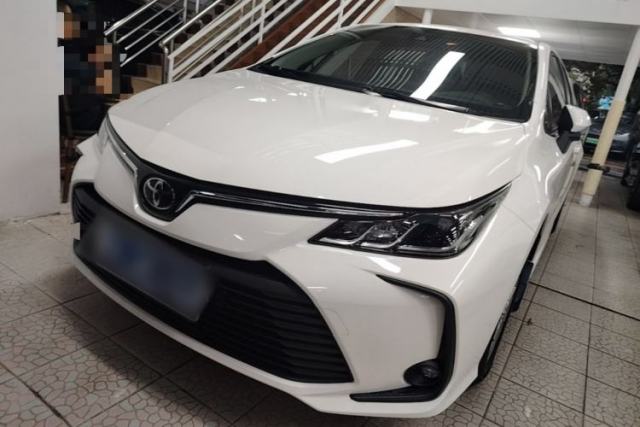
Why the Corolla is the default used buy in Poland, and why that is a trap if you are not careful
To understand the used Corolla market in Poland you have to start with how thoroughly Toyota has won here. Toyota is the single best-selling brand in the Polish new-car market, and the Corolla nameplate sits right at the top of registrations, with something like 21,000 units moved over the first eleven months of a recent year. That matters for a used buyer because every one of those cars eventually becomes a used car. The pipeline is enormous and it renews itself constantly: ex-lease vehicles handed back after three or four years, ex-fleet cars, single-owner private examples sold on as families trade up. Poland is also a market where buyers say openly that they want predictable models with established reputations, and the Corolla is almost the literal definition of that wish. It is the safe answer to the question everyone is asking.
The trap is hidden inside exactly that popularity. When a car is this universally trusted, demand stays high and the price gap between a genuinely clean example and a worn-out one stays small. That sounds like good news, and in one sense it is, because you are unlikely to be fleeced on the headline number. But it also means the margin you save by buying used is modest, and a single undisclosed fault, a tired hybrid battery, a neglected service history, a car that has quietly done motorway miles its odometer flatters, can wipe out that entire saving in one repair. On a cheap, unloved model the market prices in the risk. On a Corolla it does not, because the badge papers over it. So the discipline this car demands is not "is the Corolla good," it is "is this Corolla good," and that is a question the listing photos will never answer for you.
E170 or E210, and the Auris name that confuses everyone
The first real decision is which generation to buy, and this is where a surprising number of Polish buyers go wrong before they have even seen a car. The modern used Corolla pool splits cleanly into two generations, the E170 and the E210, and there is a naming wrinkle in the middle that the marketplaces do nothing to explain. Get this part right and everything downstream, price, engines, what to check, falls into place. Get it wrong and you can end up buying a car that is a generation older than you thought, or dismissing a perfectly good one because it wears the wrong name on the boot.
The E170 and the Auris years, what you are actually buying
The E170 generation ran roughly from 2013 to 2018, and in Europe it came with a quirk that still trips people up. During these years Toyota sold the sedan as the Corolla, but the hatchback, the body style most Polish buyers actually want, was badged as the Auris. They are siblings on the same underpinnings from the same era, but the names are different, so a search for a "used Corolla hatchback" from this period will mostly surface cars called Auris instead. This is not a trick and there is nothing wrong with the Auris. The point is simply to know that an E170-era Corolla hatch and an Auris of the same vintage are essentially the same proposition, and to not be thrown when the hatchback you want carries the other name. These are the older, cheaper cars in the pool: simpler, well-proven, and fine as honest transport, though their interiors and infotainment now feel their age and the hybrid systems here are an earlier generation than the cars that followed.
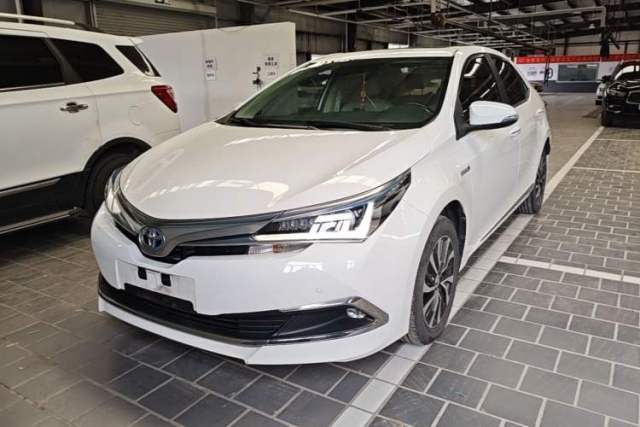
The E210 and today's Corolla, hatchback, sedan and the Touring Sports estate
From 2019 the picture got simpler and, for most buyers, better. With the E210 generation Toyota brought the Corolla name back to the hatchback, so the awkward Auris split disappeared. This is the generation that makes up the bulk of the recent used market and the one most readers should be looking at first. It comes in three body styles that cover almost every need: the hatchback for city and commuter use, the sedan for buyers who want a traditional three-box shape, and the Touring Sports, the estate, which is the quietly brilliant choice for Polish families who want boot space without stepping up to an SUV. The E210 is also where the current self-charging hybrid system lives, the one that does most of the heavy lifting in this car's reputation for low running costs. If your budget reaches a clean E210, that is almost always the smarter buy than a tired E170, and the rest of this guide leans toward it for that reason.
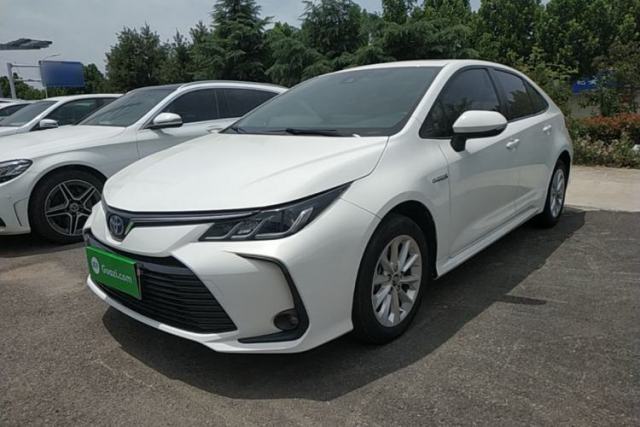
What a used Corolla costs in Poland right now, by generation
Prices move, and this is a Polish-market guide, so the figures below are in PLN and reflect listings and aggregator sightings as of June 2026. Where a car was advertised in euros on a pan-European platform, it has been converted at roughly 4.25 PLN to the euro, the rate sitting around early-to-mid June 2026, and rounded to a sensible band rather than a false-precision number. Treat these as orientation, not gospel. The honest way to use them is as a sanity check: if a car is priced well below its band, ask why before you get excited, and if it is well above, the seller needs to justify it with condition and history. The bands narrow sharply once you fix on a single generation, body style and engine, which is exactly why knowing the generation map first pays off.
| Generation and body | Typical age | Indicative PLN band |
|---|---|---|
| E170 Corolla sedan / Auris hatch | 2013 to 2018 | roughly 30,000 to 55,000 PLN |
| E210 hatchback or sedan, petrol | 2019 to 2021 | roughly 60,000 to 85,000 PLN |
| E210 Hybrid, higher mileage | 2019 to 2020, 130,000 km plus | roughly 50,000 to 65,000 PLN |
| E210 Hybrid, low mileage | 2022 to 2023, under 40,000 km | roughly 80,000 to 100,000 PLN |
| E210 Touring Sports estate | 2020 onward | from the high 60,000s PLN upward |
For context on the ceiling, a brand-new 2026 Corolla 1.8 Hybrid sedan starts somewhere around 119,000 PLN in entry trim and climbs past 145,000 PLN for the sportier and fully loaded versions, with specific configured cars occasionally advertised lower. That new-car floor is the gravity the whole used market hangs beneath, and it is why a tidy two-to-three-year-old hybrid in the 80,000 to 100,000 PLN range can look like the genuinely shrewd buy: most of the depreciation has already happened, and a Corolla holds the rest of its value better than almost anything in the class.
Petrol, hybrid or diesel, the decision that actually matters
Once you have the generation and budget settled, the engine choice is the decision that shapes how the car will cost you to run and how easily you will sell it later. For the Corolla this is genuinely the consequential fork, more so than trim or colour, and it is worth slowing down for. The good news is that the Corolla makes this decision relatively painless, because its standout engine is also its most popular one. The complications are minor and easy to navigate once you know where they are.
The self-charging hybrid, why it is the resale and running-cost champion
The Corolla's self-charging hybrid, in 1.8 and 2.0 forms, is the engine to want, and it is not a close call. This is a hybrid you never plug in. It recovers energy under braking and at low speeds and uses it to ease the load on the petrol engine, which is why these cars sip fuel in exactly the stop-start city driving where conventional petrols drink it. In Polish conditions, a mix of town commuting and the occasional longer run, the hybrid's economy advantage is real and felt every week at the pump. It is also the resale champion. Buyers want it, so it holds value, which means the premium you pay going in is largely returned when you sell. Toyota's hybrid system has a long and well-documented record for durability, and the brand has built its reputation in Poland substantially on these drivetrains. If you can stretch to a hybrid, the running-cost and resale logic both point the same way.
The 1.2 Turbo petrol and the older diesels, when they make sense
The conventional alternatives are not wrong, they are just narrower in appeal. The 1.2 Turbo petrol, the small turbocharged engine offered on some E210 cars, suits a buyer who wants the most familiar possible ownership experience, no hybrid system to think about, and who covers enough steady motorway distance that the hybrid's city advantage matters less. It is the one to scrutinise a little harder on service history, because a small turbo petrol asks for diligent oil care to stay healthy over the long run. Older diesels exist mainly in the E170 and Auris pool, and for most modern buyers they are an increasingly niche choice: fine if you genuinely do high mileage and know what you are taking on, but generally a less sensible pick than the hybrid for the typical Polish driver, and not where the value or the demand sits anymore.
Is the hybrid worth the premium over a petrol at the same age, the math in PLN
This is the question that actually decides most purchases, so let us put numbers on it rather than hand-waving. At the same age and mileage, a Corolla hybrid typically commands a premium of somewhere around 8,000 to 15,000 PLN over the equivalent petrol, depending on year and condition. That can feel like a lot up front. The case for paying it rests on two things working together. First, the fuel saving: if you drive meaningful city miles, the hybrid's economy claws back a chunk of that premium over a few years of ownership. Second, and more importantly, the resale: because the hybrid is the version everyone wants, you give back less of its value when you sell, so a large part of that premium is not really spent, it is parked in the car and returned later. The petrol only wins the math if you buy cheaply, drive mostly steady highway miles where the economy gap shrinks, and plan to keep the car a long time. For the average Polish buyer doing mixed driving, the hybrid is the rational choice and the market agrees, which is precisely why it holds its money.
How reliable is it, really, and what does go wrong
The reader has been told a hundred times that Corollas are reliable, so this section will not insult anyone by simply repeating it. The reputation is earned. As a global pattern, the Corolla Hybrid shows notably low odds of a major repair over a ten-year horizon, several points better than the segment average, and it depreciates more slowly than most rivals, holding the kind of value that makes used ownership feel like a sound financial move rather than a slow loss. Those figures come from US and global data and are quoted here to illustrate the durability and value-retention pattern the model is known for, not as a promise about any individual Polish car. The pattern is what matters: this is a car that, looked after, tends to keep going and keep its worth.
But "reliable" does not mean "nothing to check," and pretending otherwise would do you a disservice. The honest wear items are mostly mundane. On hybrids, tyres and brakes deserve a look, though regenerative braking often means the brake discs and pads last unusually well, the flip side is that buyers sometimes neglect them precisely because they wear slowly. Infotainment on older cars can feel dated and the occasional software niggle appears, more an annoyance than a fault. Beyond that, the things to confirm are the ordinary ones that apply to any used car but matter more here because the saving is thin: a complete and honest service history, evidence the car has been maintained rather than just driven, and clarity on whether the mileage and condition genuinely match. The Corolla rewards a careful buyer. It does not reward a careless one any more than any other car does.
The hybrid battery question, what a used buyer should actually check
For anyone buying a used hybrid, one question sits underneath all the others, often unspoken: what about the battery? It deserves a clear, calm answer rather than either dismissal or scaremongering. The hybrid battery in a Corolla is not the same as the small starter battery in a petrol car. It is the high-voltage pack that works with the petrol engine, and what you care about as a used buyer is its state of health, essentially how much of its original capacity it still holds. A healthy pack does its job invisibly. A degraded one shows up as worse fuel economy and, eventually, the petrol engine working harder and warning lights. The reassuring reality is that Toyota's hybrid batteries have a strong longevity record, with many examples running well past high mileages without trouble, which is a large part of why these cars are trusted in the first place.
That record is real, and it should not be undermined, but a used buyer still deserves the candid version. Battery health can vary car to car depending on how a vehicle was used and maintained, and Polish winters add a small wrinkle: sustained cold reduces the working capacity of any high-voltage battery temporarily, so a hybrid feels slightly thirstier in deep January cold than in summer. This is normal physics, not a fault, and it should inform expectations rather than alarm anyone. The practical move is to treat battery state of health as something to verify rather than assume. This is exactly what a proper used-car inspection looks for: a check of the hybrid system's health and behaviour, not just a glance at the bodywork. And it matters more on a Corolla precisely because the price spread is thin. When a clean car and a tired one are only a few thousand zloty apart on paper, the difference in their battery health is the difference between a great buy and an expensive surprise, and that difference is invisible until someone checks it.
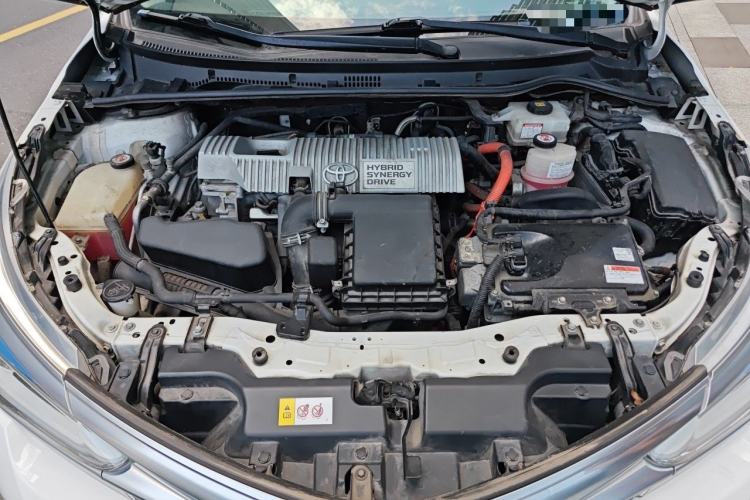
Buying a used Corolla the smart way, and how Guazi helps
This whole guide comes down to a single idea: on a car this commoditized, the model is settled and the individual car is everything. That is where a verified condition report stops being a nice-to-have and becomes the thing that protects your money. The same Corolla generations sold in Poland are inspected across the markets Guazi operates in, and the Corolla Hybrid in particular sits squarely within Guazi's hybrid and NEV inspection competence, the same expertise that makes Guazi the number one used-NEV platform in China. Every car runs through a standardized over 200-point inspection feeding a full digital condition report, which is precisely the lens that surfaces the things this guide has flagged: the true generation and build date, the service and mileage story, and the hybrid battery's state of health. To be clear about the role, Guazi is one of China's largest used-car platforms and the supply-side specialist in inspection and condition, not your local Polish dealer, so treat the local purchase accordingly. What the inspection settles is the only question the badge cannot: whether this Corolla is the clean one. Browse inspected used cars.
Key Takeaways
- The Corolla is the safe choice in Poland, so the only real risk is buying the wrong example, not the wrong model.
- Get the generation right first: the E210 (2019 on) is the modern, higher-value buy, and remember the E170-era hatchback was sold in Europe as the Auris.
- Expect roughly 30,000 to 55,000 PLN for an E170 or Auris and 60,000 to 100,000 PLN for an E210 depending on engine, age and mileage; all figures June 2026, EUR sightings converted near 4.25 PLN.
- The self-charging hybrid is the running-cost and resale champion, and its roughly 8,000 to 15,000 PLN premium is largely returned at sale.
- Reliability is genuine, but check service history, hybrid tyres and brakes, and above all the hybrid battery's state of health, since the thin price spread makes a hidden fault costly.
- On a car this commoditized the individual car is everything, which is why a verified over 200-point inspection and condition report is the check that pays for itself.
Sources & References
- otomoto.pl, Toyota Corolla listings
- otomoto news, Corolla 2026 pricing
- theparking.eu, used Toyota Corolla in Poland
- iSeeCars, Toyota Corolla Hybrid resale and depreciation
- CarEdge, Toyota Corolla depreciation
- CARFAX, 2025 Polish used car market
Trying to work out whether a specific Corolla is the clean one?
Every car runs through a standardized over 200-point inspection and a full digital condition report, so you can judge the individual car on verified data rather than listing photos.


About Us
Get Support
Follow Us


Copyright © 2015~2026 https://en.guazi.com/, Chongqing Guazi Enterprise Consulting Service Co., Ltd. All rights reserved.