

World Cup Special • Save up to $1000 on selected vehicles

Guazi
GlobalEnglish


Ghana Car Import Rules in 2026: What Actually Changes Your Final Price
Article OverviewGhana car import rules 2026 explained, with the exact rules that change your final price, real worked examples, and the paperwork that determines duty.
Pricing Note: Duty rates and fee bands in this guide are indicative 2026 figures from public Ghana Revenue Authority (GRA) references. Rates change with national budgets, so always confirm the live GRA tariff and run the specific vehicle through the official used-vehicle calculator before you commit. Currency reference: GHS 12.5 ≈ USD 1.
Quick answers
- What is the Ghana car import age limit? Ghana measures age from the year of manufacture. A car over 10 years old can still be imported, but it carries an overage penalty on top of normal duty, and the penalty rises with age.
- Can I import a right-hand-drive car? No. Right-hand-drive vehicles are prohibited with no exemption. Every imported car must be left-hand drive.
- How is the duty worked out? On the CIF value plus engine capacity and age, with import duty, VAT, NHIL and GETFund stacked on a duty-inclusive base. Use the GRA used-vehicle calculator for the exact figure.
- How much does duty add in real money? On a USD 12,000 car, duty and levies alone often come to around half of the CIF value, so a car can land near GHS 265,000 once everything is paid.
- Where do cars clear? Mainly at Tema port, with some clearance at Takoradi. After customs release, the car must be registered with the DVLA.
Most of the money lost on a Ghana car import is not lost on the car. It is lost on a rule the buyer did not know. A vehicle one year too old, a right-hand-drive unit that cannot legally enter, a duty bill double what was budgeted: each one is avoidable, and each one is governed by a rule that is published and predictable.
This guide explains the Ghana car import rules 2026 in plain terms. It covers the 10-year age cap, the left-hand-drive mandate, how the Ghana Revenue Authority calculates duty, and the documents you need. Whether you are a dealer importing in volume or an individual bringing in one car, this is how to import cars to Ghana legally, and how to budget the bill before you buy.
Why Ghana car import rules decide your price
Ghana imports the large majority of its vehicles, and used cars dominate that flow. Because the rules set the landed cost directly, a buyer who understands them holds a real advantage. They can price a deal accurately, reject a non-compliant car early, and avoid the penalty charges that turn a bargain into a loss.
The rules are administered mainly by the Ghana Revenue Authority (GRA) Customs Division, with registration handled by the DVLA. They cover three things that decide whether an import works: the age of the vehicle, its steering configuration, and the duty assessed on its value. Get all three right before you pay, and the import is straightforward. Misjudge any one, and the cost, or the outright rejection of the car at Tema, lands on you.
The four rules you have to clear before paying
Four rules govern almost every Ghana car import:
- Age cap. Vehicles over 10 years old from the year of manufacture attract a penalty, on top of normal duty.
- Left-hand drive only. Right-hand-drive vehicles are prohibited from import.
- Duty on CIF value. Duty, VAT and levies are assessed on the Cost-Insurance-Freight value plus engine capacity and age.
- Clearance and registration. Every vehicle must clear customs at Tema (or Takoradi) and be registered with the DVLA before use.
Each one is examined below. Treat the four as a checklist you clear before transferring any money.
Why a 2015 car costs you more than a 2016 one
The single rule that catches the most buyers is the age cap. Ghana measures a vehicle's age from its year of manufacture, not its registration date. A vehicle within 10 years of manufacture clears under standard duty. Once it crosses that 10-year line, an overage penalty is added on top of the normal duty, and the penalty rises the older the vehicle gets.
The practical consequence is simple. A car that is compliant this year can become penalty-rated next year just because the calendar moved. When you shortlist a car for a 2026 import, confirm the manufacture year and check where it sits against the 10-year line, not roughly, but exactly. A 2016 vehicle is the boundary case for a 2026 import. A 2015 or older car will carry the overage penalty.
Why an RHD car is a total loss at Tema
Ghana drives on the right, and right-hand-drive (RHD) vehicles are prohibited from import. There is no exemption pathway. An RHD vehicle arriving at Tema is refused entry, which leaves the importer with the cost of a car that cannot be cleared.
This rule is one reason China is a natural source market for Ghana. China is a left-hand-drive market, so its domestic used-car supply is LHD by default. A buyer sourcing from an RHD market, such as Japan or the UK domestic market, must verify the steering side of every single unit. A buyer sourcing LHD stock from China avoids the risk entirely. Either way, the rule is absolute: confirm left-hand drive before you pay.
How much duty will I actually pay?
Duty is the component buyers most often underestimate, because it is not a single percentage. The GRA assesses a used Ghana car import on the vehicle's CIF value (Cost plus Insurance plus Freight), its engine capacity, and its age, then applies several charges:
| Charge | Basis | Indicative band |
|---|---|---|
| Import duty | CIF value, varies by vehicle category | ~5 to 20% |
| VAT | On duty-inclusive value | ~15% |
| NHIL (health levy) | On duty-inclusive value | ~2.5% |
| GETFund levy | On duty-inclusive value | ~2.5% |
| Overage penalty | Added if over 10 years old | rises with age |
| Processing and examination fees | Fixed and variable port fees | varies |
Because the charges stack on a duty-inclusive base, the total can reach a substantial share of the CIF value, and far more once an overage penalty applies. For the full line-by-line stack, see the Ghana car import cost breakdown. The only reliable figure is the one the GRA used-vehicle calculator returns for your exact vehicle. Run it before you buy, every time.
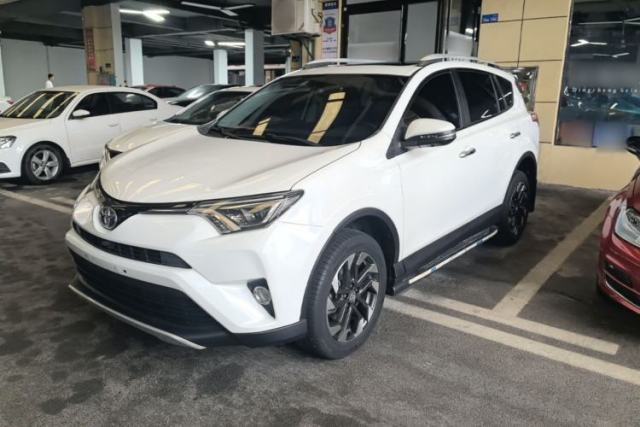
A real calculation: one 2019 Toyota RAV4 2.5L, step by step
Percentages alone do not answer the question every buyer actually has, which is "so how much will I really pay?" Here is one real-shape calculation for a 2019 Toyota RAV4 2.5L in 2026, a model whose Ghana pricing and demand we cover separately. Treat the numbers as a working illustration. Your binding figure comes from the GRA used-vehicle calculator keyed to the exact VIN.
Step 1, build the CIF value (the base everything stacks on).
| Item | USD | GHS (@ 12.5) |
|---|---|---|
| FOB Shanghai (the car at the Chinese port) | 12,000 | 150,000 |
| Ocean freight, Shanghai to Tema | 1,250 | 15,625 |
| Marine insurance (~2.25% of FOB plus freight) | 298 | 3,725 |
| CIF Tema (duty base) | 13,548 | 169,350 |
Step 2, apply each duty and levy in the order the GRA stacks them.
The first charge (Import Duty) lifts the base every later charge multiplies against, which is exactly why a flat "20% duty" estimate always understates the real bill.
| Charge | Rate | Calculation | Amount (GHS) |
|---|---|---|---|
| Import Duty | 20% of CIF | 169,350 × 20% | 33,870 |
| ECOWAS Levy | 0.5% of CIF | 169,350 × 0.5% | 847 |
| AU Import Levy | 0.2% of CIF | 169,350 × 0.2% | 339 |
| Duty-inclusive base | n/a | CIF plus duty plus ECOWAS plus AU | 204,406 |
| NHIL (Health Levy) | 2.5% of duty-incl. base | 204,406 × 2.5% | 5,110 |
| GETFund Levy | 2.5% of duty-incl. base | 204,406 × 2.5% | 5,110 |
| COVID Health Recovery Levy | 1.0% of duty-incl. base | 204,406 × 1.0% | 2,044 |
| VAT (Standard Rate) | 15% of duty-incl. base | 204,406 × 15% | 30,661 |
| Special Import Levy | 2.0% of CIF | 169,350 × 2.0% | 3,387 |
| Network Charge / IT Levy | ~0.4% of CIF | 169,350 × 0.4% | 677 |
| GRA Processing Fee | 1.0% of CIF | 169,350 × 1.0% | 1,694 |
| Examination and port fees | fixed bands | typical | 1,800 |
| GRA duty plus levies subtotal | n/a | sum of charges above | ~85,539 |
Step 3, add the post-port costs that get the car to your yard.
| Item | Amount (GHS) |
|---|---|
| Clearing agent fee | 3,500 |
| DVLA registration plus number plate | 2,200 |
| Tema to Accra inland delivery and yard fees | 3,600 |
| Roadworthy plus emissions test | 700 |
| Post-port subtotal | 10,000 |
Step 4, total landed cost in Accra.
| Stage | GHS |
|---|---|
| CIF Tema | 169,350 |
| Plus GRA duty, levies and port fees | 85,539 |
| Plus clearing, DVLA, inland delivery | 10,000 |
| Total landed cost, Accra | ~264,889 |
| Approx. USD equivalent | ~21,191 |
So a car that left Shanghai at USD 12,000 FOB lands in your Accra yard at roughly GHS 265,000 (about USD 21,200), a multiple of about 1.77 times FOB. Of that uplift, around GHS 85,500 is GRA duty plus levies (about 51% of CIF), and only about GHS 10,000 is the agent, DVLA and inland leg. The rules, not the car, drive most of the gap. Anyone quoting you "FOB plus 10%" for a Ghana landing is not pricing the same import you will actually pay.
Worked scenarios: how the same car lands at three different prices
The same physical car can land at very different prices depending on which rules apply. Below are three indicative scenarios for a 2.5L SUV at the same USD 12,000 FOB, with ocean freight plus marine insurance near USD 1,520, giving a CIF Tema of about GHS 169,000 (at GHS 12.5 ≈ USD 1). Figures are working numbers. The GRA returns the binding duty for your exact VIN.
Scenario A, compliant 2019 unit (under 10-year cap, LHD)
| Charge | Amount (GHS) |
|---|---|
| Import Duty (~20% of CIF) | 33,800 |
| VAT plus NHIL plus GETFund (on duty-inclusive base) | 40,560 |
| Special, ECOWAS, AU, COVID, Network, Processing levies | 8,957 |
| Overage penalty | 0 |
| Clearing plus DVLA plus inland delivery | 12,000 |
| Total landed, Accra | ~264,300 |
Scenario B, same car, 2014 model (just over 10 years for a 2026 import)
The age cap kicks in. An overage penalty is added, and the higher duty base lifts every downstream charge.
| Charge | Amount (GHS) |
|---|---|
| Import Duty plus overage penalty (~30% effective) | 50,700 |
| VAT plus NHIL plus GETFund (on higher duty base) | 49,455 |
| Other levies | 8,957 |
| Clearing plus DVLA plus inland delivery | 12,000 |
| Total landed, Accra | ~290,100 |
The 5-year-older car lands at about GHS 25,800 more than the compliant 2019 unit, before any consideration that the older car is worth less on resale. The 10-year line is a real financial cliff, not a soft preference.
Scenario C, same car, but RHD variant
The car never lands. Tema customs refuses entry. The importer is left with:
- Full FOB plus freight already paid: about GHS 169,000 stranded
- Re-export, scrap or auction-disposal costs to clear the vessel manifest
- Zero recoverable resale value in Ghana
This is the single most expensive mistake here, and it is entirely avoidable by verifying the steering side before payment, on the specific VIN.
The takeaway: the rules do not just shift the duty bill by a few percentage points. They can add tens of thousands of GHS to the same car (age), or write the import off entirely (RHD). Run every shortlisted unit through the four-rule checklist before any money moves.
The paperwork that keeps your car off demurrage
To import cars to Ghana legally and clear Tema without delay, prepare this document set in advance:
- Bill of Lading, the shipping line's title document for the cargo.
- Commercial invoice, the purchase price and vehicle details, for duty assessment.
- Export certificate or de-registration, proof the car was legally exported from the source country.
- Vehicle inspection report, condition and verified mileage.
- Importer identification, TIN and valid ID for the consignee.
- DVLA registration forms, for the post-clearance registration step.
Incomplete documents are the most common cause of demurrage, the daily charges that accrue while the car sits at the port. A complete set is the difference between a multi-day clearance and a multi-week one.
The compliance mistakes that burn buyers most
- Counting age from registration, not manufacture. Ghana uses the manufacture year, so a car can be older than the buyer thinks.
- Budgeting duty as a flat percentage. The charges stack on a duty-inclusive base, so always use the GRA calculator.
- Assuming steering side. Never assume LHD. Verify it on the specific VIN.
- Importing a car that crosses the age line in transit. If a car turns 11 between purchase and clearance, the penalty can still apply.
- Skipping the inspection. A non-compliant or salvage car costs far more to discover at Tema than before purchase.
- Underestimating clearance time. Incomplete paperwork means demurrage, so prepare every document before the car sails.
How Guazi keeps imports compliant
Once the duty math is settled, the next risk is the car itself, and that is where a verified condition record earns its place. Guazi sources 100% from individual owners in China, a left-hand-drive market, so the LHD mandate is met before the car is even quoted. Each unit then passes an inspection of over 200 points with verified mileage and a documented digital report, which means the steering side, the real age, and the genuine condition are confirmed on paper rather than assumed from a listing photo.
Founded in 2015, Guazi has grown into the largest used-NEV platform in China, with more than 3 million cars sold and over 30 million inspections behind its reports. For a Ghana importer, that record is the difference between a car that simply looks compliant and one that is documented as compliant before it ships. The rules still apply. A verified condition trail just makes sure the car on the water is one that can legally and affordably land.
Importing to Ghana? Talk to the Guazi Africa desk for a compliance check and a duty-inclusive landed-cost estimate.
Key Takeaways
Four rules decide whether a Ghana car import works: the 10-year age cap, the left-hand-drive mandate, duty calculated on CIF value, and clearance plus DVLA registration. Clear all four before any money leaves your account and the import is predictable. Miss any one and the cost lands on you.
Age is measured from the year of manufacture, not registration, so a 2015-or-older car carries an overage penalty for a 2026 import, and the GHS 25,000-plus gap between a compliant 2019 unit and a 2014 unit at the same FOB is real money. RHD vehicles are prohibited outright with no exemption pathway, which is why China's LHD used-car supply slots into Ghana so cleanly.
On duty, the GRA stacks Import Duty, NHIL, GETFund, COVID Health Recovery, VAT and several smaller levies on a duty-inclusive base, which means a USD 12,000 FOB car typically lands in Accra near GHS 265,000, with duty plus levies alone making up around half of CIF. To import cars to Ghana legally, verify age and steering on the specific VIN, run the GRA used-vehicle calculator before you pay, assemble the full document set before sailing, and source through a verified channel so the car on the water is one that can legally and affordably land.
Summary
The Ghana car import rules 2026 are predictable, which means they are budgetable. Confirm the manufacture year against the 10-year cap, verify the car is left-hand drive with no assumptions, run the exact car through the GRA used-vehicle calculator, and assemble all six documents before the car sails. Clear those and you know how to import cars to Ghana legally, with no surprise bill waiting at Tema.
Sources & References
- Ghana used-vehicle import rules, 10-year age cap and duty structure: WC Shipping Ghana Import Guide and WC Shipping, What Ghana Customs Rejects.
- Official duty assessment: GRA used-vehicle duty calculator.
- Ghana Revenue Authority customs overview: Ghana Revenue Authority.
- Guazi facts (founded 2015, 3M+ cars sold, 30M+ inspections, inspection of over 200 points): Guazi About.









About Us
Follow US


Copyright © 2015~2026 https://en.guazi.com/, Chongqing Guazi Enterprise Consulting Service Co., Ltd. All rights reserved.