
Guazi
GlobalEnglish


Used Chinese EVs and Hybrids Abroad: Algeria, Poland, Georgia
Article OverviewChina is exporting used EVs and hybrids fast. A clear read on which of Algeria, Poland and Georgia can absorb them, gated by charging, tariffs, the 2026 license, and battery health.
Read this first. EV policy and tariffs move every month. Everything below reflects the position in mid-2026 and was compiled in June 2026, but charging counts, subsidy amounts, the EU's per-maker tariffs on Chinese EVs, China's new export-license rule, and Algeria's incentive figures are all live and revisable. We give ranges rather than false precision, flag where sources disagree, and attribute manufacturer range claims as the makers' own (often CLTC, which runs optimistic against EPA or WLTP). This is an analysis with sources, not trade or legal advice. Guazi is the China-side supplier and battery-health layer for the cars, not your customs broker, your tariff counsel, or your grid operator. Confirm every figure that applies to your shipment with the relevant authority before you commit capital.
China built more electric cars in 2025 than it could sell at home, and the overflow has started moving out the side door, used. Roughly 16 million electric cars rolled off Chinese lines last year, somewhere around 20% beyond what the domestic market could absorb, and new-energy exports doubled to about 2.62 million units. April 2026 alone saw close to 430,000 NEVs leave the country, up around 110% year on year. A brutal domestic price war did the rest, pushing nearly-new and used electric stock toward any border that would take it. So the question a seller types into a search box, export used Chinese EV, is really a readiness question wearing a logistics coat. Who can charge them, who taxes them out of reach, and who simply wants the cheap miles however they arrive.
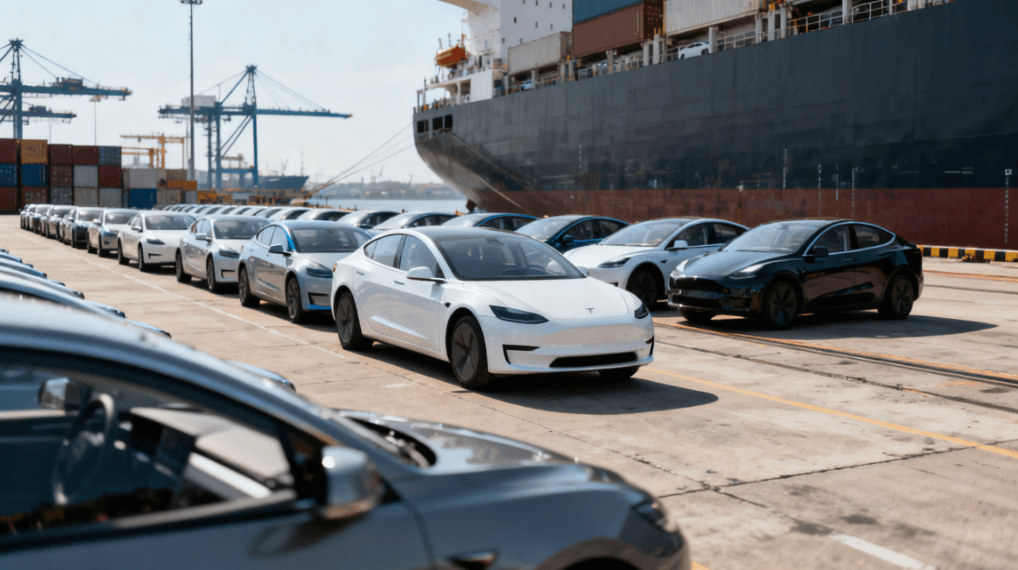
This guide answers that for three markets that look superficially similar and behave nothing alike. It is deliberately narrow. It is not a general used-car export comparison, because exporting a used EV or hybrid is its own animal, decided by charging coverage, grid quality, purchase incentives, and EV-specific tariffs and licenses rather than by the broad import math that governs a diesel pickup. Georgia rolls out a red carpet. Poland has the money and the demand but a tariff wall built specifically against Chinese-made EVs. Algeria offers a generous tariff break it can barely let you use, because there is almost nowhere to plug in. Along the way we will keep returning to the one variable that should worry an overseas buyer more than any other, battery state of health, which happens to be the thing Guazi can actually verify on a car before it crosses a border. Three markets, three different verdicts, and one honest read on where pure EVs win and where a used hybrid is the smarter bet.
The surplus driving used Chinese EVs overseas
To understand the demand, start with the supply, because the supply is the story. China did not gently grow into EV export. It overshot, hard, and the surplus is now the engine pushing units out.
A price war at home, a flood of nearly-new EVs abroad
The numbers are blunt. China assembled around 16 million electric cars in 2025, an output that ran roughly a fifth ahead of what buyers at home could take. New-energy exports doubled year on year to about 2.62 million, and the pace did not cool into 2026; April's roughly 430,000 NEV exports were up about 110% on the prior year. BYD overtook Tesla on global battery-electric sales in 2025 at around 2.26 million BEVs and set its sights on roughly 1.3 million overseas shipments in 2026. Behind those figures sits a price war so fierce that margins on new cars at home have been squeezed to almost nothing, which is exactly the pressure that makes a manufacturer or a fleet happy to move nearly-new and used stock abroad rather than let it sit.
For an exporter, this is the rare moment when leverage tilts toward the buyer of stock. There is genuine surplus, prices are soft, and the Chinese EV demand emerging markets are now showing means there are willing destinations. The catch is that the surplus is uneven in usefulness. A two-year-old BYD with strong battery health is a different proposition in Tbilisi, where it can be charged and is barely taxed, than in an Algerian town with four public chargers on the national highway. The surplus is real. The absorption is not uniform, and that gap is the whole subject of this piece.
The 2026 catch: China's new EV export license and 180-day rule
There is a new piece of friction that did not exist a year ago, and any used-EV exporter has to plan around it. From January 1, 2026, every battery-electric passenger vehicle leaving China needs an official export license, the product of a four-ministry rule announced on September 26, 2025. On top of that, a 180-day rule adds an after-sales service confirmation step for near-new units.
In plain terms, the era of quietly shipping a used Chinese EV out with minimal paperwork is over. The license requirement is meant to bring order to a chaotic export boom and weed out grey-channel operators, and it is genuine friction to budget time and effort for. It does not stop legitimate export, but it does reward working with a supply chain that already handles the documentation properly rather than scrambling for it at the dock. We flag this here, near the top, because it sits underneath every market verdict that follows. No incentive in Georgia or tariff break in Algeria matters if the unit cannot clear the China side cleanly first.
Georgia: the readiest landing spot for a used Chinese EV
If you want to know where a used Chinese EV meets the least resistance, the answer is Georgia, and it is not close. The country has built a fiscal and logistical environment that almost seems designed to receive exactly this kind of stock.
Excise-exempt EVs, a 60% hybrid cut, and China already the No.2 supplier
Georgia exempts electric vehicles from excise duty outright, and a 2026 amendment hands left-hand-drive hybrids a 60% cut on excise as well. That alone reframes the landed cost of a used EV or hybrid arriving through Poti. The demand has followed the policy almost vertically. EV registrations went from 176 in 2020 to 3,990 in 2024, roughly a twentyfold jump, and the first half of 2025 brought in 3,616 EVs, up about 88% year on year.
Here is the part that matters for a China-origin seller. China is now Georgia's second-largest EV supplier after the United States, overall Chinese car imports into Georgia are up around 79% year on year, and BYD has opened a brand center in Tbilisi. This is not a market you have to educate about Chinese EVs. It is already buying them at speed. For the exporter, that means shorter sell-through, an established buyer appetite, and a tax structure that does not punish the powertrain. Of the three markets here, Georgia is the one where a pure used EV, not just a hybrid, makes immediate sense.
Why Tbilisi is doing the heavy lifting
There is a concentration worth naming honestly, because it shapes where the stock actually lands. Tbilisi holds something like 79% of Georgia's EVs, and hybrids make up roughly 12.78% of registrations nationally. The capital is doing the heavy lifting on charging and adoption, which is good news and a caution at once. Good, because there is a dense, real, charge-capable market to sell into. A caution, because demand thins as you move away from the city, so a seller planning volume should think city-first rather than assume even national absorption.

One more framing point belongs here, the same red line that runs through any Caucasus export conversation. Georgia's openness and its role as a transit hub make it attractive, and that role is a legitimate one, distribution into the Caucasus and Central Asia. It should be kept exactly there. This is about serving a genuine, fast-growing Georgian and regional EV market, not about anything beyond it. Treated that way, Georgia is simply the cleanest landing spot of the three.
Poland: the demand is real, the Chinese-EV tariff is the wall
Poland is the market with money. It is also the market with a wall built specifically in the path of a Chinese EV, which makes it the most counterintuitive of the three. The demand a seller would love is genuinely there. The route to serving it with Chinese-made stock runs straight into a tariff designed to slow exactly that.
NaszEauto subsidies, around 8% EV share, and why they favor new BEVs
Poland's EV share of new sales sits near 8%, and the state is actively pushing it higher. The NaszEauto program offers up to 40,000 zloty, roughly 9,500 euro, toward a new battery-electric car, funded through EU money, with an additional pot of around 300 million euro earmarked for EV and charging grants. On the tax side, full EVs are excise-exempt and the akcyza is halved for hybrids.
Read the fine print, though, and the catch for a used-EV exporter jumps out. The headline subsidy favors new battery-electric cars, not used imports, so the single most generous lever in the Polish market does not lift a used Chinese EV at all. That does not kill the case, there is a real private market for affordable used EVs and hybrids beneath the subsidy, but it does mean the export pitch into Poland leans on value and condition rather than on riding a purchase incentive. The buyer you are selling to is the one the subsidy does not reach.
What the EU's per-maker tariffs do to a Chinese-EV export case
Then there is the wall. The EU applies tariffs targeted at Chinese-made EVs by manufacturer, layered on top of the standard 10% car duty. As reported, the additional rates run to roughly 17% for BYD, around 18.8% for Geely, and as high as about 35.3% for SAIC. Stack the maker-specific rate onto the base duty and the math on a Chinese-built EV into Poland changes materially depending on which badge is on the car.
This is the decisive variable for the Polish case, and it cuts in a specific direction. A used hybrid, or a Chinese-built EV from a maker on the lower end of the tariff schedule, survives the math far better than a high-tariff badge. And because the tariff is assessed by manufacturer, the choice of which used Chinese EV to export to Poland is not cosmetic, it is the difference between a workable landed cost and an uncompetitive one. We treat these figures as the mid-2026 position and flag them as the kind of number the EU revises, so anyone building a Poland case should confirm the current rate for the specific maker before committing. The headline for the exporter is simple. Poland wants EVs. Poland's rules make some Chinese EVs much easier to land than others.
Algeria: an 80% tariff break you almost cannot use yet
Algeria is the mirror image of Poland. Where Poland has charging and money but a tariff wall, Algeria offers a striking tariff break and almost no way to use it on a pure EV. It is the market that most wants the cheap clean miles and is least physically ready to deliver them, which is precisely why the hybrid story matters most here.
Four public chargers, a 1,000-station plan, and a high-emission grid
The incentive side reads well on paper. Imported EVs in Algeria can qualify for up to around 80% off tariffs, and there is a five-year corporate tax break for firms investing in EVs . The problem is everything downstream of the purchase. Algeria scores among the lowest in Africa on EV fiscal-policy readiness, roughly 2 out of 8 on one assessment, and the charging reality is stark. Reporting points to only about four public charging stations operational on the East-West Highway, against a stated ambition to build around 1,000. The grid is high-emission, and diesel still accounts for something like 68% of the market on the back of fuel subsidies.
For a buyer of a pure EV, that combination is daunting. An 80% tariff break is a powerful headline, but a car you cannot reliably charge between cities is a hard daily proposition today. The ambition to reach 1,000 stations is real and worth respecting, so this is a current-state read rather than a permanent verdict. As of mid-2026, though, the charging gap is the fact that governs everything, and it points the honest seller toward a different powertrain.
Why used Chinese hybrids fit Algeria better than pure EVs right now
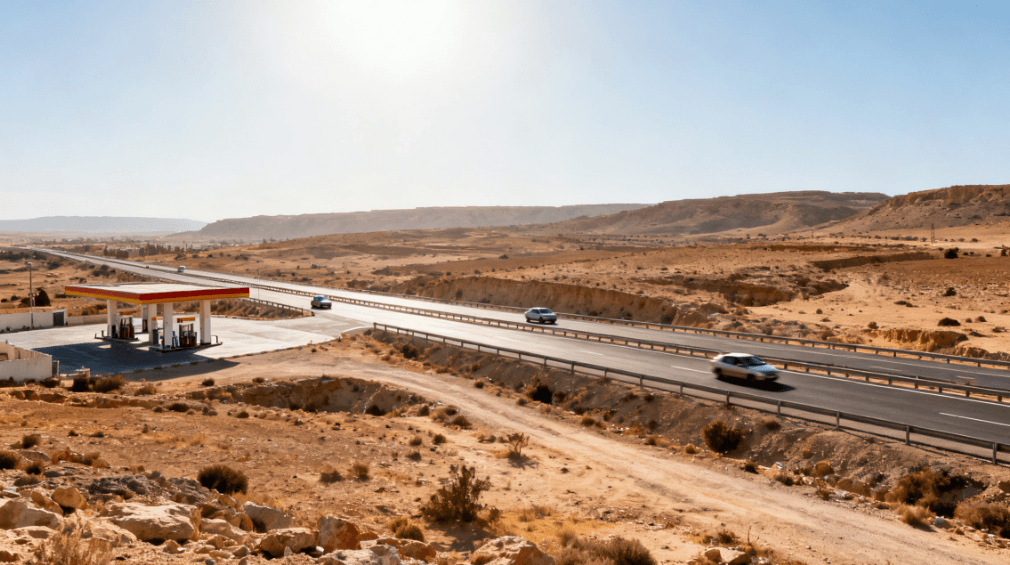
This is where used Chinese hybrid cars earn their place in the conversation. A hybrid does not need the charging network Algeria has not built yet. It refuels at the same stations everyone already uses, it cuts fuel burn against the diesel and petrol cars that dominate the roads, and it sidesteps the range anxiety that a four-charger highway guarantees for a pure EV. Given today's coverage, a used Chinese hybrid is simply the pragmatic bridge, the car that captures most of the efficiency benefit without betting on infrastructure that is still mostly a plan.
It is worth being precise rather than evangelical. This is not a claim that EVs have no Algerian future, the policy intent and the 1,000-station target say otherwise. It is a claim about right now. For a seller deciding what used Chinese stock to point at Algeria in mid-2026, hybrids fit the country as it actually is, and pure EVs fit the country it hopes to become. The export case follows the road that exists.
Hybrids versus pure EVs across the three markets
Lay the three side by side and a clear pattern falls out. The deciding factors are charging readiness, the incentive on offer, the EV-specific tariff or break, and therefore whether a pure EV or a used hybrid is the smarter China-origin play. The table below is the compressed version of everything above.
| Market | Charging readiness | EV incentive | EV-specific tariff or break | Best China-origin play |
|---|---|---|---|---|
| Georgia | Best of the three, concentrated in Tbilisi | EVs excise-exempt, LHD hybrids get a 60% excise cut | Favorable, no anti-China EV tariff; China already No.2 supplier | A pure used EV works now; hybrids also strong |
| Poland | Good, EU-grade network, around 8% EV share | NaszEauto up to ~40,000 zloty, but for NEW BEVs | EU per-maker tariff on Chinese EVs, on top of 10% base | Used hybrid, or a lower-tariff-badge Chinese EV |
| Algeria | Weakest, around 4 public highway chargers, 1,000 planned | Up to ~80% tariff cut for EVs, but hard to use yet | Generous EV break on paper; charging is the real gate | A used hybrid is the pragmatic bridge today |
The single-sentence read. Georgia is where the pure EV thesis works, Poland is where the badge and the tariff decide everything, and Algeria is where the hybrid wins on infrastructure reality. None of that is fixed, all of it moves with policy, but it is the honest mid-2026 map for someone deciding what to ship.
The one check that de-risks a used EV export: battery state of health
Underneath every market verdict sits a single technical fact that an overseas buyer should fear more than any tariff. A used EV is only worth what its battery is worth, and the battery is the one thing you cannot read from the odometer. This is the section that matters most, and it is the one where Guazi has a genuine, verifiable answer rather than a marketing line.
Why SoH, not mileage, sets a used EV's real value
On a combustion car, mileage is a decent proxy for wear. On an electric car it is close to meaningless. Two used EVs with identical odometer readings can have very different real value depending on battery state of health, the measure of how much usable capacity the pack has retained against its original specification. A car that was fast-charged hard, run in extreme heat, or sat at full charge for long stretches can show a tired pack at low mileage, while a gently used one holds up far better at higher mileage. State of health, not the number on the dash, sets the range the buyer will actually get and the price the car should actually command.
For anyone looking to import used electric car from China stock, this is the crux. The surplus is real and the prices are attractive, but a used EV bought without a battery-health read is a guess dressed as a bargain. The whole saving evaporates the first time a weak pack reveals itself as lost range or a costly replacement. The figure that protects the deal is state of health, confirmed before the car ships, not discovered after it lands.
How an inspection and battery-decay record travels across a border
This is exactly the gap Guazi is built to close. Guazi is one of China's largest used-car and used new-energy-vehicle platforms, with more than 3 million cars sold and over 30 million standardized inspections behind it, and it offers an industry-first 100-day battery-decay guarantee on new-energy vehicles. For a used EV crossing a border, that inspection layer plus a documented battery-health record is the difference between buying blind and buying informed. The condition data travels with the car. Every unit carries an over 200-point inspection feeding a digital condition report, and on a new-energy car that report is where the battery state of health, the charging history signals, and the pack condition get written down rather than guessed at from a listing photo.
We want to be honest about the limits of this, because overstating it would undercut the very credibility it rests on. The 100-day battery-decay guarantee follows Guazi's actual terms, it is not a blanket promise of zero degradation on every exported unit forever, and it is not a guaranteed resale-value figure. What it is, genuinely, is a China-side battery-health and inspection layer that turns the scariest unknown in a used-EV export into a documented, checkable fact before the money moves. On a powertrain where the battery is the value, that is the de-risking step that actually counts.
Sourcing inspected used Chinese EVs and hybrids through Guazi
Once you know which market wants what, the execution comes down to sourcing stock that fits the powertrain, the price, and the paperwork from the start, and that is the part Guazi is built for. As one of China's largest used-EV platforms, Guazi sits on exactly the kind of inspected new-energy and hybrid supply that this export wave is made of, with every car carrying an over 200-point inspection, a digital condition report, and on new-energy units a documented battery-health read backed by the 100-day decay guarantee.
We are precise about the role. Guazi is the China-side supplier and battery-health layer, not your customs broker in Poti, your tariff adviser in Warsaw, or your charging planner in Algiers. The export license and the local clearance are yours to confirm on the ground, and manufacturer range figures should be read as the makers' own claims. What Guazi handles well is the part it is designed for, a sound, inspected, battery-verified used EV or hybrid with its condition report and export documentation in order, matched to the market that can actually absorb it. Get the destination right, then let the inspection and the battery report decide the car. For the broader market read across these countries, including the ICE side and body-type demand, see our companion whole-market comparison. Browse inspected used EVs and hybrids in stock.
Key Takeaways
- China's EV surplus is the engine: around 16 million electric cars built in 2025, roughly 20% over domestic demand, with NEV exports doubling to about 2.62 million and still surging into 2026.
- Georgia is the readiest landing spot, EVs are excise-exempt, hybrids get a 60% cut, and China is already its No.2 EV supplier, so a pure used EV works there now.
- Poland has the demand and the money, but the EU's per-maker tariffs on Chinese EVs, plus subsidies aimed at NEW BEVs, mean the badge and the tariff decide the case.
- Algeria offers up to around 80% off tariffs for EVs but has roughly four public highway chargers today, so a used hybrid is the pragmatic bridge right now.
- From January 1, 2026, every BEV exported from China needs an export license, plus a 180-day after-sales confirmation, real friction to build into the plan.
- Battery state of health, not mileage, sets a used EV's true value, and a documented inspection plus battery-health record is the single check that de-risks the export.
One more time, because the figures move. EV incentives, charging counts, the EU's per-maker tariffs, China's export-license rule, and Algeria's break are all current to mid-2026 and set to change. Treat manufacturer range claims as the makers' own, often CLTC. Nothing here is trade or legal advice, and Guazi is the China-side car supplier and battery-health layer, not your customs broker or tariff counsel. Verify every figure that applies to your shipment with the relevant authority before you commit capital.
Sources & References
- ABC News, China car exports surged in 2025 as domestic demand slowed
- electrive, Chinese EV sales recover as exports surge
- Rest of World, Chinese EV exports surge amid competition and price war
- Eurasianet, as Georgia's EV market grows, China powers ahead
- Notes From Poland, Poland launches EU-funded subsidies for buying electric cars
- IISS, the EU's approach to tariffs on Chinese electric vehicles
- Ahcarsale, EV policy in Algeria
- Jingsuncar, China's NEV exports enter a compliance era
About Us
Follow US


Copyright © 2015~2026 https://en.guazi.com/, Chongqing Guazi Enterprise Consulting Service Co., Ltd. All rights reserved.