


Guazi
GlobalEnglish


Makes
Buy It NowAuctionsUp to 160 psPort StockAll VehiclesPopular Makes


Shop By Type


Popular Models


Shop By Budget

How Georgia Fills Its Streets With American and Japanese Cars
Article OverviewWhy Georgia is full of used American and Japanese cars, which models are worth buying, how the US-auction-to-Rustavi pipeline works, and the title checks that matter.
Walk the lots at Rustavi on a Saturday morning and the badges tell a story that started a long way from the Caucasus. A Toyota Camry with Carolina inspection stickers still on the glass. A Subaru Forester whose odometer reads in miles. A full-size Ford pickup that towered over a Tbilisi parking space its first owner never saw. Georgia, a country of under four million people on the Black Sea, has somehow become one of the busiest second-hand car crossroads on the planet, and most of the metal moving through it began life at an American auction. For anyone shopping here, the interesting question is not whether there are deals. It is which of these cars are actually worth owning, and how to tell the honest ones from the patched-up ones before the money leaves your hands.
This guide is the map. We will walk the pipeline that carries a car from a US salvage or lease-return auction to a Rustavi forecourt, look at the American and Japanese models Georgians genuinely buy and why, lay out the price logic that pulls buyers toward importing direct, and spend real time on the part that decides everything: titles, mileage, and condition. Guazi comes in as the inspection-and-transparency lens this market most lacks, the discipline of reading an auction history and a condition report before you commit, which is exactly where a cheap car either keeps its saving or quietly becomes a liability you cannot register.
Why Georgia is one of the world's busiest used-car crossroads
To understand the cars, you have to understand the place they pass through. Rustavi, about 20 km southeast of Tbilisi, is the largest used-car market in the region, a sprawl of open-air parking lots roughly the size of 40 football pitches holding thousands of vehicles at any one time. People drive in from Armenia, Azerbaijan and well beyond to buy here, and the scale is the point: enough supply, enough turnover, and enough competition that prices stay sharp and the inventory refreshes constantly.
The numbers behind it are large and growing. In the first eight months of 2025, Georgia imported 148,859 vehicles worth about 2.42 billion USD, up roughly 9% year over year, with motor cars sitting as the country's number-one import category. A lot of that metal does not stay. Georgia has built a second business on top of the first, taking cars in, repairing them cheaply, and sending them onward, which is what turns a small country into a regional engine rather than just a regional buyer.
From a US auction lot to a Rustavi forecourt
The pipeline is simpler than it looks. A car is bought at a US auction, most often Copart, IAA or Manheim, where salvage, insurance write-offs and lease returns are sold in volume. It is loaded into a container, shipped across the Atlantic and the Mediterranean to a Georgian port, then trucked to Rustavi where local workshops repair whatever needs repairing at a fraction of Western labour costs. From there it lands on a forecourt with a price tag, or it gets sold straight to a buyer who has come looking.
That cheap-repair step is the whole reason the model works, and it is also the reason caution matters. A large share of the cars arriving from the US carry rebuilt or salvage titles, somewhere around 40% by most accounts, because buying damaged and fixing locally is the cheapest way to fill a lot. Plenty of those repairs are sound. Some are cosmetic over structural, and telling the difference is a skill, not a guess.
Where the cars go next: the re-export flow to Central Asia
Not every car that lands in Georgia is meant for a Georgian driver. The country re-exports vehicles at record pace, near 93,000 of them worth about 2.3 billion USD in the first ten months of 2025, with the bulk heading onward to Kyrgyzstan and Kazakhstan. The average value of an exported car has climbed past 24,000 USD, which tells you the mix has moved upmarket over the years, away from pure salvage and toward cleaner, more expensive units. For a local buyer, this matters in a practical way: you are shopping in the same pool as regional traders, so good cars move fast and the market rewards a buyer who knows what to look for and can act. The full trade picture, who buys and where the cars flow, sits in our companion piece on Georgia as a used-car hub re-exporting to Central Asia.
The American used cars Georgians actually buy
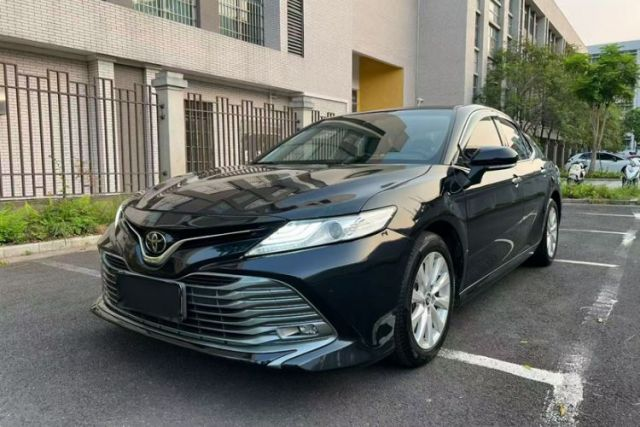
Spend any time on the lots and a few American names keep surfacing. The Toyota Camry, built in Kentucky for the US market and shipped over by the thousand, is the default mid-size sedan here for the same reason it is everywhere: it runs forever, parts are cheap and universal, and a tidy example holds its value better than almost anything in its class. A US-spec Camry is left-hand drive, which is what Georgia registers, so there is no steering-wheel complication to worry about. It is the car a cautious first-time importer reaches for, and the market agrees with that instinct.
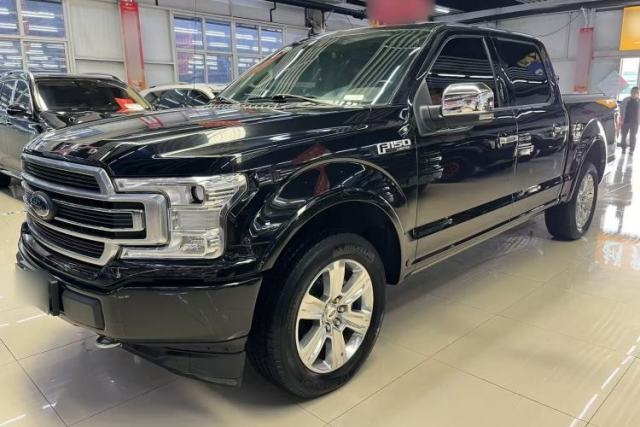
The other recurring American sight is the full-size pickup, the Ford F-150 above all. These come over because US auctions are full of them and because there is genuine demand from buyers who need to haul, tow or work, or who simply want the presence of a big truck on roads that were not built for them. An F-150 is a different proposition from a Camry, thirstier, larger, more expensive to feed, but for the right use it earns its keep, and the supply from American auctions keeps prices within reach. Around these two sit the familiar full-size names buyers ask for by brand, the large SUVs and sedans that Georgia associates with American imports because that is precisely where they come from.
The Japanese side: why Subaru and Toyota dominate
If the American cars come for price and presence, the Japanese ones come for fitness to the terrain. Subaru earns its place on capability. Standard symmetrical all-wheel drive, the thing Subaru builds into nearly everything it makes, suits a country of mountain passes, sudden rain and roads that turn to gravel without warning. The Forester is a common sight on the lots for exactly this reason, with roughly 188 of them listed on Autopapa at any time, examples running from around 12,500 USD for a 2019 to near 15,300 USD for a 2023. The Outback covers the same ground with a longer body and a wagon's load space. For a buyer who actually drives Georgia's geography rather than just its city streets, a Subaru is less a fashion choice than a practical one.
Toyota's appeal is the one it carries worldwide, scaled up by how many of its cars pass through here. The Camry already mentioned on the American side is a Japanese car built for America; the RAV4 brings the same reliability in a compact crossover that fits Tbilisi parking and copes with rough roads when asked. The deeper point is the ecosystem. So many Toyotas move through Georgia that mechanics know them cold and parts are never a problem, which lowers the real cost of ownership in a way the sticker price does not show. If your eye is drifting toward fuel economy, the hybrid versions of these cars are their own conversation, covered in our guides to the used Toyota Prius in Georgia and the best used hybrid cars in Georgia.
The price logic that pulls buyers to the US auctions
Here is the engine of the whole market, the reason buyers keep looking past the local forecourt toward the auction itself. The same car costs dramatically less at source. A 2019 Camry SE that lists locally in Tbilisi at 23,500 to 26,000 USD can be picked up at a US auction for somewhere near 14,000 USD. The reseller chain, the importer, the shipper, the workshop, the lot owner, each add a margin on the way over, typically stacking 15% to 40% onto the auction price by the time the car reaches a Rustavi forecourt. Buy direct and import it yourself and you can save roughly 25% to 35% versus the local lot, on a timeline of about six to ten weeks from auction to your driveway.
That delta is real, and it is exactly why this pipeline exists rather than people simply buying locally. It is also exactly where the risk lives. The saving assumes the car is what the listing says it is. Get the condition wrong, miss a structural repair, misread a title, and the 30% you saved evaporates into rectification, or worse, into a car you cannot legally register. The table below shows the shape of the gap, not a quote for any specific car. Treat it as the logic, then let an inspection decide the individual vehicle.
| Model (example) | US auction (approx.) | Tbilisi local lot (approx.) | Indicative saving via direct import |
|---|---|---|---|
| 2019 Toyota Camry SE | ~14,000 USD | 23,500 to 26,000 USD | ~25% to 35% |
| Subaru Forester (2019 to 2023) | varies by year | ~12,500 to 15,300 USD listed locally | depends on condition and title |
| Full-size pickup (e.g. F-150) | high US supply, lower base | local premium for size | meaningful, condition permitting |
The catch: titles, mileage and condition
This is the section that separates a bargain from a trap, so read it slowly. Because so many cars in this pipeline start as US salvage or insurance write-offs, the single most important thing you can know about any car is the honest answer to one question: what actually happened to it, and how well was it put back together. A clean repair on light cosmetic damage is one thing. A car with previous structural or frame damage, flood history, or a rolled-back odometer is another entirely, and the price tag will not tell you which you are looking at.
Work through it in order. Pull the auction photos, the ones taken before any repair, because they show the damage as it was rather than as it was hidden. Check the title status, salvage, rebuilt or clean, and understand that rebuilt is not automatically bad but does demand proof the repair was done properly. Verify the VIN against the auction and history records, and read the odometer with suspicion: confirm the mileage against records rather than trusting the dash. Separate cosmetic from structural, a scuffed bumper is nothing, a repaired airbag deployment or a straightened frame is a different car. This is the discipline that protects the saving, and it is precisely what a proper inspection and a verifiable condition report exist to provide. In a market where roughly four in ten US imports carry a rebuilt or salvage title, is the condition honest is not a side question. It is the entire game.
One rule that catches importers out: the steering wheel
There is a regulatory trap that snares buyers who shop on price alone, and it has nothing to do with condition. Since 2018, Georgia has restricted the new registration of right-hand-drive vehicles and tripled the customs fees that apply to them. Plenty of cheap, well-kept cars on the global market are right-hand drive, from Japan and the UK in particular, and an unwary buyer can land a genuinely good car that then cannot be registered cleanly or that costs far more to bring in than expected.
The rule of thumb is simple and worth holding firmly. Buy left-hand drive. US-spec American and Japanese cars, the Camrys, Foresters, RAV4s and F-150s that dominate this market, are left-hand drive by default, which is part of why the US-auction pipeline fits Georgia so well in the first place. If a deal looks unusually cheap and the wheel is on the right, the saving may be the registration problem in disguise. The exact customs treatment of right-hand-drive cars is the kind of figure that gets revised, so confirm the current position before you commit to any RHD unit.
How an inspected import protects the saving, with Guazi
Everything above points to one conclusion: in this market, the deal is only as good as the condition behind it, and condition is something you verify rather than hope for. Guazi is one of China's largest used-car platforms and a pioneer of inspected, transparent used-car trading, with 30M+ inspections behind it and a digital condition report that turns a car's history into something you can actually read. That is the lens this pipeline most lacks. A standardized multi-point inspection, a condition report you can check before paying, and records cross-checks that screen flood and accident histories are exactly what convert a cheap auction car into a safe one.
We are honest about our role. Guazi is not a Georgian importer and we do not run US auctions; what we bring is the China side of the same global used-car flow and the inspection discipline that should sit under any import decision. China-origin used and new-energy cars increasingly move through this same Caucasus hub toward regional buyers, which makes the inspected-sourcing question relevant here too. For the buyer in Georgia, the takeaway is the one that runs through this whole guide: let the rules decide eligibility, then let a real inspection decide the car. If you are weighing a work van rather than a sedan, our guide to the used Ford Transit in Georgia covers that corner of the market. See inspected used cars in stock →
Key Takeaways
- Georgia is one of the world's busiest used-car crossroads, with Rustavi as its open-air engine and US auctions, Copart, IAA and Manheim, as its main source of supply.
- On the American side, the Toyota Camry and the Ford F-150 are the cars Georgians actually buy; on the Japanese side, the Subaru Forester and Outback win on standard all-wheel drive for rain and mountains.
- Direct import from a US auction can save roughly 25% to 35% versus the local lot on a six-to-ten-week timeline, which is the engine of the whole market.
- The risk lives in titles and condition: around 40% of US imports carry salvage or rebuilt titles, so auction photos, title status, VIN and odometer checks decide whether the saving is real.
- Buy left-hand drive. Georgia has restricted right-hand-drive registration since 2018 and tripled the fees, and US-spec cars are left-hand drive by default.
- An over 200-point inspection and a verifiable condition report are what turn a cheap auction car into a safe one, which is the discipline Guazi brings to the sourcing question.
Sources & References
- Eurasianet, Georgia the used-car capital of Eurasia
- Jamestown, record car re-exports from Georgia
- Georgia Today, vehicle re-exports hit 2.3 billion in 2025
- West Coast Shipping, ship cars to Georgia complete guide
- Lion Auto, used cars in Georgia market guide
- Autopapa, Subaru Forester listings
Source Quality Used Cars From China's #1 Auction Platform
Access 200,000 verified vehicles monthly. Bid in real-time and secure bulk inventory at highly competitive market rates.











About Us
Get Support
Follow Us


Copyright © 2015~2026 https://en.guazi.com/, Chongqing Guazi Enterprise Consulting Service Co., Ltd. All rights reserved.