


Guazi
GlobalEnglish


Makes
Buy It NowAuctionsUp to 160 psPort StockAll VehiclesPopular Makes


Shop By Type


Popular Models


Shop By Budget

Three Used Hybrids That Make Sense in Georgia, and Which One Fits You
Article OverviewThe used hybrids worth buying in Georgia, ranked by use and value: the Prius commuter, the Camry Hybrid sedan, the RAV4 Hybrid crossover, plus the battery check.
With 95-octane petrol sitting near 3.77 GEL a litre in Tbilisi this year, a little over 1.41 USD, the hybrid question in Georgia has quietly changed shape. It is no longer about being green. It is about arithmetic. Every litre you do not burn on the commute between Saburtalo and the centre, or on the run down to Batumi for the weekend, is lari you keep, and over a year that adds up to a sum worth choosing a car around. That is why used hybrid cars Georgia buyers keep circling back to the same handful of models, and why buying one used is the smart version of the decision rather than the expensive one.
The trouble with most hybrid shortlists is that they rank by spec sheet. This one ranks by how you actually use a car and what it really costs to run and to own, because that is the decision behind the search. Three models cover almost every Georgian buyer. The Toyota Prius is the cheap, frugal commuter and the value floor. The Camry Hybrid is the comfortable sedan for someone who wants space and quiet without giving up the fuel saving. The RAV4 Hybrid is the do-everything crossover that holds its value and shrugs off rougher roads. We will profile each by buyer fit, lay them side by side, and then spend real time on the one check that protects any used-hybrid purchase, the battery, where Guazi's inspection discipline does the heavy lifting.
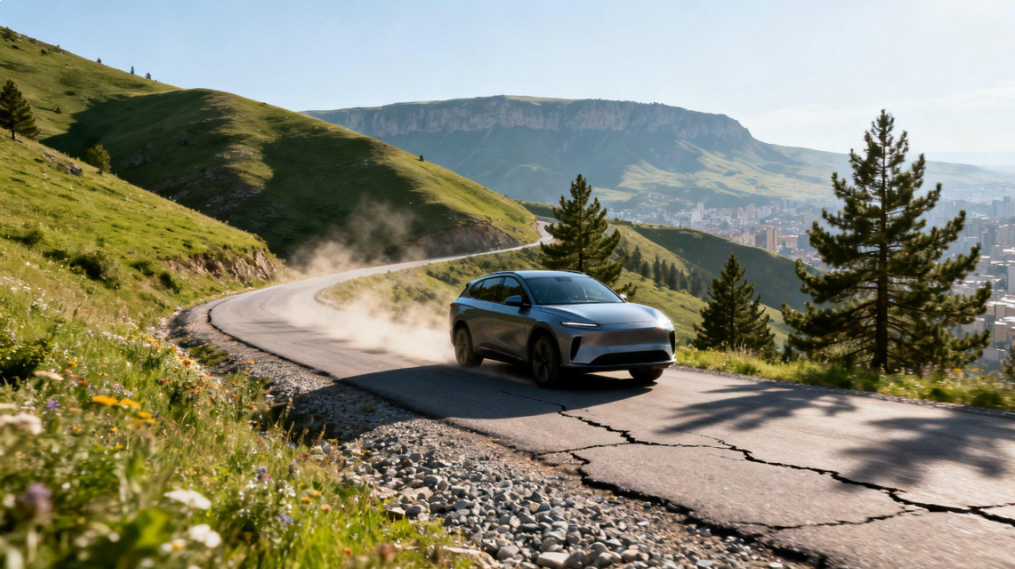
Why a hybrid is an arithmetic choice in Georgia right now
Start with the number that drives everything. Petrol at roughly 3.77 GEL per litre for 95-octane is a real running cost, not a footnote, and it is the single biggest reason hybrid and electric demand in Georgia keeps climbing. The electrification appetite is visible in the import data too, with EV imports jumping to 4,056 units in the first ten months of 2024, around two and a half times the year before, a signal that the same logic pulling buyers toward EVs is pulling them toward hybrids.
For the best hybrid for fuel economy Georgia shoppers want, the appeal is that a hybrid converts a high pump price into a smaller problem without asking you to plug anything in or plan around charging. A Prius doing roughly 5 litres per 100 km, or a hybrid Camry and RAV4 turning in figures a conventional petrol equivalent cannot touch, simply hands less of each drive to the fuel station. The market has noticed, which is the reason later-model used hybrids carry a clear price premium here. The Prius proved the thesis years ago at the cheap end. The Camry Hybrid and RAV4 Hybrid extend the same arithmetic up-market, to buyers who want more car without surrendering the saving.
The cheapest way in: the used Toyota Prius
The Prius is where the hybrid story in Georgia began, and it is still the value floor. A clean mid-spec example commonly sits around 8,500 USD, with the wider band running roughly 4,000 to 12,500 USD and up depending on generation and mileage. For that money you get the most fuel-efficient car of the three, a compact body that threads through old Tbilisi and parks anywhere, and a platform every local mechanic knows cold. If your driving is mostly city commuting and errands and your budget is tight, nothing else here gets you on the road for less while costing so little to feed.
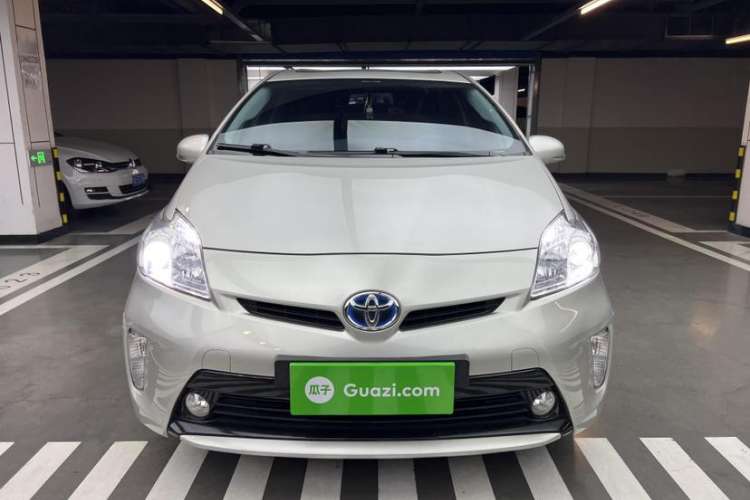
The trade-off is honesty about what the cheap end of the Prius market is. Many of the most affordable cars are ex-taxis that have already worked hard, which puts the hybrid battery and the real mileage front and centre. That is manageable with the right checks, and it does not change the fundamental case: for a commuter who wants the lowest running cost in Georgia, the Prius is the obvious entry point. Because the Prius deserves its own deep dive, including how to read battery health on a high-mileage example, we cover it in full in our dedicated guide to the used Toyota Prius in Georgia. Here it earns its place as the cheapest sensible way into a hybrid.
The comfortable sedan: the used Camry Hybrid
Step up from the commuter and the Toyota Camry hybrid Georgia buyers look for is the comfortable middle ground, a full-size sedan that adds space, refinement and a quieter ride while keeping the fuel saving that justified going hybrid in the first place. It is the car for someone who spends real time behind the wheel, carries passengers or covers longer intercity distances, and does not want to feel every kilometre of it. Where the Prius is a tool, the Camry Hybrid is a place to sit, and on the open road between cities that comfort is worth a lot.
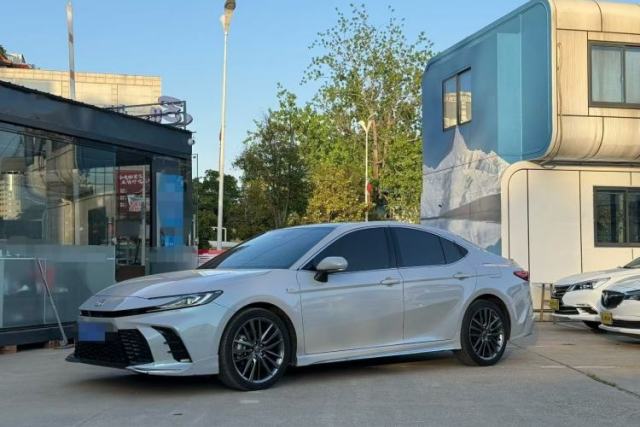
The pricing rewards patience and gives you a wide ladder to climb. A 2012 Camry Hybrid has been seen near 7,500 USD, a 2015 XLE hybrid around 11,000 USD, and a 2021 car near 17,000 USD That span lets you buy as much car as your budget. allows, from an older but comfortable saloon to a recent one with years of life ahead. Its traction battery is a different pack from the Prius and behaves differently, so the rule is to have it checked rather than assume Prius habits apply. For a buyer who values comfort and quiet on Georgian roads and still wants the hybrid economy, the Camry Hybrid is the natural pick.
| Year | Typical price (USD) | Best for |
|---|---|---|
| 2012 Camry Hybrid | ~7,500 | Comfortable older saloon on a budget |
| 2015 XLE Hybrid | ~11,000 | Higher trim, more equipment, lower wear |
| 2021 Camry Hybrid | ~17,000 | Recent car, longest remaining life |
The do-everything crossover: the used RAV4 Hybrid
If one of these three has to cover every job, it is the RAV4 Hybrid, and it is no accident that the RAV4 hybrid Tbilisi and Batumi city drivers favour combines efficiency with the higher stance, space and all-road confidence Georgian roads sometimes demand. It carries a family and their luggage, handles a rough surface or a mountain road to a village without complaint, and still returns hybrid economy a petrol crossover cannot match. For a buyer who wants one car to do everything from the school run to a weekend in the mountains, this is the answer.
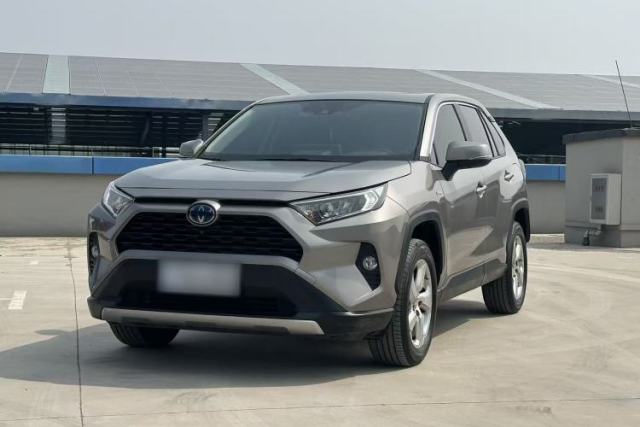
It is also the strongest on resale, which matters more than buyers expect. The RAV4 Hybrid is in genuine demand in Tbilisi and Batumi for exactly the reasons above, and that demand holds its value, so the higher price buys into a car the market wants back when you are done. Recent examples reflect that: 2021 RAV4 listings commonly run around 24,200 to 29,000 USD. It is the most expensive of the three to buy, but the combination of versatility, hybrid running cost and resale strength is what you are paying for, and for many Georgian buyers it is worth it.
How they compare for a Georgian buyer
Laid side by side, the choice comes down to the kind of driving you actually do and the budget you bring to it, not to which has the highest spec. The Prius is the cheapest to buy and run and the easiest to live with in the city, the Camry Hybrid is the comfortable long-distance sedan, and the RAV4 Hybrid is the versatile, value-holding all-rounder. Read the table below as a shortcut to the model whose strengths match your week, then let the inspection decide the individual car.
| Model | Body | Typical used price band (USD) | Best for | Fuel use |
|---|---|---|---|---|
| Toyota Prius | Compact hatchback | ~4,000 to 12,500+ | Cheapest commuter, tight city driving | Lowest, ~5 L/100km |
| Camry Hybrid | Full-size sedan | ~7,500 to 17,000 | Comfort, space, longer intercity trips | Low for a large sedan |
| RAV4 Hybrid | Crossover SUV | ~24,200 to 29,000 | Do-everything, rougher roads, resale | Low for an SUV |
Those bands are 2026 reference points and hybrid prices move quickly here, so treat them as a guide to where each model sits relative to the others rather than a fixed quote. Note, too, that for 2018 to 2022 used cars generally, prices in Tbilisi and Rustavi commonly run 20,000 USD and up, and later-model hybrids in particular carry a premium. The point of the comparison is direction, not a number to recite to a seller.
It also helps to put the running-cost gap in concrete terms, because that is what justifies a hybrid in the first place. Take a typical 1,500 km month of mixed Tbilisi driving. A Prius near 5 litres per 100 km burns roughly 75 litres, about 283 GEL at 3.77 GEL a litre. A conventional petrol car of similar size doing 8 litres burns about 120 litres, closer to 452 GEL. That is a gap of around 170 GEL a month, more than 2,000 GEL across a year, and the Camry Hybrid and RAV4 Hybrid open a similar gap against their non-hybrid equivalents in their own classes. Over three or four years of ownership the saving compounds into real money, which is the arithmetic that has been pulling Georgian buyers toward these cars and holding their resale up.
Resale is the other side of that ledger and it changes how you should read the higher prices. A car that the market wants back depreciates more slowly, so part of what you pay for a RAV4 Hybrid or a clean Camry Hybrid comes back to you when you sell, in a way it would not on a model nobody is chasing. That is why the right way to compare these three is not by sticker price alone but by what they cost to run and what they give back, and on that measure the more expensive crossover and sedan are not automatically the worse value. The cheapest car to buy is not always the cheapest car to own.
The check that protects every used-hybrid purchase
Whichever of the three you choose, one check protects the purchase above all others, the health of the hybrid battery. On any used hybrid the high-voltage pack is the headline risk, the component whose condition can swing the value by a four-figure sum, and it wears with use and heat rather than with calendar years. A strong battery delivers the frugal, smooth car you are paying for. A tired one points to a repair that can erase the saving that drew you to a hybrid in the first place. This is the gate every used-hybrid buyer in Georgia has to pass through.

Reading it does not require expertise, only the right steps in the right order. On a test drive, watch the energy-flow display for smooth charging and a steady state of charge, and notice whether the petrol engine runs more than the situation warrants. Then, and this is the decisive part, have a hybrid-literate mechanic read the pack's block voltages and balance before you buy. Tbilisi has plenty who know these cars. Treat the odometer with the same scepticism, since rollback is a documented market risk and a low reading on a hard-worked car deserves a second look, and cross-check it against service records and physical wear. It also pays to know where these cars came from, because a notable share of vehicles exported from the US to Georgia carry rebuilt or salvage titles, which our guide to American and Japanese imports in Georgia unpacks in full. Confirm the title, verify the battery and the mileage, and the car stops being a gamble.
Sourcing an inspected used hybrid through Guazi
This is where Guazi fits, and it fits squarely. Guazi is one of China's largest used-car platforms and China's number-one platform for used new-energy vehicles, so hybrid and electric condition is the core of what it does rather than an afterthought. Every car runs through an inspection of over 200 points that feeds a digital condition report, with insurance and maintenance records cross-checked to screen out flood and accident cars, and new-energy vehicles carry an industry-first 100-day battery-decay guarantee. For a used-hybrid buyer the battery is the whole risk, and that is precisely the competence on display.
The boundary is worth stating plainly. Guazi does not sell these cars from a lot in Tbilisi or hold any share of the Georgian market, and the local checks remain yours to make. What transfers is the discipline, the habit of letting a structured inspection and verified condition data decide the car instead of a clean display and a confident seller. Pick the body that fits your week, then buy the individual car the way Guazi inspects one. See inspected used hybrids in stock →
Key Takeaways
- For used hybrid cars Georgia, three models cover almost everyone: the Prius commuter, the Camry Hybrid sedan, and the RAV4 Hybrid crossover.
- A hybrid is an arithmetic choice with petrol near 3.77 GEL a litre, and rising demand means later-model hybrids carry a premium.
- The Prius is the value floor at roughly 4,000 to 12,500 USD and up, with a clean mid-spec near 8,500 USD.
- The Camry Hybrid spans about 7,500 to 17,000 USD by year and buys comfort and space for longer trips.
- The RAV4 Hybrid runs around 24,200 to 29,000 USD recent, and rewards you with versatility and strong resale.
- The hybrid battery is the check that protects every purchase, so have it read by a hybrid-literate mechanic and verify the title and mileage before you buy.
Sources & References
- auto.ge, Toyota Prius listings in Georgia
- Autopapa, used-car search
- cargurus, used Toyota RAV4 in Georgia
- cargurus, used Toyota Camry Hybrid in Georgia
- Wissol, Georgia fuel prices
- og.ge, fuel price guide for Georgia
- lionauto, used cars in Georgia market guide
- wcshipping, shipping salvage cars to Georgia guide
Trying to work out which used hybrid is sound before you commit?
We can source an inspected used hybrid from China with a full condition report and a 100-day battery-decay guarantee on new-energy cars.







About Us
Get Support
Follow Us


Copyright © 2015~2026 https://en.guazi.com/, Chongqing Guazi Enterprise Consulting Service Co., Ltd. All rights reserved.