

World Cup Special • Save up to $1000 on selected vehicles

Guazi
GlobalEnglish


What a Used Skoda Kodiaq Really Gives You for the Money, From the Third Row to the DSG Gearbox
Article OverviewA used Skoda Kodiaq review for family buyers: the honest seven-seat reality, which engine and DSG gearbox to trust, the common problems to check, USD price and value, and how to inspect one before you buy.
Quick answers
- Is a used Kodiaq reliable? Yes, on the whole. It has a strong reliability reputation, with owner-survey scores cited around 91.8% for petrol and 94.7% for diesel. But specific items recur, so the individual car's history matters.
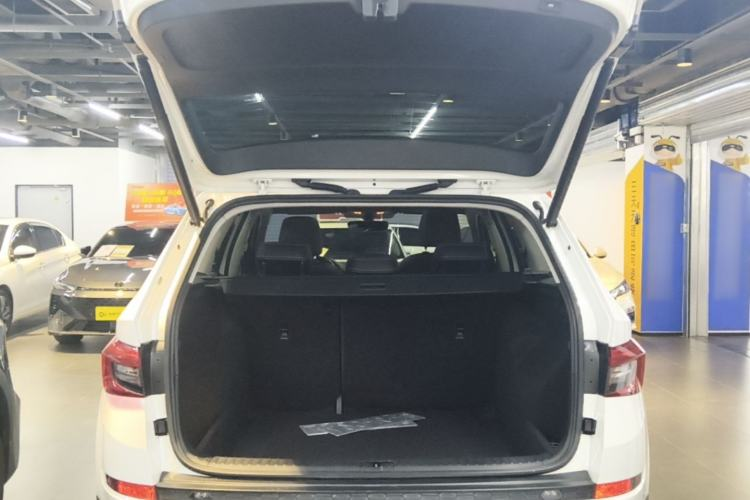
- Is the third row usable? It is a genuine "5+2." A six-foot adult fits in the third row for short trips if the middle row slides forward, which beats most rivals, but with all seven seats up the trunk is only about 340 liters.
- Which engine? The 1.5 TSI petrol is the sensible mainstream pick. The 2.0 TDI diesel is the long-distance and towing choice. Both use a 7-speed DSG that needs service-history discipline.
- What goes wrong? Watch for DSG low-speed judder, timing-chain rattle on the petrol, electronic parking brake faults, and diesel emissions-system niggles. None are universal, all are checkable.
- What does it cost? As a rough USD reference, roughly 19,000 to 48,000 US dollars depending on age and trim, with strong value retention. Local prices vary by market, so confirm them.
This review covers where the Kodiaq sits and who it is for, the seven-seat reality, the engines and the DSG truth, what actually goes wrong, price and value, and how to buy one the smart way.
Very few families regret buying a Kodiaq. The way to get it wrong is to buy the wrong engine, skip the gearbox service history, or assume the third row is something it is not. This used Skoda Kodiaq review is about getting the right one, told the way an owner and an inspector would tell it. The Kodiaq is Skoda's seven-seat hero, built on the same Volkswagen Group underpinnings as far pricier German SUVs, which means a huge used pool and a service network almost everywhere Skoda sells. Guazi is strategically positioned from the inspection lens, because on a family SUV that will carry children and tow, a verified condition report is worth more than a clean-looking listing, and the few checks that matter, the DSG gearbox and the timing chain among them, are exactly what a standardized inspection looks for.
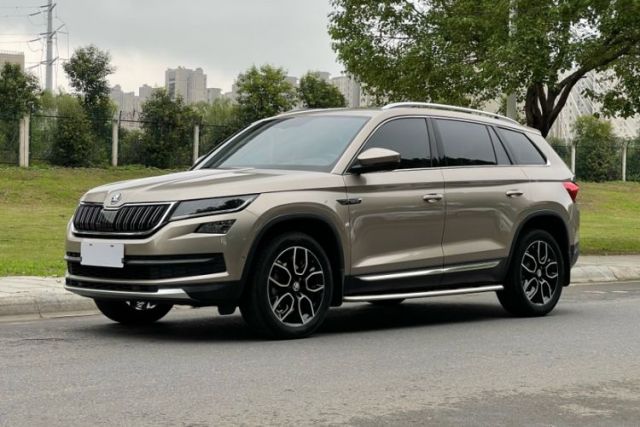
Where the Kodiaq sits, and the family it was built for
The Kodiaq exists to give families premium SUV space at mass-market money, and it does that better than almost anything in its class. It shares the Volkswagen Group platform, engines, and gearboxes with cars wearing more expensive badges, so you are buying the same engineering for less. The first generation ran from 2017 to 2024, with body dimensions of about 4,758 millimeters long, 1,864 millimeters wide, and 1,659 millimeters tall, which is large enough for genuine three-row use without being unwieldy in a city. That first generation is the version filling the used market now.
The practical upside of all that shared engineering is everywhere you look as an owner. Because the Kodiaq sold in big numbers across many markets, the used pool is huge, parts are common and affordable, and any competent independent workshop can service it without dealer-only tooling. You are not locked into an expensive network the way you can be with a premium badge. That combination, real seven-seat space, mass-market pricing, common parts, and a strong reliability reputation, is exactly what a value-minded family searches for, and it is why the honest review is the content these buyers actually want.
The third row: who actually fits back there
Here is the part that stops you from buying the wrong car. The Kodiaq is a Škoda Kodiaq 7 seater, and its third row is genuinely better than most. A six-foot adult can fit back there for short trips, provided the middle row slides forward to free up legroom. That makes it a true "5+2," more usable than many rivals that offer token rear seats. But be clear about the trade. With all seven seats in use, the trunk shrinks to about 340 liters, which is small.
Fold that third row down, and the picture changes completely. Space opens up toward roughly 765 to 794 liters, depending on where the middle row sits, so as a five-seater with occasional extra seats, it is excellent. If you almost never need seven seats, the dedicated five-seat version is the smarter buy, because it gives you a near-910-liter trunk all the time. Decide honestly how often you will carry seven people. That single answer tells you which Kodiaq to shop.
Buy It Now
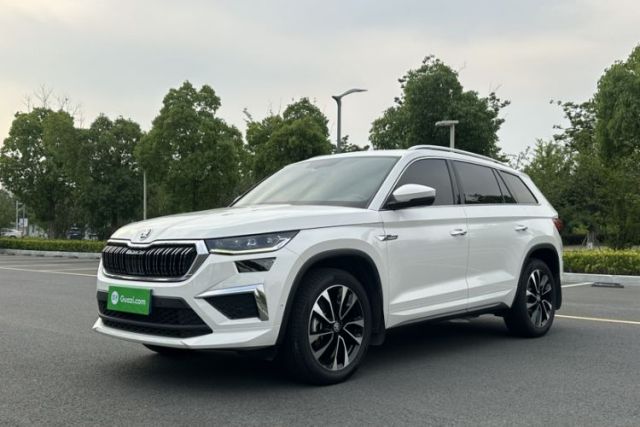
GradeAUsed Skoda Kodiaq 2022 TSI330 7-Seater Two-Wheel-Drive Luxury Edition Certified DealerCertified Dealer
 Guazi InspectedGuazi Inspected
Certified DealerCertified DealerGuazi InspectedGuazi InspectedFOB Price:$15,676$15,976

Which engine to trust on a used Kodiaq
The engine and gearbox are the decision that matters most on a used Kodiaq, because they shape both running costs and the risk you take on. Pick by how you actually drive.
The 1.5 TSI petrol, the sensible mainstream pick
The 1.5-liter TSI petrol, around 148 brake horsepower and fitted with mild-hybrid help and cylinder deactivation on later cars, is the right engine for most buyers. It suits town and mixed driving, it is smooth, and it keeps purchase costs sensible. The one thing to know is the timing chain. On the 1.4 and 1.5 TSI engines, chain wear can show up as a cold-start rattle from roughly 60,000 to 80,000 kilometers, so listen for it on a cold start and check the service record.
The 2.0 TDI diesel, the long-distance and towing choice
If you cover big motorway miles or tow regularly, the 2.0-liter TDI diesel is the engine to have. It comes in roughly 148 brake horsepower front-wheel-drive form and a 190 brake horsepower four-wheel-drive form, and it is the more relaxed long-haul companion with better economy on a long run. The trade is diesel-specific upkeep, covered in the faults section, but for the right driver it is the more sensible choice over the life of the car.
Buy It Now
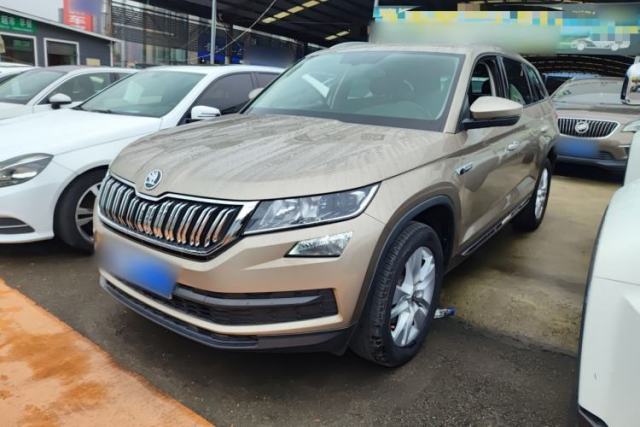
GradeSUsed Skoda Kodiaq 2019 Restyled TSI330 5-Seater Two-Wheel Drive Comfort Version China VI StandardCertified DealerCertified DealerGuazi InspectedGuazi Inspected
Certified DealerCertified DealerGuazi InspectedGuazi InspectedOriginal paint
Original paint
FOB Price:$11,913$12,413
The DSG gearbox truth: judder, service intervals, and the test-drive check
Both engines pair with a 7-speed DSG twin-clutch automatic, and this is where buyers should pay attention rather than panic. The DSG can judder or shift erratically at low speed, and oil-change discipline, roughly every 60,000 kilometers, is critical to its health. This is not a guaranteed failure. It is a "check it properly" item. On a test drive, work the gearbox deliberately at low speed, in stop-start crawling, and feel for harsh, hesitant, or shuddering shifts. A car with a clean DSG service history and a smooth low-speed test is a sound buy. One without either deserves caution.
| Engine | Power and drive | Gearbox | Best for |
|---|---|---|---|
| 1.5 TSI petrol | About 148 bhp, front-wheel drive | 7-speed DSG | Town and mixed driving, lowest entry cost |
| 2.0 TDI diesel | About 148 bhp FWD or 190 bhp 4x4 | 7-speed DSG | Long motorway miles and towing |
| 1.5 TSI iV PHEV | About 201 bhp, five-seat only | Automatic | Short electric commutes, up to about 76 miles official range |
What actually goes wrong, and what to check
Now the candid list, because Skoda Kodiaq reliability is genuinely strong and that makes the honest watch list more useful than a puff piece. The reputation is well earned, with owner-survey scores cited around 91.8% for petrol cars and 94.7% for diesels. Most owners are happy. But a handful of Škoda Kodiaq common problems recur often enough to take to a viewing as a checklist.
The DSG gearbox low-speed judder and erratic shifting, covered above, is the first thing to test. Timing-chain wear on the 1.4 and 1.5 TSI petrol can appear as a cold-start rattle from roughly 60,000 to 80,000 kilometers, so start the car cold and listen. Electronic parking brake faults have been reported on cars from 2017 onward. On diesels, the exhaust-gas-recirculation cooler and the AdBlue sensor can cause niggles, so check for warning lights and a clean emissions-system history. And both fuels can show general electrical and infotainment gremlins, so run every screen, camera, and switch. None of these is a reason to avoid the Kodiaq. Together they are the reason to inspect a specific one carefully rather than trust a photo.
Safety and family fit
Safety is one of the easy wins here. The Kodiaq holds a five-star Euro NCAP rating. The 2024-tested generation returned strong scores, around 89% for adult occupant protection, 83% for child occupant protection, 82% for vulnerable road users, and 78% for safety assistance, and the first-generation car earned its own five-star rating back in its 2017 test.
For families, the practical touches add up. There is plenty of room for child seats across the middle row, with easy-access mounting points that make fitting them less of a fight than in many rivals. Škoda's small thoughtful details, the door-edge protectors, the cabin storage, and the umbrella tucked in the door on some trims, are the kind of thing you appreciate every day rather than at the showroom. It is a grounded, dependable family environment rather than a flashy one, which is exactly what most Kodiaq buyers want. When you check a used car, make sure all the child-seat anchors and the rear features still work, because they are easy to overlook on a test drive and central to how the car will actually be used.
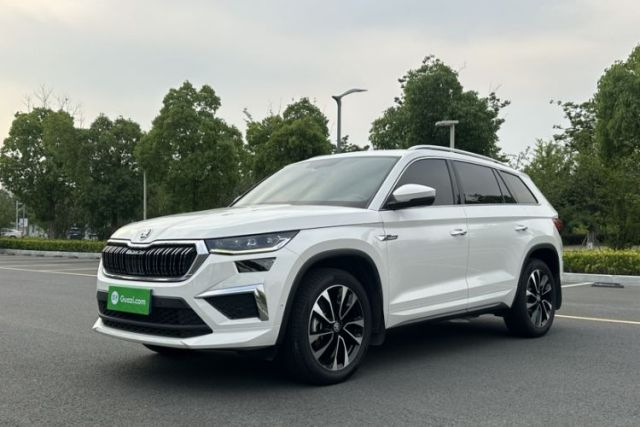
What a used Kodiaq costs and how well it holds value
Pricing on a global guide needs a caveat, so here is the honest frame on used Škoda Kodiaq price. The figures below are USD reference bands, and local used prices vary by market and import status, so treat them as a shape and confirm against current local listings. As a rough guide, used Kodiaqs span roughly 19,000 US dollars for an early, higher-mileage car to around 48,000 US dollars for a newer top-trim example.
The value story is the good news. The Kodiaq retains about 51 to 56% of its value after three years and 36,000 miles, a healthy result for a large SUV and a sign of steady demand. On a family car that will carry children and possibly tow, a clean, documented history is worth paying extra for, because it both lowers your risk and protects your own resale later. The table frames it by age and trim.
| Age and trim | Rough USD reference | What you are buying |
|---|---|---|
| Early, higher mileage | Roughly 19,000 to 26,000 | Cheapest entry, check DSG and timing-chain history closely |
| Mid-life, mid trim | Roughly 27,000 to 38,000 | The value sweet spot, balance of price and life left |
| Newer, top trim | Roughly 39,000 to 48,000 | Latest tech and lowest miles, smallest depreciation hit ahead |
Buying a used Kodiaq the smart way, and how Guazi helps
Here is where the inspection angle pays off, kept honest. The same first-generation Kodiaq sold across many markets is the car a standardized inspection maps onto directly. Guazi is one of China's largest used-car platforms, founded in 2015, with more than 30 million inspections behind it and a digital condition report on every car. The DSG behavior, the timing-chain question, the electrical items, and, on the plug-in hybrid version, the battery, all sit inside a standardized multi-point inspection rather than being left to a listing photo. On a child-carrying, towing SUV, a hidden fault is expensive, so a verified condition report is exactly the thing that pays for itself.
Summary
The used Škoda Kodiaq is one of the most rational seven-seat family SUVs you can buy, as long as you buy the right one. You get genuine premium-sized space, a true "5+2" cabin, and proven Volkswagen Group engineering for mass-market money, backed by a huge used pool and a service network almost everywhere. The price of that value is a short, specific watch list, the DSG, the timing chain, and a few electrical items, that a documented history and a proper inspection settle. Get those right and the Kodiaq rewards a family buyer for years.
100% Transparent Used Skoda Kodiaq Inspection
Looking for a used Skoda Kodiaq? We treat vehicle condition as our core product. Our in-house experts conduct a meticulous 200 point inspection, providing comprehensive condition reports with HD videos and photos. Enjoy absolute transparency with no hidden flaws and no surprises.


About Us
Follow US


Copyright © 2015~2026 https://ylqc.guazi.com/, Yilanqunche Automobile Services (Shanghai) Co.,Ltd. All rights reserved.