

World Cup Special • Save up to $1000 on selected vehicles

Guazi
GlobalEnglish


Why the BYD Blade Battery's Nail Test Changed the EV Math for Ghana Buyers
Article OverviewWhat the BYD Blade Battery's LFP chemistry and nail-penetration result actually mean for a Ghana used-EV buyer — cycle life, climate fit, fire risk.
Note. Technical claims in this guide reflect publicly available BYD specifications and third-party safety test results. Always verify the production year and battery state-of-health of a specific unit at purchase, since chemistry can vary by model and year.
If you have looked at a used BYD on a Tema lot in the last two years, the salesman almost certainly mentioned "Blade Battery" in the first sentence. The pitch is not marketing fluff. The blade format and its underlying LFP chemistry materially change three things a Ghana buyer should care about: how long the pack lasts before it loses range, how it behaves in collision and high heat, and which production years are actually worth paying a premium for. This guide unpacks the technology in plain terms, then walks through what to verify before you hand over a cedi.
What the blade format actually is, and why BYD built it
The Blade Battery is BYD's proprietary lithium-iron-phosphate (LFP) cell, introduced in March 2020 on the Han EV launch. Two engineering choices set it apart from the NMC packs used in most Korean, European and earlier Tesla EVs. First, each cell is shaped like a long thin blade, roughly 960 millimetres long and 13.5 millimetres thick, and the cells are stacked side by side directly into the pack housing, skipping the intermediate module step that legacy EV packs use. BYD calls this cell-to-pack, or CTP, and the practical result is more usable kilowatt-hours in the same floorpan and better heat dissipation because every cell has a long edge exposed to the cooling plate. Second, the chemistry is LFP rather than NMC, which is the safety story most Ghana buyers have heard about.
The blade arrived on the Han first, then rolled into the Song Plus EV, Tang EV refresh, Qin Plus EV, Yuan Plus (Atto 3 in export markets) and Dolphin between 2021 and 2022. Pre-2020 BYD vehicles, including the older Tang, the original Song and earlier Qin variants, use NMC chemistry without the blade architecture, which matters when you are checking a specific used unit against its production year.
LFP versus NMC, and why the chemistry difference matters in Accra heat
Most of what people repeat about the Blade Battery's safety comes down to chemistry, not the blade shape. LFP (lithium iron phosphate) and NMC (nickel manganese cobalt) are the two dominant lithium-ion families in passenger EVs, and they sit at different ends of the same engineering trade-off curve. NMC delivers more energy per kilogram, roughly 200 to 260 watt-hours per kilogram against LFP's 140 to 160, which is why longer-range Teslas and Korean EVs historically used NMC. The cost of that energy density is a lower thermal runaway threshold, around 150°C for NMC versus about 270°C for LFP, and a shorter calendar cycle life of 1,000 to 1,500 full charges against LFP's 3,000 or more.
For a Ghana buyer the trade-off lands clearly on the LFP side. Ambient temperatures in Accra and Kumasi sit in the 25 to 35°C band most of the year, which is the LFP sweet spot: the cells run cool, degrade slowly, and never hit the cold-weather range loss that hurts LFP in northern winters. The higher thermal runaway threshold also matters more in a market where collision response from emergency services is slower than in Europe or the US; a pack that simply heats up rather than flames out gives a driver minutes rather than seconds to get clear. The cycle-life advantage is the quietest but most important part of the story for a used buyer. At one full cycle per day, 3,000 cycles is over eight years before the pack starts losing meaningful capacity, which comfortably outlasts most Ghana ownership horizons.
| Property | LFP (Blade) | NMC (Tesla / typical Korean EV) |
|---|---|---|
| Thermal runaway temperature | \~270°C | \~150°C |
| Nail-penetration result | No fire, slight heating | Fire, visible flame |
| Cycle life (full charges) | 3,000+ | 1,000-1,500 |
| Energy density (Wh/kg) | \~140-160 | \~200-260 |
| Cold-weather performance | Weaker (below -10°C) | Stronger |
| Cost per kWh | Lower | Higher |
The nail test that anchored BYD's safety reputation
In March 2020 BYD ran a public nail-penetration test on the Blade Battery alongside a conventional NMC pack and a regular LFP pack for reference. The methodology followed GB/T 31485, China's national standard for traction battery abuse testing, which drives a steel nail through the cell to simulate the worst-case internal short circuit. The NMC pack ignited within seconds, surface temperatures climbing past 500°C and flames visible. The Blade Battery pack neither flamed nor smoked; surface temperature stabilised between 30 and 60°C, and an egg placed on top of the punctured cell did not cook. Third-party labs including TÜV Rheinland have published independent verifications of similar results in the years since.
Buy It Now
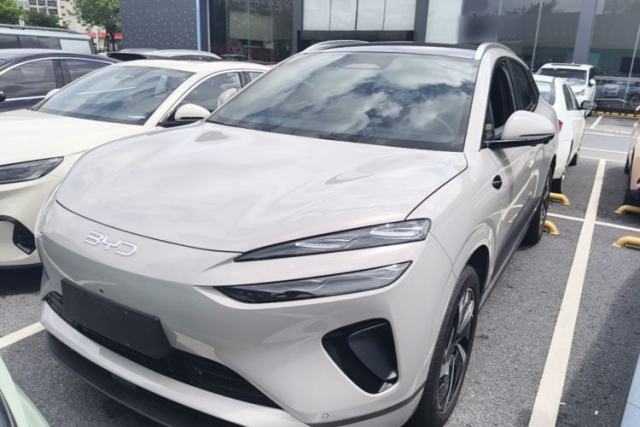
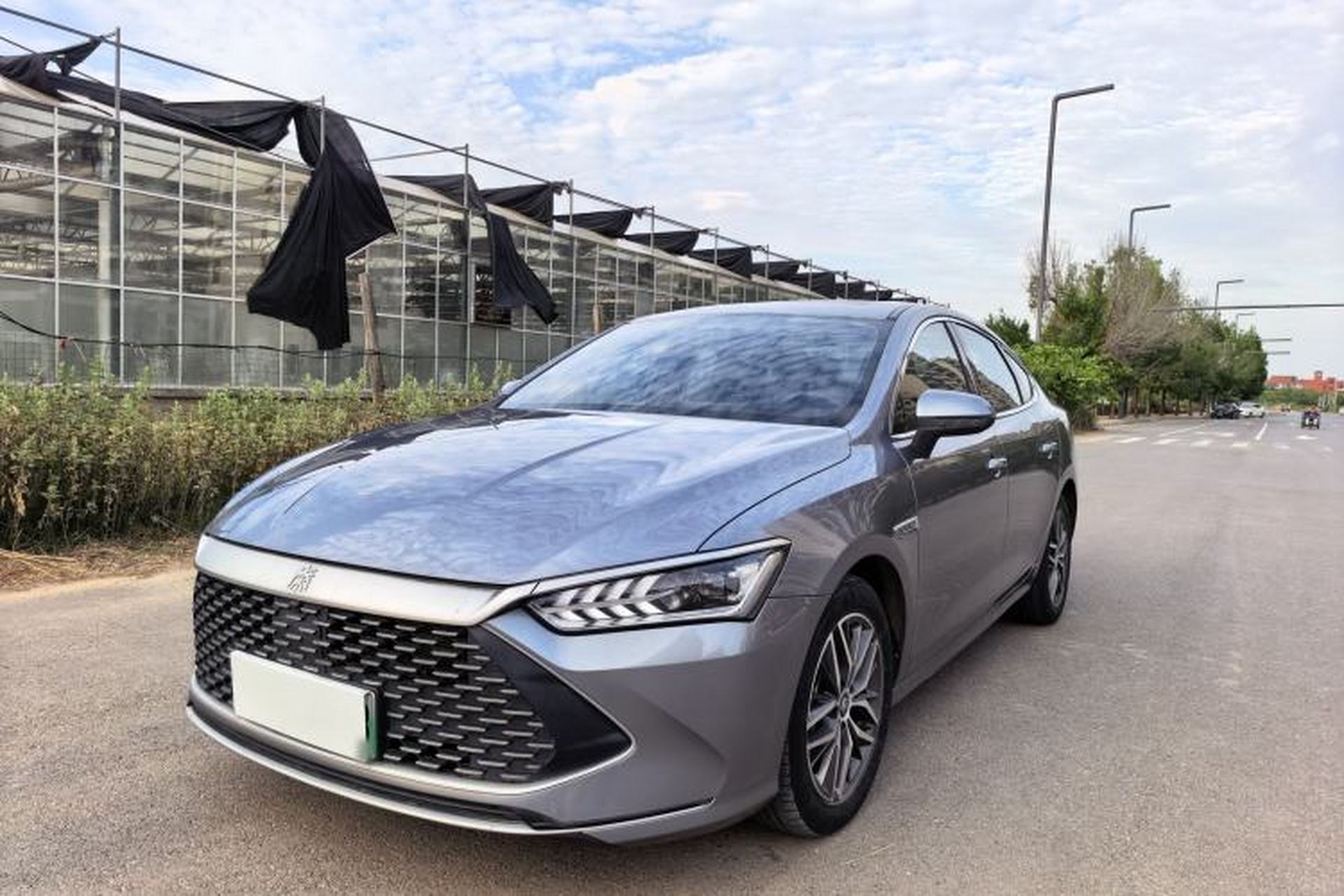
GradeSUsed BYD Sealion 06 New Energy 2025 Model DM-i 170 Navigation Plus Edition Certified DealerCertified Dealer
 Guazi InspectedGuazi Inspected
Certified DealerCertified DealerNear-new car
Near-new car
Guazi InspectedGuazi InspectedFOB Price:$21,501$21,601

What the test proves is narrow but important. It does not mean a Blade Battery is fireproof. Any battery damaged severely enough can fail, and pack-level fire risk depends on the housing, the battery management system and crash structure as much as on the cell chemistry. What it does prove is that the cell itself, when shorted internally, does not run away thermally the way an NMC cell does. For Ghana's used EV buyers, that translates into a materially lower residual fire risk in the kinds of accidents that actually happen on Spintex and the Accra-Tema motorway: fender benders, drainage-ditch incidents, the rear-end collisions that happen when traffic stops suddenly, none of which should be enough to turn a properly built blade pack into a fire incident.
What the technology means for a Ghana used-BYD buyer
Strip away the engineering and three things change in how you should think about a used blade-equipped BYD. The first is that you can stop worrying about the pack outliving the car. A blade pack with 3,000-plus cycle life will still be at usable capacity long after the body, suspension and interior have aged through Accra potholes, which means the resale conversation a few years out should not be dominated by battery degradation in the way it is for older Nissan Leafs or pre-2018 Teslas. The second is that climate is actually working for you. The blade chemistry's biggest weakness, cold-weather range loss below freezing, simply does not apply to Ghana, and the heat tolerance that hurts NMC packs above 40°C is exactly where LFP performs best. The third is the fire-risk angle, which is the underrated one. Ghana does not have EV-specific motor insurance riders yet, and roadside response to a battery fire would be slow, so the structural fire-resistance margin in an LFP blade pack is a real safety benefit, not just a brochure point.
The catch is that the blade chemistry does not guarantee anything about the specific unit on the lot in front of you. Production year, prior use cycles, prior charging behaviour and any flood or submersion history all still matter, and a Blade Battery that has been abused will still show degradation on a diagnostic scan. The chemistry sets the ceiling on what is possible; the unit's history determines where it actually sits under that ceiling.
The three checks worth doing before you buy a used blade-equipped BYD
Confirm chemistry by production year first. Han EV from March 2020, Song Plus EV from 2021, Qin Plus EV from 2021, Yuan Plus and Atto 3 from 2022, and Dolphin from 2022 onward all carry the Blade Battery as standard. Earlier production years of the same nameplates, particularly the Tang built before 2021 and the Song built before 2021, likely use the older NMC chemistry, and you should price them accordingly. A VIN check against BYD's production records is the only way to be certain on edge cases, and any seller who cannot tell you the build month should be discounted.
Pull a battery state-of-health (SoH) reading before agreeing on price. Even with the long cycle life of LFP, individual packs vary based on how the previous owner charged and stored the vehicle. A reading at 90% or higher is the working benchmark for any blade-equipped BYD under five years old; anything below that should drop the price meaningfully or move you to a different unit. Most Tema and Spintex independent EV workshops can run the diagnostic, and you should expect to pay GHS 200 to 400 for a documented report.
Check the title history for flood or submersion exposure. LFP cells are intrinsically safer in collision than NMC, but pack-level damage from saltwater submersion or freshwater flooding is expensive on any chemistry, and a flood-history pack is a write-off risk regardless of what the SoH reading says on test day. A clean title plus a recent SoH report plus a build-month confirmation are the three documents that should travel with a serious used blade-BYD purchase.
Which BYD models on the Ghana market carry the blade pack
The clearest blade-equipped picks for the Ghana used market are the Atto 3 and Dolphin, both of which were blade-only from launch and have started entering the Tema clearing yards in volume through China-export channels. The Atto 3 lands in the GHS 280K to 380K band depending on year and battery option, and the Dolphin sits a step below at GHS 220K to 310K, which is where the buyer comparison against a used Toyota bZ4X or a Nissan Leaf actually starts working in BYD's favour. The Han EV is rarer but appears occasionally as a premium import in the GHS 450K to 650K range, with the long-range version using the higher-density blade configuration. Song Plus EV and Qin Plus EV both come through as blade-equipped from the 2021 model year forward, with the Song Plus EV sitting in the GHS 320K to 450K band as a mid-size SUV option.
A used BYD from before 2020, which includes early Tang, Song, Qin and e5 variants that occasionally surface in private imports, is almost certainly NMC and should be priced as a standard used EV without the safety or cycle-life premium that goes with the blade.
Common misconceptions worth correcting
A few claims float around Ghana EV groups that deserve flat responses. "All BYD vehicles use the Blade Battery" is the most common, and it is false: pre-2020 production is NMC, and you have to check the specific unit. "LFP cannot fast-charge" is outdated; modern blade packs accept 80 to 120 kilowatts on DC, which means a typical 30 to 80 percent charge in 25 to 35 minutes at a roadside fast charger. "LFP loses range in cold weather" is true in northern Europe and Canada but not in Ghana, where ambient temperatures sit comfortably in the LFP performance band year-round. "NMC must be safer because Tesla uses it" misreads the engineering: Tesla manages NMC fire risk through battery management software and crash structure, not because NMC is inherently safer than LFP, and Tesla has itself moved to LFP for its short-range Model 3 and Model Y variants.
Key Takeaways
The Blade Battery is the combination of LFP chemistry with cell-to-pack architecture that BYD introduced in March 2020 and rolled across its EV and PHEV lineup over the following two years. For Ghana buyers the chemistry wins on three fronts that actually matter: cycle life that outlasts the car, heat tolerance that fits the climate, and a fire-risk profile that is materially safer than NMC. The constraints to watch are production year (anything pre-2020 is likely NMC), unit-specific battery state-of-health (require a 90 percent reading or discount accordingly), and title history (flood damage breaks any chemistry). Confirm those three, and the blade pack is the strongest battery story in the affordable Ghana EV market today.
100% Transparent Used BYD Inspection
Looking for a used BYD? We treat vehicle condition as our core product. Our in-house experts conduct a meticulous 200 point inspection, providing comprehensive condition reports with HD videos and photos. Enjoy absolute transparency with no hidden flaws and no surprises.




About Us
Follow US


Copyright © 2015~2026 https://ylqc.guazi.com/, Yilanqunche Automobile Services (Shanghai) Co.,Ltd. All rights reserved.