

World Cup Special • Save up to $1000 on selected vehicles

Guazi
GlobalEnglish


Best Hyundai Cars for Ghana: 65-72% Resale, 5 Models Worth Stocking
Article OverviewBest Hyundai cars for Ghana: Tucson, Santa Fe, Elantra, Accent and Creta compared, with GHS and USD landed cost, resale retention, and Hyundai Ghana parts depth.
Pricing note. All prices use Ghana cedi (GHS) with a US dollar reference at roughly GHS 12.5 to USD 1, and they are indicative for dealer-quantity sourcing in 2026. Ghana petrol sat near GHS 13.40 to 14.10 per liter across Accra fuel stations at the time of writing. Used-car prices move with the cedi rate, year, mileage and title, so treat every figure as a range and confirm a live listing before you commit stock.
Quick answers
- Why does Hyundai hold value in Ghana? Resale retention of 65 to 72% after three years, a mature authorized parts network, and build quality that improved sharply after the 2018 refresh.
- Which Hyundai should a dealer stock first? The Tucson is the central SUV volume. The Elantra carries the sedan volume. Those two anchor a Hyundai lot.
- Is the Santa Fe a real Highlander alternative? Yes. Comparable seven-seat space at roughly 20 to 30% lower landed cost than a Highlander. The Highlander still wins slightly on resale and brand familiarity.
- Are Hyundai parts as available as Toyota? Close, not equal. Hyundai parts run through the Spintex Road distributor and authorized agents, with a one to two week lead time on non-stock items versus Toyota's usually same-day supply.
- What is the cheapest Hyundai to land in Ghana? The Accent 1.4L, at roughly GHS 70K to 105K for dealer-quantity sourcing.
This guide covers why Hyundai holds value, the five models worth stocking with prices and buyer fit, how to build a Hyundai-heavy lot, the mistakes that cost margin, and the questions buyers and dealers ask most.
What sets Hyundai apart from the Chinese-brand wave flooding Ghana comes down to two numbers: resale retention and parts depth. After three years, a 2018 Tucson in Accra still holds 65 to 72% of its landed cost, while a 2020 BAIC X35 of similar trim sits closer to 50%. Put Hyundai Motor Distributors Ghana on Spintex Road, authorized agents in Kumasi and Tema, and the universal third-party parts shelves at Abossey Okai behind that, and you get a brand buyers do not worry about reselling later. This guide covers the five Hyundai models Ghana dealers should stock, with engine specs, landed cost in cedi and dollars, and what to skip. Strong resale only holds, though, when the individual car checks out, and that is where a verified condition report does the work a showroom photo cannot.
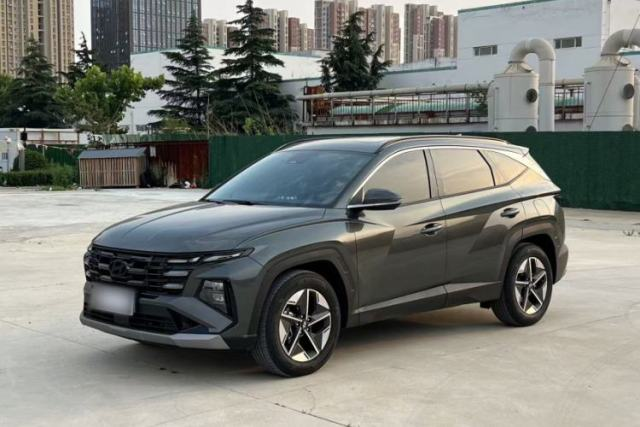
Why Hyundai holds its value in Ghana
Three structural reasons explain Hyundai staying in the top three of Ghana's used-import flow, and they are worth understanding before you pick trims.
The first is the authorized Africa parts network. Hyundai Motor Distributors Ghana runs the main dealership on Spintex Road plus authorized agents in Kumasi and Tema. Third-party parts at Abossey Okai run deep across the Tucson, Elantra and Accent generations, so service access is rarely the constraint.
The second is resale retention of 65 to 72%. A 2018 Tucson that landed at GHS 130K resells today around GHS 95K to 105K after three years of moderate use. Chinese sister brands run 50 to 60% over the same period, which is the gap that protects a Hyundai buyer at resale time.
The third is Korean engineering maturity. Hyundai's five-year or 100K km global warranty program has standardized build quality, and the 2019 refresh fixed earlier finish complaints around door-card material and headliner stitching.
Hyundai Tucson (TL and NX4): where Hyundai SUV volume lives in Accra
Mention a Hyundai SUV to a Ghana buyer and they picture a Tucson. It outsells every other Hyundai by volume across our Accra and Tema clearances, with the NX4 (2021 and newer) parametric grille pulling steady weekend traffic in East Legon and Airport Residential.
- Powertrain. The 1.6 T-GDI Smartstream (175 hp, 265 Nm) is the popular pick. Petrol options also include the 2.0L Nu MPI (155 hp) and the 2.5L Smartstream (187 hp). Transmissions are a 6-speed automatic on the petrol cars, a 7-speed wet-clutch dual-clutch on the 1.6 turbo, and an 8-speed automatic on the 2.5L Korean-export NX4.
- Landed cost, 2018 to 2021 used. GHS 125K to 200K, or about USD 10K to 16K.
- Buyer fit. A family of four, the mid-tier crossover buyer, the executive commuter, the premium ride-hail operator.
- Lot role. Central SUV volume. Stock three to five units per cycle.
The NX4 (2021 and newer) moves faster than the TL generation, but TL Tucsons from 2018 to 2020, priced GHS 30K to 40K below a same-trim NX4, are real value. Stock both. Watch fuel burn on the 2.5L for ride-hail buyers, because at GHS 13.50 per liter the 1.6 turbo pencils out better for daily Accra to Tema commutes.
Hyundai Santa Fe (TM): the 7-seat flagship that holds margin
Buyers often walk in asking for a Highlander. We show them a Santa Fe and they walk out with a 20 to 30% cost saving. The TM-generation Santa Fe is Hyundai's Highlander and Sorento competitor, and the one Hyundai we consistently hold margin on through the six to nine week clearance cycle.
- Powertrain. The 2.4L Theta II MPI (185 hp, 241 Nm) and the 2.0L Theta II turbo (235 hp, 353 Nm). Either a 6-speed automatic on the early TM or an 8-speed Aisin automatic on the 2021 refresh. The 2.2L CRDi diesel exists but is rare in Ghana imports.
- Landed cost, 2018 to 2021. GHS 195K to 285K, or about USD 15.6K to 22.8K.
- Buyer fit. A large family, the executive premium buyer, the hotel and resort fleet.
- Lot role. Margin hold. Stock one to two per cycle.
Mid-trim, SEL Premium and up, carries the panoramic roof and second-row captain chairs that Ghana seven-seat buyers expect, while base SE trim tends to sit on the lot. Test-drive the early TM 6-speed automatic from a cold start, because there are reported torque-converter chatter complaints that are easier to catch cold than warm.
Where the Elantra wins on a Ghana sedan lot
The Elantra is the Civic-class compact sedan, called the Avante in some Korean-export channels. The CN7 (2021 and newer) body photographs well and moves quickly on East Legon test-drive bookings.
- Powertrain. The 1.6L Gamma petrol (121 hp), the 1.4L Kappa T-GDI (128 hp), and the 2.0L Nu Smartstream (147 hp). The 2.0L Smartstream uses Hyundai's CVT, the 1.6L uses a 6-speed automatic, and the 1.4 turbo uses a 7-speed dual-clutch.
- Landed cost, 2018 to 2021. GHS 90K to 145K, or about USD 7.2K to 11.6K.
- Buyer fit. The first-car professional, the premium ride-hailing tier, the entry family sedan.
- Lot role. Sedan volume. Stock two to three per cycle.
The AD-generation Sport trim with the 1.6 turbo (203 hp, 7-speed dual-clutch) is the enthusiast pick and lands 8 to 12% above a standard AD. It is worth one unit per quarter for the showroom interest it generates.
When the Accent belongs in your showroom
The Accent sits at the Yaris-sedan and Rio price tier and pulls ride-hail entry buyers off the street. It is the cheapest Hyundai you can land in Ghana with credibility intact.
- Powertrain. The 1.4L Kappa MPI (99 hp) or the 1.6L Gamma MPI (121 hp). Either a 6-speed automatic or a 6-speed manual.
- Landed cost, 2018 to 2021. GHS 70K to 105K, or about USD 5.6K to 8.4K.
- Buyer fit. The first-car buyer, the lowest-cost commuter, the ride-hailing entry tier.
- Lot role. Entry-price draw. Stock one to two.
Skip the bare base trim with manual windows and no rear AC vents. SE-plus trim moves, base sits. With Ghana petrol at GHS 13 to 14 per liter, the 1.4L MPI and its 6.5 L/100 km mixed cycle is the ride-hail economics story you want to tell.
The Creta question: India-spec or Middle East-spec?
The Creta is a subcompact crossover aimed at first-SUV buyers and young professionals. The spec question matters more on the Creta than on any other Hyundai you will stock.
- Powertrain. The 1.5L Smartstream G15 (113 hp) or the 1.6L Gamma MPI (121 hp). Either a 6-speed automatic or Hyundai's CVT.
- Landed cost, 2018 to 2021. GHS 95K to 150K, or about USD 7.6K to 12K.
- Buyer fit. The first-SUV buyer, the young professional, the urban single or couple.
- Lot role. Entry crossover. Stock one to two.
The Creta arrives in Ghana mainly through India-export and Middle East-export, while Korean-export Creta is rare. Spec-check carefully, because India-spec misses the climate control and full LED lighting that Middle East-spec carries as standard. Quote Middle East-spec 5 to 8% higher, since buyers who notice the difference will pay for it.
Sourcing strategy for building a Hyundai-heavy lot
For a Hyundai-emphasis showroom, a balanced mix looks like this:
- SUV layer. Tucson three to five, Santa Fe one to two, Creta one to two.
- Sedan layer. Elantra two to three, Accent one to two.
That mix turns roughly GHS 1.3M to 1.9M of inventory, about USD 104K to 152K, in six to nine weeks based on recent Tema clearance data, and it is balanced for the Accra and Kumasi buyer mix.
What mistakes cost Hyundai margin?
A few specific errors quietly eat margin on Hyundai stock, so price them in before you bid.
The first is skipping the trim check. Base Tucson and base Elantra miss the climate control, full LED and infotainment that Ghana buyers expect, so mid-trim and up moves faster. The second is skipping the 6-speed automatic inspection on the early TM Santa Fe. The Aisin 8-speed automatic from 2021 is robust, but the earlier 6-speed has reported torque-converter chatter on hard cold starts, so test-drive it cold.
The third is the age cap. Ghana enforces a 10-year cap before penalty, so a 2013 Tucson lands with overage fees. The fourth is the pre-2018 build. Pre-refresh Hyundai had thinner door-card material and headliner stitching that ages poorly in Ghana heat, while 2018 and newer build quality is materially better. The last is stocking the Accent base trim, which does not move in an Accra showroom. Trim up.
Where Guazi fits for a Hyundai buyer
Hyundai's resale story is its whole value, and that story only holds when the individual car has a clean history behind the odometer and the service stamps. Reading that history is exactly what a verified inspection does, and it is the part a showroom photo leaves out. Guazi, founded in 2015, is one of China's largest used-car platforms, with more than 3 million cars sold and over 30 million inspections behind it. Every car it handles passes an inspection of over 200 points, feeding a digital condition report, and it cross-checks insurance and maintenance records to screen out accident and flood cars. For a dealer protecting a 65 to 72% resale promise on a Tucson or a Santa Fe, that report is the most direct way to confirm the one thing resale depends on: that this specific car is genuinely sound.
Key takeaways
- Hyundai sits cleanly between Toyota premium and Chinese-brand value, with resale retention closer to Toyota.
- The Tucson is the central SUV volume and the Elantra is the sedan volume.
- Landed bands: Accent GHS 70K to 105K, Elantra, Creta and Tucson GHS 90K to 200K, Santa Fe GHS 195K to 285K.
- Resale value of 65 to 72% after three years is strong against Chinese-brand alternatives.
- The Hyundai Ghana parts network is mature, so service access is rarely the constraint.
Summary
Hyundai earns its lot space in Ghana on two numbers a dealer can take to the bank: resale that holds 65 to 72% after three years, and a parts network deep enough that service is rarely the problem. The Tucson carries SUV volume, the Elantra carries the sedans, the Santa Fe holds margin against the Highlander, and the Accent and Creta round out the entry tiers. The case rests on buying the right individual car, which means the right trim, a body under the 10-year cap, and verified records. Confirm those with a proper inspection, and a Hyundai-heavy lot turns steadily through the Tema cycle.
Related stories
- Toyota Highlander 7-seater price in Ghana
- Hyundai Tucson price in Ghana 2026 buyer's guide
- Toyota RAV4 in Ghana
- Best cars for Ghana showrooms 2026
- Best Kia models for Ghana
Sources and references
- Hyundai Motor, model specifications and engine data
- Hyundai Motor Distributors Ghana, authorized dealer network
- Ghana Revenue Authority, HS 8703 duty schedule
- Guazi Africa Desk, 2026 Korea and Middle East export Hyundai benchmarks

About Us
Follow US


Copyright © 2015~2026 https://ylqc.guazi.com/, Yilanqunche Automobile Services (Shanghai) Co.,Ltd. All rights reserved.