
Guazi
GlobalEnglish


The Best Electric Cars for Snow in 2026 That Keep Their Range and Their Grip
Article OverviewThe best electric cars for snow in 2026, ranked on real cold-weather range retention, heat pumps and AWD, with the honest truth about winter tires and used batteries.
Note: Range-retention figures, prices and specs are 2026 reference points drawn from named cold-weather studies and manufacturer figures, compiled June 2026. Winter range varies with temperature, driving and how a car is preconditioned, so treat this as a buying guide rather than a quote and confirm the spec and the test conditions of any figure before you rely on it.
EVs really do lose range in the cold. Across a study of more than 30,000 vehicles, the average electric car retained about 78% of its range at 32°F, which is a loss of roughly 22%, and some models give up far more than that. If you live somewhere with real winters, that is the number you have heard about and the reason you are searching. The good news is that the best electric cars for snow keep that loss near the low end and stay genuinely planted on a slick road, and the features that make the difference are concrete and easy to shop for once you know what they are. The best electric cars for cold weather are not a mystery once you learn to read for two things in particular.
This guide ranks on what winter actually tests: how much range a car keeps when it is freezing, and how well it grips when the road is covered. We start with the cold-range data and why it happens, then the two features that decide a winter EV, a heat pump and all-wheel drive, with the honest reminder that winter tires beat any drive mode. Then come the models that handle winter best, a short owner's playbook, and the value question that matters most in a cold climate: whether you can trust a used EV's battery before its first winter. By the end you will know which EVs shrug off the cold and how to buy one without inheriting a tired pack.
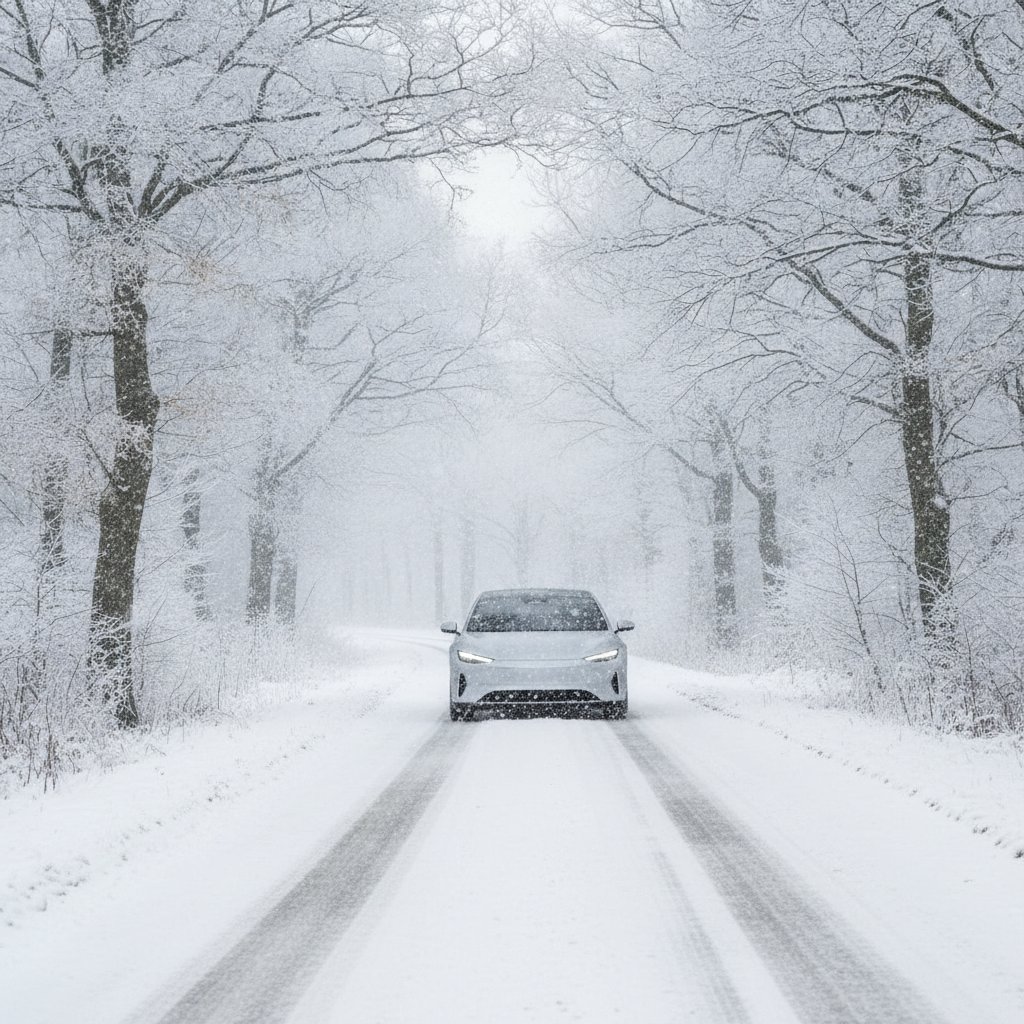
Quick picks: the best electric cars for snow at a glance
- The winter-range benchmark: Tesla Model Y and Model X, which keep losses low thanks to a heat pump and aggressive battery preconditioning.
- Heat pump as standard, fast cold charging: Hyundai Ioniq 5 and Kia EV6, both strong AWD winter performers.
- The deep-freeze champion: Lucid Air Grand Touring, which topped a real-world Norwegian winter chart with 320-plus miles in the cold.
- The deep-snow specialist: Nissan Ariya e-4ORCE, extensively cold and snow validated.
- The honest must-have: a set of dedicated winter tires, which do more for snow and ice confidence than any AWD system or drive mode.
- The smartest cold-climate money: a used winter EV with a verified healthy battery, because cold-weather loss stacks on top of any hidden capacity loss.
How much range an EV actually loses when it is freezing
The headline figure to anchor everything is this: per a study of more than 30,000 vehicles, EVs retained about 78% of their range at 32°F, an average loss near 22%. That is the fleet average, and the spread is wide. The best winter performers held up well, while the weakest gave up much more, so the model you choose genuinely matters. It is also worth separating mild cold from deep freeze. The 22% figure is at freezing point; in a harder, sub-zero cold snap the loss is larger, so plan trips in deep winter with extra margin.
Why the cold drains your battery
Three things conspire against range when it is cold, and only one of them is the battery itself. The biggest single drain is cabin heating, because warming the air for you takes real energy that no longer goes to the wheels. Second, battery chemistry slows in the cold, so the pack delivers and accepts energy less freely until it warms up. Third, a cold battery charges slowly unless it is preconditioned, gently warmed before you plug in. Understanding this is useful because it points straight at the features that fix it, which is the next section.
Range retention, model by model
Here is roughly how leading EVs compare on range kept at freezing, drawn from named winter studies. Treat these as study-specific reference points, measured at around 32°F unless noted, since deep-freeze figures differ and testing conditions vary. Verify the current number for any model before you buy.
| Model | Approx. range retained at 32°F | Why it does well or poorly |
|---|---|---|
| Tesla Model X | Around 89% | Heat pump plus aggressive preconditioning |
| Tesla Model Y Long Range | Near the top | Same efficient thermal system |
| Hyundai Ioniq 5 / Kia EV6 | Strong | Standard heat pump, efficient management |
| Fleet average (30,000+ cars) | About 78% | The benchmark to beat |
| EVs without a heat pump | Down toward 63 to 75% | Resistive heating costs more range |
The two features that decide a winter EV: heat pump and AWD
If you remember only one thing when shopping for a winter EV, make it this pair. A heat pump keeps more of your range in the cold, and all-wheel drive helps you get moving on a slick surface. They solve different problems, range and traction, and the best winter EVs have both. But there is a third factor that outranks the drive system entirely, and honesty demands saying it plainly.
Heat pump versus resistive heater: the range it saves
Heating the cabin is the biggest cold-weather drain, so how a car makes that heat matters a lot. A heat pump moves heat efficiently, using far less energy than a resistive heater, which simply burns electricity like a kettle. The difference is measurable: heat-pump EVs retained about 83% of range in freezing conditions versus about 75% for those without, roughly a 10% swing on average per cold-weather testing. That makes a standard heat pump one of the single most valuable things to look for in a winter EV, and it is why cars that include one across all trims, like the Ioniq 5, have a real cold-weather advantage.
AWD and traction, and why winter tires still matter more
All-wheel drive helps an EV pull away on snow by sending power to all four wheels, and modern systems manage traction quickly and smoothly. But here is the honest truth the marketing tends to skip: dedicated winter tires do more for snow and ice confidence than any drive mode or AWD system. Traction to get moving is only half the job; grip to steer and, above all, to stop is what keeps you safe, and that comes from the tire compound and tread, not the driven axles. A two-wheel-drive EV on proper winter tires will out-grip an all-wheel-drive one on all-season tires in the snow. Buy the AWD if you want the extra launch confidence, but buy the winter tires either way, because they are the single biggest safety upgrade for a cold climate.
| EV with heat pump | EV without heat pump | |
|---|---|---|
| Range kept at freezing | Around 83% | Around 75% |
| Cabin heating efficiency | High | Low, burns more range |
| Cold-weather advantage | Clear | Noticeable loss |
| What still matters most | Winter tires | Winter tires |
How we picked these snow EVs
We rank on cold-weather evidence, not marketing. To make this list a car has to keep more of its range in the cold than the fleet average, manage traction well, and ideally pair a heat pump with available all-wheel drive. We lean on published fleet-scale and real-world winter studies for the range-retention side, manufacturer figures for the engineering, and on something most editorial desks cannot offer for the used side.
That something is condition data. Guazi is one of China's largest used new-energy-vehicle platforms, built on a standardized multi-point inspection that produces a digital condition report for every car, and on an industry-first 100-day battery-decay guarantee for new-energy vehicles. Across that business sit tens of millions of inspections. We do not run a winter test track and we do not pretend to. So while the best EV for winter on paper is the one that retains the most range, what we can speak to honestly is the one thing that matters most for a cold-climate buyer, the battery's state of health, because winter loss stacks on top of any hidden capacity loss, and a tired pack is worst exactly when it is coldest.
The electric cars that handle winter best
Rather than rank by raw range, here is what each of the strongest winter EVs is really for, judged on how it holds up when it is cold and slick.
Tesla Model Y and Model X: the winter-range benchmark
Tesla's SUVs set the winter-range standard, and the Model X in particular has topped retention charts at around 89% kept at freezing. The reason is a well-engineered thermal system: an efficient heat pump plus aggressive preconditioning that warms the battery before you arrive at a charger, so it both loses less range and charges quickly in the cold. The Model Y Long Range brings the same approach in a more affordable package and is consistently near the top for real winter range. For a buyer who wants the lowest cold-weather range loss with the least fuss, these are the benchmark.
Buy It Now
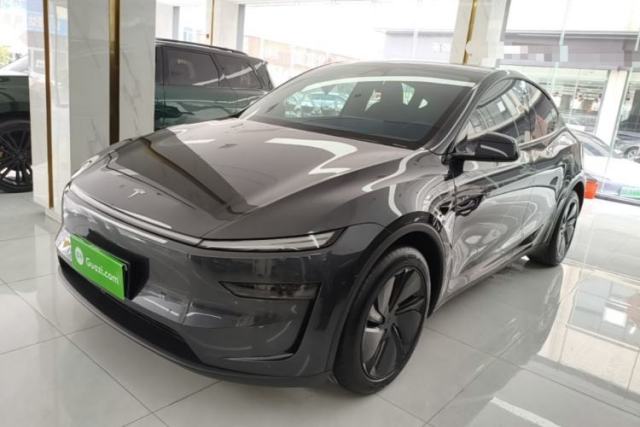
GradeSUsed Tesla Model Y 2025 Rear-Wheel-Drive Version Certified DealerCertified Dealer
 Guazi InspectedGuazi Inspected
Certified DealerCertified DealerGuazi InspectedGuazi InspectedOriginal paint
Original paint
FOB Price:$34,801

Buy It Now
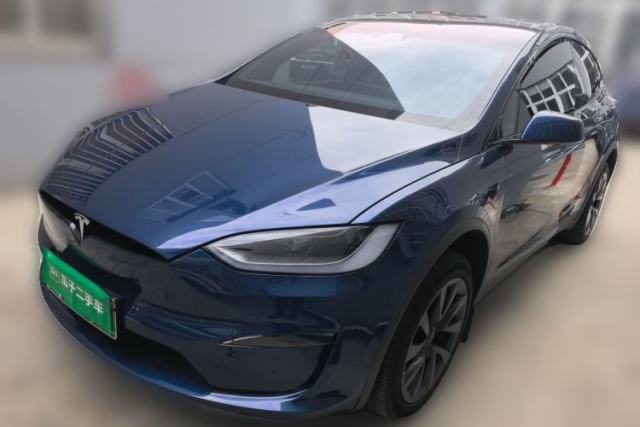
GradeSUsed Tesla Model X 2023 Dual-Motor All-Wheel-Drive Version Individual SellerIndividual SellerGuazi InspectedGuazi Inspected
Individual SellerIndividual SellerGuazi InspectedGuazi InspectedFOB Price:$77,477
Hyundai Ioniq 5 and Kia EV6 AWD: heat pump standard, fast cold charging
These two are the value answer to the winter question. Both offer a standard heat pump across the range, even on the base trim, which keeps cold-weather range loss in check, and both ride on an 800-volt architecture that charges quickly even in the cold provided the battery is preconditioned. With available dual-motor all-wheel drive, they handle snow well, and they cost meaningfully less than the premium picks. For most cold-climate buyers, an Ioniq 5 or EV6 AWD on a good set of winter tires is the sensible sweet spot.
Lucid Air and Nissan Ariya e-4ORCE: the deep-freeze and deep-snow extremes
For the two ends of the winter spectrum, these specialists stand out. The Lucid Air Grand Touring topped a real-world Norwegian winter ranking, covering more than 320 miles of mixed driving in a deep freeze, so for sheer cold-weather range it is the champion. The Nissan Ariya e-4ORCE takes the other path, with an all-wheel-drive system extensively validated in deep snow and marketed squarely as winter-ready, making it a strong pick for someone whose worry is traction on unplowed roads rather than maximum range.
Buy It Now
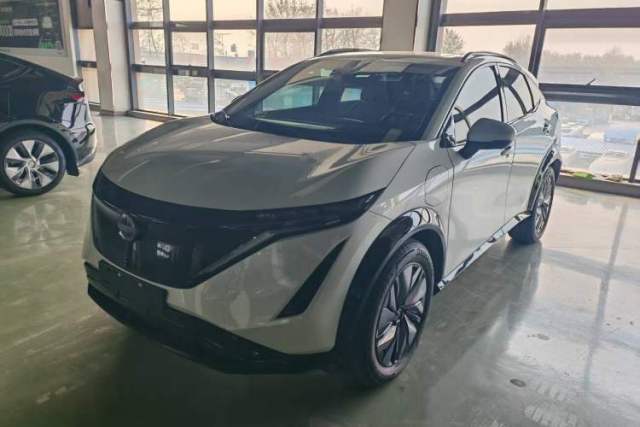
GradeAUsed Nissan ARIYA 2023 Performance ModelCertified DealerCertified DealerGuazi InspectedGuazi Inspected
Certified DealerCertified DealerGuazi InspectedGuazi InspectedFOB Price:$22,097
Buying a used EV for a cold climate: battery health is non-negotiable
This is the question the new-car winter lists never address, and in a cold climate it is the most important one of all. A used EV is a smart buy, but cold and used combine into a specific risk that a warm-climate buyer never faces.
Why winter loss and battery degradation stack against you
Every EV battery loses a little capacity as it ages, and every EV loses range in the cold. The problem is that these two losses stack. A used EV with a quietly degraded pack starts the winter with less range than when it was new, then the cold takes its 20% and more on top of that smaller number. The same car that would be fine in a mild climate can leave a cold-climate owner short, which is why a used-EV buyer in a snowy region needs to verify battery health more than anyone else does.
How to check a used EV's battery state of health before winter
The fix is simple and non-negotiable: confirm the battery's state of health, the measure of how much capacity remains versus when the car was new, before you buy. Alongside it, review the car's fast-charge history to gauge how hard the pack has been used, and confirm what battery warranty remains. A car that checks out on these will face winter from a healthy baseline; one that does not will compound the cold against you. This is exactly the data a standardized inspection produces, and it is why Guazi built a 100-day battery-decay guarantee into its new-energy cars, because in a cold climate the battery is the asset and its health is the one thing you cannot see.
| New winter EV | Healthy used winter EV | |
|---|---|---|
| Cold-weather range loss | As tested | Same, from a verified baseline |
| Battery health | As-new | Verify state of health before buying |
| Typical price | Highest | Well below new |
| Risk in the cold | Low | Removed by a battery report |
| What you still need | Winter tires | Winter tires |
Buying an EV for a place with real winters? Find a winter-ready EV, battery-checked
Where Chinese EVs fit for winter
China's makers have a real cold-weather story, because much of the country has genuinely brutal winters. Chinese new-energy vehicles are routinely validated in the deep cold of northern provinces like Heilongjiang, where winter testing programs are extensive, and heat pumps are widely adopted across the market to manage exactly the range loss this guide is about. These are the makers' own validation programs and the China market's setup, so treat them as that rather than as overseas-proven claims. For a value buyer, especially used, the combination of cold-weather engineering and price makes these cars worth tracking, which is why we follow them closely.
Getting your EV through winter: a short owner's playbook
Whatever you drive, a few habits keep an EV happy in the cold, and they are worth knowing before your first winter.
- Precondition before you drive and before you charge. Warming the cabin and battery while still plugged in uses grid power instead of your range, and a warm battery charges far faster.
- Fit dedicated winter tires. This is the single biggest safety upgrade in snow and ice, ahead of any drive mode or AWD system.
- Charge to a higher level in winter. Since you keep less range in the cold, leaving with more in the battery gives you sensible margin.
- Expect slower public charging when it is very cold unless the car has preconditioned the pack, so plan a little extra time on deep-winter trips.
How to source an inspected, winter-ready EV through Guazi
If the used route is where you want to shop, the buying process is the part that protects you through the cold. The single most important step with any used winter EV is verifying battery state of health, then confirming the rest of the car against a standardized inspection rather than a seller's word. Guazi's model is built around exactly that: a multi-point inspection that produces a digital condition report, battery-health checks for new-energy cars, and the 100-day decay guarantee that puts the battery question in writing. Start from the range retention and traction your winters actually demand, set your budget, and let the condition report rather than the sticker decide. Talk to our team about sourcing an inspected winter-ready EV
Frequently asked questions
Which electric cars are best for snow and winter in 2026?
The Tesla Model Y and Model X set the range-retention benchmark, the Hyundai Ioniq 5 and Kia EV6 AWD pair a standard heat pump with fast cold charging at lower cost, the Lucid Air leads on deep-freeze range, and the Nissan Ariya e-4ORCE is the deep-snow traction specialist. Add winter tires whichever you choose.
How much range do EVs lose in cold weather?
About 22% on average at freezing, meaning roughly 78% of range retained, per a study of more than 30,000 vehicles. The loss is larger in a deep sub-zero freeze and smaller in mild cold, and a heat pump cuts it by around 10%, so the exact figure depends on the car and the temperature.
Does a heat pump really help EV winter range?
Yes, noticeably. Heat-pump EVs retained about 83% of range in freezing conditions versus about 75% without, roughly a 10% swing, because a heat pump makes cabin heat far more efficiently than a resistive heater. A standard heat pump is one of the most valuable features to look for in a winter EV.
Is AWD necessary for an EV in snow?
It helps you get moving and adds launch confidence, but it is not essential, and it is less important than tires. All-wheel drive does nothing for stopping or steering grip; that comes from winter tires. A two-wheel-drive EV on winter tires will out-grip an AWD one on all-season tires in the snow.
Do I still need winter tires on an AWD EV?
Absolutely. Winter tires do more for snow and ice confidence than any drive mode or AWD system, because they provide the grip to steer and stop, not just to launch. All-wheel drive and winter tires solve different problems, and in a real winter you want both, with the tires being the non-negotiable part.
Is it risky to buy a used EV for a cold climate?
Only if you skip the battery check. Cold-weather range loss stacks on top of any hidden capacity loss, so a tired pack hurts most in winter. Verify the battery's state of health, its fast-charge history and remaining warranty before buying, and a used winter EV is a sound, money-saving choice.
Key Takeaways
- The best electric cars for snow keep cold-weather range loss low and grip well; the fleet loses about 22% at freezing, but the best models stay near the top.
- A heat pump is the most valuable winter feature, retaining around 83% of range versus 75% without, so favor cars that include one as standard like the Ioniq 5.
- All-wheel drive helps you get moving, but winter tires do more for snow and ice safety than any drive mode, so fit them whatever you drive.
- The Tesla Model Y and Model X set the range-retention benchmark, the Ioniq 5 and EV6 AWD are the value picks, and the Lucid Air and Ariya e-4ORCE cover the extremes.
- In a cold climate a used EV's battery is everything, because winter loss stacks on hidden capacity loss, so buy on a verified state-of-health report.
Related Stories
- Browse inspected used cars at Guazi. The live inventory, where the value end of this guide actually lives.
- How far the best range electric cars really go in 2026. The range ranking, for the warm-weather miles before winter takes its cut.
- Best electric cars for long-distance travel. The companion guide on charging speed and trip planning, which winter makes even more important. (publishing soon)
Sources & References
- Recurrent, winter EV range loss study
- InsideEVs, heat pump and winter range data
- Wikipedia, Electric car
Buying an EV for a place where winter actually bites?
Our team can match you with an inspected, winter-ready EV and walk you through its battery-health report before the cold sets in.

About Us
Follow US


Copyright © 2015~2026 https://en.guazi.com/, Chongqing Guazi Enterprise Consulting Service Co., Ltd. All rights reserved.