


Guazi
GlobalEnglish


Makes
Buy It NowAuctionsUp to 160 psPort StockAll VehiclesPopular Makes


Shop By Type


Popular Models


Shop By Budget

Which Electric Car Is Actually Worth Buying in 2026
Article OverviewThe best electric cars in 2026, ranked by what it really costs to own one, plus the Chinese EVs and used bargains the big review sites barely mention.
Range and price figures are 2026 reference points drawn from manufacturer specs and independent testing (US EPA cycle unless noted), compiled June 2026. EV pricing and specs move quickly, so treat these as a buying guide rather than a quote, and confirm the exact trim of any car before you commit.
The phrase "best electric car" stopped meaning one thing in 2026. A few years ago the answer was simply whichever new model scored highest in a road test. Now the honest answer depends on what you value, because the highest-scored car is rarely the one that makes the most financial sense, the cheapest car worth buying has quietly gotten very good, and a wave of credible Chinese EVs has arrived to scramble every ranking. The best electric cars are no longer just the ones that win the test. They are the ones that survive depreciation, charge fast enough for your week, and put the money where you actually feel it.
This guide ranks with that in mind. We start with what "best" even means for an EV buyer now, then walk through the strongest all-round models, the best electric SUV pick, the cheapest cars genuinely worth your money, where the Chinese makers land, and finally the smartest play of all, which for a lot of buyers is a clean used EV that already took its depreciation hit. By the end you should know not just what the review desks crowned, but which electric car is worth buying for the way you actually drive.
Quick picks: the best electric cars at a glance
- Best all-rounder: Hyundai Ioniq 6, the sensible benchmark that does almost everything well.
- Best luxury and range ceiling: Lucid Air, the most refined sedan on sale and the range king past 500 miles.
- Best electric SUV: Hyundai Ioniq 5, the default family pick with 800V fast charging.
- Best cheap EV worth it: Chevrolet Equinox EV, a real 300 mile SUV from around $35K.
- Best value newcomer: BYD and the wider Chinese field, strong on kit per dollar if you read the tradeoffs honestly.
- Best value of all: a clean, well-inspected used EV with a healthy battery, often 40 to 60% below its original price.
What "best" even means for an electric car buyer in 2026
Ask ten review sites for the best EV and you will get ten cars that all tested brilliantly and cost a fortune to own. That is the gap this guide tries to close. A road test measures how a car drives on the day. It does not measure what the car is worth in three years, how much the battery has faded, or whether you are paying a luxury premium for range you will never use. For a real buyer those questions matter more than a tenth of a point in a scoring system. The best electric car for you is the one that wins on the axes you will actually live with.
Range you can trust, not the number on the sticker
Every EV range figure comes from a laboratory test, and it is a comparison tool rather than a promise. On a real highway, at real speed, in real weather, most EVs return meaningfully less. A good rule for 2026 is to expect 10 to 20% below the official figure at steady motorway speed, and more in the cold. A car advertised at 300 miles is realistically a 240 to 270 mile car on a winter motorway, which is still plenty for most people but worth knowing before you trust the window sticker. Mentally discount the headline number and you will never be disappointed by it.
The number that actually bites: price to own, not price to buy
The sticker price is the smallest part of what an EV costs you. Depreciation is the largest, and EVs have depreciated harder than comparable petrol cars over the last few years, with the average model shedding well over half its value across five years. That sounds like bad news, and for a new-car buyer it is. For a used buyer it is the entire opportunity, because someone else already absorbed the steepest part of the curve. When you rank by total cost to own rather than purchase price, the table reshuffles completely, and the flagship at the top often falls to the middle.
How we picked these
We rank with a value-first, real-world bias rather than by sticker score alone. To make the list a car has to do three things: drive well enough to live with daily, hold up reasonably on a real highway, and make sense once you put a realistic ownership cost next to it. We lean on published independent testing for the road-test side, and on something most editorial desks structurally cannot offer for the used and Chinese side.
That something is condition data. Guazi is one of China's largest used new-energy-vehicle platforms, built on a standardized multi-point inspection that feeds a digital condition report for every car, plus an industry-first 100-day battery-decay guarantee for new-energy vehicles. Across that business sit tens of millions of inspections. We are not a road-test laboratory and do not pretend to be one. What we can speak to honestly is how these EVs look after a few years of real use, which ones hold value, and how a Chinese EV actually checks out once it is on a lift rather than in a brochure.
The strongest all-round electric cars right now
A handful of cars do almost everything well, which is what most buyers actually want. Rather than march through a spec table, here is what each one is really for.
Hyundai Ioniq 6, the sensible benchmark
If you asked us to recommend one EV to a friend with no strong preferences, it would be the Ioniq 6. It is frequently rated best overall by the review desks, and the reason is balance rather than any single headline. It is genuinely efficient, so its range goes further per kWh than the figure suggests. It rides on an 800V architecture that charges from 10 to 80% in around 18 minutes when you find a fast enough charger. It is comfortable, well built, and priced sensibly for what it is. Nothing about it shouts, which is exactly why it works as the benchmark every other car here gets measured against.
BMW iX3 and Skoda Elroq, why Europe's juries rate them
Europe's award juries spent 2026 handing trophies to two cars that barely register in US rankings, and both are worth knowing. The BMW iX3 took major car-of-the-year honors for blending real driving polish with a long, usable range and BMW's cabin quality, the sort of car that feels expensive without being silly. The Skoda Elroq won the other end of the argument, repeatedly named the best-value EV of the year for delivering most of what the premium badges offer at a notably lower price. Between them they bracket the sweet spot: one proves how good a mainstream-premium EV can be, the other proves you do not have to spend flagship money to get most of the way there.
Lucid Air, the range and luxury ceiling
The Lucid Air is the car that reset what an EV can do, and it sits at or near the top of nearly every luxury list with scores around 9.6 out of 10. It is the only production car past 500 miles on the EPA cycle, and it gets there with efficiency rather than a giant battery, which is the genuinely clever part. It is also one of the best-driving, most quietly refined sedans on sale at any price, electric or not. It is expensive, starting around the high $60K to $70K range depending on trim, so it is not most people's car. But as the answer to "how good can an electric car be right now," it is the ceiling everything else reaches toward.
The best electric SUV pick most families actually need
For the large share of buyers who want an SUV rather than a sedan, the Hyundai Ioniq 5 is the one to beat. It shares the Ioniq 6's excellent 800V platform and efficiency but wraps it in a roomy, flat-floored cabin that swallows people and gear, with a retro-modern design that has aged unusually well. It charges fast, rides comfortably, and holds its value better than most non-Tesla EVs, which matters as much as anything on this list. If you want one electric car that covers the school run, the road trip, and the weekend haul without drama, this is the safe, smart default. We go deeper on the whole class in our companion guide to the best electric SUVs, but the Ioniq 5 is where most family shortlists should start.
The cheapest electric cars actually worth it
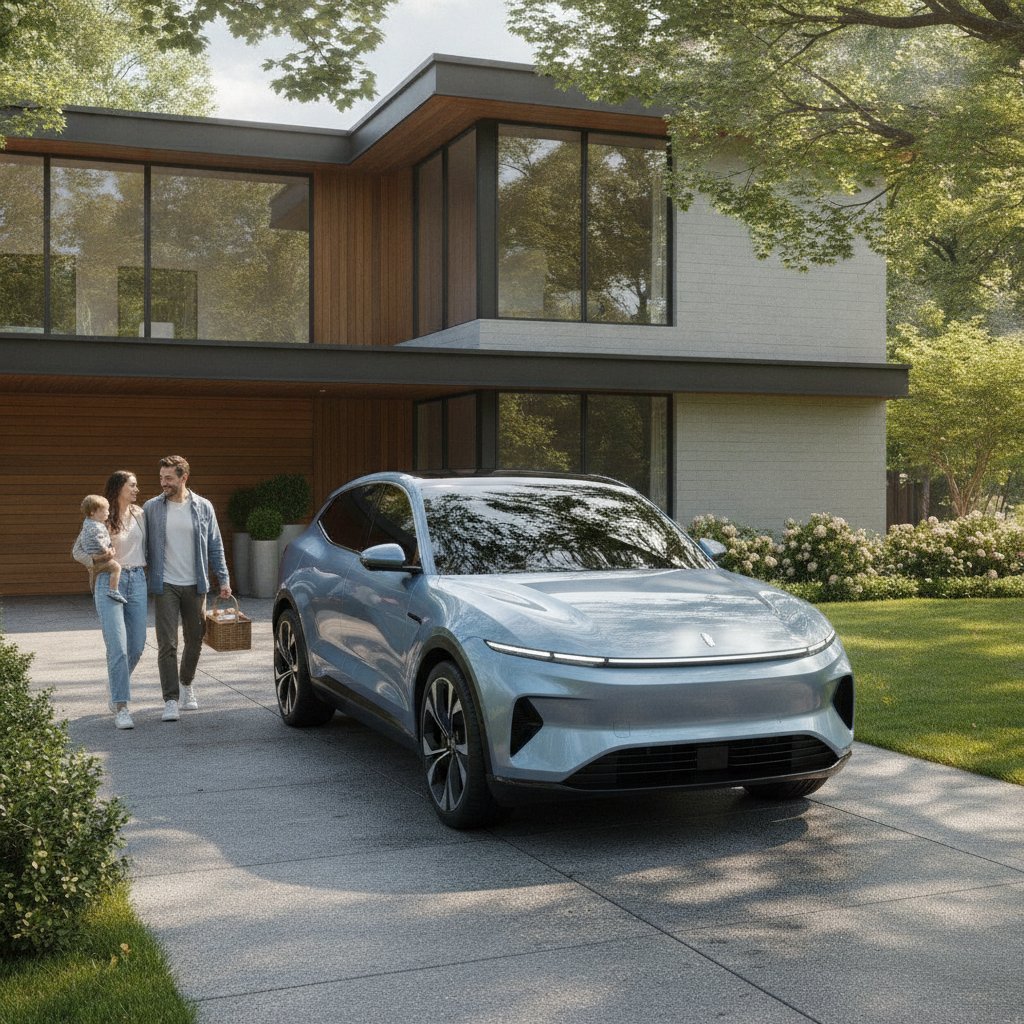
Cheap EVs used to mean compromise. In 2026 they mostly do not. Two cars prove the point. The Chevrolet Equinox EV is the headline act, a genuine compact SUV with around 319 miles of range starting near $35K, which a few years ago would have read like a typo. It is roomy, modern, and undercuts almost everything with similar range. The Nissan Leaf, long the entry point to electric motoring, remains among the cheapest new EVs at around $28K and makes sense as a city and commuter car if you do not need big range. Neither is a flagship, and neither pretends to be. What they offer is the honest floor of the market, where the question is not "what is the best EV" but "what is the least I can spend and still be happy," and the answer in 2026 is genuinely reassuring.
| Buyer goal | What to buy | Rough new price | Why it wins |
|---|---|---|---|
| Best all-rounder | Hyundai Ioniq 6 | $42K to $48K | Efficient, fast-charging, balanced |
| Best SUV | Hyundai Ioniq 5 | $44K to $50K | Space, 800V charging, strong resale |
| Cheapest real range | Chevrolet Equinox EV | $35K | 319 mi for the money |
| Cheapest city EV | Nissan Leaf | $28K | Lowest entry price |
| Range and luxury ceiling | Lucid Air | $70K+ | The only 500 mile car |
| Best value overall | Used EV, healthy battery | 40 to 60% off | Most usable car per dollar |
Where Chinese electric cars land in 2026
Any honest 2026 list has to include China's makers, because BYD, MG, and Geely now build EVs that belong on the shortlist rather than in a footnote, and the US-centric rankings barely acknowledge them. The case in their favor is straightforward: they tend to offer a lot of car, range, and equipment for the money, often undercutting equivalent Western models while matching them on the spec sheet. BYD in particular has scaled into one of the largest EV makers in the world on exactly that value proposition.
The honest tradeoffs matter just as much. Depreciation on Chinese EVs has generally been steeper than on established badges, software polish can be variable, and dealer and service networks are thinner in many markets, all of which a buyer should weigh. Availability also varies a great deal by country, so confirm what is actually sold and supported where you live before you fall for a spec sheet. Read with those caveats in place, the value case is real, and it is a large part of why we track these cars as closely as the Western names. It is also where a platform with first-hand inspection data on Chinese EVs can tell you more than a brochure can, because the question with a value EV is rarely the spec, it is how it holds up.
Should you buy used instead? The depreciation winners
This is where a used-car platform can tell you something the new-car ranking sites structurally never will. If your deciding axis is value rather than newness, the best used electric cars are very often the smartest buy on the market, and it is not close.
The logic is simple. EVs depreciate hard in their first few years, especially the expensive long-range and luxury models. A three to five year old EV frequently sells 40 to 60% below its original price while keeping most of its range, much of its useful life, and in many cases a transferable battery warranty. You are buying the same car the road testers praised, minus the steepest part of the depreciation curve that someone else already paid. On cost per usable mile, a sound used EV beats almost anything new.
There is one catch, and it is the whole game. A used EV's value lives or dies on battery state of health, the measure of how much capacity remains versus when the car was new. Two identical models with identical mileage can be a great buy and a bad one depending on this single figure, and it is the number casual sellers are least able to show you. This is exactly where condition data matters, because reading state of health, charging history, and fast-charging wear is the difference between a bargain and an expensive lesson. It is also why Guazi built a 100-day battery-decay guarantee into its new-energy cars: the battery is the asset, and its health is the one thing a buyer cannot eyeball.
| New EV (mainstream) | Healthy used EV | |
|---|---|---|
| Typical price | $40K to $50K | 40 to 60% less |
| Range kept | Full | Most of it |
| Cost per usable mile | Higher | Lowest |
| Main risk | Depreciation | Battery state of health |
| How to de-risk | n/a | Verified inspection + battery report |
Looking for the value end of this table rather than the sticker end? Browse inspected used EVs in stock
How to source an inspected EV through Guazi
If the value end of this guide is where you want to shop, the buying process is the part that protects you. The single most important step with any used EV is verifying battery state of health, then confirming the rest of the car against a standardized inspection rather than a seller's word. Guazi's model is built around exactly that: a multi-point inspection that produces a digital condition report, battery-health checks for new-energy cars, and the 100-day decay guarantee that puts the battery question in writing. Decide which kind of best you actually want, value, range, or sheer newness, set your budget, and let the condition report rather than the sticker make the call.
Talk to our team about sourcing an inspected EV
Key Takeaways
- The best electric cars in 2026 depend on what you value, because the highest-scored new car is rarely the best value to own.
- The Hyundai Ioniq 6 is the sensible all-round benchmark, the Lucid Air is the range and luxury ceiling, and the Ioniq 5 is the default SUV pick.
- Cheap EVs got good. The Chevrolet Equinox EV gives a real 300 mile SUV near $35K, and the Nissan Leaf holds the entry floor near $28K.
- Chinese EVs belong on the shortlist for value, with honest caveats on depreciation, software, and service that vary by market.
- The smartest buy for most people is a healthy used EV at 40 to 60% off, decided by battery state of health on a verified condition report.
Sources & References
- Recurrent, EV research and range data
- Coltura, Electric Car Range and Price Comparison
- Wikipedia, Electric car
Not sure which kind of best fits your budget?
Our team can match you with an inspected EV and walk you through its battery-health report before you commit.




About Us
Get Support
Follow Us


Copyright © 2015~2026 https://en.guazi.com/, Chongqing Guazi Enterprise Consulting Service Co., Ltd. All rights reserved.