


Guazi
GlobalEnglish


Makes
Buy It NowAuctionsUp to 160 psPort StockAll VehiclesPopular Makes


Shop By Type


Popular Models


Shop By Budget

Five Chinese EVs That Earn Their Price in 2026
Article OverviewThe Chinese EV cars actually worth buying in 2026, picked by use case and real-world range, plus what each one looks like after a few years used.
Price and range numbers are 2026 reference points compiled in June 2026 from manufacturer specs and independent testing. Several of these cars are not sold new in every market, so prices here are overseas or converted reference, not a quote from a local dealer. EV specs and pricing move quickly, so treat this as a buying guide and confirm the exact trim and price in your own market before you commit.
A few years ago the question was whether you should buy a Chinese EV at all. In 2026 that question has quietly answered itself, and a sharper one has taken its place. The shortlist of genuinely good chinese ev cars is now real, the prices undercut comparable European models by thousands, and the only thing left to decide is which one fits the way you actually drive. The honest answer is not a single winner. It depends almost entirely on how far you go in a typical week, what you carry, and how much you care about a familiar badge on the bonnet.
This guide picks by use case rather than by hype. We sort the best chinese ev cars into the jobs people really need a car to do, the small-city runabout, the value buy, the family SUV, the all-round sedan, and the badge-wary bridge, and we lead with real-world range instead of the optimistic sticker figure. Then we add something no road-test desk can offer: what each of these cars looks like after one to three years on an inspection ramp, because the smartest money on a fast-depreciating EV is often a clean used one rather than a new one. By the end you should know exactly which car to shortlist, and whether to buy it new or used.
Quick picks: the best Chinese EVs at a glance
- Best small-city EV: BYD Dolphin, brilliant inside a 30 km radius, less happy on a long motorway.
- Best value buy: MG 4, the car whose price quietly embarrasses Europe.
- Best family SUV: BYD Atto 3, with cargo and rear room that rivals SUVs $10K to $15K dearer.
- Best all-round sedan for the money: BYD Seal, the one to buy if you want one car to do everything.
- The badge-wary bridge: Volvo EX30, Chinese-built on Geely's platform but Western-badged and actually sold in USD markets.
- The smartest money overall: a clean, inspected one to two year old example of any of the above, with a verified battery report.
How far you really drive decides which Chinese EV is right
Most "best Chinese EV" lists hand you a flat ranking and let you sort it out. That is the wrong starting point, because the right car for a 20 km city commute is a genuinely bad car for a 400 km weekend trip, and the reverse is also true. Before you look at a single model, the most useful thing you can do is be honest about your real driving. The average driver covers well under 50 miles a day, which means a small, efficient city EV is plenty for most people most of the time. A smaller group drives long distances regularly and needs a bigger battery and faster charging. Almost nobody needs both at once, and paying for range you never use is the most common mistake in this whole category.
So every pick below is tied to a job. We say what each car is genuinely good at and, just as importantly, where it runs out of talent. That framing matters more for Chinese EVs than for almost any other group, because the range of choice is so wide, from a sub-$30K city hatch to a $50K sedan, that the use-case fit is the entire decision.
Real range vs the WLTP sticker, and why it matters more here
Every range figure you see quoted for these cars comes from a laboratory test, and the test almost never matches the road. Most Chinese EVs sold internationally quote the WLTP cycle, which reads a little optimistically, and the home-market figures use China's CLTC cycle, which is more generous still. A car advertised at 400 km of WLTP range is realistically a 300 to 340 km car on a cold motorway. That is not a defect, it is simply what highway speed and cold weather do to any EV. The practical rule for 2026 is to mentally discount the sticker by 10% to 20% at steady highway speed, and more in winter. We quote WLTP figures below where available and flag the real-world haircut, because on a city car that gap rarely matters and on a long-trip car it matters enormously.
The cars we put on the ramp, and how we picked
We are not a road-test laboratory, and we will not pretend to have re-driven every car here. What we can offer is something most editorial desks structurally cannot. Guazi is one of China's largest used new-energy-vehicle platforms, running a standardized multi-point inspection on these exact models every day, with tens of millions of inspections behind the business. That means we can speak honestly to a question the new-car reviews never reach: how these cars present after one to three years of real use, which trims hold up, where the panel gaps drift, and how the battery health looks once the warranty glow has faded.
So our picks balance three things. First, the car has to be genuinely good at a real job, which is the use-case fit. Second, it has to make sense on price, which for a Chinese EV usually means embarrassing a European rival on value. Third, it has to hold up as a used proposition, because a car that falls apart at three years is a poor buy at any sticker. Where a car is not sold new in USD markets, we say so plainly and treat its price as overseas reference. Where it genuinely is available, like the Volvo EX30, we flag that too.
Best small-city EV: the BYD Dolphin
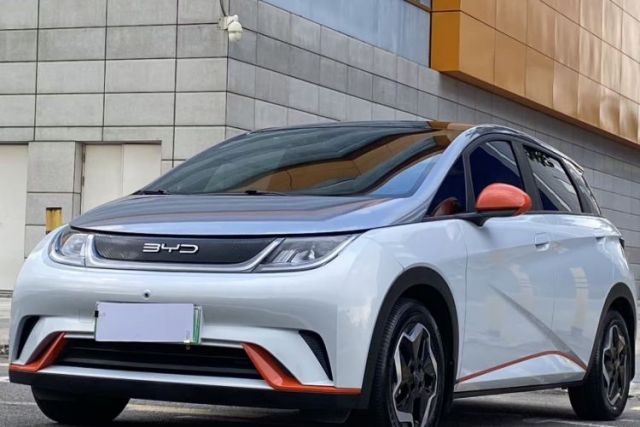
If your driving lives inside a city, the BYD Dolphin is the easiest car here to recommend. It is a small, friendly hatchback built around BYD's Blade LFP battery, and it is genuinely delightful in the environment it was designed for: tight streets, frequent stops, easy parking, and short hops where its modest size is an asset rather than a compromise.
What it is like to live with under 30 km a day
Inside a 30 km daily radius the Dolphin is close to ideal. The 60.4 kWh Blade pack gives it a WLTP figure of around 427 km, which on a city duty cycle is effectively a week of commuting between charges. The LFP chemistry is happy being charged to 100% every night, which suits a car that mostly sleeps on a home charger, and the small footprint makes the daily grind of urban parking far less of a chore than it is in a larger EV. For a single-car household that rarely leaves town, or a second car in a family that has something bigger for trips, it is an excellent fit.
Price, range and the trims that hold up used
On overseas reference pricing the Dolphin lands around the equivalent of $35K new, depending on market and trim. That is competitive rather than cheap, and it is where the used case gets interesting, because the Dolphin depreciates like most EVs in its first couple of years. On the inspection ramp the Blade battery is the reassuring part: LFP chemistry tends to hold its health well, and a clean one to two year old Dolphin with a verified battery report often delivers almost all of the new car's usable range for a meaningfully lower price. The mid trims tend to wear best, since the entry cars sometimes skimp on the comfort features buyers later wish they had.
What to watch for
The Dolphin is not a motorway cruiser, and it is honest to say so. Push it to sustained high-speed driving and the real-world range falls away faster than the sticker suggests, and the small body that feels nimble in town feels less planted at speed. If your week regularly includes long highway stints, this is the wrong car and you should look at the Seal instead. Bought for the job it is built for, though, it is one of the best value city EVs on sale.
Best value buy: the MG4
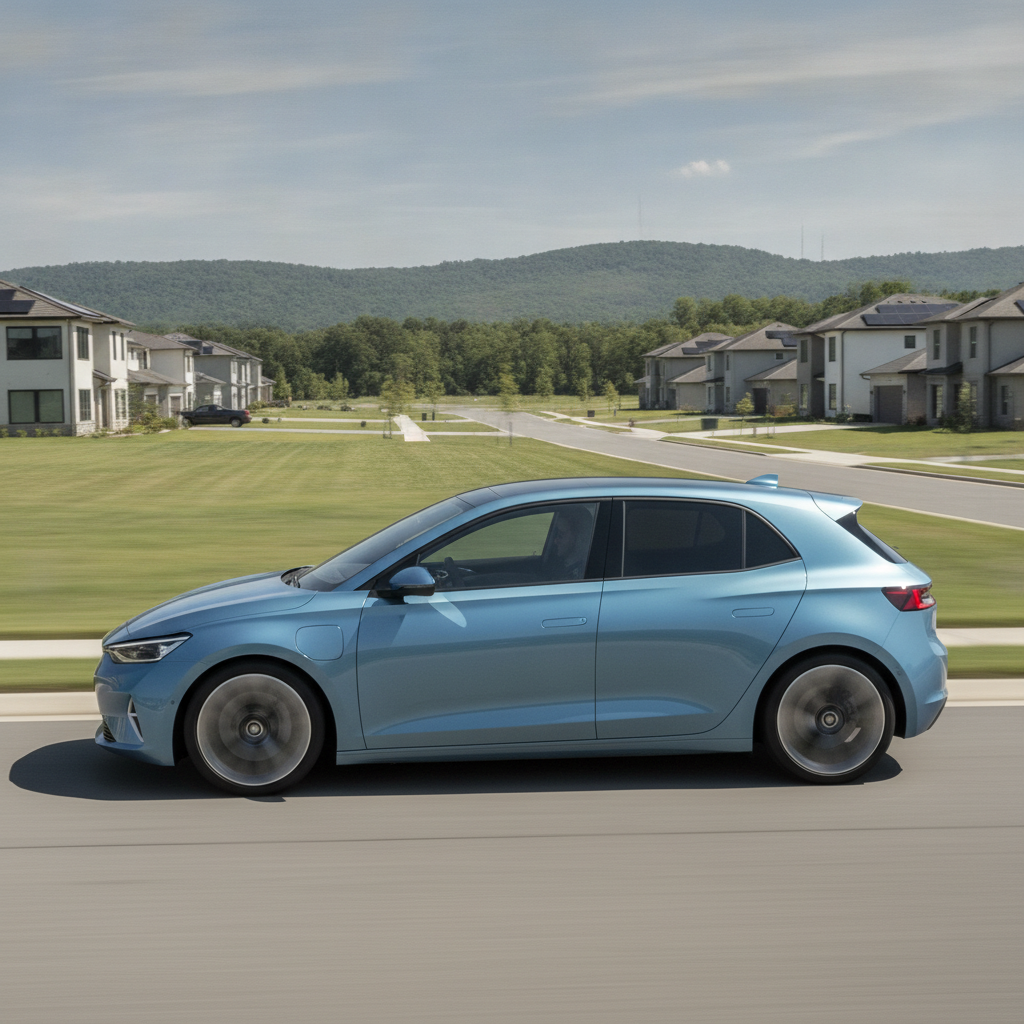
If your single most important question is how much car you get per dollar, the MG4 is the answer, and it is not especially close. Built by SAIC under the MG badge, a brand with deep dealer coverage across the UK and Europe, the MG4 is the car that made a lot of European buyers stop treating Chinese EVs as a curiosity and start treating them as the sensible default.
Why the price embarrasses Europe
The MG4 starts from around $28K on overseas reference pricing, with a usable battery around 61.7 kWh, rear-wheel drive, a 5-star Euro NCAP rating, and a WLTP range near 218 miles. For that money it undercuts comparable European hatchbacks by a wide margin while matching or beating them on the things that matter, safety, space, and a 10% to 80% DC fast charge in roughly 26 minutes. It is the rare value car that does not feel like a penalty box, which is exactly why it sells.
Where the cheap range runs out
The honest caveat is real-world highway range. That 218 mile WLTP figure becomes something closer to 175 to 195 miles on a steady motorway run, so while the MG4 is a far more capable long-distance car than the Dolphin, it is still a value car rather than a range champion. For most buyers that is plenty. If you regularly drive beyond 150 miles between charges, plan your stops around the real figure rather than the sticker, and you will not be caught out.
Best family SUV: the BYD Atto 3
For a family that needs space, safety, and a usable EV without stepping up to a $50K price, the BYD Atto 3 is the standout. It is a compact SUV built on the same Blade LFP battery philosophy as the Dolphin, but packaged for people who carry children, dogs, and the contents of a weekly shop.

BY Hubert Berberich (HubiB) - Own work
Space, safety and the Blade battery case
The Atto 3 punches above its price on practicality. Cargo room and rear-seat space rival European SUVs that cost $10K to $15K more, and it carries a 5-star Euro NCAP rating, which for a family car is the figure that matters most. The Blade battery is the other half of the case. Its LFP chemistry is inherently stable and resists the thermal-runaway failure mode that worries some buyers, and the latest Atto 3 Evo trim stretches WLTP range up toward 510 km. For a household that wants one sensible, safe EV for the school run and the occasional longer trip, it is hard to fault.
New vs a one to two year old example
This is the car in the group where the used case is most compelling, because family SUVs take the hardest depreciation hit in their first couple of years. A clean one to two year old Atto 3 with a healthy battery report can cost meaningfully less than new while giving up very little in real capability. On the ramp the things to check are the boot floor and rear-seat mounts for wear from family life, the panel gaps around the tailgate, and above all the battery state of health. Get those confirmed and a used Atto 3 is one of the best value family EVs you can buy.
Best all-round sedan for the money: the BYD Seal
If you want a single car that does everything well, the BYD Seal is the pick. Where the Dolphin specializes in the city and the MG4 specializes in value, the Seal is the all-rounder, a handsome mid-size sedan that is genuinely comfortable on a long motorway run while still being easy to live with day to day.
On overseas reference pricing the Seal lands around $48K to $50K, which places it against established European and Korean sedans, and it holds its own. It carries a 5-star safety rating and a WLTP range near 354 miles, which translates to a real-world highway figure comfortably into the high 200s, enough that long trips stop being an exercise in charge-stop arithmetic. This is the Chinese EV to buy if your driving is genuinely mixed, a city commute during the week and real distance at weekends, and you do not want to compromise either way. It is the most expensive pick here, but it is also the most complete, and on the used market a well-kept example carries that completeness at a lower price.
Buy It Now
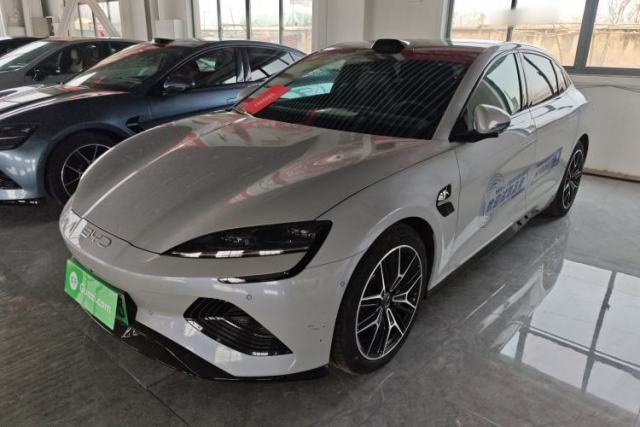
GradeSUsed BYD Seal 2025 650 Intelligent Driving Version Certified DealerCertified Dealer
 Guazi InspectedGuazi Inspected
Certified DealerCertified DealerNear-new car
Near-new car
Guazi InspectedGuazi InspectedOriginal paint
Original paint
FOB Price:$24,865

The badge-wary buyer's bridge: the Volvo EX30
Some buyers are sold on the value of Chinese engineering but are not ready to put an unfamiliar badge on their driveway, and that is a perfectly reasonable place to be. For them the Volvo EX30 is the bridge. It is built on Geely's SEA platform, the same Chinese-owned architecture that underpins Zeekr, but it wears a Volvo badge, comes with Volvo's safety reputation and dealer network, and, crucially, is actually sold new in USD markets where most of the cars above are not.
The EX30 Plus starts from $38,950, offers around 261 miles of range and 268 hp, and gives a wary buyer almost all of the Chinese-EV value story with none of the unfamiliarity. It is the honest answer to the reader who has read this far thinking the cars sound great but cannot picture owning one. If that is you, the EX30 is where the value of this whole category becomes something you can buy from a dealer you already trust. It is also the cleanest illustration that the line between "Chinese EV" and "European EV" has largely dissolved, a theme we explore in our companion guide to the chinese ev makers behind these badges.
Buy It Now
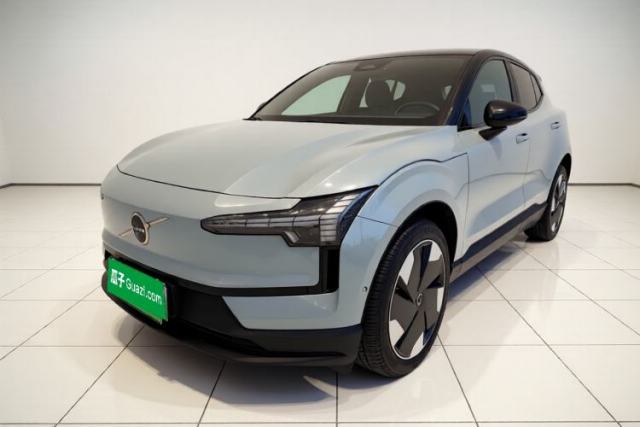
GradeSUsed Volvo EX30 2025 Rear-Drive Long-Range Version UltraCertified DealerCertified DealerGuazi InspectedGuazi Inspected
Certified DealerCertified DealerGuazi InspectedGuazi InspectedOriginal paint
Original paint
FOB Price:$20,655$20,755
Side-by-side: the five picks at a glance
Here are the five picks in one view. Prices are 2026 overseas or converted reference, and real-world range is the figure to plan around, not the WLTP sticker.
| Model | Body | WLTP range | Real-world highway | Price (USD ref) | Best for |
|---|---|---|---|---|---|
| BYD Dolphin | City hatch | 427 km | City duty, weak on motorway | $35K | Under 30 km a day |
| MG4 | Hatch | 218 mi | 175 to 195 mi | $28K | Maximum value |
| BYD Atto 3 | Compact SUV | up to 510 km | Strong mixed use | $40K to $42K | Families |
| BYD Seal | Sedan | 354 mi | High 200s mi | $48K to $50K | One car for everything |
| Volvo EX30 | Compact SUV | 261 mi | Low 200s mi | $38,950 | Badge-wary, USD buyers |
New or used? What a Chinese EV looks like after one to three years
Here is the part most "best of" lists never get to, and it is where a used-car platform can genuinely help. Chinese EVs depreciate hard in their first couple of years, harder than established European and Japanese cars, partly because the segment is new and partly because the makers keep launching fresh trims that pull down the value of last year's car. For a buyer, that fast depreciation is not a warning, it is an opportunity, because a one to two year old example of any of these cars often delivers nearly all of the new car's usable capability for a noticeably lower price.
The catch is the battery, and it is the whole game. A used EV's real value lives or dies on its battery state of health, the measure of how much capacity remains versus when it was new. The good news for this group is that most of these cars use LFP Blade chemistry, which tends to hold its health well, but you still cannot eyeball it, and casual sellers are the least able to show it to you. This is exactly where standardized inspection matters. Reading state of health, charging history, and fast-charge wear is the difference between a used bargain and an expensive mistake. It is also why Guazi built a 100-day battery-decay guarantee into its new-energy cars, because the battery is the asset and its health is the one thing a buyer cannot see.
| New Chinese EV | Healthy one to two year old example | |
|---|---|---|
| Usable real-world range | Full | Nearly full on LFP cars |
| Typical price | Sticker | Noticeably lower |
| Depreciation already taken | None, you take it | Mostly already taken |
| Main risk | Paying for fast first-year drop | Battery state of health |
| How to de-risk | n/a | Verified inspection plus battery report |
Looking at the used end of this table rather than the sticker end? See inspected BYD and MG units in stock
How to source an inspected Chinese EV through Guazi
If the used end of this guide is where you want to shop, the buying process is the part that protects you. The single most important step with any used Chinese EV is verifying the battery state of health, then confirming the rest of the car against a standardized inspection rather than a seller's description. Guazi's model is built around exactly that: a multi-point inspection that produces a digital condition report, battery-health checks for new-energy cars, and a 100-day decay guarantee that puts the battery question in writing. Start from the use case you actually need, pick the matching car from the list above, set your budget, and let the condition report rather than the sticker decide.
Talk to our team about sourcing an inspected Chinese EV
Key Takeaways
- The best chinese ev cars in 2026 split by use case, not by a single ranking. Start with how far you actually drive.
- For the city buy the BYD Dolphin, for value the MG4, for families the BYD Atto 3, for one car that does everything the BYD Seal.
- If you want a familiar badge and a car you can buy new in a USD market, the Volvo EX30 is the bridge, Chinese-built but Western-badged.
- Quote WLTP figures are lab numbers. Plan around the real-world highway range, which is 10% to 20% lower, and more in winter.
- These cars depreciate fast early, so a clean one to two year old example with a verified battery report is usually the smartest money. Battery state of health decides everything.
Sources & References
- EV Database, BYD Atto 3
- Euro NCAP, safety ratings
- Wikipedia, MG4 EV
- Wikipedia, Volvo EX30
Not sure which of these fits your driving, or whether to buy new or used?
Our team can match you with an inspected Chinese EV for your use case and walk you through its battery-health report before you commit.





About Us
Get Support
Follow Us


Copyright © 2015~2026 https://en.guazi.com/, Chongqing Guazi Enterprise Consulting Service Co., Ltd. All rights reserved.