
Guazi
GlobalEnglish


The Best Electric Cars for Long-Distance Travel in 2026, Where Charging Speed Beats Range
Article OverviewThe best electric cars for long-distance travel in 2026, ranked by charging speed and trip comfort, not max range, because the fastest-charging EV often arrives first.
Note: Range, charge times and prices are 2026 reference points drawn from manufacturer specs and independent charge testing, compiled June 2026. Charging figures are often quoted under ideal, preconditioned conditions and real numbers vary with temperature and the charger, so treat this as a buying guide rather than a quote and confirm the spec of any car before you commit.
Ask a road-tripper what they want from an electric car and they will not say miles. They will describe a real journey: a long interstate haul, a family in the back, and charging stops they would rather not think about. The deciding question for the best electric cars for long-distance travel is not which goes farthest on paper, it is which makes the whole trip painless. How often do you stop, how long does each stop take, and how confident are you that the next charger will be there and working. And here is the insight that reframes the entire list: in real highway testing, total travel time is set more by how consistently a car charges than by its maximum range. A shorter-range EV that fast-charges hard can pull into the hotel before a longer-range one that charges slowly.
This guide ranks the way the road actually rewards you. We start with that charging-speed-beats-range thesis and the one number that decides your day, then walk through the EVs that make long trips painless, the three-row options for family travel, how to plan stops so they feel like coffee breaks, and the value question almost no road-trip list answers: which of these makes a smart used long-distance car once you account for battery health. If you only care about raw miles between stops, our companion guide to the best range electric car ranks that directly; this one is about the experience of the trip.
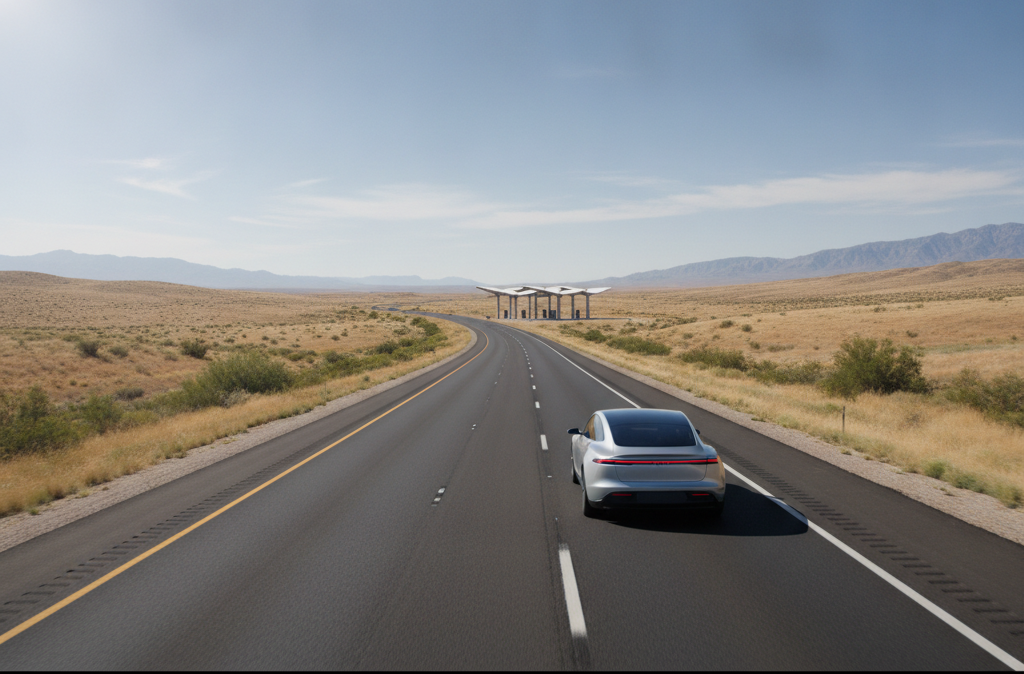
Quick picks: the best long-distance EVs at a glance
- When the whole system just works: Tesla Model Y, where car, software and charging network behave as one and the trip plans itself.
- The fast-charge travelers that arrive first: Hyundai Ioniq 6 and Porsche Taycan, 800-volt cars that refill in under 20 minutes and beat longer-range rivals on total time.
- The fewest-stops long-hauler: Lucid Air Grand Touring, for the 1,500-mile-and-a-hotel traveler who wants to stop as little as possible.
- Best for family travel: Kia EV9 or Rivian R1S, three rows of comfort built for long days in the seat.
- The smartest used long-distance buy: any of the fast-charging picks above with a verified healthy battery, because a degraded pack quietly turns a three-stop trip into a five-stop one.
Buy It Now
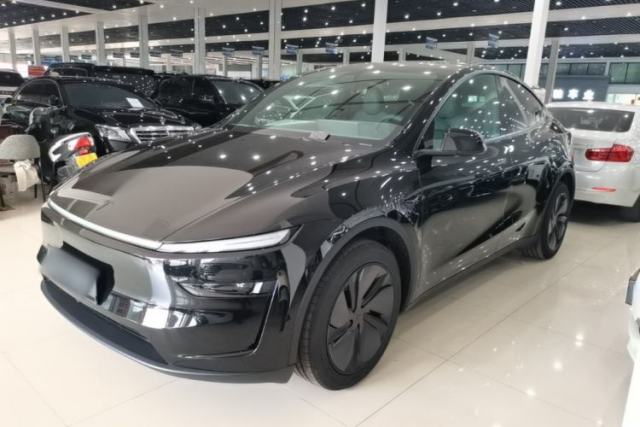
GradeSUsed Tesla Model Y 2026 Rear-Drive Model Certified DealerCertified Dealer
 Guazi InspectedGuazi Inspected
Certified DealerCertified DealerNewly listed
Newly listed
Near-new car
Near-new car
Guazi InspectedGuazi InspectedOriginal paint
Original paint
FOB Price:$39,007

On a real road trip, charging speed beats range
The range lists get the road trip wrong, because they optimize for the wrong number. On a long drive you do not need to do the whole journey on one charge; you need each refill to be short and each charger to be reliable. That makes charge-curve consistency, how much power a car holds throughout a charging session, more important than the size of its battery. A car that pulls high power from 10% all the way to 80% adds usable miles fast. A car with a bigger battery that slows to a trickle partway through the session keeps you standing around longer, even though its headline range is higher.
The clearest way to see this is to compare two real trips. A long-range EV that charges slowly and a shorter-range EV that charges hard can leave the same point at the same time, and the fast-charging one arrives first, because it spends less of the day plugged in. Range buys you fewer stops; charging speed buys you shorter ones, and on most real journeys the shorter stops win.
The 10 to 80% number that decides your day
The single most useful spec for a road-tripper is not range, it is the 10 to 80% charge time on a fast charger. That is the window you actually use on a trip, because you rarely arrive empty and rarely charge to full, since the last 20% is the slowest part. The best 2026 travel EVs do that 10 to 80% fill in 18 to 25 minutes, which is roughly the length of a bathroom-and-coffee stop. Anything much over 40 minutes turns the same break into dead time. This is why a genuinely fast charging EV makes a better road-tripper than a slow one with more range, and when you compare cars for travel, you should line up their 10 to 80% times before you look at anything else.
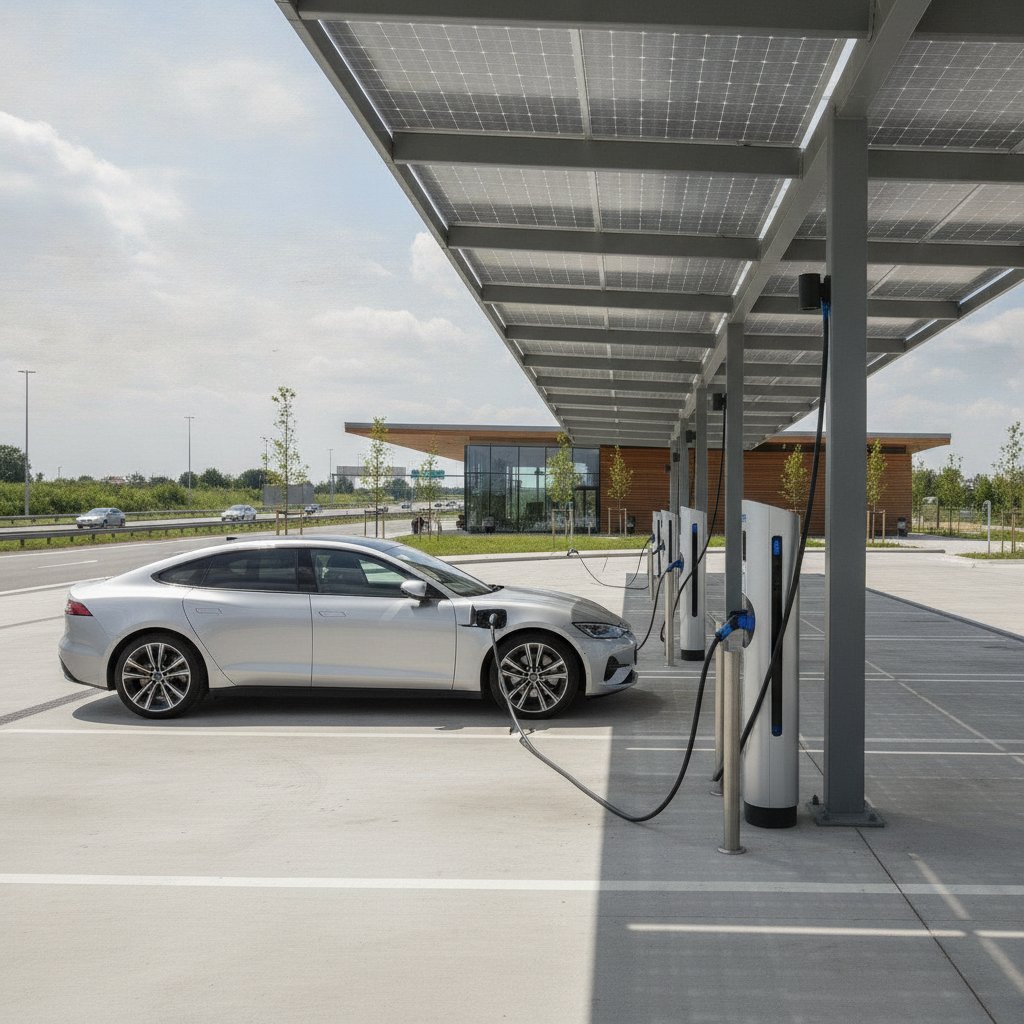
Why an 800-volt car can out-travel a longer-range one
The reason the fast chargers are fast comes down to electrical architecture. Cars built on an 800-volt system, rather than the more common 400 volts, can accept very high charging power and hold it across more of the session, which is why an Ioniq 6 or a Taycan refills so quickly. The practical payoff is fewer minutes per stop, and over a long day those saved minutes add up to a real lead. The table below shows how a shorter-range, fast-charging car can beat a longer-range, slower one on total time. Figures are 2026 references under good conditions, so verify the exact spec before you buy.
| Model | Approx. range | 10 to 80% fast charge | What it means for a trip |
|---|---|---|---|
| Hyundai Ioniq 6 (800V) | Strong, not class-leading | About 18 min | Shortest stops, arrives first |
| Porsche Taycan (800V) | Mid-pack on paper | About 18 min | Wins real long-distance tests on charge speed |
| Tesla Model Y | Up to about 327 mi | Around 25 min | Network and software make it effortless |
| Lucid Air Grand Touring | About 512 mi | Around 20 min | Fewest stops of all, big battery refilled fast |
How we picked these travel EVs
We rank with a real-world, on-the-road bias rather than by sticker range. To make this list a car has to do three things: charge quickly and consistently on a fast charger, plug into a network dense and reliable enough to trust on a long route, and stay comfortable over six or more hours in the seat. We lean on published independent charge-speed testing for the replenishment side, and on something most editorial desks cannot offer for the used side.
That something is condition data. Guazi is one of China's largest used new-energy-vehicle platforms, built on a standardized multi-point inspection that produces a digital condition report for every car, and on an industry-first 100-day battery-decay guarantee for new-energy vehicles. Across that business sit tens of millions of inspections. We are not a cross-country test team and we do not pretend to be one. What we can speak to honestly is how a used EV's battery health quietly changes its travel readiness, because a tired pack adds stops to every trip, and how to read that health before you buy.
The EVs that make long trips painless
Rather than rank by range, here is what each of the strongest travel EVs is really for, judged on how it actually handles a long day on the road.
Tesla Model Y: when the whole system just works
The Model Y remains the default road-trip answer, and the reason is not the spec sheet, it is the system. The car, the navigation software and the charging network are designed together, so the car routes you to working chargers, preconditions the battery before you arrive so it charges at full speed, and shows you live availability. With up to roughly 327 miles of range and a fast, dense network behind it, the trip largely plans itself. For a first EV road trip, or for anyone who simply does not want to think about charging logistics, the ecosystem advantage is real and hard to match.
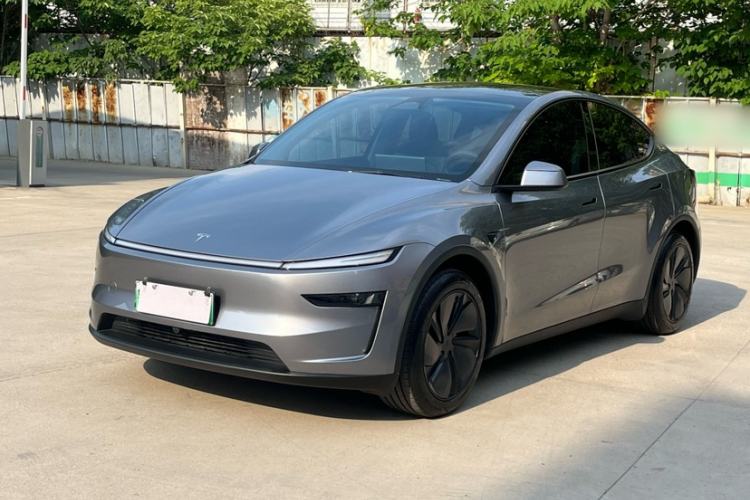
Hyundai Ioniq 6 and Porsche Taycan: the fast-charge travelers that arrive first
These two prove the thesis of this whole guide. Neither tops the range charts, yet both win real long-distance time tests, because their 800-volt systems refill so quickly. The Ioniq 6 can do a 10 to 80% charge in about 18 minutes on a 350 kW unit and briefly pull very high power, adding a big chunk of range in the time it takes to use the bathroom. The Taycan sustains very high average power across the whole session, which is why it consistently posts strong real-world travel times despite a modest paper range. If your priority is the shortest possible stops, these are the cars to beat.
Lucid Air: the fewest-stops long-hauler
For the traveler at the other extreme, the one doing 1,500 miles to a hotel and back, the Lucid Air Grand Touring is the pick. At around 512 miles it simply needs fewer stops than anything else, and it refills quickly enough that those rare stops stay short. It is expensive new, but it makes a particularly strong used case for a high-mileage road-tripper, because its efficiency and big battery mean the miles you actually drive cost less per mile once someone else has taken the first depreciation hit. Fewer stops, lower running cost, as long as the battery checks out.
Travelling with the family: three-row long-distance EVs
A long trip with kids is a different problem, where comfort and space matter as much as charging. The standouts here are the Kia EV9 and the Rivian R1S, both genuine three-row SUVs built for long days. The EV9 pairs a roomy, quiet cabin with a sliding second row and enough range to make sensible stops, while the R1S brings an adventure-oriented interior and travel-focused software for families heading somewhere remote. Neither charges quite as fast as the 800-volt sedans, but for family travel the deciding factors are seat comfort, cabin space and a smooth ride, and both deliver those over six hours far better than a smaller car would.
The charging network and route planning, in plain terms
Once you accept that the trip is about stops rather than miles, planning them well is what removes the anxiety. The goal is to make each stop coincide with something you would do anyway, so it costs you no extra time.
How to plan stops so they feel like coffee breaks
The trick is to charge in the window you naturally need a break, not to chase the next charger out of fear. Most route planners, built into the car or on your phone, will space stops every 150 to 200 miles and line them up with food, restrooms and fuel for the humans. Charge from low to about 80% rather than to full, since the last stretch is slow, and you keep each stop in that 20-minute range. Done right, you are not waiting for the car; the car is ready before you are.
Range anxiety versus charging-network confidence
The fear most people call range anxiety is usually network anxiety, the worry that the charger will be missing, broken or occupied. That is why a car tied to a large, reliable network can feel more relaxing on a trip than a longer-range car on a patchy one. When you choose a travel EV, weigh the strength and density of the charging network it can use as heavily as its range, because a confident refill rhythm is what actually makes a long drive calm.
Buying a used EV for long trips: battery health is everything
Here is the part the new-car road-trip lists structurally cannot cover, and it matters more for a traveler than for anyone else. A used EV with a degraded battery does not just have less range; it changes the rhythm of every trip, quietly turning a planned three-stop journey into a five-stop one and stretching each charge as the pack ages. For a city commuter a slightly tired battery barely registers. For a road-tripper it is the difference between a relaxed drive and a frustrating one. So battery state of health, the measure of how much capacity remains versus when the car was new, is the single most important thing to verify before buying a used travel EV.
| New travel EV | Healthy used travel EV | |
|---|---|---|
| Charging speed | As designed | As designed, confirm no fast-charge wear |
| Battery range on a trip | Full | Verify state of health first |
| Typical price | Highest | Well below new |
| Stops per long trip | As rated | Same if battery is healthy, more if not |
| Main risk | Depreciation | Unverified battery, removed by inspection |
The good news is that a healthy used EV travels exactly like a new one, and you skip the steepest depreciation. The whole risk collapses to one verifiable number, which is exactly why a battery report matters so much, and why Guazi built a 100-day battery-decay guarantee into its new-energy cars.
Want a long-distance EV that is genuinely travel-ready, not just cheap? Find a road-trip-ready EV, inspected
Where Chinese EVs fit for long-distance travel
Any honest 2026 travel conversation should include China's makers, because for them charging architecture, not just range, is the story. Zeekr and others now build fast-charging long-distance cars on advanced platforms, while Nio takes a different route entirely with battery swap, where a depleted pack is exchanged for a full one in minutes rather than charged, a model built out across China that sidesteps charge time altogether. BYD rounds out the picture with efficient long-range models. These figures and the swap network are quoted for the China market and may not reflect availability or testing standards elsewhere, so read them as the makers' own setup rather than an overseas promise. For a value buyer, especially used, these cars are increasingly part of the long-distance conversation, which is why we track them closely.
How to source an inspected travel-ready EV through Guazi
If the value route is where you want to shop, the buying process is the part that protects your trips. The single most important step with any used travel EV is verifying battery state of health, then confirming charging behavior and the rest of the car against a standardized inspection rather than a seller's word. Guazi's model is built around exactly that: a multi-point inspection that produces a digital condition report, battery-health checks for new-energy cars, and the 100-day decay guarantee that puts the battery question in writing. Start from the charge speed and comfort your trips actually need, set your budget, and let the condition report rather than the sticker decide. Talk to our team about sourcing an inspected travel-ready EV
Key Takeaways
- The best electric cars for long-distance travel win on charging speed and trip comfort, not maximum range; the fastest-charging EV often arrives first.
- The number that decides your day is the 10 to 80% fast-charge time; the best travel EVs do it in 18 to 25 minutes.
- 800-volt cars like the Ioniq 6 and Taycan out-travel longer-range rivals because they refill so quickly; the Model Y wins on network and software; the Lucid Air wins on fewest stops.
- For family travel, the three-row EV9 and R1S prioritize comfort and space over shaving minutes.
- A used travel EV is only as good as its battery, because a tired pack adds stops to every trip, so buy on a verified state-of-health report.
Sources & References
- Recurrent, fastest-charging EVs research
- Wikipedia, Charging station
- Wikipedia, Electric car
Planning a long trip and not sure which EV makes it painless?
Our team can match you with an inspected, fast-charging EV and walk you through its battery-health report before your next road trip.




About Us
Follow US


Copyright © 2015~2026 https://en.guazi.com/, Chongqing Guazi Enterprise Consulting Service Co., Ltd. All rights reserved.