
Guazi
GlobalEnglish


The Best Electric Cars for Families in 2026, Chosen the Way a Parent Decides
Article OverviewThe best electric cars for families in 2026, picked the way a parent decides: crash safety, car seats that fit, real range, running cost, and used-but-safe.
A note on the numbers in this guide. Safety scores, seat counts, cargo figures and prices are 2026 reference points drawn from Euro NCAP and IIHS results, manufacturer specs and independent testing, compiled June 2026. Family EV specs and prices move quickly, and a wrong safety claim is the worst kind, so treat this as a buying guide rather than a quote and confirm the exact spec and rating of any car before you commit.
The honest version of this question is not which electric car is fastest or flashiest. It is whether the thing will keep your kids safe in a crash, whether the car seats actually fit, whether it will strand you halfway to grandma's house, and whether you can afford to run it without flinching at every service bill. That is what a parent is really asking when they search for the best electric cars for families, and it is a very different list from the one an enthusiast would write. In 2026 the good news is that a handful of EVs clear all of those worries, and a carefully chosen used one can clear them for thousands less.
This guide is ordered the way a parent actually decides, worry by worry. We start with crash safety and what a child-occupant score really tells you, then car seats and the three-across problem, then the range that survives a real family trip, then what a family EV costs over five years, then reliability, and finally the question almost no ranking answers: can you buy one used and still trust it with your children. By the end you should know not just the safest new family EVs, but the smartest family money on the market.
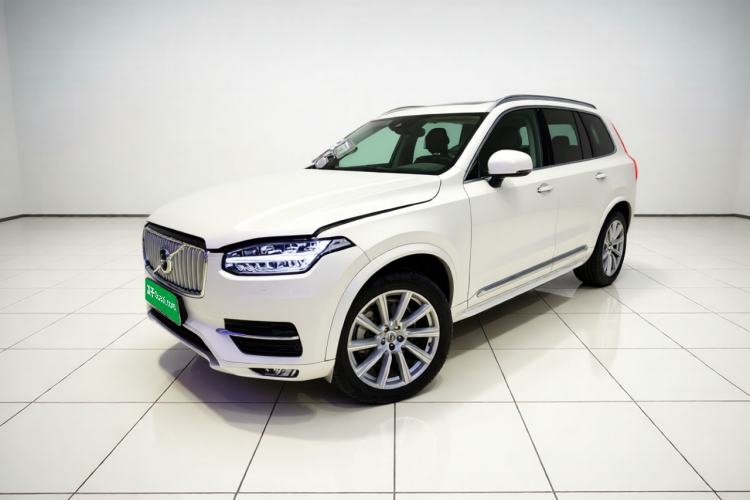
Quick picks: the best family electric cars at a glance
- The all-rounder most families should shortlist first: Kia EV9, seven seats, four ISOFIX points and a sliding second row that lets you reach the third row with seats installed.
- When safety is the non-negotiable: Volvo EX90, among the highest child-occupant crash scores ever recorded.
- Best value family pick: Hyundai Ioniq 5, a five-star car with fast charging at a meaningfully lower price than the big three-row SUVs.
- Best for three car seats across: Skoda Enyaq, which takes three child seats and has one of the biggest boots in its class.
- Roomiest five-seater, with one honest caveat: Tesla Model Y, hugely spacious but only two ISOFIX points in the standard layout.
- The smartest money of all: a clean, well-inspected used family EV with a verified healthy battery, often well below its original price with warranty still running.
What makes an electric car genuinely family-ready in 2026
Most "best of" lists rank family EVs on range and power, which is exactly backwards for the buyer doing the searching. A family car has a different job. It has to protect the people in it, swallow the gear a household drags around, cover the trips you actually take, and not bleed money over the years you own it. Range and performance matter, but they sit below safety, space and running cost in a parent's real order of priorities. The sections below take those priorities one at a time, because that is how the decision actually gets made at the kitchen table.
Safety first: what a child-occupant crash score actually tells a parent
Every family EV worth considering carries a crash rating, and the one number that matters most to a parent is the child-occupant protection score, not the overall star count. Euro NCAP and the US IIHS test how well a car protects a child in the back in a frontal and side impact, and the spread between models is real. The 2026 benchmark here is the Volvo EX90, which posted one of the highest child-occupant results on record, with strong protection in both rows. The practical takeaway is to read past the headline five stars and look at the child-occupant score specifically, because two five-star cars can still protect a child very differently.
A second point worth knowing: a five-star rating from a few years ago was tested to an easier standard than a five-star rating today. The tests get harder over time, so a 2026 five-star car has cleared a tougher bar than a 2020 one. That matters when you shop used, and we come back to it later.
Will the car seats fit? ISOFIX points and the three-across problem
This is the worry that derails more family-car purchases than any spec sheet. A car can be roomy and still be a poor fit for child seats if it has too few ISOFIX anchor points or a back seat too narrow for three seats side by side. ISOFIX (called LATCH in the US) is the standardized hard-point system that clips a child seat directly to the car's frame, and the count varies more than you would expect.
The standout here is the Kia EV9, with four ISOFIX points spread across the second and third rows, which is unusual and genuinely useful for a bigger family. The hardest job in any car, though, is fitting three child seats across a single bench, because most rear seats are simply not wide enough. The Skoda Enyaq is one of the few mainstream EVs that manages it, with ISOFIX on the front passenger seat plus two in the rear. The Tesla Model Y, by contrast, is enormously spacious but offers only two ISOFIX points in its standard five-seat layout, which is an honest caveat for a three-child household. Counts shift by trim and model year, so confirm the exact layout of the car in front of you before you buy.
Range that survives a real family road trip
A family loads a car heavy: people, bags, a roof box, the heating on for the kids in winter. All of that eats range, so the lab figure on the window is not the number you will see on the way to the coast. A sensible rule for 2026 is to expect 15 to 25% below the official figure with a full family car at motorway speed, and more in the cold. A car rated at 300 miles is realistically a 230 to 260 mile car loaded on a winter motorway, which is still plenty for most family trips but worth planning around.
What helps more than a huge battery is fast charging, because a stop that takes 20 minutes instead of 45 turns a long drive from a chore into a coffee break. Cars on 800-volt architecture, like the Ioniq 5 and EV6, add range quickly enough that the stop is over before the kids are done with the bathroom. If your family genuinely does long trips, charging speed deserves as much weight as the headline range, and we cover that trade-off in depth in our companion guide to the best electric cars for long-distance travel.
How we picked these family EVs
We rank with a parent's priorities, not an enthusiast's. To make this list a car has to do four things: protect its occupants to a current crash standard, fit real family loads and child seats, cover normal family driving without drama, and make financial sense over the years you actually own it. We lean on published Euro NCAP and IIHS results for the safety side, manufacturer and independent figures for space and range, and on something most editorial desks cannot offer for the used side.
That something is condition data. Guazi is one of China's largest used new-energy-vehicle platforms, built on a standardized multi-point inspection that produces a digital condition report for every car, and on an industry-first 100-day battery-decay guarantee for new-energy vehicles. Across that business sit tens of millions of inspections. We are not a crash-test laboratory and we do not pretend to be one. What we can speak to honestly is how a family EV holds up after a few years of family use, and how to read the one number, battery health, that decides whether a used family car is a sound buy or a costly mistake.
The safest, most sensible family EVs right now
Rather than march through a spec table, here is what each of the strongest family EVs is really for, judged purely through the safety, space and running-cost lens.
Kia EV9: the all-rounder most families should shortlist first
If you only test-drive one car off this list, make it the EV9. It is a proper seven-seater with top Euro NCAP marks, four ISOFIX points across the second and third rows, and a boot near 828 litres with the third row folded, which swallows a pram, a weekly shop and a holiday's worth of bags. The detail that wins parents over is the sliding second row, which lets an adult reach the third row even with child seats already installed, so you are not uninstalling a seat every time someone needs to climb in the back. It is not cheap, but for a growing family it answers more worries at once than anything else here.
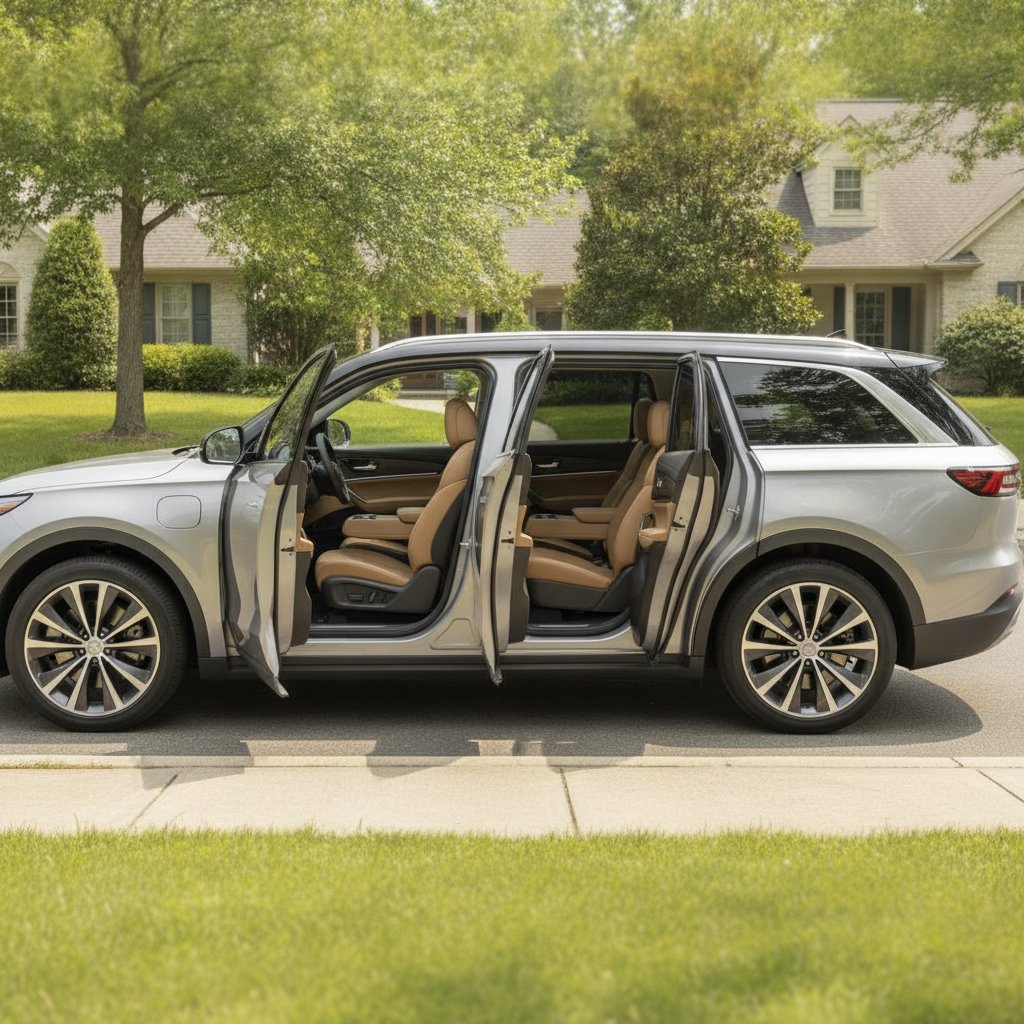
Volvo EX90: when safety is the non-negotiable
Some parents will not compromise on crash protection, and for them the EX90 is the clear answer. It recorded one of the highest child-occupant scores ever measured, with standard ISOFIX in both the second and third rows and a long list of active-safety systems designed to avoid the crash in the first place. It is a large, premium, expensive SUV, and you pay for that safety engineering. But if the deciding factor for your household is simply "the safest thing I can put my kids in," the EX90 earns its place at the top of the list.
Hyundai Ioniq 5: the best-value family pick
The Ioniq 5 is the car most families will actually be happiest buying. It is a five-star EV with a roomy, flat-floored cabin, genuinely useful space for child seats, and 800-volt fast charging that keeps road-trip stops short. Crucially it costs meaningfully less than the big three-row SUVs, which makes it the best-value family EV for households that do not need seven seats. It is a five-seater, so a family of five or six will want the EV9 or Enyaq instead, but for the typical two-child family it hits the sweet spot of safety, space and price better than almost anything.
Best family EV for car seats, including three across
If your deciding factor is car seats, the ranking changes, because raw cabin size matters less than anchor-point count and bench width. Here is how the most family-relevant EVs compare on the seat question specifically. Counts vary by trim and year, so treat this as a shortlist to verify rather than a guarantee.
| Model | Seats | ISOFIX points | Three seats across? | Best for |
|---|---|---|---|---|
| Kia EV9 | 7 | 4 (rows 2 and 3) | Tight but possible | Bigger families, easy third-row access |
| Skoda Enyaq | 5 | 3 (front + 2 rear) | Yes | Three car seats in one row |
| Volvo EX90 | 6 to 7 | Rows 2 and 3 | Tight | Safety-first households |
| Hyundai Ioniq 9 | 7 | Rows 2 and 3 | Tight but possible | New three-row value alternative |
| Tesla Model Y | 5 | 2 | No | Two car seats, maximum space |
The headline for a three-child family is simple. If you need three seats genuinely side by side, the Skoda Enyaq is the most reliable fit, with the EV9 a strong second once you account for its sheer width. If you have two children and want the most room and the easiest installation, the Model Y is hard to beat on space, as long as you can live with two anchor points.
What a family EV really costs over five years
Sticker price is only the start. A family runs a car hard for years, so the number that matters is the total cost of ownership: purchase, energy, maintenance, insurance and, above all, depreciation. EVs are cheap to fuel and cheap to service, with no oil changes and far fewer moving parts, but they lose value fast in the first few years. That single fact reshapes the whole buying decision, because the steepest depreciation happens before the car reaches you if you buy it a couple of years old.
Here is the shape of it for a typical family EV over five years. The exact figures depend on your mileage, local energy prices and model, so read this as the pattern rather than a precise quote.
| Cost over 5 years | New family EV | 2 to 4 year old used family EV |
|---|---|---|
| Purchase price | Highest | Steep first drop already taken |
| Energy vs petrol | Much lower than petrol | Much lower than petrol |
| Maintenance | Low, often under warranty | Low, warranty often still running |
| Depreciation | Steepest in years 1 to 3 | Buyer skips the worst of it |
| Cost per year owned | Higher | Lower |
The lesson is the one parents like, because it saves money rather than spending it. The average EV can lose well over half its value across five years, and a 2 to 4 year old example steps in after that cliff while still holding most of its range and, very often, a transferable battery warranty into the early 2030s. A two-year-old EV6 or Ioniq 5 can sit many thousands of dollars below its new price while driving almost identically, which is exactly why the used route deserves a serious look.
Are electric cars reliable enough for family life?
Reliability is a fair worry, because a family cannot afford a car that lives at the service centre. The honest answer is reassuring with one asterisk. EVs have far fewer moving parts than a petrol car, no gearbox in the traditional sense, no exhaust, no oil system, so there is simply less to go wrong mechanically, and the day-to-day reliability of the mainstream models here is strong. The asterisk is the battery, which is the single most expensive component and the one a buyer should care about most.
This is where the warranty matters. Most family EVs from the major makers carry a battery warranty of around eight years or 100,000 miles, and a 2022 to 2024 car still has years of that cover left. A healthy modern EV battery loses capacity slowly, typically a small amount a year, so a well-kept example holds the overwhelming majority of its range for a long time. The risk is not that batteries routinely fail; it is that you cannot eyeball a battery's health from the outside, which is exactly the problem the used market has to solve.
Can you buy a used electric car and still trust it with your kids?
This is the question the new-car ranking sites structurally never answer, and for a cautious parent it is the most important one. The honest answer is yes, but only if you buy on evidence rather than on a seller's word. Some of the best used electric cars for a family are simply older versions of the models above, and a used family EV can be the smartest buy on the market, because you skip the steepest depreciation while keeping a five-star car with most of its range and warranty intact. The catch is that everything rides on battery state of health, the measure of how much capacity remains versus when the car was new, and that is precisely the number a casual seller is least able to show you.
So the responsible used-EV checklist for a family is short and non-negotiable: a verified battery state-of-health report, a DC fast-charge history to gauge how hard the pack has been used, and a recall and warranty check to confirm what cover remains. Add a current safety rating check, since a five-star car from a few years ago was tested to an easier standard, and you have removed the real risks. This is exactly the data a standardized inspection produces, and it is why Guazi built a 100-day battery-decay guarantee into its new-energy cars, because the battery is the asset and its health is the one thing a parent cannot see.
| New family EV | Healthy used family EV | |
|---|---|---|
| Crash safety | Current standard | Current standard, verify the year tested |
| Battery health | As-new | Verify state of health before buying |
| Typical price | Highest | Well below new |
| Warranty left | Full | Often years remaining |
| Main risk | Depreciation | Unverified battery, removed by inspection |
Looking at the value end of this table rather than the sticker end? Browse inspected family EVs with battery-health reports
How to source an inspected family EV through Guazi
If the used route is where you want to shop, the buying process is the part that protects you. The single most important step with any used family EV is verifying battery state of health, then confirming the rest of the car against a standardized inspection rather than a seller's claim. Guazi's model is built around exactly that: a multi-point inspection that produces a digital condition report, battery-health checks for new-energy cars, and the 100-day decay guarantee that puts the battery question in writing. Start from the seats and safety your family actually needs, set your budget, and let the condition report rather than the sticker decide. Talk to our team about sourcing an inspected family EV
Key Takeaways
- The best electric cars for families are chosen on safety, seats, range and running cost, not speed; the Kia EV9 is the strongest all-rounder, the Volvo EX90 the safety benchmark, and the Hyundai Ioniq 5 the best value.
- Read the child-occupant crash score, not just the star count, and remember a five-star car from a few years ago was tested to an easier standard.
- Car seats decide more purchases than specs; the Enyaq fits three across, the EV9 has four ISOFIX points, the Model Y only two.
- Expect 15 to 25% below the lab range with a loaded family car, and value fast charging as much as headline range for real trips.
- A healthy used family EV is usually the smartest money, skipping the steepest depreciation, but the whole decision rests on a verified battery state of health.
Sources & References
- Euro NCAP, car safety ratings
- IIHS, vehicle ratings
- Wikipedia, Electric car
Need help choosing a family EV you can trust?
Our team can match you with an inspected family EV and walk you through its battery-health report before you put your kids in it.

About Us
Follow US


Copyright © 2015~2026 https://en.guazi.com/, Chongqing Guazi Enterprise Consulting Service Co., Ltd. All rights reserved.