

World Cup Special • Save up to $1000 on selected vehicles

Guazi
GlobalEnglish


Why a Used BMW i3 and a New Citroën ë-C3 End Up on the Same Shopping List
Article OverviewBMW i3 vs Citroen e-C3 for a small budget: a used premium hatch against the cheapest new EV, with honest real-world range, running and repair risk, prices, and the battery-health check that decides the used i3.
Quick answers
- Same money, so which do I pick? Buy the used i3 if you want a premium feel, sharp city handling, and you mostly do short trips. Buy the new ë-C3 if you want a full warranty, more usable range, and peace of mind without checking a used battery.
- What does each really go for? A good used i3 runs roughly 10,000 to 16,000 in pounds, depending on year and battery. The new ë-C3 starts near 20,000 pounds, or about 19,990 euros. Treat both as ranges and confirm against live listings.
- What is the real range? The ë-C3 claims about 199 miles on the WLTP test but returns roughly 155 to 170 in mixed use. The i3 depends on its battery pack, from about 70 miles on the oldest to about 130 to 150 on the newest, and all of them drop in cold weather.
- Which is the safer buy? The new ë-C3 carries less risk because it is warranted. The used i3 can be just as sound, but only after you check the battery state of health.
- What is the one check that matters? On the used i3, the battery state of health. It sets the value and the real range, so verify it before you pay.
This guide explains why these two land on the same list, the honest range each one gives, the daily feel, the running and repair risk on both, the money side by side, and the one battery check that decides the used car.
Here is a pairing that makes complete sense once you see the numbers. A clean used BMW i3 from 2017 to 2019 costs about the same as the cheapest new electric car on sale, the Citroën ë-C3. One is a clever, premium-feeling hatch whose price has fallen far enough to land on a budget. The other is a brand-new, fully warranted small EV built strictly to a price. So the real question is not which car is better in the abstract. It comes down to whether you want a characterful used BMW or a basic but new Citroën under warranty for the same outlay, and which one will give you fewer worries over the years you own it. Guazi stands as the used-EV inspection lens, because the single thing that decides whether a cheap i3 is a steal or a future bill is its battery health, and that is exactly what a proper inspection is built to read.
An unlikely pair that lands on the same budget
These two were never meant to be rivals. The i3 launched in 2013 as BMW's bold city car, with a carbon-fibre body and a price that matched its ambition. The ë-C3 arrived a decade later as Citroën's answer to a simple demand, a new electric car ordinary buyers could afford. They sit at opposite ends of how a car earns its place on a budget. One got there by depreciating. The other got there by design.
That is what makes the comparison interesting and useful. A used premium car against a new budget car for the same money is a real fork, and it is one the spec sheets rarely set up because they compare new against new. The i3 gives you BMW engineering, premium materials, and a battery that has aged unusually well, but it also exposes you to out-of-warranty repair on parts that are unique to the car. The ë-C3 gives you a full manufacturer warranty, modern fast charging, and more usable range, inside a cabin built down to a cost. Neither is the obvious winner. The right one depends entirely on the buyer, so the job of this guide is to match each car to the person it suits.
The range each one really gives you
Range is where a small EV lives or dies, so treat the headline numbers with care. Brochure figures come from the WLTP test, which is a controlled lab cycle. Real driving, with motorway speed, hills, heating, and cold air, always returns less. The honest way to read a small electric car range is to look at the test figure and the real-world band side by side, then plan around the lower one.
The short version is that the ë-C3 gives you more usable range than most used i3 packs, but the newest i3 closes much of that gap. Here is how the two compare on the figures that matter.
| Car | Battery (usable) | Test range | Real-world range | DC fast charge |
|---|---|---|---|---|
| BMW i3 60Ah (2014 to 2016) | about 19 kWh | up to 100 miles | roughly 70 to 80 miles | up to 50 kW |
| BMW i3 94Ah (2017 to 2018) | about 27 kWh | up to 125 miles | roughly 100 to 120 miles | up to 50 kW |
| BMW i3 120Ah (2019 to 2021) | about 37 kWh | up to 190 miles | roughly 130 to 150 miles | up to 50 kW |
| Citroën ë-C3 (2024 on) | about 43 kWh | about 199 miles (WLTP) | roughly 155 to 170 miles | up to 100 kW |
Read that as a shape, not a quote, because conditions move the number. The pattern is clear enough. The ë-C3 holds a real-world range advantage over every i3 except the newest 120Ah car, and it charges roughly twice as fast on a DC point, which matters more on a longer trip than around town.
The i3 by battery: 60Ah, 94Ah and 120Ah, and which to chase
For a used BMW i3 buyers guide, everything starts with the battery, because the i3 came in three eras and they are very different cars to live with. The 60Ah, built from 2014 to 2016, gives roughly 70 to 80 miles in real use, which is fine for short city hops but tight for anything more. The 94Ah, from 2017 to 2018, lifts that to about 100 to 120 miles and is often the best balance of price and range, enough for most lives at a cost that has come right down. The 120Ah, from 2019 to 2021, reaches about 130 to 150 miles and is the one to chase if your budget stretches and you want the i3 with the least range anxiety.
Buy It Now
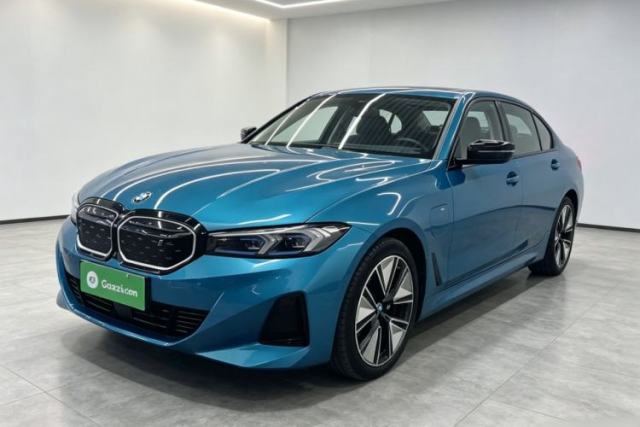
GradeAUsed BMW i3 2023 eDrive 40 L Midnight Sports Package Certified DealerCertified Dealer
 Guazi InspectedGuazi Inspected
Certified DealerCertified DealerGuazi InspectedGuazi InspectedFOB Price:$23,582

The good news on every i3 is the battery itself. It is liquid-cooled with a conservative buffer, so it has aged gently. Ten-year-old examples have tested around 85% of their original health, which is strong for an EV of that age. Cold weather still takes a bite, often 20 to 30% off the effective range on a winter morning, so plan for that whichever pack you buy. There is also a range-extender version, the REx, with a small petrol engine that tops up the battery on the move. It adds flexibility, but the engine is a known weak point and servicing it is BMW-only and expensive, so weigh it carefully.
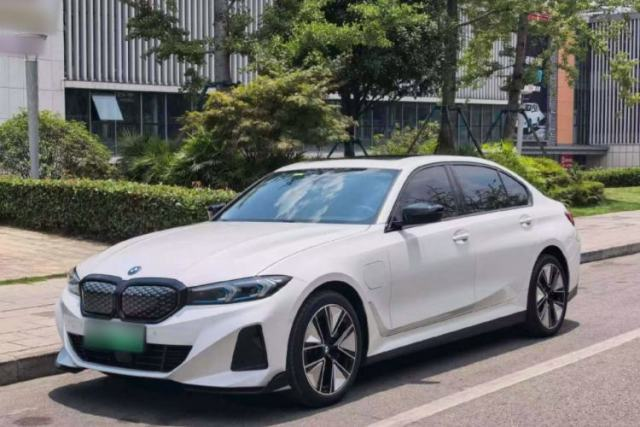
The ë-C3 and its 44 kWh: about 199 miles on paper, 155 to 170 in life
For a Citroën ë-C3 review that is honest about range, the figure to hold onto is not 199 miles. That is the WLTP number. The mixed real-world figure is roughly 155 to 170 miles, and on a cool-weather motorway run it can fall toward 190 to 230 km, which is well short of the brochure. The reason is efficiency. The ë-C3 returns about 3.5 to 3.8 miles per kWh, which is middling rather than class-leading, so the usable range trails the test figure by a wide margin.
That said, the ë-C3 still gives you more dependable range than most used i3 packs, and its 100 kW DC charging means a 20 to 80% top-up in around 26 to 29 minutes. The motor makes 111 bhp, the 0 to 100 km/h run takes about 11 seconds, and the top speed is 132 km/h. None of that is quick, but it is enough for a car meant to commute and run errands. The honest summary is a usable real-world range in the mid-150s to low-170s of miles, with fast charging that the i3 cannot match.
Living with each one: charging, cabin and the daily feel
Numbers aside, these two feel very different from the driver's seat, and that difference is half the decision. The i3 is the more special car to sit in. The cabin uses open-pore wood, recycled fibres, and a airy, lounge-like layout that still feels fresh years on. The rear coach doors, which open backward, make a striking party piece, though they need the front door open first, which is a small daily faff. The driving position is high and commanding, the steering is quick, and the tiny turning circle makes the i3 a joy in tight streets. It feels premium because it is, just an older premium.
Buy It Now
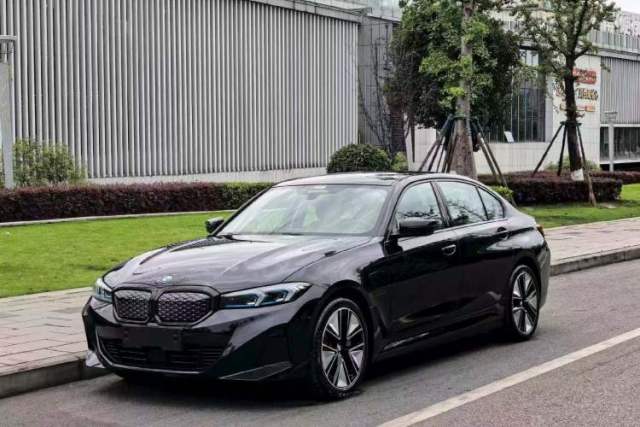
GradeSUsed BMW i3 2025 eDrive 40 L Midnight Sports PackageCertified DealerCertified DealerGuazi InspectedGuazi Inspected
Certified DealerCertified DealerNear-new car
Near-new car
Guazi InspectedGuazi InspectedOriginal paint
Original paint
FOB Price:$29,964
The ë-C3 is the opposite approach. The cabin is plain and built to a budget, with harder plastics and a simpler feel, but it is modern, roomy enough for a small family, and easy to use. The seats are notably comfortable, a Citroën trademark, and the raised, slightly crossover stance gives a good view out. Where it clearly beats the i3 is charging convenience, thanks to that 100 kW DC capability, and the simple reassurance that everything is new and under warranty. You give up the i3's charm and sharp handling. You gain space, modern charging, and a car with no past to investigate. For many buyers, that trade is the whole point.
The real risk difference between the i3 and the ë‑C3
This is the honest heart of the comparison. With the same money on the table, you are choosing between two very different risk shapes. The used i3 carries out-of-warranty repair exposure on parts unique to the car. The new ë-C3 carries a full warranty but a record of early-build niggles. Neither risk is a dealbreaker. Both just need to be understood before you commit.
What goes wrong on a used i3, and what it costs
Owners report a specific set of items on the i3, and the smart move is to turn each into a check rather than a fear. The REx range-extender engine can develop faults and is costly to fix. Early cars, broadly pre-2017, have had air-conditioning compressor and battery-cooling-line failures that can run into real money. The i3 also uses a unique narrow rear tire size that is expensive to replace, and the all-glass rear hatch can shatter and is pricey to source. Charging ports and cables can cause small issues too.
None of that means a given i3 will fail. The car actually topped its class in a What Car? reliability survey, though about 21% of examples had a fault of some kind, mostly bodywork, non-motor electrics, or suspension, with most fixed free but some bills reaching 300 to 1,500 pounds. The takeaway is plain. Buy with the service history in hand, confirm the cooling and air-conditioning system on an early car, check the glass hatch and tires, and budget for BMW-only work on the complex parts.
Buy It Now
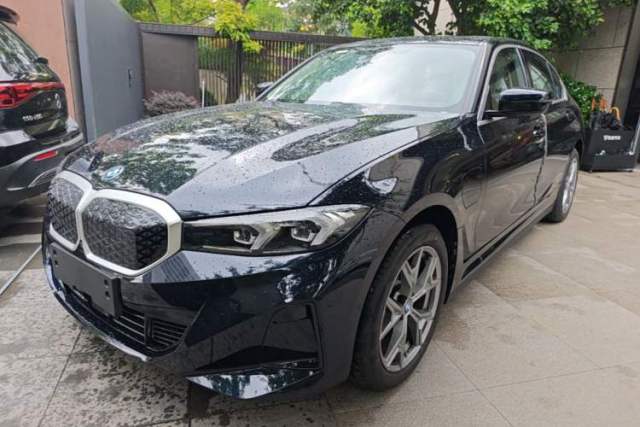
GradeSUsed BMW i3 2026 Model, eDrive 35 LCertified DealerCertified DealerGuazi InspectedGuazi Inspected
Certified DealerCertified DealerNear-new car
Near-new car
Guazi InspectedGuazi InspectedOriginal paint
Original paint
FOB Price:$28,869
What early ë-C3 owners reported, and how MY2026 improved
The ë-C3 is new, so its risk is different. Early-build cars drew some complaints, including key-remote failures, an air-conditioning fault, and home-charging glitches, and the wider fourth-generation C3 family has seen infotainment freezes and intrusive driver-assistance prompts. Read fairly, this is early-production teething rather than a damning record. About 71% of those early 2024 faults were resolved by free software updates, and model-year 2026 cars show roughly half the intervention rate of the first build. So the picture is improving niggles, not a broken car. If you buy a recent ë-C3, you get the better-sorted version, and the full warranty covers you either way.
The money, side by side
Price is the reason these two share a list, so here is the frame, with currencies labelled and figures kept as ranges. Used i3 values move, and the ë-C3 spans pounds and euros depending on market, so confirm against live listings before you commit.
| Car | Typical price | Warranty | What you are really buying |
|---|---|---|---|
| Used BMW i3 94Ah (2017 to 2018) | roughly 10,000 to 12,000 GBP | out of warranty, varies | premium feel, proven battery, repair risk on unique parts |
| Used BMW i3 120Ah (2019 to 2021) | roughly 12,000 to 16,000 GBP | maybe some left | most range, newest used option, still some repair exposure |
| New Citroën ë-C3 | from about 19,990 GBP, near 19,990 EUR | full manufacturer warranty | brand-new car, fast charging, budget cabin, no past to check |
The honest read is that the i3 undercuts the ë-C3 on sticker price and gives you a more special car for less, while the ë-C3 charges a premium for being new, warranted, and free of the used buyer's homework. The i3 also depreciates from a lower base now, which limits further loss, whereas the ë-C3 will take its biggest depreciation hit in your ownership as any new car does. Match that to how long you plan to keep the car.
Battery health is what decides the used one
Everything on the used side comes back to one number, so give it the weight it deserves. On a used EV, the battery is the most valuable and most expensive component, and its condition, not its age and not its mileage, sets what the car is worth and what range you will actually get. This is the spine of the i3 decision.
What state of health means and why it sets the price
Battery state of health, often shortened to SoH, is the pack's remaining capacity against its original capacity, written as a percentage. A battery at 90% holds 90% of the range it had when new. The i3's liquid-cooled pack ages gently, so many cars sit in the high 80s even after years, but you cannot assume it. Two i3s of the same year and mileage can have different SoH depending on how they were charged and used, and that difference is worth real money. A higher SoH means more range and a stronger resale later, which is why it should set the price you are willing to pay, not the odometer.
What to ask for before you pay
Before money changes hands, ask for three things. First, a battery state-of-health read-out, taken from the car's own diagnostics rather than guessed from a full-charge range estimate. Second, any remaining battery warranty, since BMW's battery cover runs to a set period and mileage and may still protect you. Third, the charging history, because a car that lived on rapid DC charging and sat at very high or very low charge has had a harder life than one trickled at home. A car that passes those three is the one to buy. A cheap i3 with no SoH figure and no history is the one to walk away from.
So which small EV should you buy?
No fence-sitting here, because the same-money framing makes the call cleaner than usual. Buy the used BMW i3 if you want a car with character and a premium feel, if your driving is mostly short city and commuter trips where even a 94Ah pack is plenty, and if you are comfortable checking a used battery and budgeting for occasional BMW-only repairs. It gives you the most car for the money and a genuinely special thing to own.
Buy the new Citroën ë-C3 if you want the longest usable range of the two, the fastest charging, a full warranty, and a car with no past to investigate. It is the lower-stress choice, the one for a buyer who would rather not learn what battery state of health means and simply wants a new, affordable EV that works. The cabin is plain, but it is roomy, comfortable, and modern, and the peace of mind is worth a great deal. Pick by which of those two buyers you are, and the decision is straightforward.
How Guazi helps your used electric city car sourcing
Small used EVs are at the heart of what Guazi does. Guazi is one of China's largest used-EV platforms, and every car it handles runs through a standardized inspection of over 200 points feeding a full digital condition report. On a used electric car, the most important line in that report is the battery, which is exactly the figure that decides whether a used i3 is a clever buy or a costly one. Guazi also runs an industry-first 100-day battery-decay guarantee on its electric and hybrid stock, aimed squarely at the state-of-health worry this whole guide turns on. To be precise about the role, Guazi is the inspection-and-condition specialist on the supply side, so treat any local purchase accordingly and lean on the report for the one thing a listing photo cannot tell you: whether this specific battery is sound.
The bottom line in one line each
- The pairing: a used premium i3 and a new budget ë-C3 cost about the same, which is the whole story.
- Range: the ë-C3 gives the most usable real-world range and the fastest charging, except against the newest i3.
- Feel: the i3 is the special, premium, sharp-handling car, the ë-C3 the plain but roomy and modern one.
- Risk: the i3 has repair exposure on unique parts, the ë-C3 a full warranty with early niggles now improving.
- Money: the i3 gives more car for less, the ë-C3 charges a premium for being new and worry-free.
- The deciding check: on the used i3, battery state of health, which sets both the range and the price.
Summary
A used BMW i3 and a new Citroën ë-C3 end up on the same shopping list for one reason, they cost about the same money, and the choice between them is really a choice between two kinds of buyer. If you want character, a premium feel, and sharp city manners, and you are happy to check a used battery, the i3 gives you more car than its price suggests. If you want range you can lean on, fast charging, a full warranty, and no homework, the new ë-C3 is the calmer, safer pick. Settle the i3's battery state of health with a proper read-out and history, weigh its repair exposure honestly, and either car can be the right one. The badge does not decide it. The specific car, and which buyer you are, does.
Guazi Used Cars
Access 200,000 verified vehicles monthly. Bid in real-time and secure bulk inventory at highly competitive market rates.



About Us
Follow US


Copyright © 2015~2026 https://ylqc.guazi.com/, Yilanqunche Automobile Services (Shanghai) Co.,Ltd. All rights reserved.