

World Cup Special • Save up to $1000 on selected vehicles

Guazi
GlobalEnglish


The Used Renault Clio Is Cheap to Buy and Cheap to Run, as Long as You Pick the Right Engine
Article OverviewMk4 vs Mk5, the engines to chase and avoid, the common problems and EDC gearbox truth, plus the test-drive and inspection checks that protect a small saving.
Quick answers
- Is a used Renault Clio a good buy? Yes, for a city or first car, if you pick the right engine and the specific car checks out. It is cheap to run and easy to live with, but a neglected one can erase its own low price in a single repair.
- Which generation should I buy, Mk4 or Mk5? The Mk5 (2019 on) is better built with steadier electronics and tech. The Mk4 (2012 to 2019) is the bargain, and a well-kept one is fine, but you have to check it harder.
- What is the best engine? The 1.5 dCi diesel is the long-distance star and famously durable. A healthy 1.0 TCe petrol suits city use. Scrutinise the early 0.9 TCe triple for oil use and any car with the EDC automatic.
- What goes wrong? Mostly known small-car items: timing-chain rattle on high-mileage TCe triples, ignition-coil misfires, corroded rear suspension springs, infotainment glitches, and EDC dual-clutch shudder.
- How long will it last? A serviced diesel can pass 300,000 km. The petrols last well too when maintained, but mileage matters far less than how the car was treated.
This review walks through where the Clio fits, the Mk4-versus-Mk5 choice, the engine decision that decides everything, how reliable the car really is, the faults that actually cost money, and how a proper inspection protects a saving the segment keeps thin.
Almost nobody overpays for a used Renault Clio. The car is one of the cheapest sensible used buys in Europe, and it turns up in the wider used pools that platforms like Guazi inspect, so the price you pay rarely hurts. The way people get hurt is different. They buy the wrong Clio: a tired early three-cylinder turbo that drinks oil, an automatic with a shuddering clutch, or a clean-looking car hiding corroded rear springs. On a car this cheap, one of those faults can cost more than the saving that made you choose a supermini in the first place. This guide is about avoiding that, and getting the right Clio.
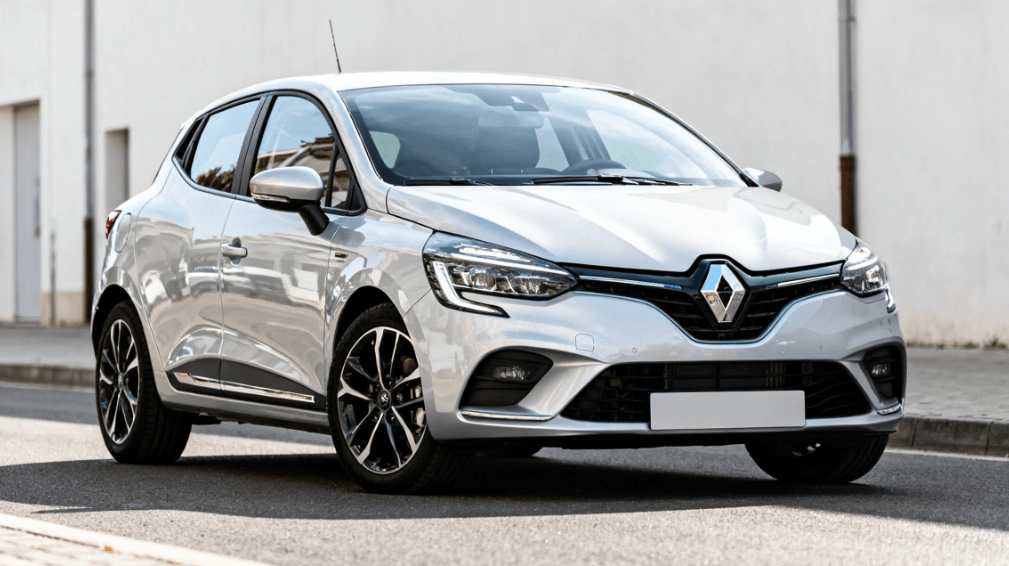
Where the Clio fits, and why it is such a common used buy
The Clio has been one of Europe's best-selling superminis for two decades, which matters to you as a buyer in a practical way. The used pipeline is enormous and self-renewing. Ex-fleet cars, ex-lease cars, and first-car private sales keep flowing into the market, so you are never short of choice and you are never forced to overpay. That same abundance is exactly why prices stay low and stable.
The car earns its popularity honestly. It is small enough to park anywhere, cheap to insure, light on fuel, and pleasant to drive on a bad road. For a commuter, a student, or a second family car, it does the job without drama. As a contender for the best used supermini on a tight budget, it belongs in any shortlist alongside a Ford Fiesta or a Volkswagen Polo.
The risk, then, is not really the car. It is that the cars are everywhere and cheap, which means plenty of them have been run on a shoestring by owners who skipped services because a Clio felt disposable. Your job is to sort the cherished examples from the neglected ones, and the rest of this guide is about how.
Mk4 or Mk5, what you are actually choosing
The first decision is which generation. The two that matter in the used market are the fourth-generation Clio (Mk4, 2012 to 2019) and the fifth (Mk5, 2019 onward). They look similar at a glance but they are meaningfully different cars to own.
The Mk4 (2012 to 2019): the value-era Clio, where the bargains and the traps both live
The Mk4 is the cheap one now, and that cuts both ways. A well-kept Mk4 with a documented history is one of the best-value used cars you can buy, full stop. The catch is that this generation carries the bulk of the model's known faults, so a cheap Mk4 with no paperwork is where most buyers get burned.
One naming point that trips people up: in some markets the Mk4 lived on after 2019 as the "Clio Génération," sold cheaply with only the basic 0.9 TCe petrol. If you are looking at a 2019 or 2020 car, confirm whether it is actually the old shape or the new Mk5, because they are not the same car underneath.
The Mk5 (2019 on): better built, better tech, and the E-Tech hybrid option
The Mk5 is the better car in almost every way that matters for ownership. Build quality stepped up, the interior feels a class above, and the electronics are more dependable than the Mk4's. It also introduced the E-Tech full hybrid in 2020, which pairs a 1.6 petrol with two electric motors and a small battery for genuinely low city fuel use. In Europe the Mk5 is a hatchback only, so if you see a wagon or sedan wearing the badge, it is a different model for a different market. You pay more for a Mk5, but you are buying fewer of the Mk4's headaches.
Petrol, diesel or hybrid, the engine decision that decides everything
More than the generation, the engine decides whether your Clio is a bargain or a slow-motion bill. Here is the honest map.
The TCe turbo petrols (0.9 / 1.0 / 1.3): the volume choice, and the early-triple caveats
Most used Clios you see will be TCe turbo petrols. On the Mk4 the 0.9 TCe three-cylinder (75 or 90 hp) became the bestseller, and it is fine when healthy, but it carries the classic small-turbo issues: ignition-coil failures, the odd turbo problem, and raised oil consumption on harder-worked examples. Check the oil level and look for any history of top-ups. On the Mk5 the 1.0 TCe 100 and 1.3 TCe 130 are stronger and better built, and a well-maintained 1.0 TCe is an easy recommendation for city and mixed driving.
The 1.5 dCi diesel: the quiet long-distance champion of the range
If you cover real distance, the 1.5 dCi diesel is the engine to chase. It is the reliability star of the Clio range, frugal at around 3.2 liters per 100 km on a steady run, and well known to pass 350,000 km when serviced properly. It suits motorway commuters far better than the petrols. The only caution is the usual diesel one: a car used only for short city hops can clog its particulate filter, so look for a history of longer journeys.
The E-Tech hybrid and the EDC automatic: what to know before you commit
The E-Tech hybrid (Mk5) is clever and very cheap to run in town, and early reliability has been encouraging, though it is the newest and least proven part of the range. Separately, watch for the EDC dual-clutch automatic on some cars. This dry-clutch gearbox can shudder at low speed and throw software glitches on tired examples; a jerky one can foreshadow repairs of 1,500 USD and up, and a worst-case clutch or full-box replacement runs into several thousand. The manual is the durable default. If you want an automatic, test it hard, which the faults section below explains.
How reliable is a used Clio, really
Honest answer: mid-pack, and improving with every generation. In the small-car class the Clio has tended to land mid-table in reliability surveys (around 18th of 26 in a recent What Car? study), which is neither a scare nor a glowing endorsement. It is an average car that rewards good maintenance and punishes neglect, which is the most useful thing to know about it.
Renault Clio reliability splits cleanly by age. The Mk4's weak spots are mostly the small-turbo and electrical items below, plus suspension corrosion on older cars. The Mk5 ironed out much of the Mk4's electrical fragility and feels noticeably more solid, though it is young enough that the long-term picture is still filling in. In both cases, the single biggest predictor of how a given Clio will behave is not its mileage or its year. It is whether the last owner actually serviced it, which is why a documented history matters more on a cheap car than buyers expect.
The faults that actually cost, and what to check on a test drive
Most Clio faults are minor. A few are expensive, and those are the ones a test drive and an inspection are built to catch. These are the Renault Clio common problems worth your attention.
Cold-start timing-chain rattle and ignition-coil misfires (the TCe listen-for)
On the TCe three-cylinder petrols, the timing chain can stretch and its tensioner weaken beyond roughly 120,000 to 150,000 km. The tell is a metallic rattle in the first few seconds after a cold start. Always start the car yourself from cold if you can. A misfire, rough idle, or a warning light can also point to an ignition coil, which is cheap individually but a sign of a car that needs attention.
Corroded rear springs, tired bushes and the electrical niggles
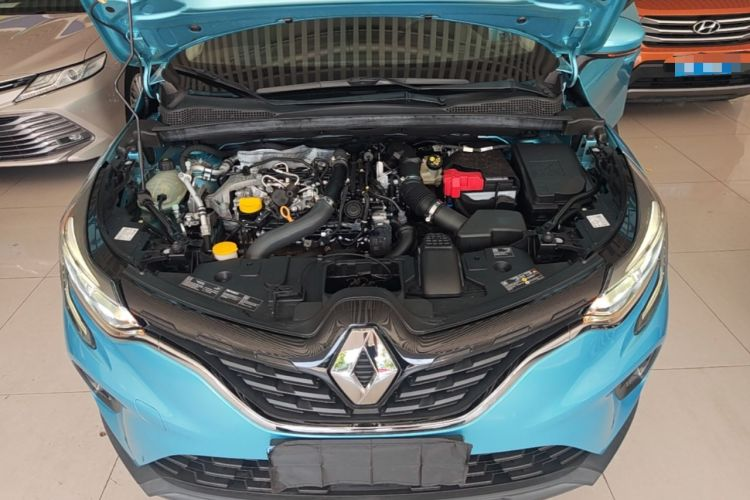
The Clio's rear suspension springs are notorious for corroding and, in bad cases, snapping. Have the underside looked at, and on the test drive listen for clonks over bumps that suggest worn bushes. Add the usual Mk4 electrical niggles to the list: window regulators, central locking, ABS sensors, and the MediaNav infotainment, which can glitch or freeze. None of these is catastrophic alone, but several together describe a tired car.
EDC gearbox shudder: the low-speed test that tells you a lot
If the car has the EDC dual-clutch automatic, the most valuable test is the simplest. Pull away gently from a standstill several times and crawl in slow traffic. A healthy EDC is smooth. What you do not want is a shudder or vibration as the clutch engages, harsh or hesitant low-speed shifts, or any jerkiness that the car's software cannot hide. That behavior is the warning sign of the expensive repair described above. A clean test drive here is worth a lot.
Here is the engine and gearbox picture in one place:
| Engine / gearbox | Generation | Verdict | What to check |
|---|---|---|---|
| 1.5 dCi diesel | Mk4 and Mk5 | Chase it for distance | DPF health, history of longer runs |
| 1.0 TCe petrol | Mk5 | Strong city and mixed pick | General service record |
| 1.3 TCe petrol | Mk5 | Good, more performance | Service record, oil level |
| 0.9 TCe petrol | Mk4 | Fine if healthy, check hard | Oil use, coils, cold-start rattle |
| E-Tech hybrid | Mk5 | Cheap in town, newest tech | Newest, least proven, full history |
| EDC dual-clutch | Various | Test drive carefully | Low-speed shudder, jerky shifts |
Who should buy a used Clio, and who should look elsewhere
The Clio is a brilliant fit for some buyers and the wrong call for others, and being honest about that saves disappointment.
It suits a first-time driver, a city commuter, a student, or anyone who wants a cheap, light, easy-to-park second car. If most of your driving is short urban trips, a healthy petrol Clio is hard to beat for the money. If you cover long motorway distances, the 1.5 dCi diesel turns it into a genuinely frugal mile-eater.
It is the wrong car if you regularly carry a big family, need a large trunk, or tow anything of weight. A supermini is a supermini, and asking it to haul big loads ends in frustration. For those needs, a larger sedan or wagon is the honest answer.
Buying a used Clio the smart way, and how Guazi helps
The same Clio generations sold across Europe also turn up across the wider markets Guazi inspects, so the buying logic travels. The point that matters on a car this cheap is simple: the price gap between a clean Clio and a tired one is small, so a single hidden fault erases the whole saving. That is exactly why verified condition pays.
Guazi is one of China's largest used-car platforms, and every car it handles goes through a 200+ point inspection by certified technicians that feeds a full digital condition report. On a Clio, that means the cold-start behavior, the gearbox, the suspension state, the service record, and the electronics are written down as checked data rather than guessed from a listing photo. It does not change the price ladder. It changes whether you land on the cherished Clio or the neglected one.
Browse inspected used cars
Buy It Now
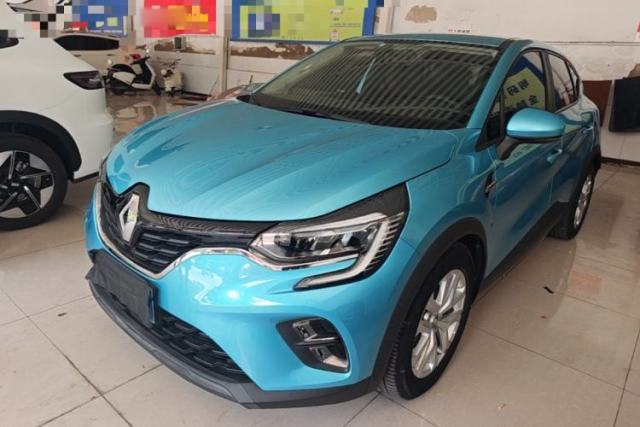
GradeAUsed Renault Clio 2019 TCe270 Automatic Sporty Model Certified DealerCertified Dealer
 Guazi InspectedGuazi Inspected
Certified DealerCertified DealerGuazi InspectedGuazi InspectedFOB Price:$6,053$6,753

The bottom line on the used Clio
- Value: one of the cheapest sensible used cars to buy and to run, with an enormous, self-renewing supply.
- Generation: the Mk5 is the better-built, steadier choice; the Mk4 is the bargain if you check it hard.
- Engine: chase the 1.5 dCi for distance or a healthy 1.0 TCe for the city; scrutinise the early 0.9 TCe and any EDC.
- The catch: the saving is thin, so one hidden fault on a neglected car can wipe it out entirely.
- Reliability: mid-pack and improving, dominated by service history rather than year or mileage.
- Best buy: a documented, inspected car with a healthy gearbox and clean underside, in the engine that suits your driving.
Summary
The used Renault Clio is one of the easiest superminis to recommend on cost, because you almost never overpay for it. The whole game is condition, not price. Pick the Mk5 if you want the steadier car or a well-kept Mk4 if you want the bargain, choose the 1.5 dCi for distance or a healthy 1.0 TCe for town, and treat the early 0.9 TCe and any EDC automatic with care. Settle those with a documented history and a proper inspection, and the Clio does exactly what it promises: a lot of cheap, easy, dependable motoring, as long as you bought the right one.
Source Quality Used Cars From China's #1 Auction Platform
Access 200,000 verified vehicles monthly. Bid in real-time and secure bulk inventory at highly competitive market rates.






About Us
Follow US


Copyright © 2015~2026 https://en.guazi.com/, Chongqing Guazi Enterprise Consulting Service Co., Ltd. All rights reserved.