

World Cup Special • Save up to $1000 on selected vehicles

Guazi
GlobalEnglish


Is the ORA Lightning Cat the EV Sedan Ghana Has Been Waiting For?
Article OverviewORA Lightning Cat Ghana review 2026: GWM retro electric sedan, real Accra range, RWD vs AWD picks, used prices in GHS and USD, charging and a verified LHD import.
Pricing note. All GHS figures are 2026 indicative ranges from Guazi Africa Desk China-export quotes and Tonaton and Jiji listings. USD figures use a working reference of about GHS 12.5 to USD 1. Exchange rates and EV listings move, so confirm the seller's GHS price and the live Bank of Ghana rate before payment. Prices are written as K thousands, for example GHS 200K to 260K.
Quick answers
- What is the real-world range in Ghana? About 380 to 430 km for the 500 km CLTC trim and 460 to 520 km for the 600 km trim in mixed Accra driving. Air-conditioning trims that by about 10 to 15% on hot days.
- RWD or AWD? The long-range RWD with the 600 km battery is the value pick for most buyers. The dual-motor AWD is for the buyer who specifically wants the 4.3-second performance.
- What does a used one cost? Roughly GHS 200K to 340K, about USD 16K to 27K, depending on configuration and year. Treat any figure as a range and confirm a live listing.
- Can I charge it in Ghana? Yes, on a home AC wallbox as the daily routine, with public DC fast-charging at a small but growing set of Accra sites. A reliable home charger is effectively essential.
- Is it left-hand drive? China exports the Lightning Cat left-hand drive, which is what Ghana requires. Confirm LHD and a documented battery state-of-health report on the specific unit.
This review covers the Ora Lightning Cat Ghana proposition end to end. The battery and range choices, the RWD against AWD decision, real-world charging in Accra, used pricing in GHS and USD, and how a Lightning Cat EV import Africa route through a verified platform actually works. It is written for the Ghanaian buyer ready to go electric without going anonymous.
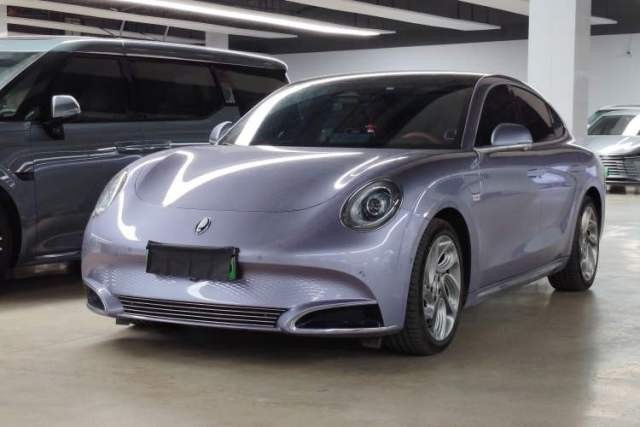
If you want an electric car in Ghana that does not look like every other electric car, the Ora Lightning Cat is the one to know. Built by GWM, Great Wall Motor, under its ORA electric brand, the Lightning Cat is a retro-styled, mid-size electric sedan. It is a real design statement carrying a 500 to 600 km battery, and it is sourced from the same Chinese market that already supplies Ghana with most of its used cars.
The short answer for a 2026 Ghana buyer
Yes, for the buyer who wants EV running costs and a distinctive car. The Lightning Cat is a medium-sized pure-electric sedan with a retro design, offered as a single-motor RWD at around 150 kW, or a dual-motor AWD up to 300 kW with a 0 to 100 km/h time near 4.3 seconds. Battery options run roughly 63.9 kWh and 79.6 kWh, for CLTC ranges around 500 km and 600 km. The AWD uses an 83.5 kWh pack.
Used Ora Lightning Cat prices in Ghana in 2026 run roughly GHS 200K to 260K, about USD 16K to 20.8K, for an early single-motor 500 km car, and GHS 250K to 320K, about USD 20K to 25.6K, for a 600 km or AWD unit, based on China-export-equivalent landed cost. Pick the 600 km RWD if you want the best balance of range and value.
Where the Lightning Cat sits in Ghana's 2026 EV mix
EV adoption in Ghana is early but real, and the cars arriving are increasingly Chinese, because China builds the world's widest range of affordable EVs and exports them left-hand drive, which Ghana requires. The Lightning Cat occupies an interesting niche. It is not a budget city runabout, and it is not a luxury flagship. It is a design-led mid-size sedan that competes on style as much as on price.
The powertrain is electric-only. A rear-mounted motor on RWD versions at around 150 kW, or dual motors on AWD at around 300 kW combined and about 680 N.m. A single-speed reduction gear drives the wheels, so there is no engine, no gearbox, and no oil changes. Charging is by AC for home use and DC fast-charging where available. The car is set up as a comfortable, refined cruiser rather than a track tool, even though the AWD's 4.3-second 0 to 100 km/h is genuinely quick.
Real numbers from Accra driving
Most Lightning Cats reaching Ghana are 2023 to 2024 China-export units. The configuration mix in Ghana imports is roughly 60% single-motor RWD 500 km, 30% RWD 600 km, and 10% dual-motor AWD.
Real-world range in Ghana works out like this. The 500 km CLTC car delivers approximately 380 to 430 km of usable range in mixed Accra driving, and the 600 km car delivers roughly 460 to 520 km. Air-conditioning load on hot Accra days reduces range by around 10 to 15%. Charging is the practical constraint. Home AC charging is the backbone of ownership, and public DC fast-charging is available at a small but growing number of Accra sites. As with any EV in Ghana, a reliable home charging point is effectively a prerequisite.
How to pick the right trim, battery and variant
Use this to match the configuration to your use.
| Variant | Battery and range (CLTC) | Drive | Notes for Ghana |
|---|---|---|---|
| Standard RWD | About 63.9 kWh, about 500 km | Single-motor RWD | Cheapest entry, ample range for Accra-region use |
| Long-range RWD | About 79.6 kWh, about 600 km | Single-motor RWD | Sweet spot, most range per cedi |
| Performance AWD | About 83.5 kWh, about 640 km NEDC | Dual-motor AWD | About 300 kW, 0 to 100 in about 4.3 s, the flagship |
The long-range RWD with the 600 km battery is the Ghana sweet spot. It comfortably covers Accra-region daily driving plus an inter-city run, and avoids the price step of the AWD. The Standard RWD is fine if your driving stays mostly urban. The AWD is for the buyer who specifically wants the performance.
Key specs table, ORA Lightning Cat
| Spec | Value |
|---|---|
| Powertrain | Single-motor RWD, about 150 kW, or dual-motor AWD, about 300 kW and about 680 N.m |
| Battery | About 63.9 kWh for 500 km, about 79.6 kWh for 600 km, 83.5 kWh for AWD, LFP or NMC depending on trim |
| Range (CLTC) | About 500 km or 600 km, AWD about 640 km NEDC |
| Real-world range (Ghana) | About 380 to 430 km on the 500 km trim, about 460 to 520 km on the 600 km trim |
| Performance | AWD 0 to 100 km/h about 4.3 s, top speed about 180 km/h |
| Body | Mid-size electric sedan and fastback, 5 seats |
| Charging | AC home charging, DC fast-charging at compatible stations |
| Key safety | Multi-airbag, ESC, driver-assist suite, advanced ADAS on higher trims |
Powertrain, battery and range figures from GWM ORA and public Lightning Cat references. Real-world range is observed Accra usage, not CLTC, so confirm against the specific unit.
Charging a Lightning Cat in Accra
Charging in Ghana still leans heavily on the home setup, and that is the right mental model for any Lightning Cat owner. A 7 kW home AC wallbox refills a depleted 79.6 kWh pack overnight comfortably. A standard household socket works in a pinch but is slow. Public DC fast-charging is the next layer, and the network is growing rather than mature. Sites near East Legon Mall, the airport business district and several Accra petrol forecourts now carry 60 to 120 kW units that bring the Lightning Cat from 20 to 80% in roughly 30 to 40 minutes.
If you live outside Accra, plan trips around known charging sites and treat home charging as the daily routine. The CCS2 inlet on the Lightning Cat is the standard most new chargers in Ghana use, so compatibility is not the bottleneck. Uptime and queue length are.
What a Lightning Cat costs in Ghana, new and used
Used Ora Lightning Cat prices in Ghana, China-export-equivalent and sampled in 2026, look like this.
| Configuration | Local price range (GHS) | USD approx |
|---|---|---|
| Standard RWD 500 km (2023) | 200K to 260K | About 16K to 20.8K |
| Long-range RWD 600 km (2023 to 24) | 240K to 300K | About 19.2K to 24K |
| Performance AWD (2023 to 24) | 270K to 340K | About 21.6K to 27.2K |
The Lightning Cat is China-built, so China-export is its native channel. A verified route through Guazi typically lands a 2023 to 2024 unit at or below the Tonaton and Jiji upper range, with an inspection of over 200 points, a battery state-of-health report and Tema documentation, on a four to six week lead time.
Want a like-for-like Lightning Cat quote? Browse inspected ORA stock and ask the Africa desk.
Source Quality Used Cars From China's #1 Auction Platform
Access 200,000 verified vehicles monthly. Bid in real-time and secure bulk inventory at highly competitive market rates.
The Lightning Cat Touring, the wagon sibling worth knowing
GWM also offers a Lightning Cat Touring, an estate or shooting-brake variant on the same platform. It carries the same electric powertrain choices and the same retro design DNA, but with a longer roofline, more rear headroom and a more practical boot. It is the answer for buyers who like the styling but need a sliver more space.
Touring units are rarer on the China-export channel than the sedan, but they do appear. If you want the look and feel of the Lightning Cat with a little more family practicality, ask the Africa desk to flag Touring stock specifically. Supply is thinner and lead times can stretch to the upper end of the four to six week window.
Five-year cost of running one in Ghana
For about 15,000 km a year of mixed driving on home charging, the picture works out as follows.
| Item (5 years, about 15,000 km a year) | Indicative range |
|---|---|
| Electricity (home charging) | GHS 20K to 30K, about USD 1.6K to 2.4K |
| Insurance (third-party, mid-tier) | GHS 14K to 22K, about USD 1.1K to 1.8K |
| Routine service (no oil cycles) | GHS 9K to 15K, about USD 720 to 1.2K |
| Tires (one full set) | GHS 6K to 10K, about USD 480 to 800 |
| Likely unscheduled repairs (12V, sensors) | GHS 7K to 14K, about USD 560 to 1.1K |
| 5-year total operating cost | About GHS 56K to 91K, about USD 4.5K to 7.3K |
This is well below the equivalent cost of a petrol sedan of similar size. Zero fuel, no oil changes, and regen-extended brake life. Parts availability in Ghana rates low to medium. The Lightning Cat is a newer, lower-volume model, so high-voltage and trim-specific parts route through GWM ORA's authorized channel or a verified China-export source, while routine items are straightforward. Insist on a battery state-of-health report at purchase.
Where it wins and where it lacks
Where it wins.
- A genuinely distinctive retro-modern design that stands apart from every other EV in Ghana
- Strong real-world range, around 460 to 520 km on the 600 km trim
- Low EV running costs, with no fuel, no oil, and regen-extended brakes
- The AWD version is genuinely fast, 0 to 100 km/h in about 4.3 s
- China-export native channel, with verified LHD
Where it lacks.
- Charging infrastructure in Ghana is still nascent, so a home charger is essential
- A lower-volume model, so parts and specialist service are thinner than for mainstream brands
- The fastback rear glass trades some boot access for the silhouette
- Resale value is still settling in Ghana for EVs generally
- Battery state-of-health must be verified, which is non-negotiable on any used EV
Inside the cabin
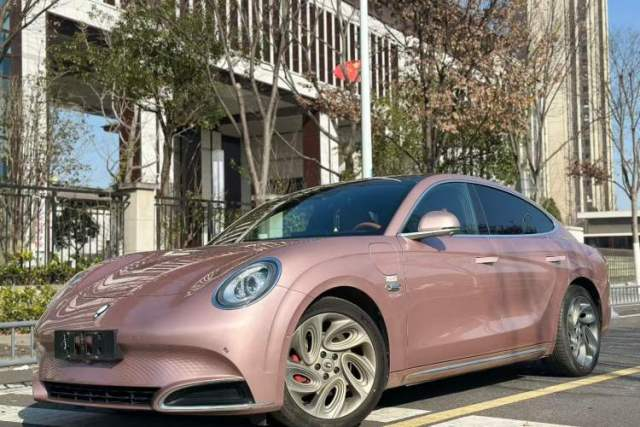
The Lightning Cat's interior carries the exterior's retro-modern theme inside. A clean, minimalist cabin is built around twin connected widescreen displays, with available two-tone leather, a panoramic glass roof and ambient lighting that lifts the night-time feel. The driving position is low and coupe-like, and material quality is a clear step above budget EVs. Standout features that matter in Ghana include strong air-conditioning, essential in the Accra climate, a wireless charging pad, the large dual-screen infotainment, and an advanced driver-assist suite on higher trims. The trade-off of the fastback roofline is rear headroom, fine for adults on shorter trips, tighter than a traditional three-box sedan over long distances.
Why the inspection report matters more than the badge on a used EV
For a dealer or a private buyer weighing a Lightning Cat, the one thing a listing photo never shows is the health of the battery underneath. That is the gap Guazi's process is built to close. Every car it handles goes through an inspection of over 200 points feeding a digital condition report, and on an EV that report carries a battery state-of-health read plus a cross-check of accident and maintenance records. On a lower-volume model like this one, where you cannot lean on a dense local service network, that verified picture of the specific car is what turns a good-looking listing into a safe buy.
Four buying channels compared
| Channel | Price | Verification | Lead time | Best for |
|---|---|---|---|---|
| Tonaton and Jiji | Lowest used | None | 1 to 2 weeks | EV-savvy buyers who can self-inspect |
| GWM and ORA dealer, where available | New plus limited used | Dealer warranty plus battery report | 1 to 7 days | Warranty and battery-service backstop |
| Guazi, China-export | At or below Tonaton upper | Inspection of over 200 points plus battery SoH | 4 to 6 weeks via Tema | Used 2023 and newer verified-LHD buyers |
| Facebook and social | Variable | Lowest signal | 1 to 2 weeks | Discovery only, never wire funds direct |
For a model this new in market, the safest routes are an authorized GWM ORA channel where present, or a verified China-export source with a battery state-of-health report. The China-export route is the Lightning Cat's native channel, since the car is China-built.
Talk to our Africa desk if you want a Lightning Cat inspected, including a battery state-of-health report, before it ships.
Final pick by budget
- Under GHS 260K, a 2023 Standard RWD 500 km. Distinctive design, ample urban range.
- GHS 260K to 300K, a 2023 to 2024 Long-range RWD 600 km. The range-and-value sweet spot.
- GHS 300K and up, a Performance AWD. The fast, fully-loaded flagship.
Whichever you choose, confirm it is LHD, has a documented battery state-of-health report, and that you can install a home charger.
Key Takeaways
The Ora Lightning Cat is a retro-styled mid-size electric sedan from GWM ORA. It is design-led, with a 500 to 600 km battery, and in mixed Accra driving you can expect roughly 380 to 430 km on the 500 km trim or 460 to 520 km on the 600 km trim of real-world range. The long-range RWD 600 km is the Ghana sweet spot, while the AWD is the 4.3-second performance flagship, and a Touring wagon variant exists for buyers who want the styling with more space. In 2026, used prices run GHS 200K to 340K depending on configuration. Whichever you buy, insist on LHD, a documented battery state-of-health report, and a verified China-export route. The Lightning Cat EV import Africa channel is the car's native source since it is China-built.
Summary
The Lightning Cat is the EV for the Ghana buyer who wants electric running costs without driving the same silhouette as everyone else. It backs the styling with real range, a low cost of ownership and a native China-export channel, and the only firm conditions are a home charger, verified LHD and a battery state-of-health report on the exact car. Settle those, and this is one of the more characterful electric sedans you can land at Tema in 2026.
Sources & References
- ORA Lightning Cat specifications, including battery, range, RWD and AWD, and performance: Ora Lightning Cat (Wikipedia) and GWM ORA Lightning Cat overview (ChinaPEV).
- GWM ORA brand and EV range context: GWM ORA model overview (CarsGuide).
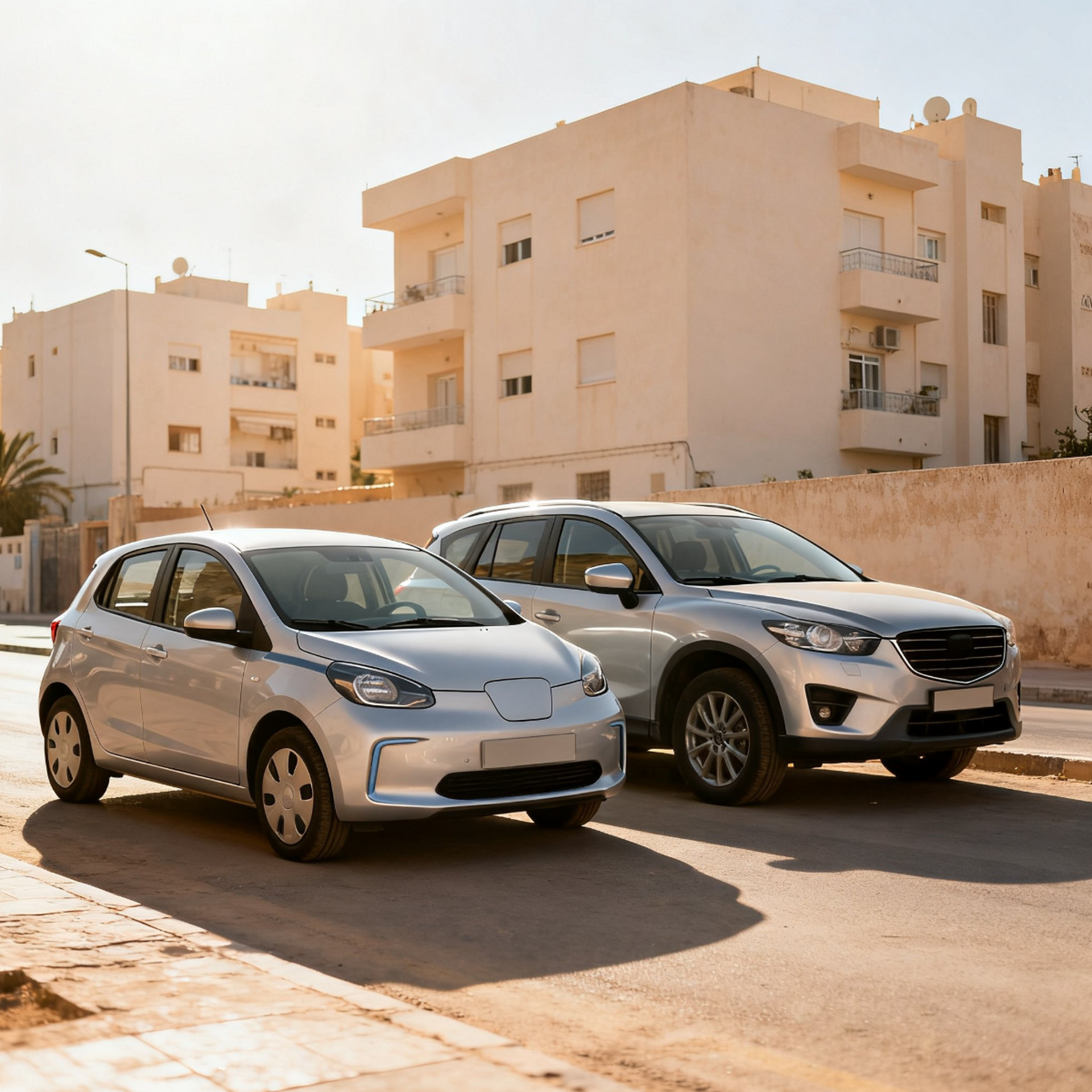
- Vehicle imagery in this article is AI-generated for editorial illustration and does not depict a specific real-world vehicle, owner or location.
- Guazi facts, including founded in 2015, more than 3 million cars sold, more than 30 million inspections, number-one used NEV platform in China, and an inspection of over 200 points: Guazi About.
Buy It Now

GradeSUsed ORA Lightning Cat 2022 555 km Luxury Edition Individual SellerIndividual Seller
 Guazi InspectedGuazi Inspected
Individual SellerIndividual SellerGuazi InspectedGuazi InspectedFOB Price:$18,140

About Us
Follow US


Copyright © 2015~2026 https://en.guazi.com/, Chongqing Guazi Enterprise Consulting Service Co., Ltd. All rights reserved.