

World Cup Special • Save up to $1000 on selected vehicles

Guazi
GlobalEnglish


How to Buy a Used Mercedes E-Class Without Inheriting Someone Else's Repair Bill
Article OverviewAn honest used Mercedes E-Class review: W212 vs W213, the engines to chase, the AIRMATIC air-suspension cost reality in plain numbers, the common problems, and the safe combination to buy.
Quick answers
- Is a used E-Class a good buy? Yes, when you buy the right combination. A serviced W213 with the OM654 diesel is a genuinely reliable luxury sedan. A cheap, unverified car with tired air suspension is a money pit.
- Which generation, W212 or W213? The W213 (2016 on) is the more reliable, modern choice. A W212 facelift (2013 to 2016) is the value option, but avoid the pre-2013 cars with unverified diesel injectors.
- What is the best engine? The W213 OM654 diesel (E220d) is the standout. It has one valve-train watch-item but is the reliable default most buyers should chase.
- Are the air suspension problems as bad as people say? They are expensive when they happen. AIRMATIC repairs commonly run 1,500 to 3,000 USD per corner and above 5,000 USD for a full system, so a neglected car must be inspected or avoided.
- Is it expensive to maintain? It can be, which is the whole point. Servicing is dominated by history. A documented car with a sound engine and suspension is affordable; a neglected one is not.
This review walks through why a used E-Class looks so cheap, the W212-versus-W213 choice, the engines, the air-suspension cost reality in plain numbers, the faults that cost money, and the safe combination to buy, plus why an inspection is non-negotiable on a car this complex.
A used Mercedes E-Class is one of the easiest ways to drive a genuinely luxurious sedan for executive-hatchback money, because the first owner already absorbed the brutal depreciation. That is the good news, and it is real. The catch is just as real and far more expensive: the cheapest E-Class is almost never the cheapest to own. Get the engine, the suspension, and the service history right and you have a bargain that feels like a far pricier car. Get them wrong and a single neglected system can cost more than the car is worth. This guide is about telling those two cars apart and getting the right one.
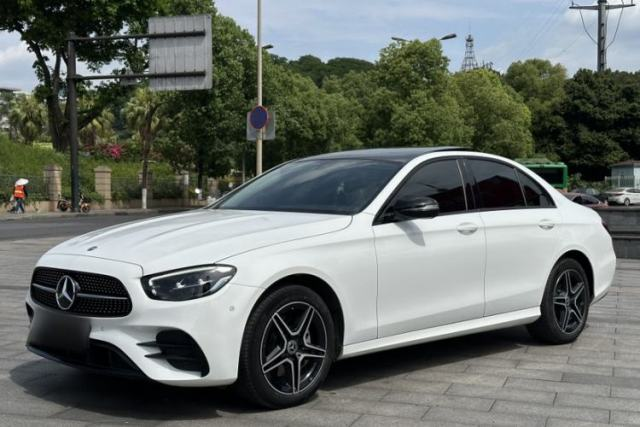
Why a used E-Class looks so cheap, and why that is the trap
The reason the E-Class is tempting is the same reason it is risky: depreciation. A car that cost 65,000 to 70,000 GBP new can be worth roughly half that after three years, a drop of around 30,000 GBP that the first owner swallowed and you did not. That is why a used E-Class wears a price that looks almost too good next to its original sticker.
The trap is that the purchase price is only the entry fee. This is a complex luxury sedan with air suspension, sophisticated diesels, and electronics that age expensively. On a budget supermini, one fault is an annoyance. On an E-Class, one neglected system, a tired air-suspension compressor, a set of worn injectors, a gearbox that never had its fluid changed, can cost more than the next three cheaper listings combined.
So the right way to read the whole used E-Class market is this: you are not shopping for the cheapest car. You are shopping for the best-maintained one you can find within budget. Everything that follows is built around that single idea.
W212 or W213, what each one actually is
The two generations in the used market are the W212 (2009 to 2016) and the W213 (2016 onward). A newer W214 exists, but the used volume and the value sit firmly in these two.
The W212 (2009 to 2016): the value-era E-Class, and why the 2013 facelift matters
The W212 is the cheap entry point, and within it the dividing line is the 2013 facelift. The post-2013 cars received an updated OM651 diesel and detail improvements that make them the sounder used buy. The pre-2013 cars are where the well-known diesel-injector story lives, covered below, and they are the ones to approach with the most caution. A clean, documented W212 facelift is a lot of car for the money. A cheap early one with no paperwork is a gamble.
Buy It Now
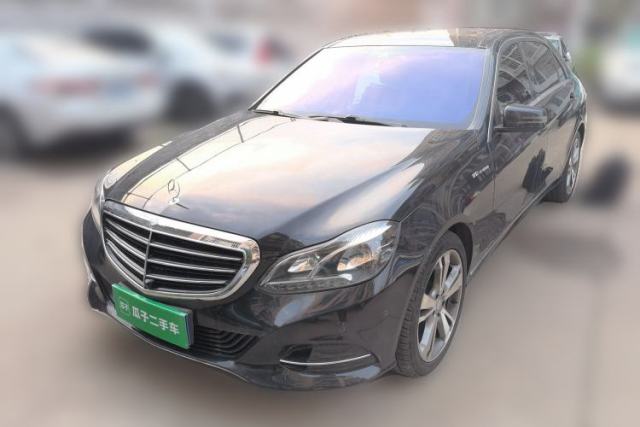
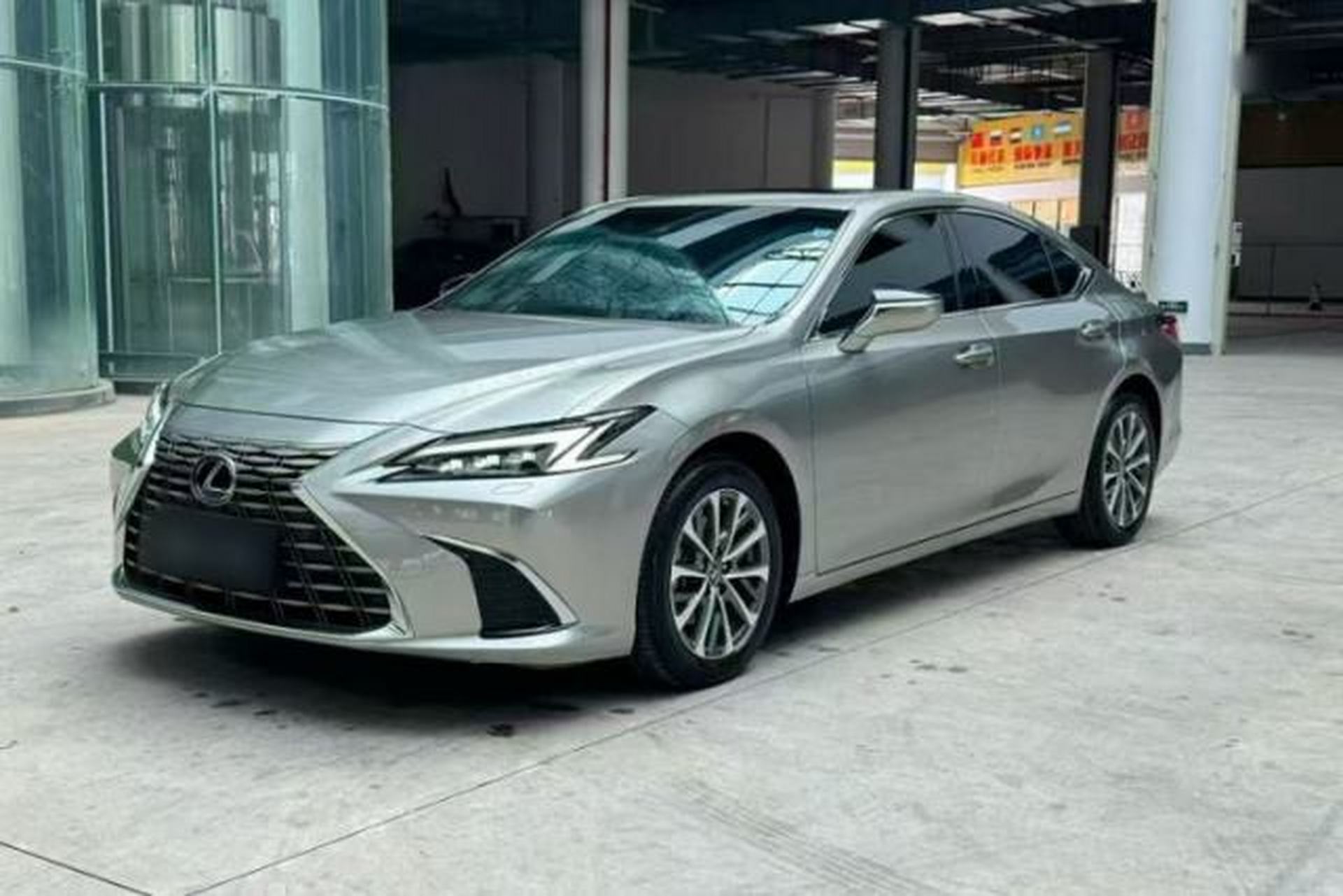
GradeSUsed Mercedes-Benz E-Class 2015 E 320 L 4MATIC Individual SellerIndividual Seller
 Guazi InspectedGuazi Inspected
Individual SellerIndividual SellerGuazi InspectedGuazi InspectedFOB Price:$10,624

The W213 (2016 on): the modern, more reliable choice, and the 2020 facelift
The W213 is the better car and, when serviced, a genuinely reliable luxury sedan. It moved to a new family of engines, sharper electronics, and a more modern cabin, and a 2020 facelift refreshed it further for the 2021 model year. This is the generation most used buyers should focus on. It still demands the same discipline on history and suspension, but it starts from a stronger base than the W212 and ages more gracefully.
Buy It Now
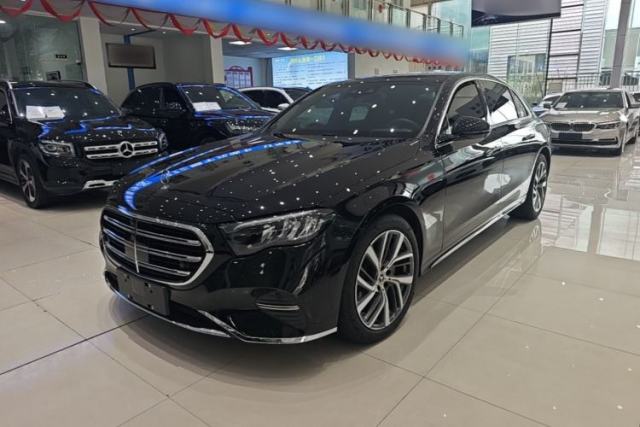
GradeSUsed Mercedes-Benz E-Class 2024 E 300 L Stylish Model Certified DealerCertified DealerGuazi InspectedGuazi Inspected
Certified DealerCertified DealerGuazi InspectedGuazi InspectedOriginal paint
Original paint
FOB Price:$48,958
The engines, and the one diesel most buyers should chase
Engine choice on an E-Class matters as much as the generation, because the running-cost gap between them is wide.
The W213 OM654 diesel (E220d): the reliable default, with one valve-train watch-item
The OM654 2.0 diesel in the E220d is the standout reliable choice across both generations. It is smooth, frugal for a car this size, and the engine most buyers should chase. There is one honest caveat: a documented valve-train watch-item, roller-rocker-arm wear that can show as a rough idle or an odd intake noise from around 100,000 km. It is worth listening for, but it does not undo the OM654's status as the safe default.
The W212 OM651 diesel: why the pre-2013 injector story changes which car you buy
The W212's OM651 2.1 diesel (E200, E220, E250 CDI) is where generation precision earns its keep. Pre-2013 versions are prone to piezo injector failure, which shows as rough running, black smoke, and rising consumption, typically between 150,000 and 200,000 km. The post-2013 facelift updated the engine and is the one to buy. This single fact is why "buy a W212" is not enough advice. You want a facelift car with a verified injector history, not an early one bought on price.
The petrols (M274, M276/M272 V6, the V8): power, and the running-cost reality
The petrols are the alternative if diesel does not suit your use. The M274 2.0 turbo (E200, E300) is the mainstream choice, though early W213 units saw piston and wrist-pin damage that was addressed under warranty, so confirm an early car is clear. The M276 and earlier M272 V6 in the E350 are smooth but thirstier, and early M272 units can show balance-shaft wear. The M278 twin-turbo V8 in the E500 and E550 is fast and characterful but carries heavy running costs. For most buyers, the petrols are a use-case choice, not the value default.
How reliable is a used E-Class, really
The honest answer has two halves. The W213 is a genuinely reliable luxury car, and the W212 is solid from the 2013 facelift onward. That is the good half, and it is true.
The other half is the one that decides outcomes. Mercedes E-Class reliability depends almost entirely on service history and which systems a given car carries, far more than on the model year alone. Two W213 E220ds of the same age can be completely different ownership propositions: one with a full Mercedes service record, fresh gearbox fluid, and steel suspension, the other with gaps in its history, original transmission fluid, and tired AIRMATIC. The badge and the year tell you almost nothing. The folder of receipts tells you everything. Treat any E-Class with an unverified history as an unknown, not a bargain.
The air suspension question, in plain numbers
The biggest single cost trap on a used E-Class is its air suspension, and the E-Class air suspension problems are worth stating in plain money rather than vague warnings. AIRMATIC gives the car a superb ride, but it is expensive when it fails. Front struts can develop slow leaks as early as 60,000 to 80,000 miles, with the rears following around 80,000 to 100,000. A single strut or corner commonly costs 1,500 to 3,000 USD to repair, and a full-system replacement runs above 5,000 USD.
That is why a neglected AIRMATIC car can be a money pit, and why many guides say avoid one unless you can budget for the work. The good news is that a healthy system is easy to sense-check on a test drive. The car should sit level when parked, rise evenly when started, and ride without sagging at one corner or pumping constantly. A car that sits low, takes time to rise, or leans is telling you something expensive. If you do not want the risk at all, a steel-sprung E-Class is the lower-risk buy, and there is no shame in choosing one.
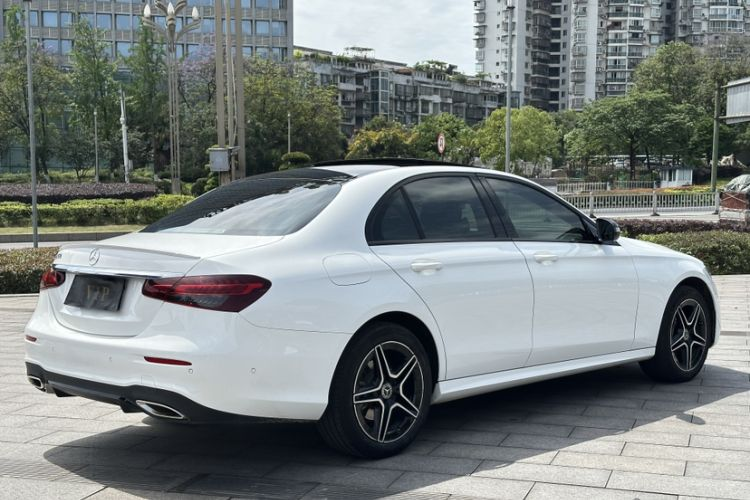
The faults that cost, and exactly what to check
Beyond the suspension, a few systems make up the rest of the Mercedes E-Class common problems checklist. None is a reason to walk away from a documented car, but each is a reason to verify before you buy.
Diesel injectors, DPF, AdBlue and NOx sensors: the diesel checklist
On the diesels, work through a short list. Confirm the injector history, especially on a pre-2013 W212. Check that the diesel particulate filter is healthy, which means looking for a history of longer journeys rather than only short city trips. On early W213 diesels, AdBlue tank and heater faults and NOx sensor failures are documented, so check for related warning lights and a clean fault scan. A diesel that has lived on the motorway and kept its receipts is the one you want.
Transmission fluid history, conductor plate and the electronics that age expensively
Some W212 7G-Tronic gearboxes suffer conductor-plate or valve-body issues, and a documented fluid-change history is vital, because a gearbox fluid change is a few hundred EUR while a gearbox repair is 2,000 to 5,000 EUR. Some W213 9G-Tronic cars show low-speed jerkiness that a transmission software update fixes, so ask whether it has been done. Across both, electronics and sensor glitches tend to rise after three to five years, so a full fault-code scan before purchase is money well spent. Here is the safe-combination picture in one place:
| Generation and engine | Verdict | What to confirm |
|---|---|---|
| W213 E220d OM654 (2017 to 2021) | The safe default | Full service history, gearbox fluid, valve-train noise |
| W212 facelift OM651 (2013 to 2016) | Strong value | Injector history, fluid change, suspension state |
| W213 E200/E300 M274 petrol | Good if early piston issue cleared | Warranty work done, fault scan |
| W212 pre-2013 OM651 | Approach with caution | Verified injectors, full history |
| Any car with AIRMATIC | Inspect or budget | Level stance, even rise, no sag or constant pumping |
| Any car, unverified history | Treat as unknown | Independent inspection before purchase |
The safe combination to buy, and who the E-Class suits
Pulling it together, the safe combination is clear. The best used buys cluster on a W213 E200d or E220d with the OM654 (2017 to 2021), the 9G-Tronic with a fluid-change history, and a full service record, or a W212 facelift (2013 to 2016) with the updated OM651. The cars to avoid are an early W212 with unverified injectors and any AIRMATIC car bought without an inspection.
On fit, the E-Class suits a long-distance driver who values comfort and refinement and will keep a car well, and especially a high-mileage motorway commuter, for whom the OM654 diesel is close to ideal. It is the wrong car for a buyer who wants the lowest possible running costs and minimal fuss, because even a good E-Class asks for proper maintenance. If your budget covers the purchase but not the upkeep, a simpler car is the honest answer.
Buying a used E-Class the smart way, and how Guazi helps
The same E-Class generations are inspected across the markets Guazi handles, so the buying logic travels. The principle is the one this whole guide rests on: on a complex luxury sedan, one neglected system outweighs several cheaper listings, so verified condition is the entire game.
Guazi is one of China's largest used-car platforms, and every car it handles goes through a 200+ point inspection by certified technicians that feeds a full digital condition report. On an E-Class, that means the AIRMATIC ride height and compressor health, the diesel injector and DPF behavior, the transmission fluid history, and the ageing electronics are recorded as checked data rather than guessed from photos. It does not make a cheap car cheaper. It tells you whether the cheap car is the bargain or the trap, which on this model is the only question that matters.
See how every car is inspected
The bottom line on the used E-Class
- Value: heavy depreciation makes the E-Class look cheap, but the purchase price is only the entry fee.
- Generation: the W213 is the modern, reliable choice; a W212 facelift is the value pick, with pre-2013 cars to avoid.
- Engine: chase the W213 OM654 diesel; verify the W212's injectors and any early petrol's warranty work.
- Air suspension: the single biggest cost trap, so inspect AIRMATIC, budget for it, or buy steel-sprung.
- Reliability: genuinely good when serviced, and almost entirely dependent on history rather than year.
- Best buy: a documented W213 E220d or a W212 facelift OM651, inspected before purchase.
Summary
A used Mercedes E-Class can be one of the smartest luxury buys on the market or one of the most painful, and which one you get is almost entirely in your hands. The depreciation that makes it tempting is real, but so is the cost of a neglected complex sedan. Focus on a W213 with the OM654 diesel or a clean W212 facelift, treat the air suspension and the service history as the decision rather than a footnote, and confirm it all with a proper inspection. Do that, and you drive away in a genuinely luxurious car for sensible money, without inheriting the last owner's repair bill.
Ready to source an inspected used car from China?
Browse Guazi's export-ready inventory →


About Us
Follow US


Copyright © 2015~2026 https://en.guazi.com/, Chongqing Guazi Enterprise Consulting Service Co., Ltd. All rights reserved.