

World Cup Special • Save up to $1000 on selected vehicles

Guazi
GlobalEnglish


Everything That Goes Wrong on a Used BMW 3 Series, and How to Buy One That Won't
Article OverviewAn honest used BMW 3 Series review: E90 vs F30 vs G20, the timing-chain truth by engine, run-flat and VANOS costs, the years to avoid, indicative prices, and the test-drive and inspection checks.
Quick answers
- Is a used 3 Series a good buy? Yes, when you buy the right one. A documented F30 with the B48 or B47 engine, or any G20, is an excellent car. A neglected early F30 is a trap.
- Which generation and engine, and which years to avoid? Chase a B48 petrol or B47 diesel F30 facelift (roughly 2016 to 2019) or a G20 (2019 on). The E90 N52 328i is the reliable older bargain. Scrutinise the early F30 N20 (2012 to 2015) and the N47 diesel hardest.
- Does it have timing-chain problems? On specific engines, yes. The early F30 N20 petrol and the N47 diesel are the worry. The later B48 and B47, the E90 N52, and the G20 are not affected.
- What goes wrong? Timing chains on those early engines, some oil consumption, VANOS, electric water pumps, plastic thermostat housings, and the cost of run-flat tires.
- Is it expensive to run? Moderate when sorted, around 900 USD a year on average over five years, but run-flats and deferred maintenance can push it up.
This review covers the generation map with the timing-chain reputation placed correctly, an engine-by-engine verdict, the ownership costs people underestimate, indicative prices and the test-drive tells, and the inspection checklist that turns those unknowns into knowns.
The used BMW 3 Series is the sports sedan almost everyone wants, and one of the easier ones to get badly wrong. It is not a bad car. It is an unforgiving one. The gap between a 3 Series that runs sweetly to 200,000 km and one that drains your wallet at 120,000 is almost entirely about which generation, which engine, and whether the last owner actually serviced it. The timing-chain horror stories you have heard are real, but only on certain engines, and that distinction is the difference between a brilliant buy and a costly mistake. This guide lays out that decision plainly, so you can buy the 3 Series that won't go wrong.
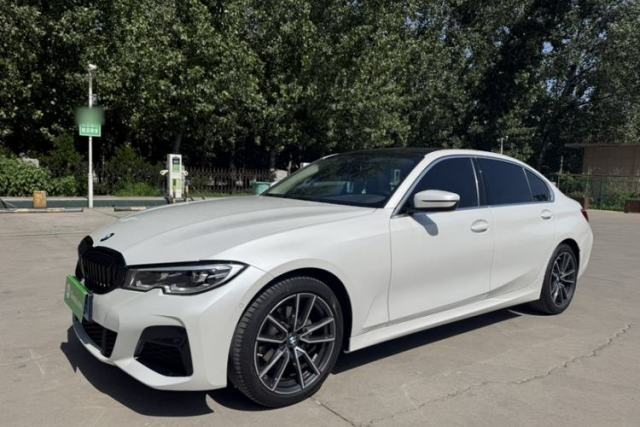
Why the 3 Series is so tempting, and why that's a trap if you're casual about it
The 3 Series is tempting for a simple reason: it is the benchmark. It drives better than almost anything at its price, the used supply is huge and cheap, and depreciation of roughly 47 to 53% over five years means a car that once cost a fortune now looks like a steal. For a keen driver on a budget, nothing else feels quite like it for the money.
The catch is that BMW running costs punish neglect. This is a sophisticated German sedan with engines, cooling systems, and electronics that all reward maintenance and bite back when it is skipped. A previous owner who deferred servicing to save money has not saved you anything. They have handed you the bill, with interest.
So the car you buy must come with proof it was looked after. That is the thread running through this entire guide. The 3 Series rewards the buyer who chooses the documented car and quietly ruins the one who chases the cheapest listing.
E90, F30 or G20, and where the bad reputation actually belongs
The three generations in the used market are the E90 (2005 to 2013), the F30 (2012 to 2019), and the G20 (2019 onward). They are very different ownership propositions, and crucially, the model's reputation is split cleanly by which engine sits under the hood.
E90 (2005 to 2013): the last naturally aspirated cars, and why the N52 328i is the bargain
The E90 is the old-school choice and home to one of BMW's most reliable modern engines, the N52 inline-six found in the 325i, 328i, and 330i. A well-kept N52 328i is the reliable bargain of the range, naturally aspirated, smooth, and free of the timing-chain worry that haunts the later four-cylinders. The turbocharged N54 (335i) and later N55 add power and complexity, including some known niggles covered below, but for buyers who want a simple, durable older 3 Series, the N52 is the one to seek.
Buy It Now
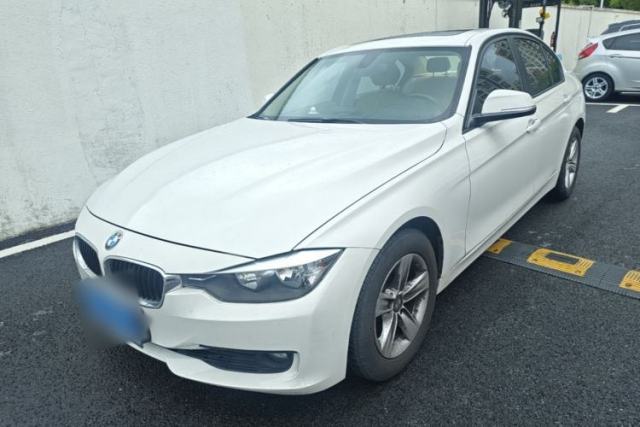
GradeAUsed BMW 3 Series 2013 320i Active Edition Certified DealerCertified Dealer
 Guazi InspectedGuazi Inspected
Certified DealerCertified DealerGuazi InspectedGuazi InspectedFOB Price:$7,544

F30 (2012 to 2019): the timing-chain early cars vs the sorted B48/B47 from around 2016
The F30 makes up the bulk of today's used pool, and it is the generation where getting the engine right matters most. Early F30s carry the timing-chain reputation on the N20 petrol and N47 diesel, which is where the fear comes from. But from around 2015 to 2016, BMW switched to the B48 petrol and B47 diesel, which fix the problem with a reinforced setup. A B48 or B47 F30 facelift is a genuinely strong used buy. An early N20 or N47 without documented chain work is exactly the car to scrutinise. Same shape, very different risk.
Buy It Now

GradeAUsed BMW 3 Series 2019 320i M Sport PackageCertified DealerCertified DealerGuazi InspectedGuazi Inspected
Certified DealerCertified DealerGuazi InspectedGuazi InspectedFOB Price:$13,884$14,284
G20 (2019 on): the genuinely reliable modern choice
The G20 is the modern, genuinely reliable generation, and if your budget reaches it, the easiest one to recommend. It uses the B58 six-cylinder and the B48 and B47 four-cylinders, all sound engines, and it scored about 97.5% and ranked near the top of its class in the 2024 What Car? reliability survey. It still benefits from a service history like any car, but it starts from the strongest base of the three.
The engines, ranked by how much they'll worry you
Engine choice is where the 3 Series decision is really made. Here is the honest order, from the ones to check hardest to the ones you can largely trust.
The timing-chain question: F30 N20 petrol and N47 diesel vs the later B-series
This is the BMW N20 timing chain issue everyone has read about, and it deserves precision. The F30 N20 petrol (roughly 2012 to 2015) uses plastic timing-chain guides that degrade over time, and in a worst case the chain can skip teeth or snap, destroying valves and pistons. Failures have been reported as early as 40,000 to 60,000 miles and commonly between 60,000 and 90,000. The N47 diesel (around 2012 to 2014 or 2015) is similarly infamous for chain stretch, made worse because the chain sits at the rear of the engine, so replacement is labor-intensive and expensive, roughly 2,500 to 3,500 GBP. Both issues were substantially resolved by 2015, and the later B48 and B47 use a reinforced setup that solves them. The single most valuable check on any of these cars is listening for a rattle on a cold start.
The turbocharged sixes (N54/N55) and the oil, fuel-pump and charge-pipe notes
The turbocharged sixes are fast and rewarding but bring their own checklist. Some N20s and the turbo sixes show higher-than-expected oil consumption before 100,000 km, so look for oil-burning evidence and top-up history. Turbo hoses and, on the N55, the plastic charge pipe can crack under boost around 60,000 to 100,000 miles. The N54's high-pressure fuel pump is a known weak point. None of these is a deal-breaker on a documented car, but each is a reason to check the service record and scan for fault codes.
The reliable picks: E90 N52, F30 B48/B47, G20 B58, and what each still needs checked
The reliable picks are the E90 N52, the F30 B48 petrol and B47 diesel, and the G20 B58. These are the engines that let you relax, but "relax" does not mean "skip the checks." Even on these, confirm a full service history, look for the wear items in the next section, and run a fault scan. A sound engine in a neglected car is still a neglected car. Here is the picture in one place:
| Generation and engine | Reliability verdict | What still needs checking |
|---|---|---|
| E90 N52 (328i, 330i) | Reliable bargain | VANOS, water pump, thermostat housing on higher mileage |
| F30 B48 / B47 (from ~2016) | Strong, sorted buy | Full service history, oil level, fault scan |
| G20 B58 / B48 / B47 (2019 on) | The most reliable | Service record, fluid history |
| F30 N20 petrol (2012 to 2015) | Scrutinise hardest | Cold-start rattle, documented chain work, oil use |
| F30 N47 diesel (to ~2015) | Scrutinise hardest | Rear timing-chain wear, proof of any chain work |
| E90 N54 (335i) | Rewarding but complex | HPFP, oil consumption, charge pipe |
The ownership costs people underestimate
Beyond the engines, a few running costs catch buyers off guard. They are not faults so much as the price of running the car, and budgeting for them is the difference between a happy ownership and a resentful one.
Run-flat tires are the big one. Most 3 Series ride on run-flats, which cost meaningfully more to replace, commonly around 350 to 700 USD per tire and roughly 1,100 to 1,400 USD for a set. Many owners switch to conventional tires plus a repair kit to cut the cost. This is a running-cost reality, not a defect, but it surprises people, so factor it in.
The rest are age and mileage wear items. VANOS, BMW's variable valve timing, can develop faults around 70,000 to 100,000 miles. On the older sixes, the electric water pump (roughly 80,000 to 120,000 miles) and the plastic thermostat housing (70,000 to 100,000 miles) are known wear items. Electrical and body-control glitches, warning lights and central locking, appear with age. The ZF 8-speed automatic is robust but benefits from a fluid-change history. The honest message on all of these is the same: budget for them and check for them, rather than fear them. Here is the cost-reality checklist:
| Item | Typical onset | What it means for you |
|---|---|---|
| Run-flat tires | Any time | 350 to 700 USD per tire; many switch to conventional |
| VANOS | 70,000 to 100,000 miles | Rough running or codes; check on test drive |
| Electric water pump (older sixes) | 80,000 to 120,000 miles | Wear item; confirm if already replaced |
| Thermostat housing (older sixes) | 70,000 to 100,000 miles | Plastic part; check for coolant leaks |
| ZF 8-speed automatic | High mileage | Robust; wants fluid-change history |
| Electrics and body control | With age | Warning lights, locking; fault scan |
What a used 3 Series should cost, and the test-drive tells
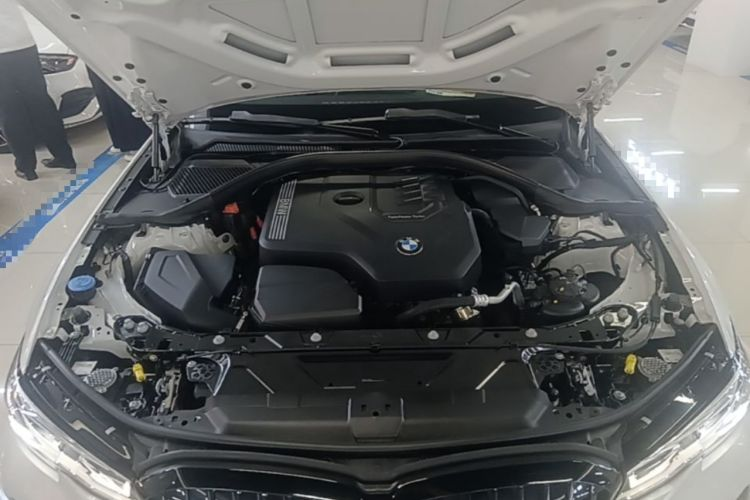
On the used BMW 3 Series price, the steep depreciation curve is your friend on a sorted later car and your trap on a neglected early one. As an indicative guide, expect older E90 N52 cars at the affordable end, early F30s cheap but to be checked hard, sorted F30 B48 and B47 facelift cars in the middle, and G20s at the top of the used range. These are indicative USD and EUR bands only, they vary by market and tax treatment, and you should re-confirm against current listings before you commit.
| Generation and engine | Indicative used position | Notes |
|---|---|---|
| E90 N52 328i / 330i | Lowest | Reliable bargain if documented |
| F30 N20 / N47 (early) | Low | Cheap, but check timing chain hardest |
| F30 B48 / B47 (facelift) | Mid | The value sweet spot |
| G20 (2019 on) | Highest | Most reliable, newest, priciest used |
The test-drive tells are simple and powerful. Start the car from cold yourself and listen for any rattle in the first seconds, the key timing-chain check. Look under the oil cap and check the dipstick for evidence of oil burning. Have a fault-code scan run before you buy, which surfaces VANOS, sensor, and electrical issues a polished listing hides. A clean cold start, a clean oil check, and a clean scan are worth more than any photo or sales pitch.
Who should buy a used 3 Series, and who shouldn't
The verdict on BMW 3 Series reliability is genuinely positive, with a condition attached. The 3 Series is superb for a buyer who will choose a documented B48 or B47 F30, or a G20, and then maintain it. For that person it delivers a driving experience nothing else at the price matches, with reliability to match when the right car is chosen.
It is the wrong car for someone who wants cheap, hands-off, fix-nothing motoring. If your plan is to buy the cheapest 3 Series and never spend another penny, the car will punish that plan, especially if it turns out to be an early N20 or N47. For low-fuss, low-cost ownership with no interest in maintenance, a simpler car is the honest recommendation.
Buying a used 3 Series the smart way, and how Guazi helps
The same E90, F30, and G20 generations flow across the markets Guazi inspects, so the buying logic travels. The 3 Series is exactly the complex German sedan where verified condition pays for itself, because the price spread between a sorted car and a tired one hides the timing-chain, VANOS, and oil-consumption risk. An inspection turns those unknowns into knowns.
Guazi is one of China's largest used-car platforms, active in 50+ markets, and every car it handles goes through a 200+ point inspection by certified technicians that feeds a full digital condition report. On a 3 Series, that means the cold-start behavior, any evidence of chain work, the oil-consumption picture, the cooling-system wear items, and a full fault-code scan are recorded as checked data rather than guessed from a photo. It does not change the price ladder. It tells you which car on it is the sorted one and which is the trap.
See how every car is inspected →
The bottom line on the used 3 Series
- Value: the benchmark drive at a tempting price, thanks to steep depreciation, but only on the right car.
- Generation: chase a B48 or B47 F30 facelift or a G20; the E90 N52 328i is the reliable older bargain.
- Timing chain: a real worry on the early F30 N20 and N47 only, solved by the later B48 and B47.
- Costs: budget for run-flats, VANOS, and cooling wear on older sixes rather than fearing them.
- Reliability: excellent when you buy a documented later car, punishing when you chase the cheapest early one.
- Best buy: a documented B48 or B47 F30, or a G20, inspected with a clean cold start and fault scan.
Summary
The used BMW 3 Series is one of the most rewarding cars you can buy for the money and one of the easiest to get wrong, and the engine you pick decides which. Place the timing-chain reputation where it belongs, on the early F30 N20 and N47, and the rest of the range opens up: a documented B48 or B47 F30, a G20, or a clean E90 N52 328i are all genuinely strong buys. Budget for the run-flats and the wear items, check the cold start and the fault codes, and confirm it all with a proper inspection. Do that, and the 3 Series gives you the benchmark drive without the repair bill that catches casual buyers out.
Ready to source an inspected used car from China?
Browse Guazi's export-ready inventory →








About Us
Follow US


Copyright © 2015~2026 https://en.guazi.com/, Chongqing Guazi Enterprise Consulting Service Co., Ltd. All rights reserved.