


Guazi
GlobalEnglish


Makes
Buy It NowAuctionsUp to 160 psPort StockAll VehiclesPopular Makes


Shop By Type


Popular Models


Shop By Budget

Poland's Smartest Bridge to Electric Is a Chinese Plug-in Hybrid, and How to Buy One Well
Article OverviewThe best plug-in hybrids to buy in Poland in 2026, led by the BYD Seal U and Chery Tiggo, with PLN prices, real winter EV range, and the used-battery truth.
Picture the driver this guide is really for. You do most of your kilometres around town, the school run, the office, the supermarket, and you would happily do all of that on electricity if it were not for the two trips a year to the coast or to family three voivodeships away, and for the small voice that asks what happens when it is minus twelve outside and the nearest fast charger is occupied. You are not anti-electric. You are anti-stranded. For that driver the used plug-in hybrid Poland buyers keep circling back to is the rational answer, daily-electric for the commute with a petrol engine sitting behind it for the days that do not cooperate, and the sharpest-value cars in that exact niche right now are not German. They are Chinese, and the two names that lead are the BYD Seal U and the Chery Tiggo.
This guide does three honest things. It names the plug-in hybrids actually worth buying in Poland and gives you the prices in PLN. It is candid that the genuinely used market for these particular cars is still young, so most of what you will find is nearly-new rather than five years old, and it tells you how to buy that wisely. And it covers the one subject the brochures will never raise, which is how to read the battery on a plug-in that has already been on the road, because that single check is what separates a clever buy from an expensive regret.
By BYD.COM
Why a plug-in hybrid makes sense in Poland, and who it is really for
The plug-in hybrid is a compromise, and the word "compromise" usually sounds like a criticism. Here it is the whole point. A PHEV carries a battery big enough to cover a normal Polish commute on electricity alone, typically somewhere between 70 and 130 kilometres of claimed range depending on the car, and a conventional petrol engine that takes over the moment the battery is flat or the trip is long. Charge it overnight at home and your weekday driving is effectively electric and cheap. Point it at Gdańsk on a Friday and it behaves like an ordinary petrol car, no range maths, no charging stops you did not plan. You get the daily economy of an EV without ever inheriting an EV's worst day.
That balance suits Poland specifically. The public charging network is growing quickly but it is still uneven once you leave the big cities, and a Polish winter is long enough and cold enough that pure-electric range takes a real seasonal haircut. A plug-in hedges both of those problems at once. The car the segment is built around is the SUV, which happens to be the fastest-growing slice of the Polish used market, so a plug-in hybrid SUV sits right where buyer demand and buyer caution overlap. Add the incentive backdrop of the NaszEauto era, which has nudged Polish buyers toward electrified cars in general, and the case for a plug-in as a first step into electrification is stronger here than the bare spec sheet suggests.
Who is it not for? If you can charge at home and your life genuinely never needs more than 300 kilometres in a day, a full EV will be cheaper to run and simpler to own, and you should read our companion guide to used electric cars in Poland instead. The plug-in earns its keep precisely for the driver who is not there yet, who wants most of the EV benefit while keeping the petrol safety net for another few years.
The honest bit first: is there even a used market for these yet?
Here is the thing the cheerful round-ups skip. BYD and Chery arrived in Poland recently, which means a deep pool of three- and four-year-old used Seal Us and Tiggos simply does not exist in 2026. Most of what you will find is nearly-new: ex-demonstrator cars, low-mileage early private resales, cancelled orders, and dealer stock that has turned over once. Pretending otherwise would set you up for a frustrating search.
So reframe the goal, because the reframe is genuinely good news. Treat this as a guide to the best plug-in hybrids to buy in Poland, including how to buy one nearly-new and wisely, rather than a hunt for a bargain-basement high-mileage car that is not on the market yet. A nearly-new plug-in has real advantages. It is still inside its manufacturer warranty, including the long battery warranty that matters most on this kind of car. It has depreciated off the new price, so you are not paying the showroom premium. And because it is young, its battery has barely aged, which removes most of the risk that makes used plug-ins tricky in the first place. The discipline that follows, reading build dates, checking the battery, confirming history, matters from day one and matters more with every year the car gains, so learning it now pays off whenever you buy.
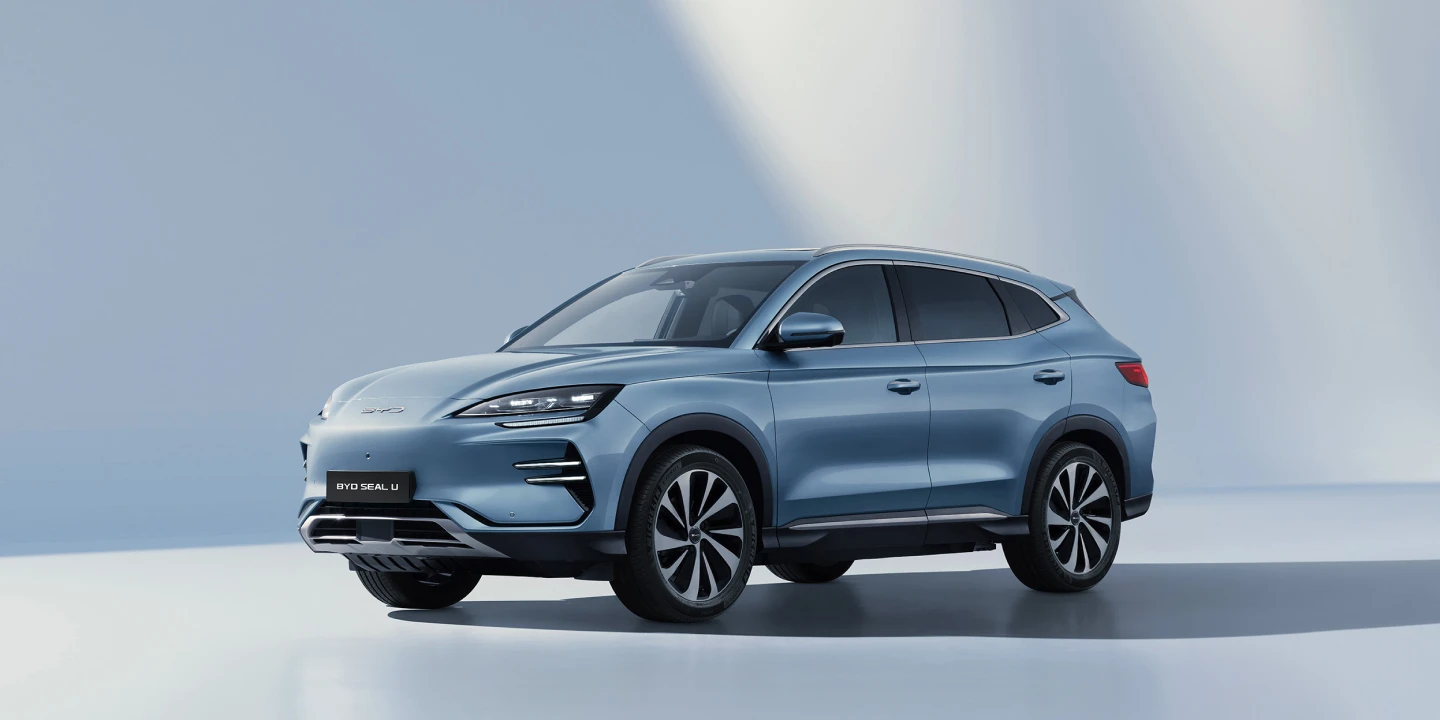
BYD Seal U DM-i, the value plug-in SUV that anchors the segment
If one car defines the value end of this segment in Poland, it is the BYD Seal U Poland buyers keep landing on, sold here as the Seal U DM-i. It is a mid-size family SUV, roomy and quietly well-finished, and it undercuts the established European plug-in SUVs on price by a margin that makes people look twice. DM-i is BYD's plug-in system, a 1.5-litre petrol engine paired with an electric motor and a lithium-iron-phosphate battery, tuned to run on electricity as much as possible and to use the engine efficiently when it does kick in.
What it costs in Poland and what you get
In Poland the Seal U DM-i starts from roughly 169,900 PLN and climbs toward about 214,900 PLN depending on trim, battery choice, and colour. The two battery options are the part to understand, because they change the car's character. The smaller pack delivers a claimed electric-only range of around 80 kilometres, while the larger 26.6 kWh pack pushes the claimed figure to about 125 kilometres, and BYD quotes a combined petrol-plus-electric range of up to around 1,125 kilometres for the long-range version. The system makes roughly 160 kW, about 218 horsepower, with 300 Nm of torque, so it is comfortably brisk rather than sporty. Treat every range number as a maker's laboratory figure and assume real life, and a Polish winter in particular, will come in lower. We get into exactly how much lower further down.
Who it suits and what to check on a used one
The Seal U DM-i is for the family that wants space, a low monthly running cost, and a recognisable amount of electric range without paying German-premium money. On a nearly-new example, three things deserve your attention. Confirm which battery the car has, because the price gap between the two packs is real and the range difference is large. Ask for the exact build date and match it to the registration, since a young plug-in's value rests heavily on it genuinely being young. And request a battery state-of-health read-out, which on a car this new should be close to as-new and gives you a clean baseline. None of this is exotic. It is the same discipline a careful buyer applies to any used car, with the battery added as the one extra line that a plug-in demands.
Chery Tiggo Super Hybrid, the 7, 8, and the Tiggo 9 flagship
If BYD anchors the segment, Chery fills it out. The Chery Tiggo plug-in hybrid range, sold under the Super Hybrid badge, spans a value core and a genuine flagship, which means there is usually a Tiggo to match the budget and the need. Chery has scaled fast in Poland, marking its five-millionth global delivery with Polish events and building out a nationwide dealer network, so while the brand is new here it is not a fly-by-night arrival. Treat that as reassurance about parts and service reach, not as a claim to any particular Polish market share, which would be premature to assert.
Tiggo 7 and Tiggo 8: the value core
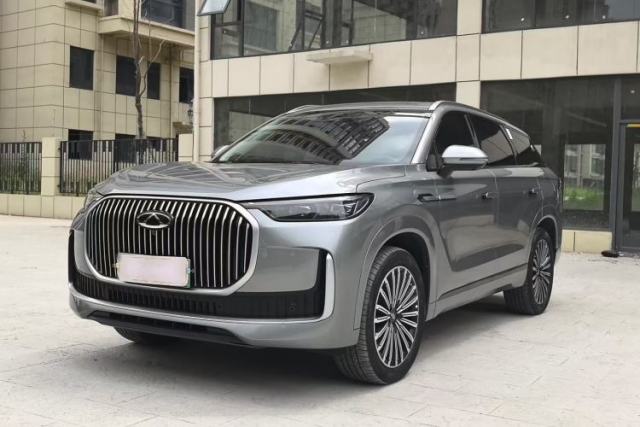
The Tiggo 7 Super Hybrid is the sweet spot for many buyers. It pairs a 1.5-litre turbo petrol engine with an 18.3 kWh battery and an electric motor for a combined output of around 201 horsepower and a claimed electric-only range of roughly 90 kilometres, and reviewers across Europe have repeatedly flagged it as one of the best-value plug-in hybrids on sale. The Tiggo 8 Super Hybrid steps up in size to a seven-seater, trades a little electric range for space and pulling power with a claimed electric-only figure near 75 kilometres, and suits the larger family that still wants the daily-electric habit. Polish PLN pricing for the 7 and 8 moves with trim and dealer, so confirm the current figure on Chery's Polish site or with a dealer at the time you buy rather than trusting a number quoted months earlier.
Buy It Now
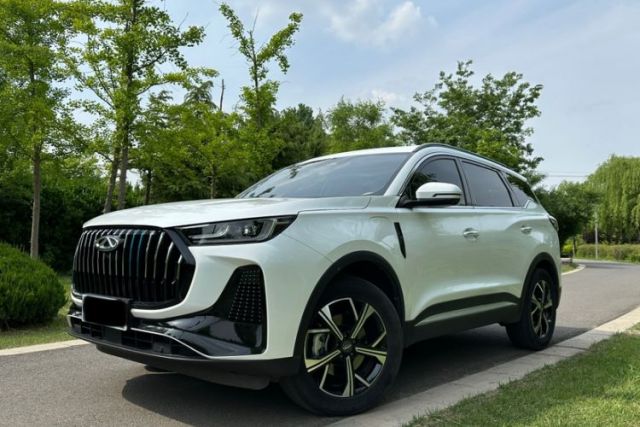
GradeSUsed Chery Tiggo 7 PLUS New Energy 2023 1.5T Zhiyuan Trim Certified DealerCertified Dealer
 Guazi InspectedGuazi Inspected
Certified DealerCertified DealerGuazi InspectedGuazi InspectedOriginal paint
Original paint
FOB Price:$11,445$11,945

Tiggo 9: the flagship plug-in
At the top sits the Tiggo 9 PHEV, which launched in Poland at around 209,900 PLN with a nationwide dealer rollout. It is the most powerful of the family by a distance, with a system output in the region of 428 horsepower and a claimed electric-only range above 147 kilometres, which is unusually high for a plug-in and means a genuinely long electric commute is on the table before the petrol engine is needed at all. This is the Tiggo for the buyer who wants the long-electric-range plus full-size-SUV combination and is comparing it against pricier European flagships, where on paper it offers a lot of car for the money.
Which Tiggo is for whom, and what to check
Match the car to the life. The Tiggo 7 is the everyday value pick, the Tiggo 8 is the seven-seat family option, and the Tiggo 9 is the long-range flagship. On any used or nearly-new Tiggo the checklist mirrors the Seal U: confirm the precise variant and battery, match the build date to the registration, and get the battery state-of-health figure in writing. With the model line still young in Poland, most examples you meet will be low-mileage, which works in your favour on the one variable, battery age, that matters most.
How far they really go on electric, and what a Polish winter does to it
Every electric-range number in the section above is a maker's figure measured on a standard test cycle in mild conditions, and the honest translation is that your real-world range will be lower, sometimes a lot lower, in a Polish January. Cold weather hurts a plug-in's electric range in two compounding ways. The battery itself delivers less of its stored energy when it is cold, and the car spends a chunk of that energy heating the cabin and the battery rather than turning the wheels. The practical result is that a plug-in claiming 90 kilometres of electric range in the brochure might give you 60 to 65 on a freezing morning with the heater running, and a car claiming 80 might dip toward 55.
Both the BYD DM-i and the Chery Super Hybrid use lithium-iron-phosphate chemistry, which is durable and safe but is a little more sensitive to cold than some other battery types, and charging can slow noticeably below freezing. There is a sensible counterweight to all of this. The very reason a plug-in suits Poland is that the petrol engine absorbs the cold-weather shortfall without drama, so a shorter winter electric range is an inconvenience rather than a problem. You charge what you can, you drive electric for as far as it lasts, and the engine quietly covers the rest. If you want the full picture of where and how to charge across the country, including home wallbox versus public charging, our guide to EV charging in Poland goes deep on it. For buying purposes, the rule is simple: read the claimed range, mentally subtract a winter margin, and judge whether the realistic electric range still covers your daily distance. For most Polish commutes, even the winter figure does.
The battery-health truth for a used plug-in hybrid
This is the section that earns the price of the whole car, so read it slowly. On a used or nearly-new plug-in hybrid, the battery is the single most valuable component and the single biggest variable in whether you have bought well, and the uncomfortable fact is that batteries do not all age the same way. A large ADAC study of around 28,000 plug-in hybrids found enormous brand-to-brand differences in how well the battery held its capacity over time. Some cars retained close to 90% of their battery health after 200,000 kilometres, while others had lost more than 30% over a comparable life. That is not a rounding error. It is the difference between a plug-in that still does its job in year eight and one whose electric range has quietly collapsed.
Why does this matter so much in money terms? Because a plug-in's high-voltage battery is expensive to replace, so its state of health effectively sets the car's real value. Two examples of the same model, same year, same mileage can be worth very different amounts if one has been charged and cared for well and the other has not, and you cannot see the difference by looking. You have to measure it. A proper inspection reads the battery's current usable capacity against its original capacity and expresses it as a percentage, and it checks the charging history and how the car has been used, because frequent fast-charging, deep discharges, and a hard life all leave a trace. On a nearly-new car this number should be reassuringly high, which is exactly why buying young takes most of this risk off the table, but you should still see the figure rather than assume it.
It is worth balancing the warning so it informs rather than frightens. Cooler climates can actually be kinder to battery longevity over the years, since heat is a bigger enemy of battery life than cold, and a well-managed pack with a good battery-management system can comfortably see past 150,000 to 200,000 kilometres. The takeaway is not that plug-in batteries are fragile. It is that they vary, the variation is invisible to the eye and decisive to the price, and the only sensible response is to insist on a measured state-of-health figure before you pay. That insistence is the whole discipline, and it is one a platform that has inspected used new-energy vehicles at real scale takes for granted. Here are the three cars at a glance, with the understanding that the prices are 2026 figures to confirm at the time you buy.
| Model | Indicative price (PLN, 2026) | Claimed EV-only range | Battery | Best for |
|---|---|---|---|---|
| BYD Seal U DM-i | from ~169,900 to ~214,900 | ~80 km, or ~125 km (long range) | 18.3 kWh or 26.6 kWh LFP | The value family SUV, two range choices |
| Chery Tiggo 7 Super Hybrid | confirm at dealer | ~90 km | 18.3 kWh LFP | The everyday value pick |
| Chery Tiggo 8 Super Hybrid | confirm at dealer | ~75 km | LFP | The seven-seat family option |
| Chery Tiggo 9 PHEV | from ~209,900 | >147 km | LFP | The long-range flagship |
Incentives and the real cost of a plug-in in Poland
Polish incentives for electrified cars have been a moving target, and the important caution is that the headline support associated with the NaszEauto era has generally favoured fully electric cars over plug-in hybrids, and has been aimed at new vehicles rather than used ones. So while the incentive backdrop has helped warm Polish buyers to electrification in general, you should not assume a specific grant will land on a used or nearly-new plug-in. Eligibility, the amount, and the window all need checking against the current official programme at the time you buy, and they may exclude PHEVs entirely or treat them differently from BEVs. Treat any figure you read elsewhere as something to verify, not as a discount you can bank.
Where the real running-cost case lives is in daily use, not in a one-off subsidy. A plug-in that covers your commute on home-charged electricity sidesteps most of your fuel spend, and home charging in Poland is materially cheaper per kilometre than petrol, while the petrol engine keeps your long trips cheap in convenience terms by removing the need to plan around chargers. That everyday arithmetic, cheap electric commuting plus painless long-distance petrol, is the honest financial argument for a plug-in here, and it does not depend on a grant that may or may not apply.
Buying a used or nearly-new plug-in the smart way, and how Guazi helps
Once the rules of the segment are clear, buying well comes down to discipline: confirm the variant and battery, match the build date to the registration, get a measured battery state-of-health figure in writing, and check the charging and service history. That is the same competence Guazi is built around. Guazi is one of China's largest used-car platforms and the leading used new-energy-vehicle platform in its home market, with more than 30 million inspections behind it and an industry-first 100-day battery-decay guarantee designed around exactly the worry this article keeps returning to, the health of a used electrified car's battery. BYD and Chery are Chinese new-energy brands, which is Guazi's core category, so the battery state-of-health read that decides a used plug-in is precisely what Guazi does at scale.
A precise word on our role, because overstating it would undercut the point. Guazi is a China-side used-car platform, not a Polish dealer, and we are not claiming to retail or export the Seal U or the Tiggo into Poland. What translates anywhere is the discipline: the standardized inspection and the battery-decay guarantee exist because the condition of a used new-energy car, and above all its battery, is too important to take on trust. Carry that same standard into your Polish search, insist on the inspection and the state-of-health number, and let verified condition decide the car. See how inspected new-energy cars are checked.
The bottom line for Polish plug-in buyers
- A used plug-in hybrid Poland buyers consider is the rational bridge to electric: daily-electric for the commute, petrol for the long trips and the deep winter, and the sharpest-value cars in that niche right now are Chinese.
- The BYD Seal U DM-i, from around 169,900 PLN, anchors the value end, while the Chery Tiggo plug-in hybrid range spans the everyday Tiggo 7, the seven-seat Tiggo 8, and the long-range Tiggo 9 flagship from around 209,900 PLN.
- The genuine used market for these is still young, so buy nearly-new and wisely: confirm the variant and battery, match the build date to the registration, and get a measured battery state-of-health figure in writing.
- Claimed electric ranges are best-case maker figures; a Polish winter can cut them by a third or more, but the petrol engine quietly covers the gap.
- An ADAC study of around 28,000 plug-in hybrids found battery retention varies enormously by brand, and since the battery sets the car's real value, its state of health is the one number that decides a smart buy.
- Do not assume a Polish incentive applies to a used plug-in; NaszEauto-era support has leaned toward new fully electric cars, so verify eligibility before you count on it.
Sources & References
- BYD Polska: Seal U DM-i
- Chery International: five-millionth delivery and Poland events
- Electrifying: Chery Tiggo 7 PHEV review
- What Car?: Chery Tiggo 8
- EVDANCE: why some plug-in hybrids keep their battery health far better than others (ADAC 28,000-car study)
Weighing a plug-in against a full EV or a conventional hybrid?
We inspect used new-energy cars at scale, with a battery state-of-health read and a 100-day battery-decay guarantee, so condition decides the car.





About Us
Get Support
Follow Us


Copyright © 2015~2026 https://en.guazi.com/, Chongqing Guazi Enterprise Consulting Service Co., Ltd. All rights reserved.