

World Cup Special • Save up to $1000 on selected vehicles

Guazi
GlobalEnglish


Pickup Duty Math That Catches Ghana Dealers Off Guard in 2026
Article OverviewGhana pickup duty 2026: why HS 8704 versus HS 8703 swings landed cost by GHS 30K or more on the same Hilux or Navara, full worked examples, and how to clear at the lowest legal rate.
Pricing note. All figures use a GHS K shorthand and are indicative for 2026. Pickup duty classification, commercial 8704 against personal 8703, materially changes the math. Confirm with your clearing agent at declaration.
Quick answers
- What decides pickup duty in Ghana? The HS line. Commercial 8704 sits at 5% to 10% of CIF, while passenger 8703 sits at 20%, the same as an SUV.
- How big is the swing on a double-cab? Roughly GHS 25K to 40K on the same truck, depending on which line it clears under.
- Can any double-cab be filed as commercial? Only if the trim, use case, and cargo setup support it. GRA inspects, and misfiling brings retroactive duty plus penalty.
- Does the 10-year age cap apply to pickups? Yes, on chassis year, not condition. A clean-running 2013 Hilux still triggers the penalty.
- Can I import a right-hand-drive pickup? No. Ghana is left-hand-drive only, so a right-hand-drive truck is effectively unsellable regardless of sticker.
This guide covers the one classification decision, the full bill on each band, the age cap, two worked examples, how to defend a commercial filing, where pickups come from, and the mistakes that flip the math.
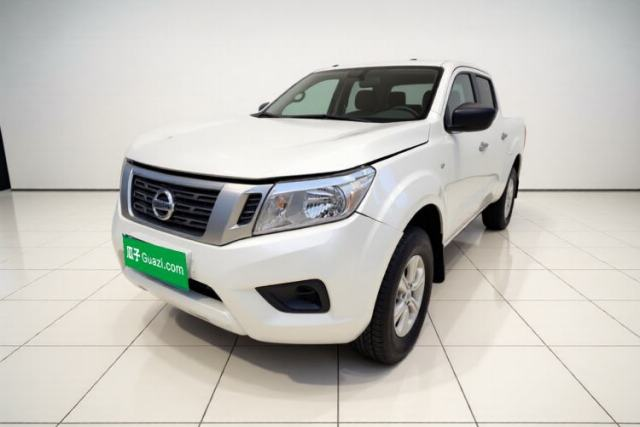
Pickup trucks are the volume workhorse of Ghana's trades, farms, NGOs and fleet operators. The main players are Hilux, Navara, Ranger, D-Max, Amarok and BT-50. They are also the one duty category where the GRA reads a single line on the customs form and your landed cost can swing by tens of thousands of cedis. The trap is the classification choice between import codes HS 8704 and HS 8703. This guide unpacks how GRA decides, what each band actually costs in 2026, two worked examples on a Hilux and a Navara, and a defensive playbook so the lowest legal rate is the rate you actually pay. The classification is one risk. The truck under it is the other, especially on a work vehicle that may have lived a hard life, and that is what Guazi checks, putting every unit through an inspection of over 200 points so chassis rust, accident history, and a tired drivetrain show up on paper before the money moves.
The one decision that drives everything
Ghana's pickup duty hinges on a single classification:
HS 8704, the commercial or goods-transport line. Single-cab pickups, work-spec trims and vehicles configured mainly for cargo. The lower band, 5% to 10% of CIF.
HS 8703, the passenger or dual-purpose line. Double-cab pickups, four-door and five-seat, configured mainly for passenger transport. The higher band, 20% of CIF, the same as a passenger SUV.
The split is decided when the customs form is keyed in. A double-cab Hilux declared as 8704 commercial saves roughly 10 to 15 percentage points against the same truck declared as 8703 passenger. GRA inspects cargo-bed dimensions, the rear-seat configuration, the leather or luxury trim level, and the use-case statement before signing off.
Stacking the full bill on a commercial pickup
For an 8704 commercial pickup, where most foreign-used Hilux and Navara units land:
- Import duty. 5% to 10% of CIF, the commercial band.
- Import VAT. 12.5% of CIF plus duty.
- NHIL. 2.5% of CIF plus duty.
- GETFund. 2.5% of CIF plus duty.
- Special, ECOWAS and processing. About 2% of CIF.
- Total tax burden. About 25% to 32% of CIF.
For an 8703 dual-cab passenger pickup:
- Import duty. 20% of CIF, the passenger band.
- All other levies stay the same.
- Total tax burden. About 38% to 45% of CIF.
The gap on a GHS 200K CIF pickup is roughly GHS 25K to 30K, which is material to any importer's margin. Duty is only one line in the wider Ghana import cost breakdown, so weigh it against freight and the levy stack before you commit.
The 10-year cap still bites pickups
The 10-year cap applies just as it does to passenger imports. For a 2026 clearance:
- 2016 onward is clean.
- 2015 is borderline.
- 2014 or older carries a 5% to 50% over-age penalty.
Pickups age well mechanically, which makes the temptation real. A 2013 Hilux running fine still triggers the penalty, because GRA enforces the cap on chassis year, not condition.
Worked example 1: 2018 Toyota Hilux single-cab
A 2018 Hilux single-cab in work-spec trim, declared CIF GHS 195K, classified as HS 8704:
| Line item | Rate | Amount (GHS) |
|---|---|---|
| Declared CIF | base value | 195,000 |
| Import duty, HS 8704 | 5% of CIF | 9,750 |
| Subtotal for VAT base | running total | 204,750 |
| Import VAT | 12.5% | 25,594 |
| NHIL | 2.5% | 5,119 |
| GETFund | 2.5% | 5,119 |
| Special, ECOWAS, processing | about 2% | 3,900 |
| Total tax burden | sum of charges | 49,482 |
| Landed cost | final | 244,482 |
The tax burden lands at about 25.4% of CIF.
Worked example 2: 2019 Nissan Navara double-cab
A 2019 Navara double-cab, declared CIF GHS 210K. The same truck, two possible classification outcomes:
| Line item | 8704 commercial | 8703 passenger |
|---|---|---|
| Declared CIF | 210,000 | 210,000 |
| Import duty | 10,500 at 5% | 42,000 at 20% |
| Import VAT, 12.5% | 27,563 | 31,500 |
| NHIL, 2.5% | 5,513 | 6,300 |
| GETFund, 2.5% | 5,513 | 6,300 |
| Special, ECOWAS | 4,200 | 4,200 |
| Total tax burden | 53,289 | 90,300 |
| Landed cost | 263,289 | 300,300 |
The classification difference on the same truck is GHS 37K. That is why the work-spec or cargo configuration on a double-cab matters so much at declaration time.
How to defend an 8704 filing on a double-cab
If you bought a double-cab pickup and want the commercial rate, your declaration package has to support it:
- A commercial use statement. The buyer signs a declaration of intended use, trade, farm, fleet or NGO.
- Cargo-bed verification. Photos of bed dimensions and tie-down hooks.
- A work-spec trim level. Stick to work-spec or mid-trim, and avoid full leather, a sunroof and premium audio.
- No personal-luxury add-ons. Chrome trim, rear screens or a third row will trigger an 8703 reclassification.
For personal-use buyers, declaring 8703 honestly and paying the 20% is the correct path. Misclassification is a customs offence with retroactive duty and penalties on the back end.
Where the pickup itself comes from
Foreign-used pickups for Ghana arrive through three main channels:
- China-export left-hand-drive, Chinese brands. The JAC T6, JAC T8, Maxus T70 and Foton Tunland. Verified-source units, dealer quantity available, lower CIF, lower duty and a complete paper trail.
- Japanese-export right-hand-drive pickups. These are not compliant for Ghana, which is left-hand-drive only, so skip any right-hand-drive listing regardless of sticker price.
- European or US-export left-hand-drive pickups. The Toyota Hilux LHD, Ford Ranger LHD and Volkswagen Amarok. Sometimes cheaper on the sticker, but freight and insurance from Europe or the US runs 25% to 40% higher than China-export.
Buy It Now

GradeAUsed Ford Ranger 2023 Trailblazer 4x4 Automatic Off-Road Version – Gasoline Certified DealerCertified Dealer
 Guazi InspectedGuazi Inspected
Certified DealerCertified DealerGuazi InspectedGuazi InspectedFOB Price:$26,412

A used pickup is also the body style most likely to hide a hard life, so condition is not a formality here. Northeast-US units carry severe chassis rust, fleet trucks carry worn drivetrains, and salvage history hides behind a fresh respray. This is exactly where a verified report earns its place. Guazi runs an inspection of over 200 points into a digital condition report and cross-checks the truck's insurance and maintenance records to flag accident and flood history, which answers the one thing a yard photo cannot show on a work vehicle: whether the chassis and the running gear are actually sound.
Five mistakes that turn the pickup math upside down
- Buying right-hand-drive by mistake. Ghana enforces left-hand-drive only, and a right-hand-drive pickup is unsellable.
- Filing a double-cab as 8704 without supporting paperwork. This triggers reclassification and penalties.
- Buying past the age cap. A 2013 Hilux saves on the sticker and loses to the overage penalty.
- Skipping the inspection. Pickups bought sight-unseen often carry severe chassis rust or salvage history.
- Underestimating freight. Pickup curb weight of 1,800 to 2,200 kg makes ocean freight 15% to 25% higher than a sedan.
Key takeaways
- One line decides the bill. HS 8704 commercial at 5% to 10% against HS 8703 passenger at 20%.
- The swing is large. On a double-cab the classification alone moves landed cost by GHS 25K to 40K.
- Declare honestly. File the band the truck supports with documentation, rather than gambling on the lower rate.
- The age cap applies. Target 2017 to 2020 model years for the cleanest math.
- Left-hand-drive only. Never import a right-hand-drive pickup regardless of sticker price.
Summary
Pickup duty in Ghana hinges on a single split, HS 8704 commercial at 5% to 10% against HS 8703 passenger at 20%, which drives the total tax burden from about 25% to 32% of CIF up to 38% to 45%. On a double-cab the classification swing alone is GHS 25K to 40K, so declare honestly with supporting documentation rather than hoping for the lower band. The 10-year age cap applies as it does to other passenger imports, so target 2017 to 2020 model years for the cleanest math. Ghana is also left-hand-drive only, so never import a right-hand-drive pickup regardless of sticker price, and settle the condition of a hard-working truck with a verified inspection before you commit.
Used Pick up for Sale
Browse Guazi's export-ready inventory


About Us
Follow US


Copyright © 2015~2026 https://en.guazi.com/, Chongqing Guazi Enterprise Consulting Service Co., Ltd. All rights reserved.