

World Cup Special • Save up to $1000 on selected vehicles

Guazi
GlobalEnglish


Trotro to 30-Seater: What Ghana's Van and Bus Duty Costs in 2026
Article OverviewGhana van and bus duty 2026: how seat count flips HS 8702 versus 8704 versus 8703, the full landed-cost stack, Hiace 15-seat and Coaster 30-seat examples, plus trotro and staff-shuttle operator math.
Pricing note. All figures use a GHS K shorthand and are indicative for 2026. Van and bus classification depends on seat count and use. Confirm with your clearing agent.
Quick answers
- What decides van and bus duty in Ghana? Seat count and body type. Cargo 8704 sits at 5% to 10%, passenger 8702 with 10 or more seats at 10% to 15%, and a sub-10-seat conversion can default to 8703 at about 20%.
- What does a 15-seat Hiace land at? On the worked example, around GHS 289K from a GHS 220K CIF, a tax burden near 31% of CIF.
- What does a 30-seat Coaster land at? Around GHS 521K from a GHS 380K CIF, a tax burden near 37%, since larger coaches sit higher in the 8702 band.
- How fast does a trotro pay back? Roughly 14 to 22 months at full operation on a busy Accra route, before maintenance surprises.
- Does the age cap apply? Yes, the 10-year cap, and it is enforced more closely once a vehicle enters commercial service. Target 2017 to 2020.
Vans and buses move the country. Trotros, staff shuttles, NGO transport, church coaches and school buses all run on foreign-used minibuses cleared through Tema. The GRA puts them in their own duty bracket, separate from passenger cars and pickups, and the rate inside that bracket can swing on something as small as how many seats a van is configured with. This guide walks through the 2026 GRA rates, the seat-count rule that drives classification, two worked examples on a Hiace 15-seat and a Coaster 30-seat, and the operator math that decides whether your unit pays itself back in 14 months or 22. For a commercial buyer the duty is only the entry ticket, because a fleet vehicle earns nothing if it spends its first month in the workshop, and that is the gap Guazi closes, reading brake, suspension and chassis wear from prior service through an inspection of over 200 points, so the unit you clear is one that can actually run a route.
This guide covers the three HS codes, the levy stack, the age cap, two worked examples, the operator math, the paperwork that locks your bracket, and the mistakes that push it the wrong way.
Three HS codes, one seat-count decision
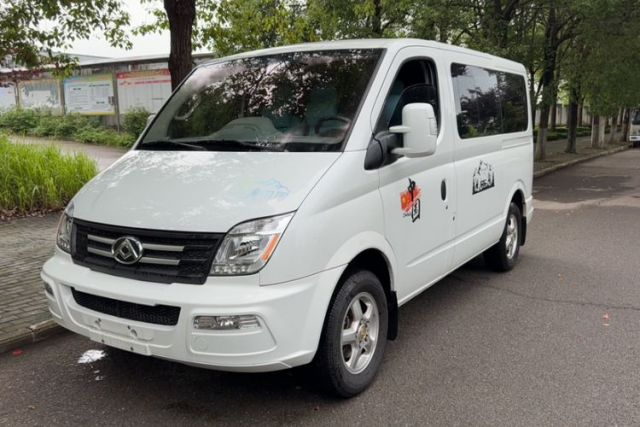
Ghana uses three HS codes for van and bus imports, and seat configuration is what sorts you into one:
HS 8704, the cargo or goods-transport van. A single-row van with no rear passenger seats, cargo-focused, the Hiace cargo, Sprinter cargo and JAC Sunray cargo. Duty of 5% to 10% of CIF.
HS 8702, passenger transport with 10 or more seats. The minibus, midi-bus and full coach, the Hiace 15-seat, Coaster 30-seat, Rosa and King Long. Duty of 10% to 15% of CIF, with seat count subdividing further inside the band.
Vans configured with fewer than 10 passenger seats, such as 5-seat Hiace conversions, usually fall under HS 8703 passenger duty at about 20%. This is why the seat configuration on the customs form, and on the inspection photo, decides which bracket you pay in.
Stacking the levies on a minibus
For an HS 8702 minibus with 10 or more seats:
- Import duty. 10% to 15% of CIF.
- Import VAT. 12.5% of CIF plus duty.
- NHIL. 2.5%.
- GETFund. 2.5%.
- Special, ECOWAS and processing. About 2%.
- Total tax burden. About 30% to 37% of CIF.
For an HS 8704 cargo van the total runs about 25% to 32% of CIF, the same band as a commercial pickup.
The age cap is tighter here than it looks
The 10-year cap is the same as everything else, but in practice it bites harder on fleet vehicles because GRA tracks them more closely once they enter commercial service. Target 2017 to 2020 model years, and expect that paperwork on anything older will be scrutinized at clearing.
Worked example 1: 2018 Toyota Hiace 15-seat
A 2018 Hiace 15-seat, declared CIF GHS 220K:
| Line item | Rate | Amount (GHS) |
|---|---|---|
| Declared CIF | base value | 220,000 |
| Import duty, HS 8702 | 10% | 22,000 |
| Import VAT | 12.5% | 30,250 |
| NHIL | 2.5% | 6,050 |
| GETFund | 2.5% | 6,050 |
| Special, ECOWAS, processing | about 2% | 4,400 |
| Total tax burden | sum of charges | 68,750 |
| Landed cost | final | 288,750 |
The tax burden lands at about 31.3% of CIF.
Worked example 2: 2017 Toyota Coaster 30-seat, HS 8702
A 2017 Coaster 30-seater, declared CIF GHS 380K:
| Line item | Rate | Amount (GHS) |
|---|---|---|
| Declared CIF | base value | 380,000 |
| Import duty, HS 8702 | 15% | 57,000 |
| Import VAT | 12.5% | 54,625 |
| NHIL | 2.5% | 10,925 |
| GETFund | 2.5% | 10,925 |
| Special, ECOWAS, processing | about 2% | 7,600 |
| Total tax burden | sum of charges | 141,075 |
| Landed cost | final | 521,075 |
The tax burden lands at about 37.1% of CIF. The higher 15% duty on 30-seat coaches reflects the heavier passenger-transport classification inside HS 8702.
How the trotro and staff-shuttle math actually works
Trotro and staff-shuttle operators are the largest single buyer segment for foreign-used minibuses in Ghana. The real operating math looks like this:
- A 15-seat Hiace trotro on the Accra to Tema route brings in about GHS 800 to 1,200 per day, with fuel and maintenance around GHS 300 to 450, for a net of about GHS 350 to 750 per day per vehicle.
- The payback period at GHS 290K landed is typically 14 to 22 months at full operation.
- A 30-seat Coaster on a school or staff-shuttle contract earns contract-based revenue, with GHS 250K to 450K per year typical for a 200-day school year.
Duty, at about 30% to 37% of CIF, is a fixed input, and it sits inside the wider Ghana import cost breakdown alongside freight and the levy stack. What separates winning operators is route selection, maintenance discipline and sourcing CIF. The maintenance side starts at purchase, because a fleet vehicle that arrives with worn brakes or a stressed chassis eats the first few months of net straight away. A verified report is the cheapest insurance against that. Guazi runs an inspection of over 200 points into a digital condition report and cross-checks the vehicle's records to screen accident and flood history, which answers the one question a terminal photo cannot on an ex-fleet minibus: whether it is ready to earn from day one or hiding a workshop bill.
Source Quality Used Cars From China's #1 Auction Platform
Access 200,000 verified vehicles monthly. Bid in real-time and secure bulk inventory at highly competitive market rates.
The paperwork that determines your bracket
What your clearing agent will ask you to provide:
- The original bill of lading, with a VIN matching the chassis.
- The commercial invoice, with a CIF breakdown.
- The export certificate.
- A vehicle inspection report.
- A seat-count declaration, which locks HS 8702 for 10 or more seats and avoids the 8703 passenger-duty default.
- A body-type declaration, which distinguishes a cargo van under 8704 from a passenger minibus under 8702.
Five mistakes that push the bracket the wrong way
- Buying a 5-seat van conversion thinking it is HS 8704. It actually falls under HS 8703 and pays about 20% duty.
- A Coaster misclassified as a truck. Pushed into 8704 incorrectly, it is subject to reclassification and penalty.
- An older fleet bus from 2013 to 2014. The age penalty erases any sticker saving.
- Skipping the inspection. Fleet vehicles often hide chassis stress, brake or suspension wear from prior commercial use.
- Underestimating freight. Minibuses at 1,800 to 2,500 kg and coasters at 3,500 to 5,000 kg carry materially higher ocean freight.
Key takeaways
- Seat count sets the band. Cargo 8704 at 5% to 10%, passenger 8702 with 10 or more seats at 10% to 15%, and a sub-10-seat conversion near 20%.
- The worked cars. A 15-seat Hiace lands around GHS 289K, a 30-seat Coaster around GHS 521K.
- Declare honestly. Lock the bracket with a seat-count and body-type declaration backed by the inspection photo.
- The age cap is enforced harder on fleets. Target 2017 to 2020 model years.
- Condition protects the payback. A fleet vehicle with hidden wear eats its first months of net, so verify before you buy.
Summary
Ghana van and bus duty splits between HS 8704 cargo at 5% to 10% and HS 8702 passenger with 10 or more seats at 10% to 15%, which drives the total tax burden from about 25% to 32% of CIF on a cargo van up to 30% to 37% on a 15 to 30 seat passenger unit. Seat count is the key classification trigger, so declare honestly with supporting documentation. The worked examples show a Hiace 15-seat landing around GHS 289K and a Coaster 30-seat around GHS 521K. The 10-year age cap applies and is enforced more closely on commercial fleets, so target 2017 to 2020 for the cleanest math, and settle the condition of an ex-fleet vehicle with a verified inspection before you commit.
Looking to source an inspected used car from China?
Browse Guazi's export-ready inventory



About Us
Follow US


Copyright © 2015~2026 https://en.guazi.com/, Chongqing Guazi Enterprise Consulting Service Co., Ltd. All rights reserved.