

World Cup Special • Save up to $1000 on selected vehicles

Guazi
GlobalEnglish


Reading a Used Tesla's SoH Number Before You Wire GHS 280K
Article OverviewWhat a Tesla state-of-health percentage actually means, how to verify it on a Ghana lot, and when battery replacement makes economic sense.
e single biggest variable that decides whether the unit is a deal or a trap.
Ghana does not have an authorized Tesla service centre. That single fact reorders how a used Tesla decision actually works in Accra. The battery cannot be diagnosed by walking the car into a dealer; the pack cannot be swapped under warranty by a local agent; and a 70-percent SoH unit cannot quietly become a 95-percent one on a service visit. Every used Tesla on a Tema lot or in a private-import garage is being sold to you with its current state-of-health, whatever that number is, and the price you pay should reflect it. This piece walks through what the SoH percentage actually measures, the three ways serious buyers verify it in Ghana, the degradation curve you should expect on Accra heat, and the math that decides when replacing the pack is the right call.
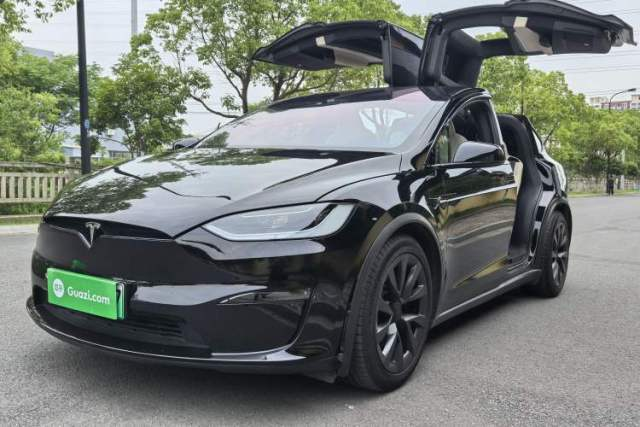
What the SoH percentage actually tells you about a Tesla pack
State-of-health is the battery management system's running estimate of how much usable capacity the pack still has compared with the day it left Fremont or Shanghai. A 92-percent SoH reading on a Model 3 Long Range means the pack will hold roughly 92 percent of its original 78 kWh, which translates to a real-world rated range of about 480 km instead of the showroom-day 523 km. The number is computed by the BMS from cycle count, individual cell voltage spread, internal resistance drift and calendar age, and it updates continuously as the car drives. Tesla's own warranty thresholds are anchored to this number: the eight-year battery warranty on Model 3 and Model Y guarantees at least 70-percent SoH at the end of the term, and a pack that drops below that during the warranty window is replacement-eligible in the markets where Tesla service operates.
For a Ghana buyer the practical reading is simpler. A 90-percent-or-higher SoH on a unit under five years old is the safe-margin band where you are paying for a normal used Tesla. Between 80 and 90 percent the pack is healthy but ageing, and the price should drop noticeably; you are buying the next four to six years of useful life. Below 80 percent the conversation changes entirely, because you are now inside replacement-planning territory, and the asking price needs to reflect the GHS 180K to 380K pack-replacement bill you may face within the ownership window.
The three ways Ghana buyers verify SoH before money changes hands
The cleanest verification path is a Tesla service centre diagnostic report, pulled by a Tesla technician with manufacturer-level access. The catch is that no such centre exists in Ghana, so a Tesla-issued report is only available when the unit was diagnosed at a Tesla service location elsewhere before export. A Chinese-domestic Tesla often carries a recent report from the Shanghai service network, and a US-imported unit may carry a Tesla mobile service record; either is the gold standard and worth asking for upfront. If the seller cannot produce one, you fall back to one of the next two methods.
The second method, and the one most working Ghana EV mechanics use, is a third-party diagnostic via the ScanMyTesla app paired with an OBD2 adapter. The hardware investment is small, around USD 35 for a Bluetooth OBD adapter plus the app licence, and an experienced workshop in Spintex or Abossey Okai can pull a full pack report in fifteen minutes: BMS-reported SoH, individual cell voltages, internal resistance per module, charge-cycle count, supercharger-use count, and temperature history. Expect to pay between GHS 250 and 500 for a documented scan, and insist on the raw screenshots rather than a verbal "battery is fine." If the cell voltage spread is over 30 millivolts at rest, treat the SoH number with caution; an outlier cell drags down real-world capacity faster than the BMS estimate suggests.
The third method works when no diagnostic tool is on hand. Charge the car to 100 percent at a Level 2 home charger, note the rated-range value Tesla displays, then divide it by the original EPA or WLTP range for the model and year. A 2019 Model 3 Long Range that shows 460 km at full charge against a 523 km original rating is sitting near 88-percent SoH, which is consistent with three to four years of mixed Accra and supercharger use. This method is rough but useful when the seller refuses to allow an OBD scan; a refusal alone is itself a data point, and you should treat it as a discount-or-walk signal.
Buy It Now
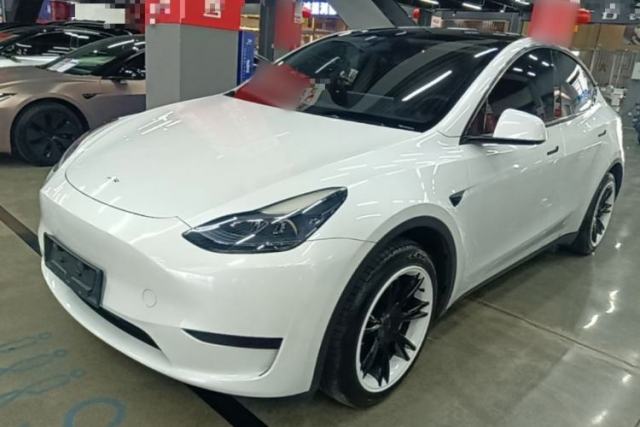
GradeSUsed Tesla Model Y 2024 Rear-Wheel-Drive Version Certified DealerCertified Dealer
 Guazi InspectedGuazi Inspected
Certified DealerCertified DealerGuazi InspectedGuazi InspectedFOB Price:$28,163

How fast a Tesla pack ages in Accra heat versus Munich winters
Tesla packs degrade on three vectors at once, and the Ghana climate hits two of them harder than the European average. Heat is the dominant factor. Sustained ambient temperatures above 30 degrees Celsius accelerate calendar ageing in lithium-ion cells, and a Tesla parked at 100-percent state-of-charge in direct Accra sun for an afternoon is being aged at roughly twice the rate of one parked in 20-degree German shade. Charging behaviour is the second; frequent DC fast-charging at superchargers or third-party 120-kilowatt stations pushes more heat into the pack per session than a slow Level 2 AC charge, and that heat compounds with the ambient load. Calendar age is the third vector and it operates regardless of how the car is used; a 2017 Model S with 60,000 km on the odometer will still show meaningful capacity loss simply because the cells are nine years old.
Working numbers for Ghana, drawn from owner reports and supercharger telemetry, look roughly like this. A new Tesla typically loses three to four percent of capacity in the first 12 months, with most of the drop coming in the first 10,000 km as the BMS calibrates. By three years and 60,000 km the cumulative loss is usually between eight and 12 percent on units that lived in Accra shade, and 12 to 15 percent on units that parked daily in direct sun or charged primarily on DC fast chargers. By the six-year mark the cumulative range loss is 15 to 22 percent, and by nine years the typical Ghana-climate pack is sitting somewhere between 25 and 35 percent below its original capacity. This is faster than the Norwegian or Pacific-Northwest fleet average and slower than the UAE or coastal-Saudi pattern. For a buyer comparing a US-imported 2019 Model 3 to a Chinese-export 2019 Model 3 of the same SoH, the Chinese-domestic unit usually wins on long-term Ghana performance, because Shanghai's climate is closer to Accra's than New England's is.
When swapping the pack is smart money, and when it is a trap
A Tesla pack replacement on the Ghana market runs GHS 180K to 280K for a Model 3 or Model Y, and GHS 260K to 380K for a Model S or Model X, depending on capacity, sourcing route and whether the work goes through a specialist EV importer or a self-managed parts route. Used vehicle value at 70-percent SoH sits roughly at GHS 130K to 180K on a Model 3, GHS 170K to 220K on a Model Y, and GHS 180K to 280K on the older Model S and X imports. The math therefore breaks the same way every time: replacement makes sense only when the remaining vehicle life multiplied by its utility value exceeds the replacement cost, plus the labour and shipping that go with the swap.
On a 2018 to 2020 Model 3 or Model Y that still drives well in body and interior terms, a replacement at GHS 200K can buy another six to eight years of useful life, which is usually defensible if the rest of the car is sound. On an older Model S or X that has reached 250,000 km with worn suspension, ageing infotainment hardware and tired interior trim, spending GHS 350K on a pack is almost never recovered in resale; the smarter move is to sell the unit as a 70-percent-SoH driver to a buyer who will run it down further and not replace, or to part the car out. The cleanest sell-side rule is to list any Tesla that has fallen below 75 percent SoH while the rest of the vehicle still presents well, and let the next owner make the replacement decision when the number falls further.
Buy It Now
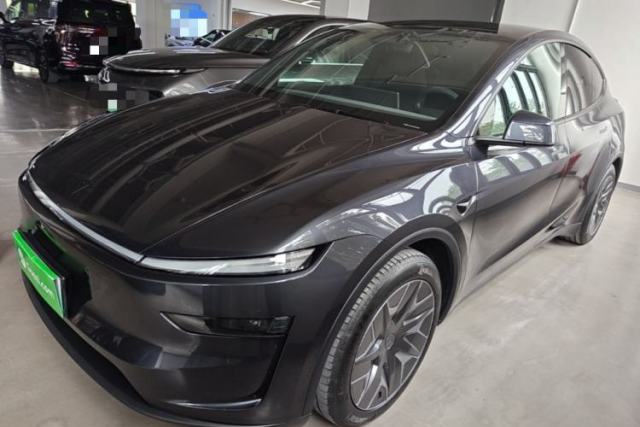
GradeSUsed Tesla Model Y L 2025 Model Long-Range All-Wheel-Drive VersionCertified DealerCertified DealerGuazi InspectedGuazi Inspected
Certified DealerCertified DealerNear-new car
Near-new car
Guazi InspectedGuazi InspectedOriginal paint
Original paint
FOB Price:$51,032
Habits that buy you another 50,000 km of pack life in Ghana
The largest single gain comes from where the car sleeps. A Tesla parked in shade, ideally under a roofed carport, ages materially slower than one parked on a bare driveway in direct Accra sun, and the gain over five years is usually worth four to six percentage points of SoH. The second-biggest gain comes from where you stop the daily charge: the BMS prefers the pack sitting at 50 to 80 percent state-of-charge for routine use, and the Tesla in-car menu lets you cap daily charging at 80 percent with a single setting. Bump it to 100 percent only the night before a long Kumasi or Cape Coast run. The third habit is to keep DC fast-charging as the exception rather than the routine; a once-or-twice-a-month supercharger session on a road trip is fine, but a daily 60-kilowatt fast-charge habit on a Bolt-station Tesla in commuter use will move SoH down two to three points a year faster than a Level 2 AC pattern. Avoid running the pack flat below five percent before charging, because deep cycling stresses the lowest-capacity cells disproportionately. And keep the car on the latest Tesla software release; BMS firmware updates have measurably improved cell balancing on the 2017 to 2020 generation, and a unit running two-year-old firmware is leaving capacity on the table that an update would recover.
The five mistakes that turn a cheap Tesla into a GHS 280K liability
Buying a used Tesla in Ghana without an SoH report is the first and worst mistake. The seller's verbal assurance that "the battery is fine" carries no information about where the pack actually sits on the degradation curve, and no Ghana mechanic can reverse a low-SoH purchase after the money has moved. Insist on either a Tesla service centre report or an OBD-based ScanMyTesla scan before the deposit changes hands.
Trusting the odometer over calendar age is the second mistake. A 2017 Model S with 50,000 km on the clock still has nine-year-old cells, and the pack has been ageing on calendar regardless of how lightly the car was driven. Treat any pre-2018 Tesla as a calendar-age conversation, not a kilometre conversation, and pull an SoH report regardless of how clean the odometer looks.
Buying a salvage Tesla without a pack-level diagnostic is the third mistake. Salvage-title Teslas, particularly those auctioned out of US insurance write-offs, can be deep-value units when the structural damage was cosmetic and the pack escaped intact. They can equally be money pits when collision damage compromised pack housing or coolant integrity. The pack inspection is the single document that separates the two, and a salvage Tesla without one should be discounted to parts-out value.
Ignoring supercharger-use history is the fourth mistake. The BMS records cumulative DC fast-charge counts, and a unit that has been heavily supercharged shows accelerated SoH loss even when total kilometres look modest. A ScanMyTesla scan exposes the supercharger count directly; a unit with over 800 DC sessions on a 60,000-km odometer has been used as a fleet vehicle, and the pack reflects it.
Skipping the range-capacity check entirely is the fifth mistake. Even after an OBD scan, a one-day verification is worth doing: charge to 100 percent, drive a known 50-km loop in moderate traffic, note the indicated battery percentage drop, and compare against rated-range math. A unit that drops 20 percent on a 50-km Accra commute is closer to 50-percent real-world capacity than its BMS-reported 75-percent SoH suggests, and the discrepancy is itself the negotiating data point.
Key Takeaways
State-of-health is the single number that decides whether a used Tesla on the Ghana market is a deal or a trap, and the gap between a 92-percent and a 72-percent unit is usually the gap between a sound four-to-six-year ownership and a GHS 250K replacement decision inside three years. The verification options are a Tesla service-centre report from the exporting market, an OBD-based ScanMyTesla scan run by a Spintex or Abossey Okai workshop, and a full-charge range-capacity test as a last fallback. Expect Ghana-climate Teslas to lose roughly 25 to 35 percent of capacity by year nine, faster than the European baseline and slower than the Gulf, and price your offer accordingly. Park in shade, cap daily charging at 80 percent, treat DC fast-charging as a road-trip tool rather than a routine, and the same pack will hold its number for another 50,000 km longer than a sun-baked, supercharged sibling. And when the SoH does fall below 75 percent, run the replacement math against remaining body and interior life before assuming a swap is the right move.
100% Transparent Used Tesla Inspection
Looking for a used Tesla? We treat vehicle condition as our core product. Our in-house experts conduct a meticulous 200 point inspection, providing comprehensive condition reports with HD videos and photos. Enjoy absolute transparency with no hidden flaws and no surprises.






About Us
Follow US


Copyright © 2015~2026 https://ylqc.guazi.com/, Yilanqunche Automobile Services (Shanghai) Co.,Ltd. All rights reserved.