

World Cup Special • Save up to $1000 on selected vehicles

Guazi
GlobalEnglish


How to Import Chinese Cars to Kazakhstan in 2026
Article OverviewImport Chinese cars to Kazakhstan with this 2026 buyer guide covering documents, customs duty, VAT, EV quota risk, shipping, and registration checks.
If you want to import Chinese cars to Kazakhstan in 2026, do not start with the shipping quote. Start with the exact car, the customs file, and whether the car can become registration-ready after it crosses the border. A low purchase price in China can still become an expensive mistake if the customs value, VAT, engine size, EV status, conformity evidence, or recycling-fee path is unclear.
Kazakhstan is not a simple "buy in China, send to Almaty" market. It sits inside the EAEU customs environment, uses Kazakhstan-specific tax and registration systems, and has recently changed the VAT planning picture for imports. If you are comparing a Chinese EV, hybrid SUV, petrol sedan, or China-built global model, you need a landed-cost worksheet before you pay a deposit.
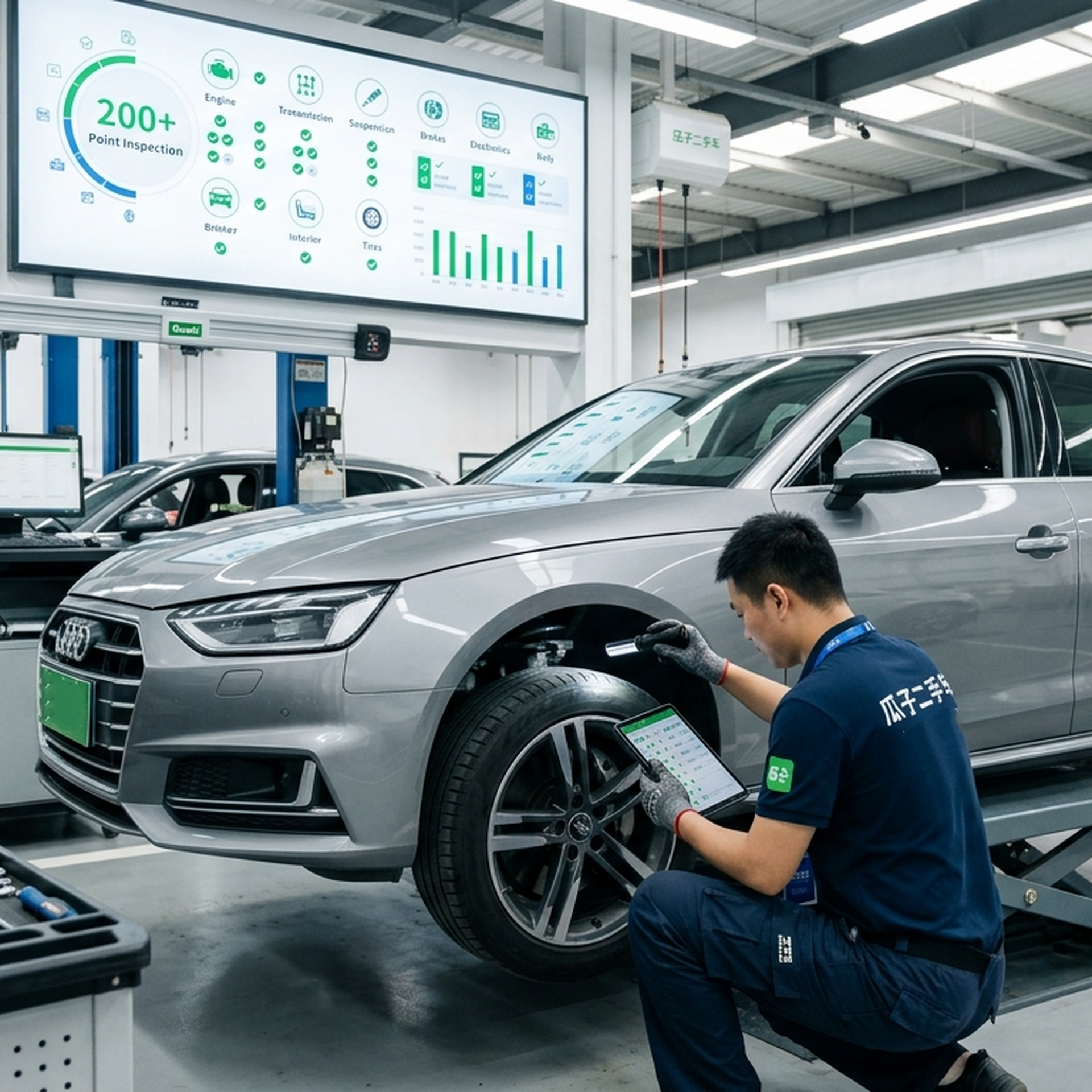
Guazi can help you think in that evidence-first way. All cars listed on the Guazi platform undergo over 200 professional inspections, so the buying discipline should be the same when you are preparing a Kazakhstan import: verify the exact VIN, documents, inspection result, specification, export path, and condition story before you treat any offer as real.
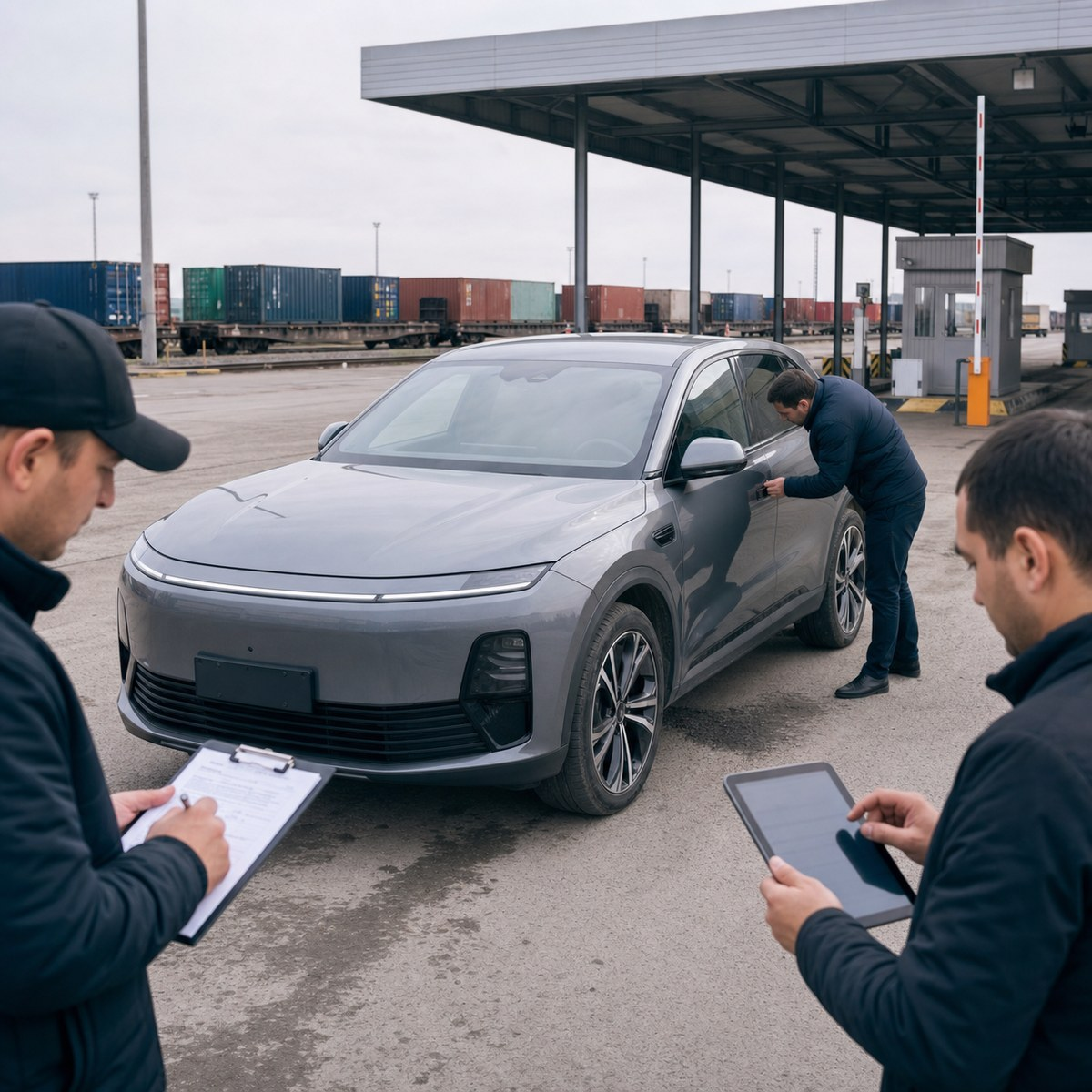
Short answer for Kazakhstan buyers in 2026
- You can import Chinese cars to Kazakhstan, but the car must be supported by a customs-ready and registration-ready file.
- For 2026 planning, use Kazakhstan's updated import VAT rate of 16%, then verify the payable rate and base with your broker before payment.
- Import customs duty is not one fixed number. Kazakhstan State Revenue Committee guidance says it depends on EAEU tariff classification, age, engine volume, engine type, and the applicable rate, which can be ad valorem or fixed by unit.
- Excise risk matters mainly for passenger vehicles with engine displacement over 3,000 cm3.
- Do not rely on an old duty-free EV assumption. Kazakhstan official guidance says the 2025 preferential EV import quota of 15,000 units had been fully used by 14 October 2025, so EVs can move to general customs payments and taxes.
- The safest route is to confirm the exact VIN, invoice, export documents, transport agreement, conformity evidence, customs estimate, recycling-fee path, and eGov/service-center handoff before the car leaves China.
Before you pay in China, prove the car can enter Kazakhstan
The biggest mistake is treating the China purchase price as the Kazakhstan price. That number is only one line in the worksheet. Before you pay, ask whether the exact vehicle can pass through the next steps without a document gap.
Start with the VIN, model year, trim, fuel type, engine displacement, battery type if it is an EV or hybrid, source market, odometer reading, accident history, and export eligibility. A car that looks attractive in a seller photo may still be hard to clear if the invoice, title history, deregistration proof, battery paperwork, or transport documents do not match the vehicle.
If you are buying as a dealer, your file discipline needs to be even tighter. You should know how you will explain the car's origin, condition, specification, and landed cost to the next buyer. If you are buying for private use, you still need the same proof because a weak customs file can delay registration and raise storage, broker, and correction costs.
For a Guazi-sourced option, use the inspection report as part of the evidence pack, not as a replacement for Kazakhstan compliance. The inspection can help you judge condition before shipment, while Kazakhstan customs, conformity bodies, and registration authorities still decide whether the car can move through their systems.
The document file you should build before shipment
The cleanest import starts before the vehicle is loaded. If a seller says the documents will be "handled later," slow down. Kazakhstan import work is much easier when the China-side file is complete and consistent.
| Document or proof | Why you need it before shipment |
|---|---|
| VIN, photos, and inspection report | Confirms the exact car you are paying for and helps catch damage or mismatch before export |
| Sales contract and commercial invoice | Supports customs value, payment trail, and ownership transfer |
| Export documents from China | Shows the vehicle can leave China legally under the declared route |
| Transport document or carrier agreement | Supports the movement path, destination, vehicle identity, and handoff responsibility |
| Certificate of origin if available | Helps the broker assess whether any tariff treatment or origin evidence is relevant |
| Registration or deregistration evidence for used vehicles | Helps prove prior ownership and export status |
| Specification sheet and conformity evidence | Helps with EAEU/Kazakhstan technical and registration-readiness review |
| EV battery report or safety evidence where relevant | Helps reduce risk for EV transport, insurance, and local acceptance checks |
Adilet's legal text on vehicles registered abroad entering Kazakhstan points to border-entry checks, registration-certificate evidence, and transport-service agreement details when a carrier moves the vehicle. Use that as a warning: border and customs work is document work, not just logistics work.
Chinese car import requirements and taxes in Kazakhstan
Chinese car import requirements and taxes in Kazakhstan should be planned as a worksheet, not guessed as one percentage. The official State Revenue Committee materials describe several payment lines for vehicle customs clearance. Those lines can include the customs declaration fee, import customs duty, excise where applicable, and VAT.
For 2026 planning, the VAT point deserves special attention. Some 2025 vehicle guidance still refers to 12% VAT. A newer Kazakhstan State Revenue Committee update on import VAT says that from 1 January 2026, VAT on taxable imports is 16%. If you are budgeting a 2026 import, use 16% as the planning assumption and ask your customs broker to calculate the payable amount against the current law and the exact vehicle file.
| Cost line | What you should verify |
|---|---|
| China purchase price | Exact VIN, trim, mileage, condition, included documents, and whether the price is FOB or local China handover |
| Export and handling | China-side paperwork, inland movement, port/rail/road handling, inspection, and loading fees |
| Shipping and insurance | Route, timing, carrier liability, cargo insurance, and whether the vehicle is running or non-running |
| Customs value | Invoice, payment proof, freight, insurance, and documents that support the declared value |
| Customs declaration fee | Official guidance commonly refers to 6 MRP for customs declaration |
| Import customs duty | EAEU tariff classification, vehicle age, engine volume, fuel/engine type, and applicable ad valorem or fixed rate |
| VAT | Use the 2026 import VAT planning rate of 16%, then verify with current Kazakhstan tax rules before payment |
| Excise | Check especially if the passenger vehicle has engine displacement above 3,000 cm3 |
| Recycling fee and registration readiness | Confirm Zhasyl Damu, electronic vehicle/passport data, and service-center requirements |
| First service reserve | Tyres, fluids, diagnostics, battery check, spare key, software, winter tyres, and local adaptation |
Do not under-declare customs value to make the numbers look better. If customs questions the value, the delay and penalty risk can cost more than the short-term saving. A serious buyer or dealer should prefer a defensible landed-cost file over a cheap-looking quote.
How to import a car from China to Kazakhstan step by step
If you are asking how to import a car from China to Kazakhstan step by step, think of the process as nine decisions rather than one shipment.
- Choose the exact vehicle and confirm the VIN, condition, fuel type, engine size, battery status, and export eligibility.
- Ask for a full inspection file. For Guazi-listed cars, use the over 200 professional inspections as a condition-proof starting point.
- Confirm Kazakhstan import suitability with a customs broker before paying the seller.
- Build the China-side document pack: invoice, contract, export file, transport documents, and specification proof.
- Choose the route and carrier. Make sure the route matches the vehicle type, battery status, timing, and insurance need.
- Estimate customs duty, VAT, excise exposure, recycling fee, registration fees, broker fees, and first-service reserve.
- Ship only after the payment terms, handoff point, and responsibility for missing documents are written down.
- Complete customs declaration and pay required duties, taxes, and fees.
- Prepare for registration through the relevant Kazakhstan systems and service-center process.
This sequence protects you from the most common trap: paying for a car before anyone has proven it can become road-usable in Kazakhstan.
EV imports need a separate caution in 2026
Chinese EVs are attractive for Kazakhstan buyers because China has strong supply in affordable electric sedans, compact SUVs, and family crossovers. That does not mean every EV import is easy.
Kazakhstan State Revenue Committee guidance says the 2025 preferential import quota for EVs classified under EAEU HS code 8703 80 000 2 was 15,000 units and had been fully used by 14 October 2025. The same guidance says the exemption from import customs duty no longer applies once that volume is exhausted and EV imports move to general customs payments and taxes.
| EV question | Why it changes the decision |
|---|---|
| Is the EV still eligible for any preferential treatment? | Do not rely on old quota language; ask for current broker confirmation |
| What is the battery condition? | Range, resale, insurance, and safety confidence depend on it |
| Does the transport route accept the battery class and state of charge? | EV shipping rules can affect route, loading, and insurance |
| Can Kazakhstan systems accept the vehicle data? | Registration readiness may require correct electronic data and proof |
| Are charging, parts, software, and service support practical? | A cheap EV is not cheap if you cannot operate it confidently |
As a buyer, you should not reject EVs automatically. You should simply price them like a technical import, not like a normal petrol car with a battery added.
Choosing the right shipping route from China to Kazakhstan
Kazakhstan's geography makes route planning different from coastal import markets. You may use road, rail, containerized rail, or a mixed route through inland logistics corridors. The right choice depends on the vehicle value, whether the car runs, the battery or fuel type, the loading point in China, and the final city in Kazakhstan.
For a standard petrol vehicle, a direct road or rail-forwarding plan may be enough if the carrier can handle the paperwork and border handoff. For a higher-value EV, hybrid, luxury car, or non-running unit, containerized movement can give better protection and cleaner accountability, even when it costs more.
| Route style | When it can fit | What you should confirm |
|---|---|---|
| Road movement | Shorter inland route, running vehicle, simpler handoff | Border point, carrier documents, insurance, responsibility for delays |
| Rail or rail-road mix | Planned logistics lane, multiple units, dealer shipment | Loading terminal, transit time, rail documents, final pickup location |
| Containerized rail | EVs, higher-value units, non-running cars, stronger protection need | Container condition, loading photos, battery acceptance, unloading point |
Do not choose the route only by the lowest quote. Choose the route that gives you the clearest document trail and the smallest chance of a border surprise.
Registration readiness after customs clearance
Customs clearance is not the finish line. The car still has to become usable in Kazakhstan. That means the registration path should be checked while the car is still in China.
Kazakhstan registration readiness can depend on more than a stamped customs document. In practical terms, you should expect VIN checks, vehicle data, recycling-fee evidence, and local service-center requirements to matter before the car becomes usable. Your individual import may not follow the same workflow as a locally sold dealer vehicle, but the lesson is useful: Kazakhstan registration can depend on whether the right data and payment evidence exist in the right systems.
Before shipment, ask your broker or local registration support to confirm the registration certificate path, state plate process, recycling-fee evidence, conformity or technical approval need, and whether the exact model/version has any known acceptance issue. A car that clears customs but cannot move smoothly through registration can tie up money for weeks.
Which Chinese cars make sense for Kazakhstan buyers?
The best Chinese car for Kazakhstan is not always the newest or cheapest one. It is the one with a clear document file, suitable drivetrain, practical service path, and a landed cost that still makes sense after VAT, duty, fees, winter preparation, and first service.
For private buyers, compact SUVs and family crossovers can be easier to justify because they match daily road use, winter tyre planning, and family space needs. For dealers, the stronger choices are models that can be explained quickly: recognized brand, clear trim, clean inspection, realistic parts path, and a price that still leaves resale room after import costs.
| Buyer type | Car type | Model + series | Better model logic |
|---|---|---|---|
| Private family buyer | Compact or midsize SUV | Chery Tiggo 7/8, Geely Atlas, Haval H6 | Prioritize a known crossover platform, predictable service, winter-readiness, and clean condition |
| EV buyer | Electric sedan or family EV SUV | BYD Song Plus EV, BYD Atto 3/Yuan Plus, Tesla Model 3 China-built units | Prioritize battery proof, charging fit, software support, and current customs treatment |
| Dealer or reseller | Easy-to-explain SUV or sedan | Geely Coolray, Chery Arrizo 8, Haval Jolion | Prioritize explainable trim, clean VIN story, document completeness, and landed-cost margin |
| Business fleet buyer | Petrol SUV, van, or durable work-use model | JAC JS4/JS6, Changan CS75 Plus, Dongfeng or JAC commercial variants | Prioritize uptime, parts path, tyre/suspension durability, and simple operating cost |
If you are comparing options on Guazi used-car inventory, do not stop at the visible price. Ask for the proof behind that exact vehicle, then rebuild the Kazakhstan landed-cost worksheet around that VIN.
Where Guazi fits in the import decision
Guazi should not be treated as a substitute for Kazakhstan customs, a conformity body, a tax authority, or a registration office. That would be the wrong promise. The useful Guazi role is: helping you source a documented used car and judge the condition before the shipment risk begins.
When you contact the sourcing team, bring a practical brief: target budget, destination city, preferred fuel type, acceptable model years, whether you are a private buyer or dealer, and whether you can support EV service locally. The more specific your brief is, the easier it is to compare real cars instead of vague offers.
Use the same discipline for every option:
| Proof point | What a serious buyer should ask for |
|---|---|
| Vehicle identity | VIN, model year, trim, source market, photos, and inspection report |
| Condition | Accident evidence, underbody, tyres, interior wear, diagnostics, and battery condition if relevant |
| Export readiness | Seller documents, invoice path, contract terms, and China-side handoff point |
| Kazakhstan readiness | Customs estimate, tax assumptions, conformity path, recycling-fee path, and registration support |
| Commercial sense | Landed-cost worksheet, first-service reserve, resale logic, and timing risk |
If one of those proof points is missing, the price should change. Missing proof is not a small detail; it is part of the cost.
Final buying rule before you import
Import Chinese cars to Kazakhstan only after the exact vehicle has passed three checks: the car is worth buying, the document file is strong enough for customs, and the Kazakhstan registration path is realistic. If any one of those is weak, pause before deposit.
A good import plan does not make the car look cheaper on paper. It makes the real cost visible early enough for you to decide calmly.
Sources and references
- Kazakhstan State Revenue Committee, EV import rules and 2025 quota update
- Kazakhstan State Revenue Committee, passenger-car customs clearance payments
- Kazakhstan State Revenue Committee, mandatory payments when importing vehicles
- Kazakhstan State Revenue Committee, 2026 import VAT update
- Adilet, rules for vehicles registered abroad entering Kazakhstan


About Us
Follow US


Copyright © 2015~2026 https://ylqc.guazi.com/, Yilanqunche Automobile Services (Shanghai) Co.,Ltd. All rights reserved.