

World Cup Special • Save up to $1000 on selected vehicles

Guazi
GlobalEnglish


Important Used Car Import Policies for Ghana, Central Asia, and the Caucasus Region 2026
Article OverviewLearn everything you need to know about Ghana, the Caucasus, and Central Asia's 2026 rules for importing used cars. Find out the most recent information about Georgia's 6-year age limit, Uzbekistan's duty changes, and important port logistics.
To operate in the worldwide used car trade in 2026, one needs a thorough understanding of the changing local laws, almost as much as finding a good price. Most governments in Africa, the Caucasus, and Central Asia are raising age limits and updating emission standards as a way to upgrade their vehicles. On the supply and dealer side, even an error in determining the manufacture year, combined with choosing the wrong port of transit, can lead to large fines and vehicle confiscation.
The year 2026 is witnessing a fundamental change in the industry. Ghana sticks to its 10-year age rule, while in contrast, Georgia has come up with stringent 6-year age limits effective from 1st April. Meanwhile, the landlocked Central Asian countries are revising their customs duties so that they encourage new and environmentally friendly vehicles. Essentially, this brief encapsulates nine major markets with high potential, along with their regulations and logistics necessities, which, if followed, will make your 2026 shipment as seamless as from the auction to the customer's home.
Need help finding a particular model?
Connect with a certified Guazi sourcing expert and enjoy 24/7 multilingual support
1. Ghana
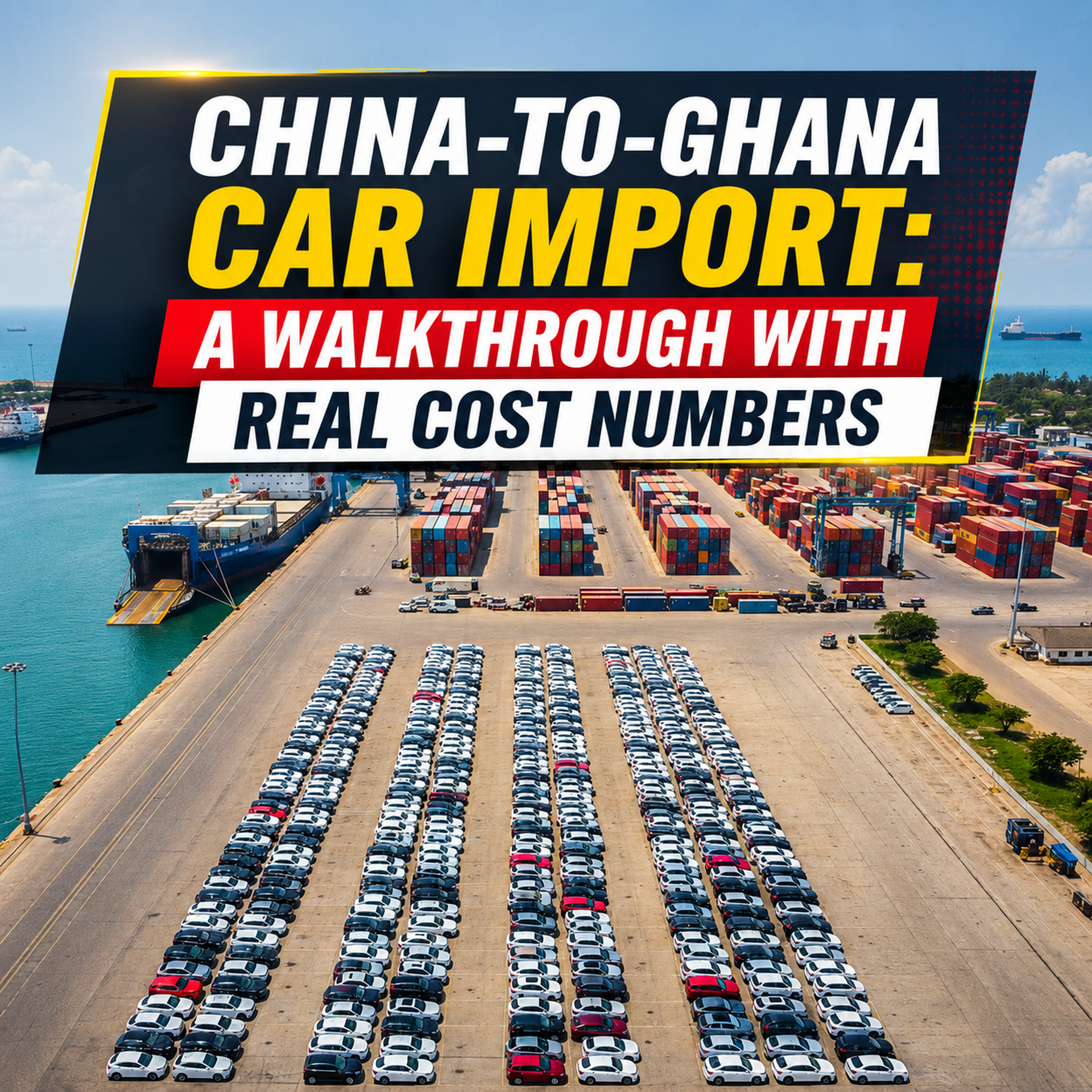
If you're planning on importing to Ghana in 2026, you will have to strictly follow the rule of the 10-year age limit, which means the vehicles can be up to the 2016 models or newer. Only left-hand drive cars that meet at least the Euro 2 emission standards are allowed. Import duty on pure electric vehicles is 0%; however, fuel-powered vehicles will be taxed progressively based on their engine capacity. All shipments should be cleared through Tema or Takoradi ports and have COC and BSC certifications, as these help to avoid hefty "over-age" penalties.

2. Kazakhstan
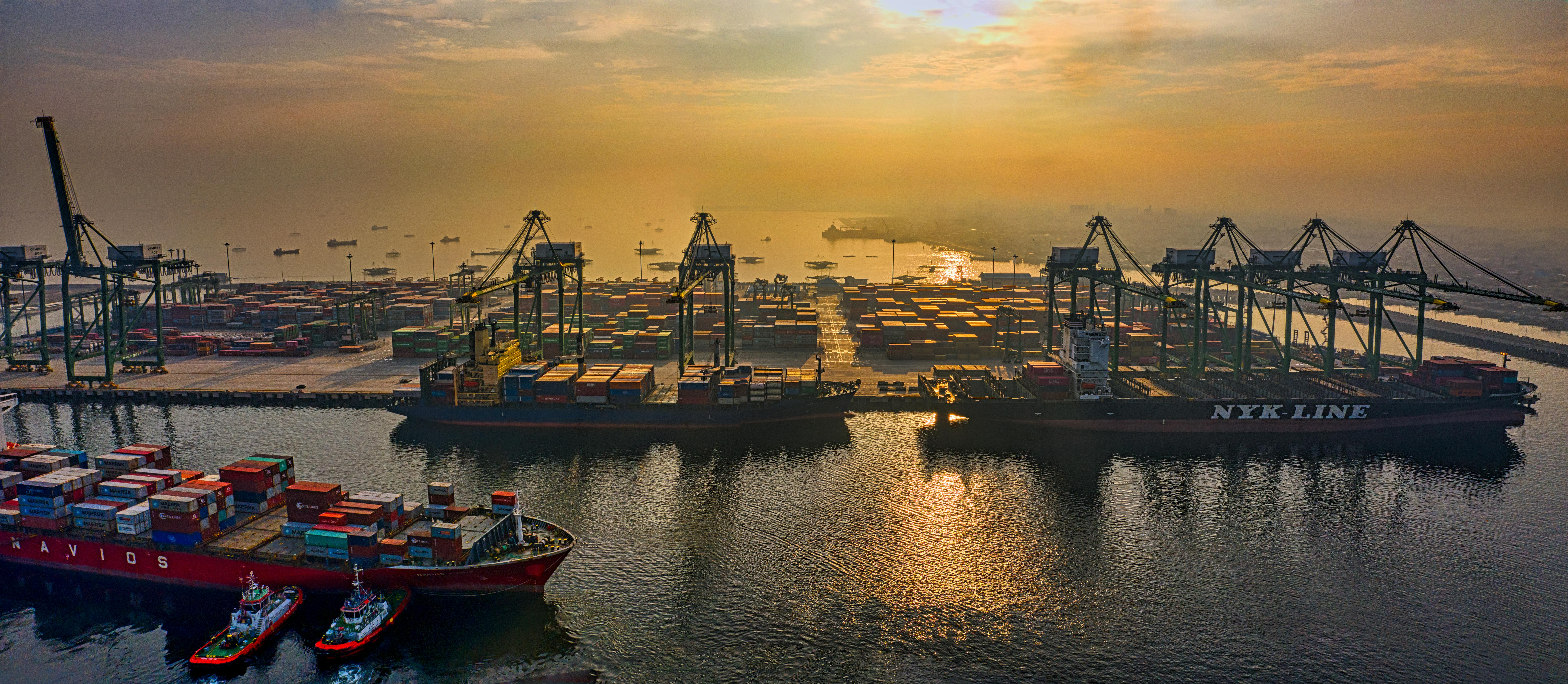
Kazakhstan's 2026 policy favors new inventory, thereby strictly limiting imports to only left-hand drive vehicles under five years old. To check for compliance, cars should meet Euro 5 standards and be equipped with the ERA-GLONASS emergency system. Buyers must consider that VAT has risen to 16%, and an individual importer is allowed to import only one vehicle per year. The majority of logistics pass through the Port of Aktau or the rail terminals of Almaty, and the customs duties are heavily increased for engines with a volume greater than 3.0L.
Sign Up for Best Deals
Access full vehicles reports plus personalized assistance
3. Uzbekistan
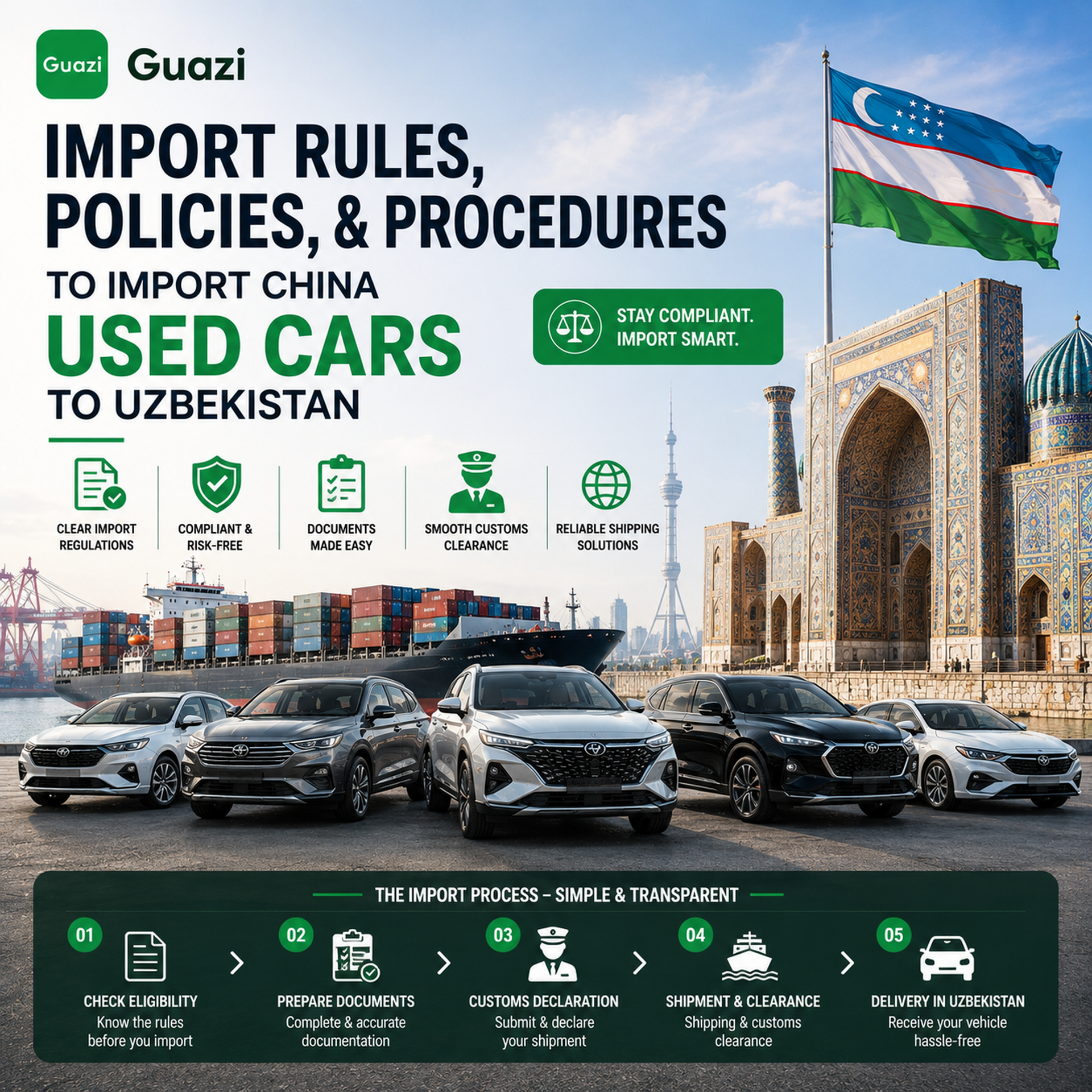
Uzbekistan has announced that from January 1, 2026, it will no longer provide tax holidays for small-engine vehicles, and therefore, 1.0L and 1.2L cars will first pay 15% standard duty and then a per-cc fee. Also, the country has stopped re-registration of non-antique cars over 50 years, but still, the best import option for minimum environmental charges is vehicles under 3 years old. It is advised that buyers use the rail-linked dry ports in Tashkent for effective customs clearance.

4. Turkmenistan
Turkmenistan has some of the world's most unique import rules, including a strict requirement that all imported cars be white and less than five years old. Besides that, right-hand drive cars and those with dark colors or big engines (over 3.5L) are not allowed at all. Suppliers should only deliver their vehicles via the Port of Turkmenbashi and be ready to prove that their cars have at least two front airbags and meet the Euro 4 emissions standard for passing the mandatory state technical inspection.

5. Kyrgyzstan
Kyrgyzstan's 2026 strategy focused on aggressively promoting green energy. One of the measures in the plan is to provide a huge duty-free quota for 15,000 electric vehicles. However, if one opts for a standard gasoline car, there's a 10-year age limit, and Euro 2 emission standards at least must be met by all imports. The standard VAT rate stays at 12%, but customs duties go up very much for vehicles over 7 years old. Most of the shipments are cleared in Bishkek, and models with the left-hand drive are mandatory to comply with local traffic laws and the standards of the Eurasian Economic Union.

Need help finding a particular model?
Access full vehicles reports plus personalized assistance
6. Tajikistan
Tajikistan still strictly prohibits vehicles manufactured before 2013 from entering the country as a way of fighting air pollution in the cities. The authorities have placed the "Electric Transport Development Program" as a top priority, giving a total 10-year free period from taxes and customs charges for all electric vehicles brought into the country. As for regular cars, meeting Euro 4 standards is considered the minimum requirement. Besides presenting a valid purchase contract, a technical passport is a must for importers. Most of the logistics are going through the Dushanbe customs terminal, where environmental and safety inspections are being done to make sure that the vehicles are meeting requirements.

7. Georgia
Georgia has dramatically tightened its regulations for 2026 as it attempts to modernize the car fleet in the region. Initially, a complete prohibition of old cars was one of the proposals, but in the end, the authorities decided to sharply raise the excise tax to GEL 4.5 per cc for cars older than six years. Electric vehicles are still completely free of any restrictions and extra duties related to the vehicle's age. Importers mostly use the Port of Poti. However, they only allow vehicles that meet the Euro 5 standard to ensure successful registration.

8. Armenia
At the core of Armenia's 2026 policy lies the continuation of its membership of the Eurasian Economic Union (EAEU). In this regard, electric vehicles will benefit from a rather generous duty-free quota of up to 15,000 units. Regarding vehicles traditionally powered by fuel, it is a requirement that they be left-hand drive, and the customs duties escalate drastically once a vehicle is older than seven years. A 20% VAT is levied on all legal entity imports, coupled with an environmental tax imposed on cars that are more than five years old. Most of the cargo destined for Armenia is routed through the ports of Georgia before crossing into Armenia at the Sadakhlo-Bagratashen border point.
Want to become a dealer?
Connect with a certified Guazi sourcing expert and enjoy 24/7 multilingual support
9. Azerbaijan
In 2026, Azerbaijan is still implementing the strict Euro 4 emission standard, allowing mainly cars manufactured within the last 10 years. The authorities have rolled out an unusual vintage program that gives a chance to a person to bring a vehicle over 40 years old once a year with complete exemptions from VAT and customs duties. Regular shipments come in through the Baku International Sea Trade Port, where accurate documents describing the chassis number and engine capacity are a must for the calculation of the progressive excise taxes.

Conclusion
Navigating changing import regulations in 2026 is only the beginning; the greater insight comes from finding a partner who knows the regulations as well as you do. To make it big in the international used car market, you need more than just a vehicle; you need a sourcing process that is transparent and backed by data and guarantees compliance even before the ship sets sail.
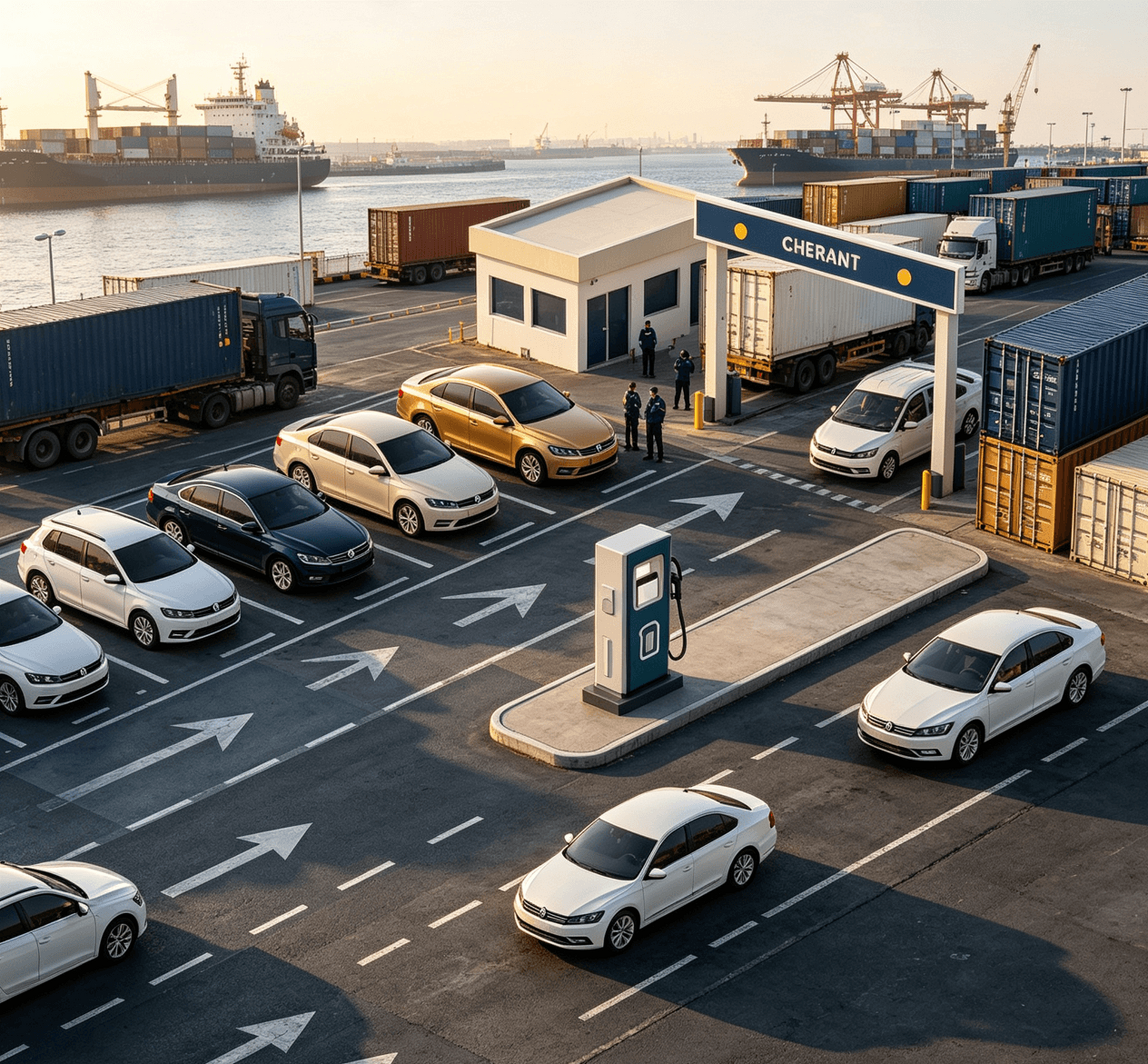
Guazi gives you an opportunity to directly access high-quality used car stocks in China, each vehicle accompanied by a professional 300-point inspection report. No matter if you are importing to Ghana, the Caucasus, or the rapidly expanding markets of Central Asia, we assist you in trading with confidence. Guazi offers you not only the complete export documentation for customs but also the arrangements for secure shipping to the main ports, such as Tema, Poti, and Aktau. We are your reliable partner for efficient, low-cost automotive solutions in 2026.







About Us
Follow US


Copyright © 2015~2026 https://ylqc.guazi.com/, Yilanqunche Automobile Services (Shanghai) Co.,Ltd. All rights reserved.