

World Cup Special • Save up to $1000 on selected vehicles

Guazi
GlobalEnglish


Importing Used Cars from China to Uzbekistan: Dealer Strategy (2026)
Article OverviewThe complete guide to importing quality used cars from China to Uzbekistan. Get informed about all regulations and import strategies as dealers to maximize profit.
The automotive market in Uzbekistan is changing as the demand for good-quality, reasonably priced cars far exceeds the country's stock of them. As Chinese brands continue their upward climb, commanding a significantly better price-performance ratio, many savvy dealers are turning to China's enormous stock to fill the gap. But to be successful in 2026 means understanding a changing regulatory environment, with tax breaks on small-engine cars ending this year and demand for fuel-saving and electric cars dramatically increasing. For foreign dealers, Uzbekistan is a high-growth market if you understand the logistics and regulations. The standard duty returned for many hot segments since 2026, so purchase-price discipline, sourcing, and import efficiencies are paramount. This guide on importing from China includes a tactical guide on how to check listings on export-ready sites, all the way through to the total landed cost, to keep your inventory competitive.
Need help finding a particular model?
Connect with a certified Guazi sourcing expert and enjoy 24/7 multilingual support
Why Source from China?
One thing that China offers over other markets globally is its expansive and most liquid used car inventory. With an enormous domestic fleet, the channels of distribution are endless, and there is always a flow of fresh stock, which can be very difficult to find in other export markets. Ranging from economical commuter cars to luxury SUVs, there are many models and generations to choose from.
Competitive pricing for exports remains a key attractive factor as China's developed supply chain and high internal demand ensure a low cost of these cars. Dealers are able to source newer vehicles at prices that still command a healthy profit margin even after accounting for logistics and tax duties. On top of that, quality standards have risen substantially. Today's export platforms, such as Guazi Used Cars, have adopted more stringent inspection mechanisms with 200+ inspection points to guarantee transparency and dependability of each export vehicle.
Uzbekistan Import Regulations for Used Cars (What You Must Know)
Core Eligibility Requirements
To import a used car into Uzbekistan in 2026, it must meet several key technical standards. Importantly, Uzbekistan will only allow the registration of LHD vehicles; right-hand drive cars are not allowed. Specifically in relation to vehicle age, there are no overall restrictions on used cars, but there is a 50-plus-year cutoff point for certain vehicles. Cars that are more than 50 years old are no longer eligible for registration either outside the country or within. Finally, even just in terms of general inventory, imported cars need to meet the Euro 4 standard or higher in order to pass environmental clearance.
Restricted & High-Risk Categories
The preferential small engine duties were abolished on January 1, 2026. Vehicles with engines smaller than 1,000 cc are now subject to a 15% import duty plus 0.4 per cc. Vehicles with engines of 1,000–1,200 cc are subject to 150.4 per cc. Vehicles with engines of 1,000–1,200 cc are subject to a charge of 150.6 per cc. From the Chinese side, used cars must be registered for more than 180 days to obtain a standard export license. Cars registered for less than 180 days require a manufacturer's letter. All imports must comply with Euro 4 emissions standards.
Compliance Insight (Dealer Tip)
The most successful dealers are those who will comply with all regulations and get emissions certification verified before the vehicle leaves the Chinese port, and not after it has arrived in Uzbekistan. Regulations are moving very fast in this area, especially regarding non-tariff barriers for individual importers versus legal entities. Build some flexibility into your sourcing decisions by concentrating on real used inventory (register for 180+ days) and checking the latest customs rates on a regular basis, as the resumption of normal tariffs has redefined profit levels for certain engine classes.
Need help finding a particular model?
Connect with a certified Guazi sourcing expert and enjoy 24/7 multilingual support
Required Documents for Importing Used Cars
Essential Documentation Checklist
The relevant legal and technical documentation needed to clear a vehicle through customs in Uzbekistan includes the Commercial Invoice, Bill of Lading, Export Certificate, Certificate of Conformity, and the original vehicle registration documents. They must be complete and accurate. The commercial invoice will provide evidence of the transaction, used as a true market value. The Bill of Lading will be used for the origin of the vehicle. The China Export Certificate is used to verify that the vehicle has been cleared for export, and the Certificate of Conformity needs to be present to confirm the vehicle is legislatively in compliance with Uzbekistan's national safety and emissions regulations. You will also need the original vehicle registration documentation from China to be present.
Common Documentation Issues
>>>Become a Verified Partner<<<
Most costly delays at the border are caused by paperwork errors. Identity-mismatched VIN records occur when the chassis of the physical vehicle does not match the appearing bill of sale or export certificate digit-for-digit; even one digit mistake can get you in trouble. Missing conformity certification is one of the major stumbling points, as Uzbekistan is currently enforcing technical requirements more strictly and would not accept registration absent approved safety reports. Another major issue is incorrect individual invoice valuation: when used for duty cost savings, it can be invalidated against price databases by customs officials, and heavy fines and manual recalculations can follow at a much higher rate.
Total Cost Breakdown: What Dealers Actually Pay
It is essential to know the core cost components to understand the actual landed cost for profitability. Newcomers often concentrate on the price of the car being imported only, but experienced dealers sum up the entire cost stack to determine the best time and place to buy. They consider the export price, shipment taxes, and clearance-related costs, each of which influences resale margin in Uzbekistan. 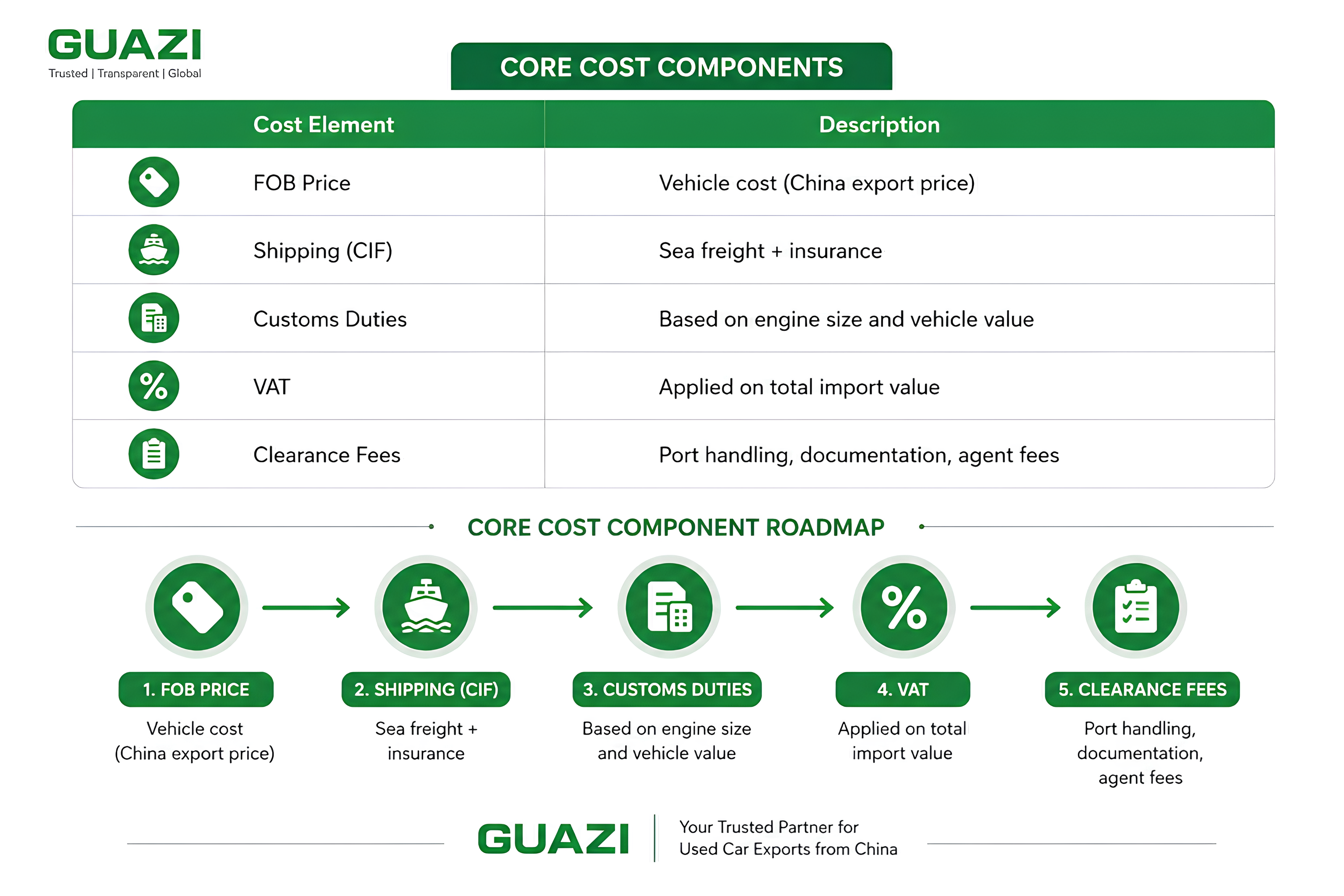
Sample Landed Cost Scenario
Using an actual listing from Guazi, featuring the Geely Emgrand 2022 (4th Generation 1.5L CVT Luxury Model), we demonstrate below how landed cost works.
Need help finding a particular model?
Connect with a certified Guazi sourcing expert and enjoy 24/7 multilingual support
Additional vehicle information:
· Condition: Used (Inspected)
· Fuel Type: Petrol
· Mileage: 32, 700 km
Landed cost breakdown (Dealer Scenario-Uzbekistan)
| Item | Estimated Cost |
|---|---|
| Vehicle (FOB) | $9,200 |
| Shipping | $1,500 |
| Duties & VAT | $3,000–$4,500 |
| Clearance | $500–$1500 |
| Total Landed cost | $14,200–$16,200 |
The China-Uzbekistan used car import business is profitable mainly if built through disciplined and guided decisions every step of the way.
Need help finding a particular model?
Connect with a certified Guazi sourcing expert and enjoy 24/7 multilingual support
Engine size (tax impact)
Standard duties now are levied on all sub-2-liter passenger cars: 15% of customs value plus a per-cc surcharge. The smaller engines (1.0L–1.2L) have lost their previous 0%–5% preference. A 1.5L–1.6L engine, on the other hand, is still an attractive option for dealers.
Purchase price discipline
The margin is made at the point of purchase. Paying too much (say, $500–1,000$ above market) wipes out your resale advantage.
Efficient logistics
If shipping is delayed, or carriers choose the wrong route, or if agent arrangements fall short, then storage, demurrage, and handling costs will be high. Tight logistics means margins are protected.
Note: Practically, successful dealers optimize all three simultaneously, and not separately.
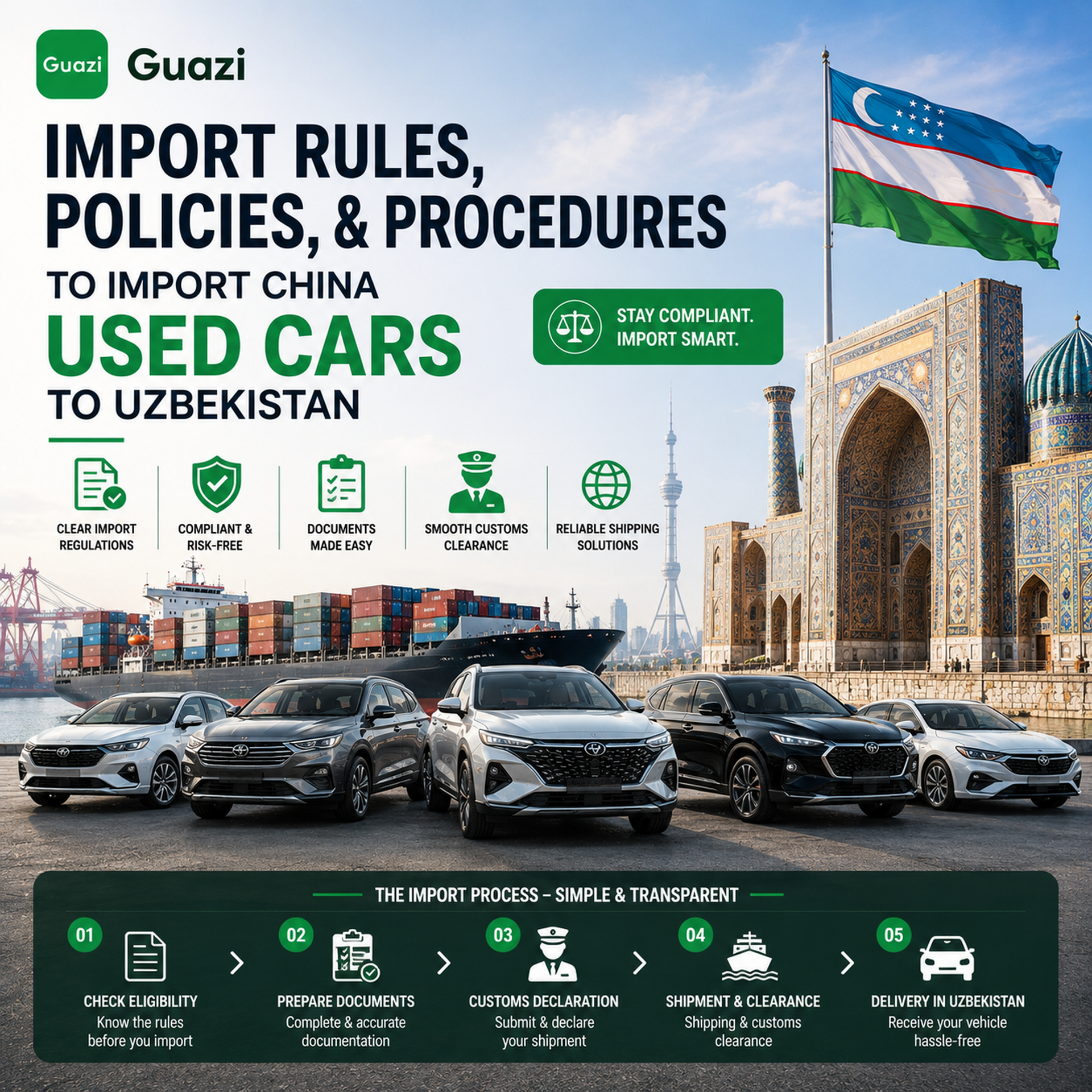
Step-by-Step Export Process from China to Uzbekistan
Step 1. Vehicle Sourcing
A successful import begins with the search for the right unit, the ultimate source:
· Utilize trusted export platforms such as Guazi
· Compare multiple listings for the same model (price, mileage, condition)
· Check inspection reports, photos & vehicle history
Look for high-demand models that hold value, not just the cheapest option.
Step 2. Verification & Payment
Ensure the vehicle is validated before releasing any money:
· Verify VIN information matches all documentation
· Cross-reference vehicle condition with inspection reports
· Secure: Commercial invoice, export certificate, and supporting documentation
· Arrange Payments: Bank transfer (standard); Escrow (recommended for risk control)
Never proceed with payments without verification or if there is a document inconsistency.
Step 3. Shipping and Logistics
Once you purchase your vehicle, the next step is exporting:
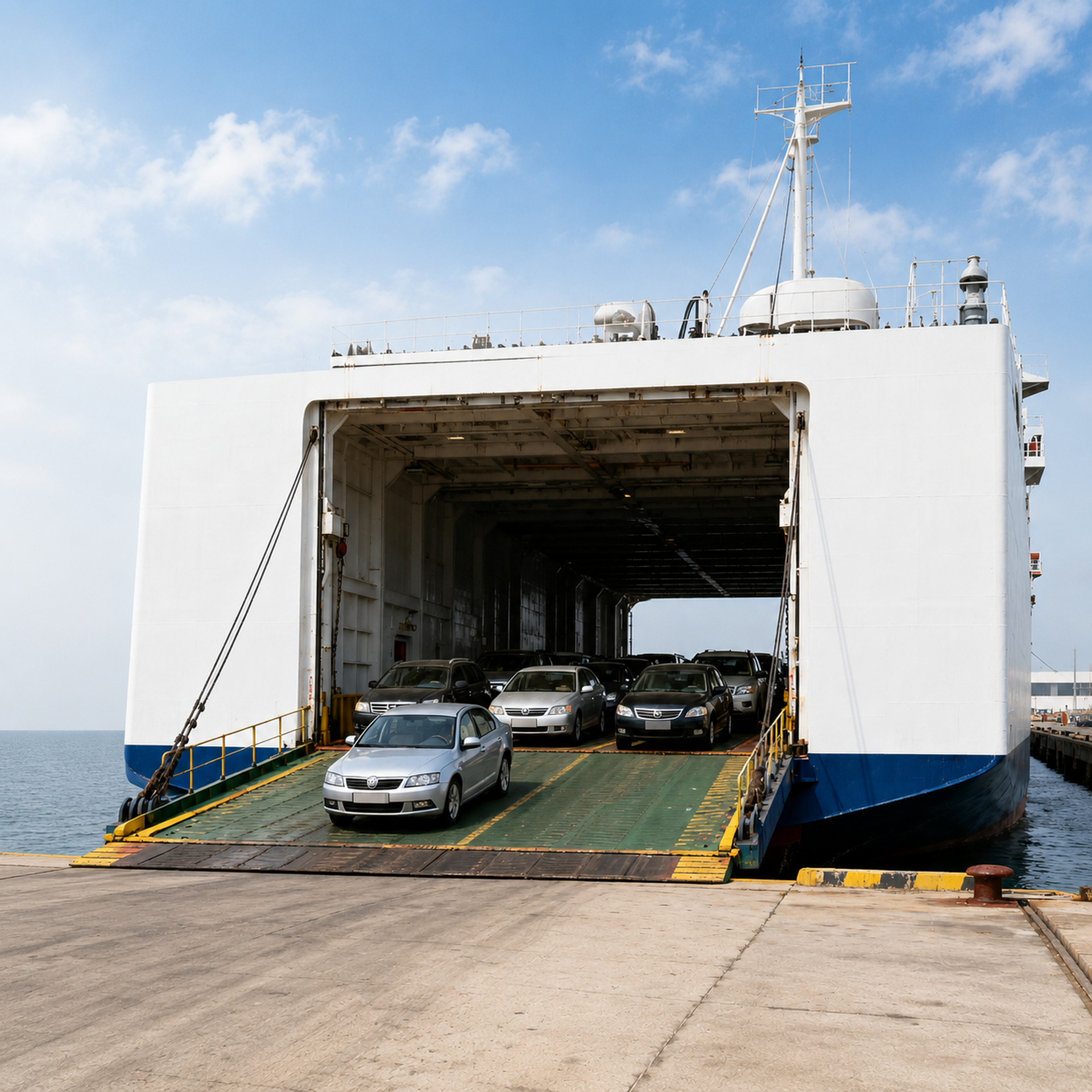
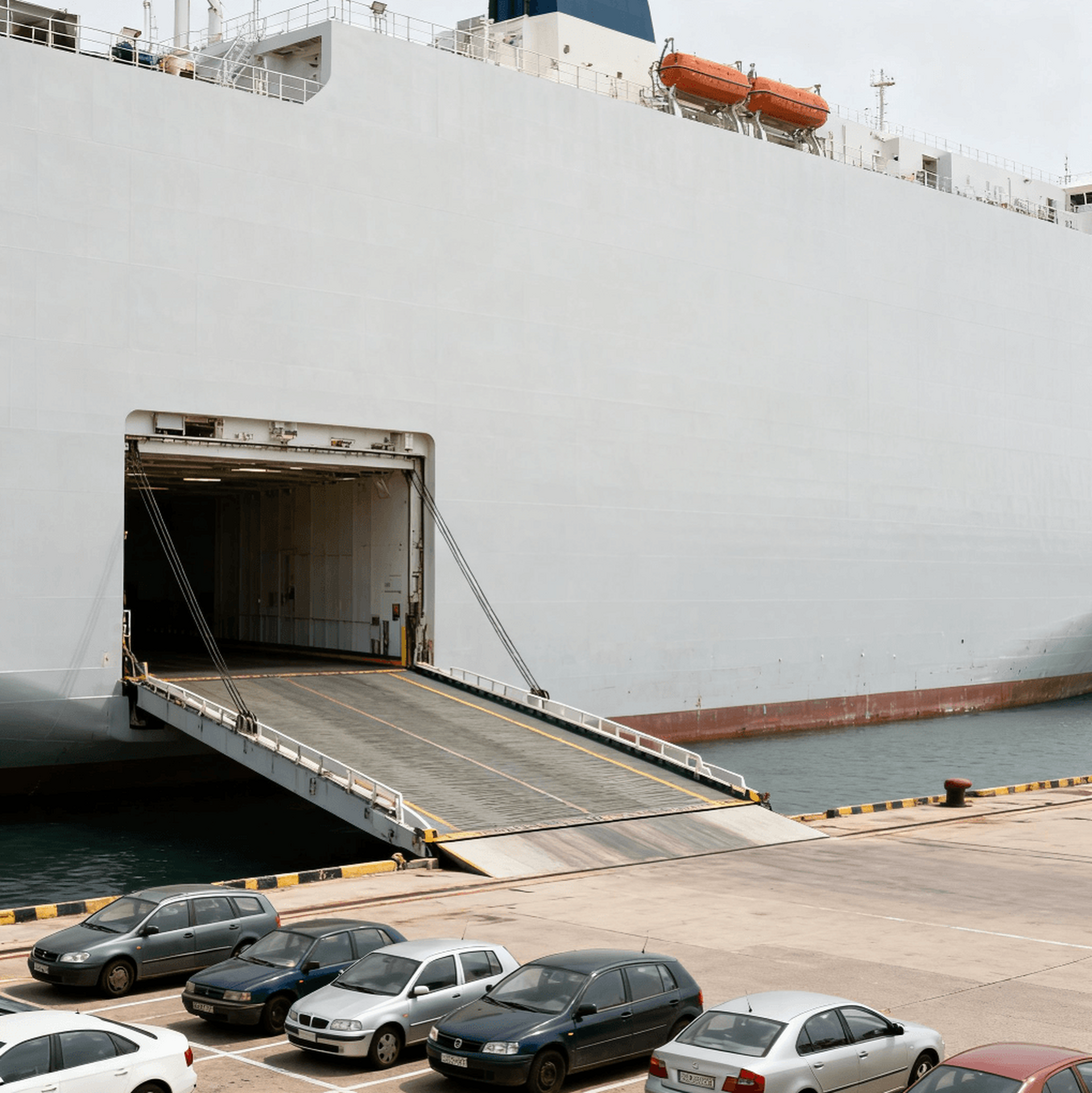
· Choose your shipping method: RoRo (Roll-on/Roll-off), lower cost. Container: More secure, but higher cost.
· Choose the port and route
· Track your shipment from China to Uzbekistan
Step 3 is very important, as shipping decisions can directly affect delivery time and total cost.
Step 4. Customs Clearance
· Ensure to provide all required documents
· Pay application customs duties and VAT
· Cooperate with a licensed clearing agent to: Handle paperwork, navigate local procedures, and avoid compliance mistakes
Step 5. Registration and Resale
· Complete Vehicle Registration in Uzbekistan
· Set your price based on: Total landed cost, local market demand, and competitor pricing
· Prepare for resale
The target is to position the car within the high turnover category to sell faster and keep your cash flow consistent.
Need help finding a particular model?
Connect with a certified Guazi sourcing expert and enjoy 24/7 multilingual support
Conclusion
To begin with, if you are going to be importing Chinese used cars into Uzbekistan, the key is execution, not just theory. The first thing to keep in mind is to stay under the 1.5-1.6 L engine size, as well as the price of the vehicle at FOB, which should be around $7,000-$10,000 currently. The most important item to remember when calculating the full landed cost before purchasing is that your pricing will need to remain competitive for the vehicles being sold in a high-turnover market segment. Operationally, what makes a dealer successful is discipline. The dealer needs to obtain their vehicles from reliable sources such as Guazi. They also need to validate all documentation before making a payment on the vehicle. They need to create an efficient system for processing their logistics and clearing the automobiles through customs. Dealers who have the ability to consistently follow these guidelines do not simply import; they establish a consistent and profitable importing pipeline.





About Us
Follow US


Copyright © 2015~2026 https://en.guazi.com/, Chongqing Guazi Enterprise Consulting Service Co., Ltd. All rights reserved.