


Guazi
GlobalEnglish


Tema Port Clearing: A Ghana Buyer's Step-by-Step Guide
Author
Bill
Categories
Regional Insights
Published on
2026-07-06
Updated on
2026-09-24
Article OverviewClear an imported car at Tema with fewer surprises. Prepare documents, review duty, track Customs, carrier and terminal release, then register with DVLA.
- Quick answers
- The five parties in your clearance
- Before the vessel arrives
- Step 1: Confirm the bill of lading
- Step 2: Settle the carrier file
- Step 3: Submit the customs declaration
- Step 4: Review the assessment
- Step 5: Pay through the official route
- Step 6: Complete examination
- Step 7: Obtain Customs release
- Step 8: Complete terminal release
- Step 9: Move the car safely
- How to read a clearing quote
- Delay risks you can control
- Red flags
- Key takeaways
- Summary
- Sources & References
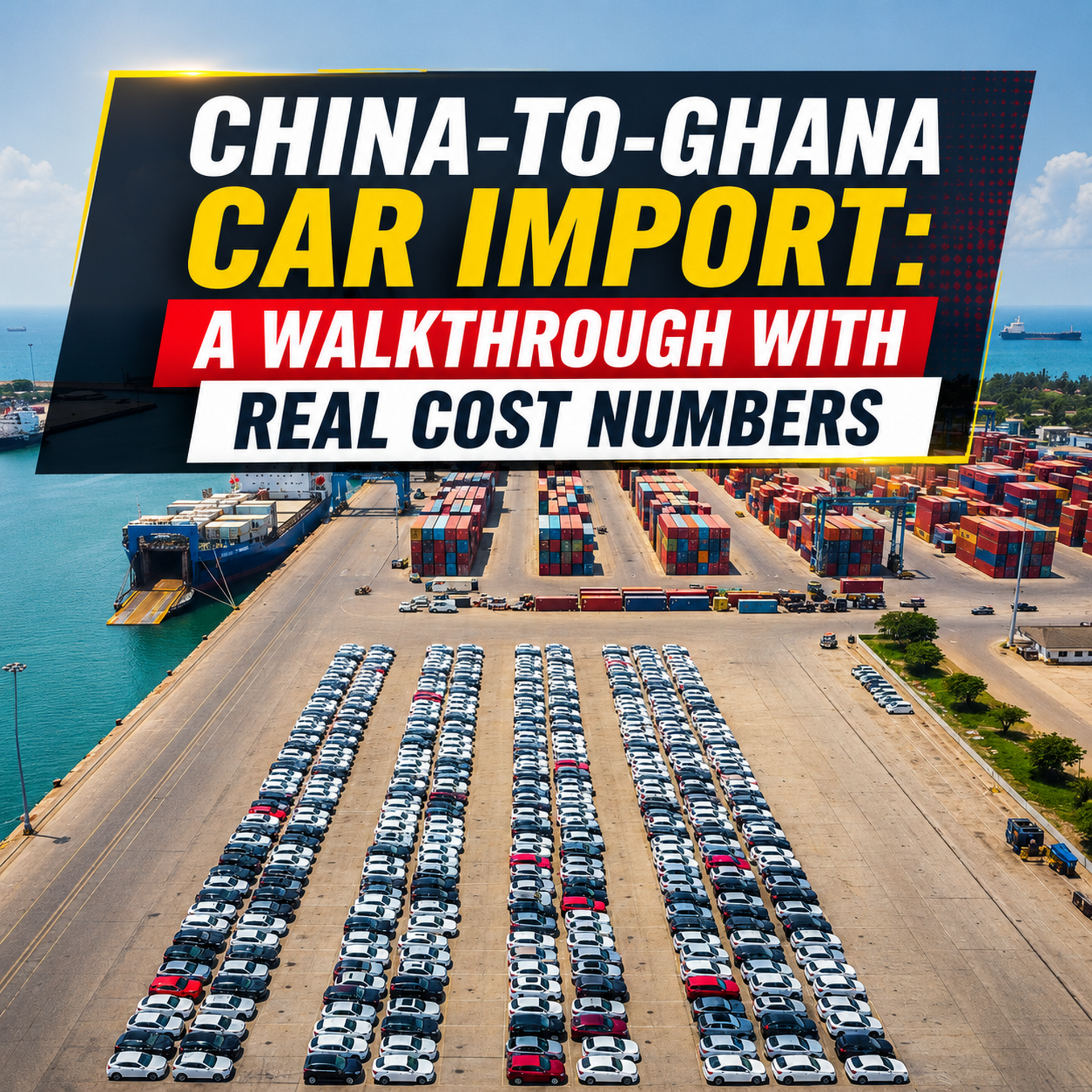
Your car has reached Tema, but it is not ready for the road. It must be declared, assessed, examined, and released. You also need the carrier and terminal to release their part of the file.
Most delays begin before arrival. A wrong VIN, missing title, unpaid carrier charge, or weak duty plan can hold the car while costs keep growing. The best time to prepare is when the vessel is still at sea.
This guide shows each checkpoint, who controls it, and what proof you should receive. It does not promise a fixed clearance time. The result depends on the file, assessment, examination, payment, and current port process.
Quick answers
- How long does clearing take?
There is no safe fixed promise. A complete file can move faster (3~7 days), but assessment, examination, payment, and release issues can add time.
- Can I clear the car myself?
GRA says a person who wants to act as a clearing agent must register and receive approval. Most private buyers use a licensed agent.
- Which documents should I prepare?
VIN, title, bill of lading, invoice or price record, identification, inspection and conformity papers where required, and payment evidence.
- Is duty the only payment?
No. Carrier, terminal, agent, transport, and possible storage charges are separate.
- Can I drive away after Customs release?
Normal road use still needs the proper DVLA registration and roadworthiness process.
The five parties in your clearance
Know who controls each step.
| Party | Main role |
|---|---|
| GRA Customs | Declaration, assessment, examination and Customs release |
| Shipping line or carrier | Bill-of-lading and delivery release |
| Terminal | Vehicle handling and terminal release |
| Clearing agent | Submits and follows the file for the importer |
| DVLA | Road inspection and registration after Customs clearance |
One payment does not release every party. Ask for proof at each checkpoint.
Before the vessel arrives
Send the agent a clean document pack. It should contain:
- VIN and vehicle details;
- Title or ownership paper;
- Final bill of lading;
- Invoice or purchase record;
- Freight and insurance record;
- Importer name and Ghana Card PIN or business details;
- Approved inspection and Certificate of Conformance where required; and
- Any written approval linked to a restricted vehicle.
- Check spelling, VIN, ports, and consignee name. Fix a document error before discharge where possible.
- Use the Ghana VIN-check guide before shipment and the GRA import-procedure page for the current official flow.
Step 1: Confirm the bill of lading
The bill of lading links the vehicle to the shipment and consignee. Check:
- VIN;
- Make and model;
- Port of loading and Tema;
- Consignee;
- Carrier; and
- Original or electronic release status.
A one-character VIN error can delay the file. Do not wait for the terminal to find it.
Step 2: Settle the carrier file
The shipping line may require its local charges and documents before it gives delivery release. Ask for an invoice from the carrier or its Ghana agent.
Keep the receipt and release note. Do not send money to an unrelated personal account.
Carrier demurrage and terminal storage are not the same charge. Ask the payee to name the charge and period in writing.
Step 3: Submit the customs declaration
The clearing agent enters the vehicle and supporting records in the official system. Vehicle identity, year, engine, and classification must match.
GRA explains that its vehicle process uses the VIN, make, model, and year for a duty check. It also uses its valuation and tax rules, not only the seller’s invoice.
Ask the agent for the declaration reference and a copy of the assessment. If the details are wrong, correct them before payment.
Step 4: Review the assessment
Check the vehicle identity and every charge line. Ask what came from Customs and what came from a private party.
Your review should cover:
- Accepted value;
- Vehicle classification;
- Engine and fuel details;
- Age and any overage charge;
- Duty and levies;
- Examination fee where applicable; and
- Payment reference.
Use the Ghana duty guide to understand the method. The final assessment still comes from GRA.
Step 5: Pay through the official route
Pay only against a valid reference. Keep bank or electronic proof.
Separate government payments from the agent’s fee. An agent can collect money for several items, but you should still receive a clear breakdown and receipts.
If the amount changes, ask for the new assessment or invoice. Do not accept “the port added something” as the whole explanation.
Step 6: Complete examination
Customs may examine the vehicle and documents. The car in the terminal should match the declaration.
The check can focus on:
- VIN and chassis;
- make, model, and year;
- Engine;
- Condition;
- Steering;
- Documents; and
- Items inside the vehicle.
Do not pack undeclared goods in the car. They can create a second customs issue.
Step 7: Obtain Customs release
Once the assessment, payment and examination are complete, Customs can release its hold.
Ask for the release evidence. “Customs is done” should come with a document or system proof, not only a phone call.
Customs release does not mean the carrier and terminal have also released the car.
Step 8: Complete terminal release
The terminal checks its own charges and release conditions. Pay the correct terminal invoice and obtain the exit proof.
Inspect the car before it leaves where the process allows. Take dated photos of all sides, glass, interior and odometer. Compare the condition with the loading report.
Record any transport damage at once and follow the carrier or insurance claim route.
Step 9: Move the car safely
Arrange a suitable tow, truck, or lawful temporary movement route. Do not assume Customs release allows normal road use.
Afterward, complete DVLA inspection and registration. DVLA Ghana lists the vehicle, original customs entry, inspection report and owner identification among its requirements.
How to read a clearing quote
Ask the agent to separate:
| Cost group | Typical payee |
|---|---|
| Customs assessment | GRA |
| Carrier charges | Shipping line or local agent |
| Terminal charges | Terminal operator |
| Clearing service | Licensed agent |
| Storage or demurrage | Terminal or carrier, depending on the charge |
| Inland movement | Tow or transport company |
| Registration | DVLA and testing station |
The quote should state what is included, what may change and how long it remains valid.
Delay risks you can control
- Send documents before arrival.
- Check the VIN on every page.
- Keep money ready for valid assessments and invoices.
- Respond to examination questions quickly.
- Remove no document from the file without a copy.
- Track carrier and terminal free-time rules from their current notice.
- Plan inland transport before release.
- No agent can remove every delay, but a clean file removes avoidable ones.
Red flags
Pause if someone:
- Asks for a large cash payment without an invoice;
- will not show the Customs assessment;
- mixes duty, terminal and agent fees into one unexplained number;
- promises a guaranteed release date;
- asks to change the vehicle description to lower duty; or
- refuses to identify the licensed agent handling the entry.
- GRA publishes information on Customs agents. Check the current route before appointing one.
- Contact the Guazi Africa Desk of experts for a full, itemized quotation before you commit.
Key takeaways
- Prepare the file before the vessel arrives.
- Carrier, terminal, Customs, and DVLA have different roles.
- Check the assessment before payment.
- Keep an invoice and receipt for every charge.
- Customs release is not the same as road registration.
- Fixed clearance-time promises are not reliable.
Summary
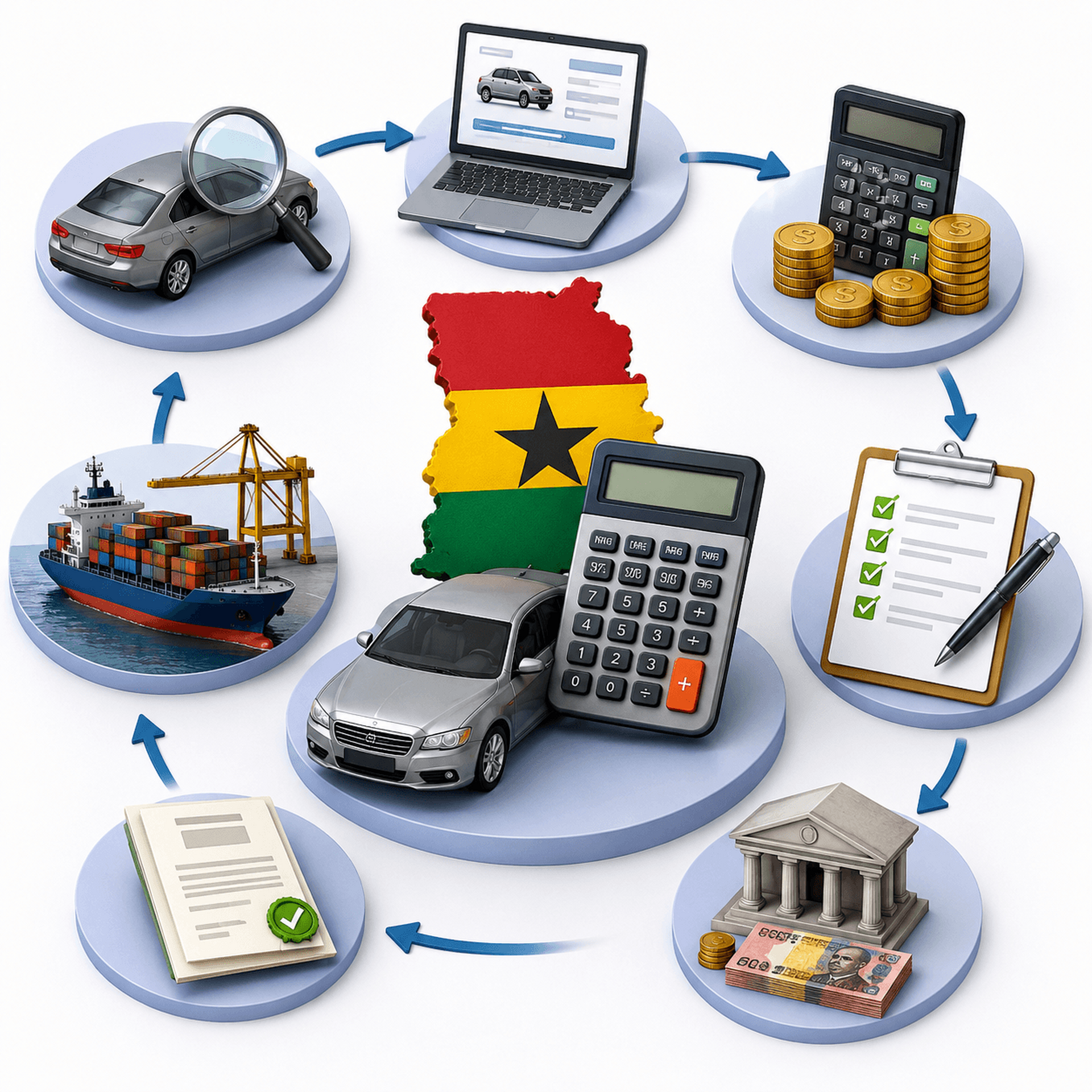
Tema clearance is a chain of small releases. A missing link can hold the car even when another party has finished.
Track the VIN, documents, assessment, payments, and release proof in one file. That gives the buyer control and makes it easier to challenge a wrong charge or missing step.
Sources & References
- Ghana port clearance, customs process and ICUMS system
- DVLA Ghana services
- Tema port operations: Ghana Ports and Harbours Authority and Tema (Wikipedia).
- Official duty assessment: GRA used-vehicle duty calculator.
- Guazi facts (founded 2015, 3M+ cars sold, 30M+ inspections, inspection of over 200 points): Guazi About.



VEHICLE & CONTACT INFORMATION
FAQs
Q
A
GRA says duty can be paid once the consignee has the title and bill of lading. Confirm the current process with the agent and GRA.
Q
A
Most private buyers use a clearing agent. A licensed customs house agent files the ICUMS entry and navigates the process. Self-clearing is technically possible but slow for most importers.
Q
A
The car remaining beyond the relevant free period can trigger charges. Carrier and terminal rules may differ.
Q
A
Avoid undeclared items. They can create an examination and tax problem.
Q
A
Ask for the official release evidence or system reference.
Q
A
After the proper DVLA registration and roadworthiness steps, not merely after Customs release.





About Us
Get Support
Follow Us


Copyright © 2015~2026 https://en.guazi.com/, Chongqing Guazi Enterprise Consulting Service Co., Ltd. All rights reserved.